
Buying a wireless charger for your iPhone sounds simple until you hit the checkout page. On one side, Apple’s MagSafe chargers snap magnetically to the back of your phone and promise faster charging on newer models. On the other, standard Qi wireless pads cost as little as $10 and work with nearly every phone ever made. The real decision isn’t which technology is better in the abstract — it’s which one fits how you actually live: where you set your phone down at night, how many devices you own, and whether you’re the kind of person who grabs the phone mid-charge to check a recipe. If you’ve been searching “magsafe charger vs qi wireless pad for iphone,” this comparison breaks down the practical differences that matter at home.
Top 3 picks at a glance

Quick Verdict
If you own an iPhone 12 or newer and charge mostly in one spot — a nightstand, a desk — a MagSafe charger is worth the premium. Magnetic alignment means it charges reliably at up to 15W (25W on iPhone 16 models with a compatible charger), and you can pick the phone up without fumbling for a cable. If you charge multiple brands of devices, use older iPhones, or want a backup pad for a guest room or office, a Qi wireless pad delivers the same basic convenience for a fraction of the price. Budget pick: a basic 15W Qi pad in the $10–$17 range. Premium pick: the Apple MagSafe Charger (2 m) at around $39.99, or a third-party magnetic pad closer to $14.
As an Amazon Associate we earn from qualifying purchases at no extra cost to you.
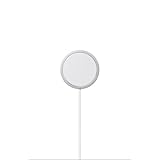


Side by Side
| Category | MagSafe Charger | Qi Wireless Pad |
|---|---|---|
| Max charging speed (iPhone) | 15W on iPhone 12–15; up to 25W on iPhone 16 with a compatible charger | 7.5W on iPhones (Qi standard), even on pads rated 10–15W |
| Alignment | Magnets snap the phone into place every time | You position the phone on a coil by eye; misalignment slows or stops charging |
| Device compatibility | Works with iPhone 12+ and magnetic cases; non-magnetic phones charge slowly via Qi | Works with virtually all Qi phones — iPhone, Samsung, LG, and more |
| Case compatibility | Works through MagSafe cases up to roughly 3 mm thick; magnets need direct contact for full strength | Works through most cases under about 5 mm, but not metal or magnetic plates |
| Typical price | $14–$40 depending on brand and length | $10–$25 for most name-brand pads |
| Space needed | Puck about 2.16 in diameter, roughly 0.2 in thick; cable snakes anywhere | Flat pad typically 3.5–4.5 in across, needs a stable surface |
| Charging while using | Easy — grab the phone and go, charger comes along or releases cleanly | Phone stays tethered to the pad surface; lifting it ends the charge |
| Maintenance | Wipe the puck; keep metal objects (keys, coins) away from the magnet face | Wipe the surface; keep the pad free of dust and debris that traps heat |
| Resale/travel value | Magsafe gear holds appeal for the large installed base of iPhone 12+ owners | Qi pads are so inexpensive that resale value is minimal, but they’re easy to gift or stash |
| Best for | Dedicated iPhone households, nightstand charging, StandBy mode use | Mixed-device homes, guest rooms, desks, secondary charging spots |
Where Magsafe Charger Wins
Speed on modern iPhones. Apple reserves its fastest wireless charging for MagSafe. iPhone 12 through 15 models charge at up to 15W when magnetically aligned, and iPhone 16 models push to 25W with a charger that can deliver it. A standard Qi pad tops out at 7.5W on any iPhone, regardless of what the box says — a 15W pad like the Amazon Basics model negotiates down to Apple’s Qi profile. In real terms, that can mean a meaningfully fuller battery after a 30-minute top-up.
Alignment you never think about. The magnets do the aiming. Set the phone within about an inch of the puck and it snaps into the correct position. On a loose Qi pad, being even a half inch off the coil can drop charging speed or stop it entirely — a common reason people wake up to a half-charged phone.
Grab-and-go usability. The puck either comes with the phone or releases with a flick of the wrist. This is genuinely useful in the kitchen (following a recipe), at a desk (video calls), or anywhere you’re in and out of the phone.
Cable length and placement freedom. The Apple MagSafe Charger (2 m) comes with a generous six-and-a-half-foot cable, so the outlet can live behind the nightstand while the puck sits on top. Many budget Qi pads ship with shorter captive cables, which limits where the pad can sit.
Accessory ecosystem. MagSafe alignment works with magnetic stands, car mounts, and battery packs, so one charger can anchor a small system.
Where Qi Wireless Pad for Iphone Wins
Price. This isn’t close. The Yootech 10W pad runs about $9.99, the Amazon Basics 15W pad is $16.88, and even a well-reviewed magnetic third-party pad like the 25W MagSafe-compatible option sits around $13.95 — a third of Apple’s $39.99. If you need chargers in three rooms, the math gets lopsided fast.
Universal compatibility. A Qi pad charges iPhones from the X onward, plus Samsung, LG, Google, and most anything else with Qi inside. In a household mixing iPhones and Android phones, or when guests visit with their own devices, one pad serves everyone. A MagSafe puck still charges other Qi phones, but without the magnetic lock it behaves like a slower, fussier pad.
Stability. A pad lies flat and weighs enough (typically 2–5 ounces) to stay put. The phone rests on it, not hanging off it. That matters on a cluttered nightstand where a magnetically attached phone and puck can slide or get knocked off the edge.
No case drama. Qi pads generally charge through cases up to about 5 mm thick. MagSafe works best with MagSafe-compatible cases; a thick non-magnetic case weakens the snap and can cause misalignment or dropped connections.
Simplicity for guests. Nobody needs instructions. Put the phone down, it charges — no orientation, no snap, no settings to check.
Cost Over 5 Years
Assume one charger per person and normal wear. A single Apple MagSafe Charger at $39.99 lasts well beyond five years in most cases — the cable is the likeliest failure point, and a replacement is another $39.99 (or less for third-party). Realistic five-year MagSafe cost: $40–$80 per person, plus a USB-C power adapter if you don’t already own one (roughly $19 for Apple’s 20W brick, though most homes have spares).
A Qi pad at $10–$17 is nearly disposable. If a pad fails in year three, replacing it costs less than a dinner out. Realistic five-year Qi cost: $15–$45, including a likely replacement and the USB-A or USB-C adapter it needs (the Yootech ships without one, which adds $10–$15 if you’re starting from zero).
The honest framing: over five years, the gap between the two is often $20–$50 per person. That’s real money multiplied across a family of four, but it’s not the deciding factor for a single charger. Speed, alignment, and how you use your phone day to day should drive the choice.
Which One for Your Home
Small Apartment
Space and outlets are at a premium, so favor the MagSafe charger — its puck footprint is smaller than most pads (about 2.2 inches across), the long cable lets you tuck the adapter behind furniture, and it doubles as a grab-and-go charger when you’re heading out. If you also own an Android tablet or a second phone, add a $10–$17 Qi pad in the living room and keep MagSafe at the bedside.
Family with Kids or Pets
Go Qi pads in shared spaces. A flat $10–$17 pad on a stable surface survives bumps better than a magnetically attached phone that a toddler or cat can drag off the table by the puck. Keep one MagSafe charger in a parent’s bedroom for overnight speed, but treat pads as the household workhorses — at these prices, you won’t grieve one that gets stepped on.
Rental or Frequent Mover
Qi pads win. They’re cheap enough to leave behind or lose in a move, they work with whatever phone your roommate or partner carries, and they don’t require wall anchors or permanent placement. One 15W pad per room, total outlay under $50, and nothing to reinstall at the next address.
Long-Term Home
Invest in MagSafe where it counts. Build a small system: an Apple MagSafe Charger (2 m) at the nightstand, a magnetic stand for the home office, and a spare Qi pad for the kitchen counter. As phones continue adding faster wireless charging — expect MagSafe-class speeds to remain the iPhone advantage heading into 2026 — a quality magnetic setup ages better than a drawer of bargain pads.
FAQ
Will a Qi wireless pad charge my iPhone as fast as a MagSafe charger?
No. On any iPhone, a standard Qi pad charges at 7.5W maximum, even if the pad is rated 10W or 15W. MagSafe delivers up to 15W on iPhone 12–15 and up to 25W on iPhone 16 models with a compatible charger — roughly twice the speed or better in practice.
Can I use a MagSafe charger on an older iPhone or an Android phone?
Yes, but only via standard Qi, so you get the same slow 7.5W charging as a basic pad without the magnetic hold. If your main phone isn’t an iPhone 12 or newer, a Qi pad is the better buy.
Do wireless chargers work through phone cases?
Usually. Qi pads typically charge through cases up to about 5 mm thick as long as they’re not metal or holding magnetic plates. MagSafe needs a MagSafe-compatible case for the magnets to grip properly; thick non-magnetic cases weaken the connection and can cause intermittent charging.
Do I need a special power adapter?
For full speed, yes. MagSafe needs a USB-C adapter rated at least 20W (30W for 25W charging on iPhone 16). Most Qi pads need a USB-A or USB-C adapter — note that the Yootech 10W pad ships without one, and the Amazon Basics pad includes only a cable. Budget an extra $10–$19 if you don’t have spares in a drawer.


