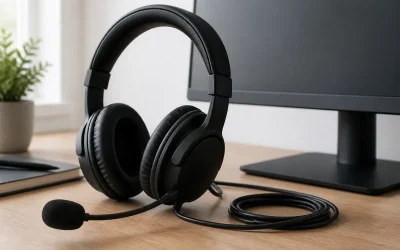
The modern desk is more than just a place to work; it is a carefully curated environment where productivity meets personal style. When you invest in a quality pair of over-ear headphones—which typically weigh between 250 and 450 grams and can cost anywhere from $100 to over $500—leaving them sprawled across your workspace is a recipe for clutter and accidental damage. A headset left on a flat surface occupies roughly 30 to 50 square inches of prime desk real estate, traps dust on the earcups, and is highly susceptible to coffee spills.
For home office enthusiasts and gamers alike, the storage dilemma eventually boils down to a classic battle of design philosophy: the headphone hook under the desk versus the desktop headset stand. This choice is not merely about spending ten or fifteen dollars; it is about how you interact with your workspace daily. Do you prefer an ultra-minimalist, completely clear desktop where your tools are hidden until needed? Or do you view your headphones as a piece of functional art that deserves a dedicated pedestal? Deciding between these two storage methods requires weighing physical ergonomics, desk dimensions, cable management, and long-term durability.
As an Amazon Associate we earn from qualifying purchases at no extra cost to you. Product prices and availability are accurate as of the date shown and are subject to change.


Top 3 picks at a glance
Quick Verdict
For those working with limited desk space (desks under 48 inches wide) or anyone dedicated to a zero-clutter, minimalist aesthetic, the under-desk headphone hook is the superior choice. It completely frees up your desktop surface and keeps cables out of sight. However, if you have a spacious desk, prioritize effortless physical access without bending down, or want to showcase a premium pair of audiophile headphones, the desktop headset stand is the undisputed winner. It requires zero installation, cannot damage your desk’s underside, and keeps your gear beautifully on display.
Side by Side
To help you visualize how these two storage solutions compare across key utility and design metrics, here is a detailed breakdown of their daily performance characteristics:
| Metric | Headphone Hook (Under Desk) | Desktop Headset Stand |
|---|---|---|
| Desktop Footprint | 0 square inches (completely suspended underneath) | 12 to 25 square inches (depending on base size) |
| Ergonomic Accessibility | Moderate; requires reaching blindly under the desk edge | High; sits at arm’s length on the desktop surface |
| Installation Effort | Requires adhesive curing (24 hours) or clamp tightening | None; ready to use straight out of the box |
| Cable Management | Excellent; cables hang naturally beneath the work surface | Moderate; excess cable must be coiled on the desktop |
| Risk of Desk Damage | Low to Moderate (adhesive residue or clamp pressure marks) | Zero (usually features soft silicone or foam feet) |
| Portability & Versatility | Low; difficult to relocate once adhered or clamped | High; can be moved to any table, shelf, or room instantly |
| Price Range | $5.00 to $20.00 | $6.00 to $40.00 (premium wood/metal options cost more) |
| Best For | Minimalists, compact desks, and active cable management | Audiophiles, spacious setups, and quick-grab convenience |
Where Headphone Hook under Desk Wins
The primary triumph of the under-desk headphone hook is spatial efficiency. On a standard 48-inch home office desk, every square inch of surface area is highly contested by monitors, keyboards, mice, and document trays. By utilizing the unused three-dimensional space beneath your desktop, a hook preserves your entire work surface. This layout prevents your workspace from looking overcrowded, which can mentally reduce focus during long working hours.
Safety from common desktop hazards is another major advantage. If you keep a coffee mug, water glass, or soda can on your desk, your electronics are constantly at risk. A desktop spill can ruin expensive headphone drivers in seconds. By suspending your headset underneath the desk surface, you place it completely out of the “splash zone.”
Under-desk hooks also offer diverse mounting styles to suit different furniture materials. For example, adhesive-based models like the Elevation Lab The Anchor™ – Under Desk Headphone Adhesive Mount ($11.99) use high-strength 3M adhesive to mount dual headsets out of sight without requiring tools or leaving visible marks on the top of your desk. For those who want more flexibility, clamp-on options like the EURPMASK Rotating Headphone Stand, Adjustable Clamp-on Headset Holder Hanger ($11.99) use a mechanical screw mechanism. This model features a 360-degree rotating neck, allowing you to swing your headphones completely under the desk to hide them, or outward when you need quick access to your built-in microphone.
Where Desktop Headset Stand Wins
Desktop headset stands excel in physical ergonomics, convenience, and visual presentation. When you use a desktop stand, your headphones sit at a natural resting height for your hands. There is no need to bend forward, reach blindly beneath your desk, or risk bumping your knees against a dangling headset. You simply lift the headphones off the cradle and place them on your head.
For users who own high-end audiophile headphones or premium gaming headsets, these devices are a source of pride. A beautifully designed desktop stand transforms your gear into a visual focal point of your room. It treats your headphones like a piece of high-end home audio equipment rather than an accessory to be hidden away.
Furthermore, desktop stands require absolutely zero installation and carry zero risk of damaging your furniture. There are no adhesives that could peel away wood veneer, and no metal clamps that could compress soft pine or particleboard desk edges. Budget-friendly options like the New Bee Headphone Stand Headset Holder Earphone Stand ($6.99) utilize a slim aluminum alloy support bar combined with a flexible TPU rubber headrest to cradle your headband without causing deep indentations in the padding. Similarly, the minimalist Ahonnpely Headphone Stand for Desk – Headset Stand Headphone Holder (Black) ($6.99) provides a heavy, slip-resistant base that stays firmly in place on your desk without sliding around when you grab your headset in a hurry.
Cost Over 5 Years
When assessing the true cost of ownership over a five-year period, both options are highly economical, but they wear differently over time. Under-desk hooks that rely on adhesive backing may require maintenance. Over five years, temperature fluctuations in your home and the constant downward pull of gravity can cause adhesives to dry out and fail. You will likely need to replace the double-sided mounting tape once or twice during this period, adding a few dollars in maintenance costs. Additionally, if you change desks, adhesive hooks are rarely reusable without buying new mounting strips.
Clamp-on under-desk hooks are far more durable, but constant rotation or over-tightening can wear down plastic threads or loosen the internal springs over a multi-year timeline. You can expect a high-quality clamp hook to last the full five years, provided it is not subjected to heavy impacts from office chairs or stray knees.
A solid desktop headset stand, by contrast, has virtually no failure points. Because it sits statically on your desk and is subjected to no shear force or tension, a metal or heavy plastic stand can easily last a decade or more. There are no adhesives to degrade and no mechanical clamps to strip. Aside from occasional dusting, a desktop stand purchased today for under ten dollars will perform identically half a decade from now, making it the most durable and cost-effective option over the long term.
Which One for Your Home
The ideal choice depends heavily on your specific living situation, room layout, and household dynamics. Here is how to choose the right accessory for your specific home environment.
Small Apartment
In a small apartment or studio, your desk often has to double as a dining table or vanity, and every square inch of space is precious. An under-desk headphone hook is the clear winner here. It keeps your workspace looking clean and uncluttered when you transition from your day job to evening relaxation. Stowing your headphones completely out of sight helps maintain a clear boundary between your professional life and your personal living space.
Family with Kids or Pets
If you share your home with curious toddlers or playful pets, an under-desk hook can actually pose a hazard if not positioned carefully. Dangling headphone cables under a desk are highly tempting targets for cats to swat at or toddlers to pull, which can result in expensive headphones crashing to the floor. In this scenario, a heavy, stable desktop headset stand placed far back on your desk—well out of reach of small hands and wagging tails—is the safer option to protect your audio investment.
Rental Home
As we look ahead to the interior design preferences of 2026, renters are increasingly prioritizing modular, non-damaging home office setups. If you live in a rental, you want to avoid any risk of damaging your landlord’s built-in fixtures or your own leased furniture. A desktop headset stand is completely risk-free, as it leaves absolutely no residue or pressure marks. If you must use an under-desk option, choose a clamp-on model with soft rubber padding rather than an aggressive adhesive mount that could tear the finish off your desk during move-out.
Long-Term Home
If you own your home and have a dedicated, permanent home office with high-quality solid wood furniture, you have the luxury of choosing based purely on your personal workflow. If you love a pristine, clean-room aesthetic, you can mount a permanent under-desk hook exactly where you want it. If you prefer a classic, executive-style study, an elegant desktop stand crafted from wood or brushed aluminum will complement your decor and showcase your premium gear as a natural extension of your home design.
FAQ
Can an adhesive under-desk hook support heavy gaming headsets?
Yes, provided you follow the installation instructions carefully. High-quality adhesive mounts can typically support up to 10 pounds of weight. However, you must clean the underside of your desk with rubbing alcohol to remove dust and oils, apply the adhesive firmly, and allow it to cure for a full 24 hours before hanging any weight on it.
Will a desktop stand leave permanent dents in my headphone headband?
This depends on the shape of the top cradle. Stands with narrow, sharp plastic edges can compress foam headbands over time. Look for stands that feature a wide, curved, or flexible TPU rubber cradle that distributes the weight of the headphones evenly across the band to prevent structural indentations.
Do under-desk hooks get in the way of your knees?
They can if they are mounted directly in the center of your seating area. To avoid bumping your knees, always mount under-desk hooks off to the far left or far right side of your desk, near the outer legs or drawers, where your legs do not naturally travel while typing or turning.
Can I use a desktop stand for wireless charging?
Basic desktop stands do not feature charging capabilities, but they provide a perfect resting place next to your computer’s USB ports. If you want a clean charging setup, you can run a short charging cable up the spine of a desktop stand, keeping the cable organized and ready to plug in whenever your headset is resting.