
Choosing between a glass desk mat and a PVC desk mat usually comes down to one question: how long will it actually look good and perform well on your desk? Both promise to protect your desktop from scratches, spills, and heat, but they age very differently. One stays crystal clear for years but can crack if abused, the other forgives drops and bends but shows wear much sooner. If you are trying to decide which material makes sense for daily work, gaming, crafting, or a family desk that takes a beating, durability is the deciding factor.
In this comparison we break down what durability really means for each material, from scratch resistance and heat tolerance to yellowing, curling, and cleaning over time, so you can pick the mat that fits your home and your habits.
As an Amazon Associate we earn from qualifying purchases at no extra cost to you. Product prices and availability are accurate as of the date shown and are subject to change.

![[Tempered Glass] 46" x 55" Glass Office Chair Mat for Carpet](https://m.media-amazon.com/images/I/41UO1C7z6QL._SL160_.jpg)
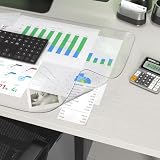

Top 3 picks at a glance
Quick Verdict
For sheer long-term durability, glass wins. A tempered glass desk mat resists scratches, heat, and discoloration far better than PVC and will keep its smooth, hard writing surface for 5 to 10 years or more if you do not chip the edge or drop something heavy on a corner. PVC wins on impact resistance, flexibility, and short-term value. It is lighter, harder to shatter, and much cheaper to replace, but expect visible micro-scratches, slight yellowing, and edge curling within 12 to 24 months of heavy daily use. If you want a buy-once, stays-perfect surface and do not mind the weight and higher upfront cost, choose glass. If you need a lightweight, affordable protector you can roll up, move, or replace without worry, PVC is the more practical choice.
Side by Side
| Feature | Glass Desk Mat | PVC Desk Mat |
|---|---|---|
| Comfort | Hard, completely flat, no give. Excellent for writing and precise mouse control. Cold to the touch at first, can feel hard on wrists without a rest. | Slight cushion and give. More forgiving on wrists and elbows. Surface has a little tack, pen pressure leaves faint impressions over time. |
| Durability | 9H hardness surface resists scratches and will not yellow, warp, or dent. Vulnerable to chips and cracks from hard impacts on edges or corners. | Flexible and shatterproof, resists cracking from drops. Prone to surface scratches, permanent dents, and yellowing from UV and heat over time. |
| Price Range | $45 to $160+ depending on size and thickness. Mid-size tempered glass mats typically run $59.99 to $154.99. | $10 to $36 depending on size and thickness. Common desk pads from $12.59 to $25.99. |
| Maintenance | Wipe with glass cleaner and microfiber. Does not absorb oils or dyes. Stays odorless and resists staining. | Wipe with damp cloth and mild soap. Can trap dust along edges, may develop static, needs flat storage to prevent curl. |
| Space Needed | Heavy and rigid. A 48″ x 32″ panel at 1/5″ thick weighs 28 to 35 lbs and cannot be rolled or folded. Requires a sturdy desk and two hands to move. | Light and flexible. Rolls for storage and weighs 1 to 3 lbs for a typical 36″ x 48″ mat. Easy to reposition and store in a closet. |
| Look | Ultra-clear, high gloss, premium feel. Does not haze or discolor and showcases wood grain underneath. Rounded polished edges. | Clear to slightly frosted when new. Can develop haze, fine scratches, and yellow tint after extended sun exposure. |
| Resale / Longevity | Long useful life of 5-10 years. Retains appearance well if not chipped, which helps resale value of the setup. | Shorter life cycle of 1-3 years before replacement is desired for appearance. Low resale value, treated as disposable. |
| Best For | Permanent home offices, design-focused spaces, anyone prioritizing scratch and heat resistance. | Renters, students, kids’ desks, temporary setups, and budget-conscious buyers who want easy replacement. |
Where Glass Desk Mat Wins
When you talk about glass desk mat vs pvc desk mat durability, tempered glass is in a different league for surface hardness. Most quality options use 1/5″ thick tempered glass with polished, rounded edges and a hardness rating that resists razor scratches, key scuffs, and the daily slide of a mouse or laptop. You can write hard with a ballpoint, rest a hot mug directly on it, and wipe up ink or coffee without leaving a shadow.
That hardness translates into clarity over time. Glass does not yellow, it does not absorb dyes, and it does not develop the fine spiderweb of cleaning scratches that clouds plastic. Products like the Tcyzest Tempered Glass Chair Mat 48″ x 32″, 1/5″ Thick at $59.99 and the larger [Tempered Glass] 46″ x 55″ Glass Office Chair Mat for Carpet at $154.99 show how the category scales: you pay more for a larger tempered panel, but the material itself stays odorless, nonporous, and perfectly flat. Four small non-slip pads are usually all that is needed to keep it stable on hardwood or carpet, and there is no off-gassing smell when you unbox it.
Heat is another clear advantage. PVC begins to soften around 140 to 160 degrees Fahrenheit and can warp or leave a faint ring under a very hot pan or heat gun. Tempered glass handles mug heat, laptop exhaust, and desk lamps without warping or discoloration. For anyone who solders, uses a heat press, or just wants zero worry about a fresh cup of tea, glass is the safer long-term bet.
Glass also cleans faster and stays hygienic. Because it is nonporous, oils from your hands, ink, and food spills sit on the surface. A quick spray and wipe restores the gloss. There is no texture to trap grime and no need for special cleaners.
The trade-off is impact. Hard does not mean unbreakable. A direct hit on a corner or edge from a dropped stapler, scissors, or glass bottle can chip or, in rare cases, shatter a tempered panel into small granular pieces. You also need to respect the weight. A large glass mat can weigh more than your monitor, so moving it for cleaning takes care and a desk that can support it without flexing.
Where Pvc Desk Mat Durability Wins
PVC durability is about forgiveness rather than hardness. A PVC desk mat will not crack if you drop it, bend it, or roll it up for a move. That flexibility is why it is so popular for rentals and shared family desks. If a child drops a toy on it or you knock your chair into it while vacuuming, it bounces back. You can see this resilience in everyday options like the Oterri Clear Writing Desk Pad, 23.6”x 13.7” Heat Resistant Waterproof PVC Round Edge Durable Desk Protect Mat at $12.59 and the larger Yecaye Office Chair Mat for Hardwood Floor, 36″ x 48″ Rolling Chair Mat at $25.99, both of which are designed to be unrolled, used immediately, and moved without tools or help.
PVC is also kinder to the desk underneath from an impact standpoint. It absorbs small shocks and will not chip your desktop if it shifts. For desks with a softer finish, that cushion can actually prevent dents from writing pressure. The anti-static and waterproof claims you see on many PVC mats hold up for normal office use; spills bead up and wipe away if you catch them quickly.
Where PVC shows its limits is surface aging. Even high-quality PVC is much softer than glass. After months of daily mouse use, writing, and sliding objects, you will see fine swirl scratches in the light, especially on clear mats. In sunny rooms, UV exposure gradually adds a yellow or blue-gray haze that is most obvious over white or light wood desks. Heat resistance is moderate for brief contact, but sustained heat can leave a faint impression or slight wave. Dust and pet hair also cling more readily, and the edges on larger mats can lift or curl if the mat was stored rolled for a long time or placed near a heat vent.
The practical advantage of PVC is replacement cost. When it does look tired, you can replace it for well under $30 without rethinking your whole setup. For messy crafts, kids’ homework, or a desk that doubles as a dining table, that disposable durability is a feature, not a flaw.
Cost Over 5 Years
Upfront price favors PVC by a wide margin, but the five-year math often flips depending on how you use your desk.
A tempered glass desk mat typically costs $60 to $160. Assuming you protect the edges, keep it clean, and avoid severe impacts, you should not need to replace it in five years. Even if you add a $10 pack of replacement non-slip pads or a bottle of glass cleaner, your total five-year cost stays close to the initial purchase, roughly $60 to $170. As we head into 2026, that buy-once approach appeals to buyers who want to avoid repeat purchases and waste.
A PVC desk mat typically costs $12 to $36. Under light use, one mat might last two to three years before yellowing and scratching prompt replacement. Under heavy daily use of 6 to 8 hours with a mouse, writing, and occasional heat, many households replace a PVC pad every 12 to 18 months for appearance. Over five years that is three to four replacements, or about $36 to $105 total if you stay in the budget range, and $75 to $145 if you choose larger, thicker PVC mats each time. Add in the minor annoyance of flattening a new mat for 24 to 48 hours after unrolling.
If you value a consistently perfect surface and hate re-buying, glass costs less per year. If you value low upfront spend and the freedom to change sizes or move often, PVC keeps cash outlay low even if you replace it more often.
Which One for Your Home
The right choice depends less on the material spec sheet and more on how your desk lives day to day.
Small Apartment
In a compact apartment, weight and flexibility matter. A PVC mat that you can roll and tuck behind a bookshelf when you need the table for guests is hard to beat. Glass is beautiful in a small space because it visually expands the desk and never needs flattening, but a 30+ lb glass panel is awkward to move in tight hallways and cannot be stored vertically without risk to the edges. Choose PVC if you reconfigure often; choose a small to mid-size glass mat, like a 24″ x 36″ to 30″ x 48″ piece, if your desk stays put and you want a premium, easy-clean surface that makes the room feel larger.
Family With Kids or Pets
For homes with kids, pets, and frequent spills, PVC is the low-stress option. It will not shatter if a toy is thrown, a dog bumps the desk, or a chair tips. Scratches and marker marks are less heartbreaking when the mat costs $12.59 to $25.99 and can be swapped in minutes. Glass can still work for a dedicated adult workspace with a door, but for a shared kitchen desk or craft table, the shatter risk and hard edges make PVC the more forgiving family choice.
Rental
Renters benefit from PVC for two reasons: floor and desk protection without modification, and easy move-out. A PVC desk mat leaves no residue, rolls up for transport, and protects landlords’ desktops from damage that could cost a deposit. Glass is excellent for protecting a desk you own, but its weight can dent a softer rental desk if the mat shifts without pads, and moving a large glass panel between apartments requires careful packing. If you do bring glass to a rental, use all included non-slip pads and lift rather than drag it.
Long-Term Home
If you have a permanent office and a solid wood, veneer, or standing desk you plan to keep for years, glass is the long-term value play. It preserves the desktop underneath without yellowing or texture transfer, looks consistently high-end for video calls, and eliminates the cycle of replacing cloudy plastic. Pair it with a soft wrist rest to offset the hard surface and you get the best durability with everyday comfort. For homeowners who prefer to set up once and not think about it again, glass justifies its higher initial price.
FAQ
Will a glass desk mat scratch my desk?
No, when used correctly. Tempered glass mats sit on small non-slip pads that prevent direct glass-to-wood contact and allow air flow. Keep the pads clean, lift the mat to dust underneath monthly, and avoid dragging the panel across the surface. The glass itself will not scratch the desk, but grit trapped under the pads can if you slide it.
Does PVC really turn yellow?
Clear PVC can develop a faint yellow or gray haze after a year or more, especially with direct sunlight, heat, and frequent cleaning with harsh chemicals. Thicker, higher-quality PVC yellows more slowly, but all PVC is softer and more UV-sensitive than glass. Using a mat away from south-facing windows and cleaning with mild soap and water helps extend clarity.
Which is easier to clean after coffee or ink spills?
Glass is easier. Coffee, pen ink, and permanent marker sit on the nonporous surface and wipe off with standard glass cleaner. PVC is waterproof for quick spills too, but dyes can leave a faint stain if left for hours, and textured PVC can hold ink in micro-scratches that need more scrubbing.
Can I use either mat with a rolling chair?
Both can work, but check the product’s intended use. Small PVC desk pads like a 23.6”x13.7” writing mat are for desktop protection, not for chair rolling. Larger PVC chair mats like a 36″ x 48″ model are made for rolling and often include a studded underside. Tempered glass chair mats rated for rolling, such as the 48″ x 32″ or 46″ x 55″ glass panels, are extremely durable for chairs but are heavy and require flat, stable flooring. Always use the recommended size so casters stay fully on the mat.
