
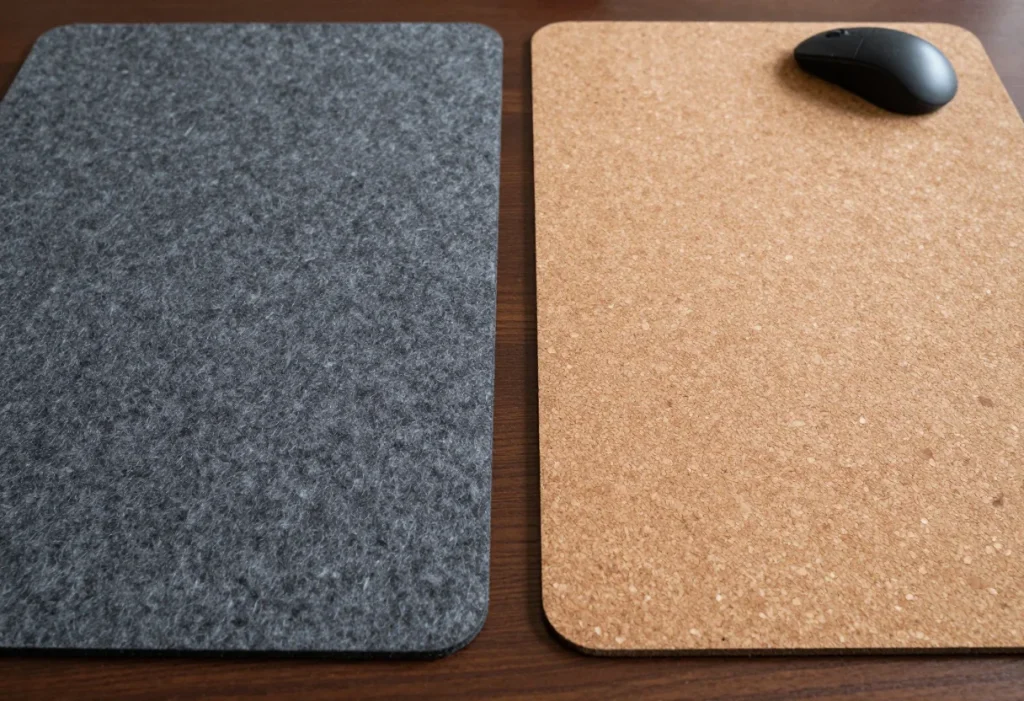
When curating a home office space, the desk pad is no longer just a functional afterthought—it is the foundation of your daily workspace aesthetics, acoustic comfort, and desktop preservation. Choosing between a felt desk mat and a cork desk mat often comes down to a fundamental trade-off: tactile, cozy warmth versus low-maintenance, spill-resistant durability. Both materials offer distinct tactile benefits, but they handle daily wear, liquid accidents, and mouse tracking quite differently.
As remote and hybrid work environments mature into 2026, homeowners are looking for accessories that protect expensive hardwood, veneer, or glass tops while maintaining a polished look. Standard desk mats typically span between 30 and 36 inches in width and 12 to 18 inches in depth, occupying significant real estate under your keyboard, mouse, and daily essentials. Understanding how felt and cork behave under daily strain ensures you invest in the right material for your routine.
As an Amazon Associate we earn from qualifying purchases at no extra cost to you.


Top 3 picks at a glance
Quick Verdict
If you prioritize noise dampening, wrist cushion, and a cozy Scandinavian aesthetic, a felt desk mat is your best match. It softens the physical impact of daily typing and absorbs harsh keystroke sound reflection.
If you frequently drink coffee or water at your desk, need an easily wipeable surface, or prefer a firm backing for writing on single sheets of paper, a cork desk mat is the clear winner. It resists moisture, cleans in seconds, and provides a sleek, natural backdrop.
Side by Side
| Feature | Felt Desk Mat | Cork Desk Mat |
|---|---|---|
| Comfort & Ergonomics | Soft, cushioned warmth; gentle on wrists during long typing sessions. | Slightly firm, flexible support; cool to the touch and stable. |
| Spill & Stain Resistance | Low to moderate; liquids absorb quickly if untreated. | High; naturally hydrophobic, liquids bead on the surface. |
| Maintenance | Requires vacuuming or spot-cleaning with mild soapy water. | Wipes clean effortlessly with a damp microfiber cloth. |
| Acoustic Dampening | Excellent; dampens mechanical keyboard chatter and desk reverberation. | Moderate; offers light impact sound absorption. |
| Writing Surface | Soft; ballpoint pens may pierce through thin single paper sheets. | Firm and smooth; ideal surface for writing and sketching. |
| Mouse Tracking | Smooth for high-DPI optical mice; requires high-density felt weave. | Consistent, precise tracking across standard optical sensors. |
| Price Range | $12 to $35 depending on wool blend vs. synthetic density. | $10 to $28 depending on thickness and backing construction. |
| Typical Thickness | 3mm to 5mm thick. | 2mm to 4mm thick. |
| Best For | Design-conscious working spaces, cold climates, sound dampening. | High-use desks, multi-purpose family spaces, beverage drinkers. |
Where Felt Desk Mat Wins
Felt brings an unmatched sense of warmth and softness to modern home offices. Whether made from natural wool or high-density synthetic fibers, a felt mat acts as a sound-absorbing layer that reduces the acoustic bounce of clackey mechanical keyboards, phone vibrations, and hard desk items. If you conduct frequent video calls or spend hours writing code, the acoustic buffering of a felt mat noticeable reduces ambient clatter.
Beyond sound management, felt provides superior thermal insulation. Cold glass or solid timber surfaces feel substantially warmer under hand when covered by a plush felt pad. Options like the Nordik Felt Desk Mat – Large Felt Desk Pad – Charcoal 35 x 17 inches ($24.97) or the DAWNTREES Felt Desk Mat, Computer Mat for Desk, Dark Gray (36x12Inches) ($14.89) offer expansive, soft coverage that shields wrists from sharp desk edges.
Visually, wool and synthetic felt create a soft, textured aesthetic that grounds computer monitors and brass or wood desk accessories. It breaks up monochromatic, hard surfaces with organic visual depth, instantly elevating minimalist or minimalist-industrial office rooms.
Where Cork Desk Mat Wins
Cork excels in practical durability and physical resilience. Derived from the outer bark of cork oak trees, cork is naturally rich in suberin—a waxy substance that renders the material water-resistant, antimicrobial, and resistant to mildew. Where a drop of dark roast coffee on a felt mat demands immediate stain treatment, a spill on cork simply sits on the surface until you wipe it off with a paper towel.
For individuals who use their desk for tasks beyond typing—such as writing longhand, signing documents, or sketching—cork offers a firm yet slightly forgiving surface. Pens will not puncture through paper as they can on deep felt pads. Products such as the Cork Desk Mat – Dual-Sided Desk Pad for Office and Home – Desk Organization and Accessories (Dark Green, 80cm x 40cm) ($16.99) show how flexible cork can be bound with durable, easily cleaned polyurethane or left raw for a biological, textured look.
In addition, raw cork material, such as the utility-focused Hygloss Cork Sheets – 12 x 18-Inch – 3 mm Thick Cork Sheets , 2 Sheets ($9.54), demonstrates the baseline durability of cork under heavy items. Cork mats will not pill or produce fuzzy lint over time, making them far better suited for setups where objects are frequently dragged across the desktop.
Cost Over 5 Years
Evaluating desk mats over a five-year horizon requires looking at initial purchase prices and replacement intervals based on material wear.
Synthetic or wool-blend felt desk mats cost between $12 and $30 upfront. However, lower-density felt pads are vulnerable to pilling, lint accumulation, and unremovable liquid stains over time. In a high-use home office, an entry-level felt mat may need replacement every 18 to 24 months to maintain a crisp appearance. Over five years, buying two to three felt mats totals approximately $35 to $75.
Cork desk mats generally cost between $10 and $25. Because cork is naturally resistant to moisture absorption and staining, its aesthetic integrity remains intact significantly longer under normal use. A single, quality cork desk pad can easily last three to five years without degrading, provided it is kept away from extreme dry heat that could cause cracking. Over five years, total cork pad expenditure averages $15 to $30, making cork the slightly more economical long-term investment.
Which One for Your Home
Small Apartment Desk Setups
In compact apartments where a home office desk often doubles as a dining surface or hobby station, a cork desk mat is the pragmatic choice. Its wipe-clean surface handles lunch spills and drink condensation effortlessly. You can move seamlessly from laptop work to meals without worrying about lingering food odors or dark liquid stains settling into fabric fibers.
Family Homes with Kids and Pets
If your workspace is accessible to young children or climbing pets, felt mats can quickly become magnets for pet hair, dust, and craft glue. Cork desk pads win definitively in family settings. Animal fur does not cling to cork, craft materials peel off easily, and dust can be removed with a quick wipe. Furthermore, cork’s inherent antimicrobial properties add an extra layer of hygiene in busy households.
Rental Properties and Flexible Workspaces
For renters looking to transform temporary work nooks without making permanent alterations, felt desk mats offer instant cosmetic warmth and sound reduction. Thin apartment walls benefit from the sound-softening qualities of felt, which dampens keyboard click noise and prevents items from echoing when set down on hollow interior furniture.
Long-Term Home Offices
In dedicated, climate-controlled home offices featuring solid hardwood or custom built-in cabinetry, the decision comes down to personal workflow style. Choose a high-density, tailored felt mat if you prioritize wrist ergonomics and visual luxury during video calls. Choose a smooth, dual-sided cork desk mat if you maintain a strict pen-and-paper organization system and desire low-maintenance care.
FAQ
Do felt desk mats scratch wooden desks?
No, high-quality felt desk mats do not scratch wood surfaces. In fact, felt is widely used on the bottom of furniture specifically to protect floors and tabletops from scuffs. However, ensure no hard debris or grit becomes trapped beneath the felt mat, as ground-in dirt can act like sandpaper when the mat shifts under hand pressure.
Can you use an optical mouse directly on a cork desk mat?
Yes, modern optical and laser mice track reliably on smooth cork surfaces. The organic micro-texture of cork gives optical sensors precise surface tracking data. However, if the cork surface is exceptionally rough or unfinished, a dedicated ultra-smooth mouse pad laid on top of the cork pad may offer a gliding feel favored by graphic designers and gamers.
How do you clean coffee spills off a felt desk pad?
Blot—do not rub—the spill immediately using a dry microfiber cloth or paper towel to extract as much liquid as possible. Dab the stained area with a damp cloth mixed with a few drops of mild dish soap or wool detergent. Avoid scrubbing aggressively, which disrupts the fabric fibers and causes pilling. Allow the mat to air-dry completely on a flat surface before placing your laptop back down.
Are cork desk mats eco-friendly compared to synthetic felt?
Natural cork is one of the most sustainable materials available because harvesting cork bark does not harm or require cutting down the cork oak tree; the bark regenerates naturally every nine years. In contrast, many budget felt mats are constructed from synthetic polyester or recycled PET fibers. While recycled synthetic felt is resourceful, natural cork offers superior biological biodegradability at the end of its life cycle.


