
The best wah pedals for reliable live use are the Dunlop Cry Baby 535Q, Xotic XW-1, Vox V847-A, Ibanez WH10V3, and Morley 20/20 Power Wah 2: each offers a different balance of sweep range, toe-switch behavior, resistance, bypass design, noise control, and chassis durability.
As an Amazon Associate we earn from qualifying purchases at no extra cost to you.


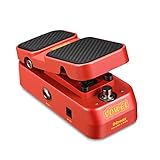
Top 3 picks at a glance
Quick comparison of the best wah pedals
| Pedal | Best for | Controls and switching | Bypass and power | Typical market range |
|---|---|---|---|---|
| Dunlop Cry Baby 535Q | Players who want one wah to cover many styles | Adjustable Q, frequency range, volume boost, toe switch | Buffered bypass; 9V battery or adapter | Usually $170–$220 |
| Xotic XW-1 | Premium control over sweep and voicing | Bias, treble, bass, wah level, frequency, toe switch | True bypass; 9V–18V adapter or battery | Usually $200–$260 |
| Vox V847-A | Classic vocal-style wah tones | Fixed voicing, toe switch | Buffered bypass; 9V battery or adapter | Usually $120–$170 |
| Ibanez WH10V3 | Modern, aggressive tones and compact boards | Range, depth, and gain controls; toe switch | True bypass; 9V adapter or battery | Usually $140–$190 |
| Morley 20/20 Power Wah 2 | Players who dislike mechanical toe switches | Switchless optical activation and level control | Buffered design; 9V adapter or battery | Usually $180–$230 |
Prices are broad 2026 market ranges and vary with regional availability. The most important difference is not the number of controls: it is how predictably the pedal turns on, holds its sweep, and sits in a noisy live signal chain.
Best overall: Dunlop Cry Baby 535Q
The Cry Baby 535Q remains one of the safest choices for a guitarist who needs several usable wah sounds without carrying multiple pedals. Its adjustable frequency range lets you move from a lower, throaty sweep toward a sharper, more cutting response, while the Q control changes how concentrated the resonant peak feels. A volume boost is useful when the wah needs to remain audible during a dense chorus or high-gain section.
Its traditional toe switch is familiar and easy to service, but it requires a deliberate press at the front of the treadle. That can be an advantage on stage: accidental activation is less likely than with a switchless design. Pedal resistance is moderate and can be adjusted during maintenance, making it possible to keep the treadle from drifting while still allowing quick rhythmic movement.
The trade-off is its buffered bypass. The buffer can help compensate for long cable runs, but it is not completely invisible in every rig. If the wah is always on a pedalboard with a tuner, buffer, or active switching system, this is rarely a problem. If your amplifier reacts strongly to a pure guitar-to-amp connection, compare it with a true-bypass option.
Best premium adjustable wah: Xotic XW-1
The Xotic XW-1 is the strongest choice when a player wants to tune a wah to a particular guitar, amplifier, and stage volume. Its external controls provide unusually direct access to the pedal’s frequency range, output level, bass, treble, and bias. That makes it easier to correct common problems: excessive ice-pick highs, a weak heel-down position, or a wah that disappears under distortion.
Its true bypass suits rigs where the pedal spends most of the song switched off. The enclosure is compact but sturdy, and the treadle has a more controlled, refined feel than many entry-level wahs. That resistance is useful for slow funk accents and sustained vocal sweeps because the treadle is less likely to move from vibration.
The XW-1 rewards setup time. Start with the frequency and Q-like voicing near their middle positions, set the wah level at unity, and adjust only one control at a time. Increasing the treble can restore definition, but it can also make high-gain noise more obvious. Its 9V–18V operation offers headroom flexibility, but use the manufacturer’s specified polarity and a regulated supply; a higher voltage is not automatically better.
Best classic tone: Vox V847-A
The Vox V847-A is a strong match for players who want a recognizable, mid-focused wah without a menu of adjustments. Its sweep is voiced for a pronounced vocal character, making it effective for blues leads, classic rock rhythm parts, and expressive single-note lines. Because the voicing is fixed, it is quicker to operate and harder to set badly.
The toe switch requires a firm press, and the conventional housing tolerates normal gigging well. The pedal uses a buffered bypass, which can help when the wah is placed early in a long cable chain. However, the buffer and fixed voicing offer less flexibility than the 535Q or XW-1. Players using very bright pickups or extreme modern gain may find the upper sweep too pointed and may need to adjust the amplifier rather than the pedal.
Best for modern, aggressive sweep: Ibanez WH10V3
The Ibanez WH10V3 has a distinct, more forceful character than a traditional Cry Baby or Vox. Its range and depth controls make it useful for sharp rhythm figures, alternative rock, and heavily saturated sounds where a narrow, obvious filter movement cuts through better than a smooth vintage sweep.
It uses a standard toe switch and true bypass, so the pedal can be removed from the signal path without adding its active circuit when disengaged. The enclosure is lighter and more compact than many traditional wahs, which helps on crowded pedalboards but gives it a less tank-like feel than a large metal housing. Protect it from being used as a step between songs or from poorly secured board mounts.
Noise is usually less about the WH10V3 itself than about gain and placement. Put it before distortion for the classic resonant sweep. Putting it after distortion produces a more synthetic filter effect but also magnifies hiss and power-supply noise.
Best switchless design: Morley 20/20 Power Wah 2
The Morley 20/20 Power Wah 2 is the practical pick for performers who frequently engage and disengage wah while moving around the stage. Its optical, switchless system activates as the treadle moves, eliminating the hard toe press that can be awkward during fast transitions.
That convenience changes the technique. A switchless pedal can activate if your foot rests slightly forward, so it is important to return the treadle fully to its heel position when finishing a phrase. The optical mechanism avoids a conventional mechanical toe switch, but it does not eliminate maintenance: clean the treadle area, secure the pedal, and check its activation threshold before a show.
Morley’s larger body is stable underfoot and generally reassuring for live use. It is less compact than the Ibanez and has a different feel from a traditional pivoting wah. Choose it for predictable activation rather than for a vintage circuit imitation.
How to choose by live-performance problem
| Your situation | Priority | Best fit |
|---|---|---|
| One pedal must cover funk, blues, rock, and metal | Wide adjustable sweep and output control | Dunlop Cry Baby 535Q |
| Your wah is too bright or disappears in the mix | Independent voicing and level adjustment | Xotic XW-1 |
| You want familiar vintage-style operation | Simple controls and vocal midrange | Vox V847-A |
| You use fast, aggressive rhythm patterns | Pronounced modern filter movement | Ibanez WH10V3 |
| You dislike toe switches or have limited foot mobility | Switchless optical activation | Morley 20/20 Power Wah 2 |
Sweep range, resistance, and toe-switch checks
Do not judge sweep quality only by how dramatic the pedal sounds at full travel. A useful wah has a controllable heel-down position, a clear vocal center, and enough treble at toe-down to remain expressive without becoming painfully sharp. Before a show, test the sweep with clean and distorted sounds. Distortion compresses dynamics and can make a narrow resonant peak seem more responsive than it really is.
Pedal resistance should match your playing. Lower resistance suits quick rhythmic rocking and exaggerated “cocked wah” effects. Higher resistance helps slow, sustained sweeps and prevents stage vibration from moving the treadle. If the treadle feels gritty, loose, or uneven, do not spray general lubricant into the housing. Inspect the pivot and use only the service method recommended for that model.
A mechanical toe switch should engage without requiring you to stomp hard enough to move the pedalboard. If activation is intermittent, check the switch, the treadle travel, and the board mounting before blaming the cable. For a switchless pedal, verify that the heel-down rest position reliably turns the circuit off.
Bypass, noise, and power planning
True bypass is useful when a pedal is off for long periods and you want minimal circuit interaction. Buffered bypass can be preferable with long cables because cable capacitance removes high frequencies; a buffer restores drive capability, although its tonal response may not suit every amplifier. Neither design is automatically superior.
For power, calculate a small safety margin instead of matching the supply exactly. For example, if a board contains five pedals rated at 20 mA, 35 mA, 45 mA, 60 mA, and 100 mA, the total is:
20 + 35 + 45 + 60 + 100 = 260 mA.
A 300 mA output technically covers that load, but a 500 mA isolated output gives 240 mA of headroom for startup demand and measurement tolerances. Confirm polarity, voltage, and whether each output is isolated. A noisy daisy chain can make a wah sound faulty when the real problem is shared digital-pedal noise.
Frequently asked questions
Can I use these wah pedals with a high-gain setup?
Yes, each can be used with high-gain sounds, but distortion changes how the sweep and noise behave. The Cry Baby 535Q can remain audible with its volume boost, while the Xotic XW-1 can address a weak or overly bright response through its controls. The Ibanez WH10V3 gives an aggressive filter effect, though gain can magnify hiss and power-supply noise.
Where should a wah pedal go in my signal chain?
Place the wah before distortion for a classic resonant sweep. Placing it after distortion creates a more synthetic filter effect, but it can also magnify hiss and power-supply noise. The article also notes that bypass design matters: true bypass removes the pedal’s active circuit when disengaged, while a buffer can help compensate for long cable runs.
Do these pedals need a battery or an adapter?
Most of these pedals can use either a battery or an adapter, although the Xotic XW-1 also supports operation from 9V to 18V. Use the manufacturer’s specified polarity and a regulated supply. A higher voltage is not automatically better. The Ibanez WH10V3 and Morley 20/20 Power Wah 2 are listed as using a 9V adapter or battery.
How can I stop a wah treadle from moving during a performance?
Choose higher pedal resistance if you need the treadle to stay in place during slow sweeps or stage vibration. Lower resistance is better for quick rhythmic rocking and cocked-wah effects. If the treadle feels loose, gritty, or uneven, inspect the pivot and follow the model’s recommended service method rather than spraying general lubricant into the housing.
What should I check if a mechanical toe switch works intermittently?
Check the switch, treadle travel, and pedalboard mounting before blaming the cable. The switch should engage without requiring a hard stomp that shifts the board. A deliberate toe press can reduce accidental activation, but the treadle must still travel correctly. For a switchless pedal, return the treadle fully to the heel position when finishing a phrase.
Final recommendation
Choose the Dunlop Cry Baby 535Q if you need the broadest practical range, the Xotic XW-1 if detailed adjustment is worth the higher price, and the Vox V847-A if a classic fixed voice is more valuable than flexibility. Pick the Ibanez WH10V3 for a more aggressive modern sweep, or the Morley 20/20 Power Wah 2 when switchless operation is the deciding factor. For dependable live performance, prioritize a stable treadle, reliable activation, sensible bypass behavior, and a power supply with headroom over an impressive list of controls.


