Searching for a running watch designed for women usually comes down to three things that have little to do with the word “women.” Does the watch fit a smaller wrist without looking like a brick? Does it track the run accurately, with real GPS and not a phone-dependent guess? And does it give you the kind of feedback you want, whether that is a plain stopwatch for race day or training suggestions that build a plan? The answers separate a casual walker’s gadget from a tool for a runner chasing a 10K.
This guide covers five watches that span the range: two Garmin Forerunner models with built-in GPS, a Timex Ironman digital chronograph for runners who prefer simplicity, a Golden Hour digital sport watch with a rose-gold case, and a feature-packed budget smartwatch. All comparisons stick to what each title states: case size, GPS, battery claims, and training features. Color variants of the same Golden Hour and duplicate Garmin Forerunner 55 listings are treated as one product each.
Our Top Picks

Top 3 picks at a glance
Quick Picks
As an Amazon Associate we earn from qualifying purchases at no extra cost to you.




| Product | Best for | Key spec from the title |
|---|---|---|
| Garmin Forerunner 165 | Serious training on a smaller wrist | 43mm, built-in GPS, training and recovery features |
| Garmin Forerunner 55 | First GPS running watch | GPS, daily suggested workouts, up to 2 weeks battery |
| Timex IRONMAN Transit 33mm | Simple intervals and race timing | 33mm, 100-hour chronograph, 10-lap memory |
| Golden Hour Digital Chronograph | Style-forward workouts | Waterproof, digital chronograph, rose-gold case |
| DIVOAZBVO Smartwatch | Everyday wear with many sports modes | 120 sports modes, 1.83-inch HD display, IP67 |
How to Choose
Case size and comfort
Watch size is the first filter. A 43mm case, like the Forerunner 165, sits comfortably on many wrists, and a 33mm case, like the Timex Ironman Transit, suits small wrists especially well. Larger smartwatch faces, such as the 1.83-inch display on the DIVOAZBVO, show more information but look bigger on the arm. Check the strap material as well: silicone is easy to rinse after a sweaty run, and a loop that does not chafe matters over a 90-minute effort. Smaller wrists also benefit from shorter strap lengths and extra holes, so confirm the strap range on the product page before assuming it will fit. Sizes for bands are often listed in millimeters of wrist circumference.
GPS accuracy and where it comes from
Built-in GPS records distance, pace, and route without carrying a phone. The Garmin Forerunner models list it directly. Basic digital watches rely on timing only, which is fine on a track or treadmill but does not tell you outdoor pace. Lower-tier smartwatches may use phone GPS or less accurate sensors, so confirm the source before expecting reliable splits. For race planning, built-in GPS is the feature to put first. If you run in tree-covered trails or between tall buildings, expect some drift on any watch, and use lap buttons to correct your splits when needed.
Battery life and training features
The Forerunner 55 is listed with up to two weeks of battery life per the listing, with less to be expected when GPS is running. Treat battery numbers as best-case. Look at the training tools: daily suggested workouts, recovery guidance, and heart-rate zones help beginners structure a week, while advanced users want interval alerts and lap memory. Think about how you actually train: a plan with set easy days and hard days benefits from recovery guidance, whereas a casual runner may only look at pace and total time. A chronograph with 10-lap memory is enough for track repeats if you do not need an app.
Water resistance, notifications, and what to ignore
Water resistance matters for rain and sweat, and every watch here is waterproof or water-rated to some degree, but swimming claims should be verified. Ignore the count of sports modes; 120 modes sounds impressive, yet most runners use two or three. Budget smartwatches often cut corners on GPS accuracy, software polish, and long-term support, so weigh features against dependability, not against the number of options. Water resistance ratings such as IP67 mean protection from splashes and brief immersion, which is different from a rating meant for lap swimming.
The 5 Best Options
Garmin Forerunner 165
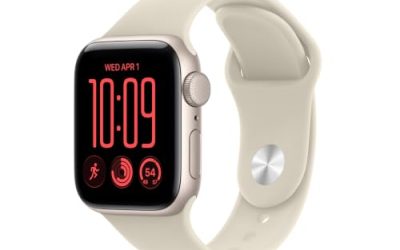
The Forerunner 165 is a 43mm running smartwatch in a Whitestone color, with built-in GPS for distance, pace, and speed, plus essential training and recovery features. It is aimed at runners who want data-driven training in a case size that fits many wrists. A runner moving up from a basic tracker, who now cares about pacing a half marathon and knowing when to rest, is the person this watch is built around.
- Strength: built-in GPS removes the need to carry a phone on runs.
- Strength: the training and recovery tools suit runners following a plan.
- Trade-off: it is the most feature-rich option here, which means a steeper learning curve.
Skip it if you only want a stopwatch, or if you prefer a watch that looks like regular jewelry for daily wear. It is a training device first and an accessory second, and runners who value that focus will like it. Pair it with the companion app on a phone to review the week, and use the recovery prompts to decide when an easy day is wiser than a hard one.
Garmin Forerunner 55
The Forerunner 55 is a GPS running watch with daily suggested workouts and up to two weeks of battery life per the listing. It is a simple entry-level GPS running watch, and it adds structure for beginners. Someone returning to running after a break, or a walker beginning to jog, will find that the prompts take the guesswork out of what to do on a given day.
- Strength: daily suggested workouts give new runners a plan without a coach.
- Strength: built-in GPS and a long listed battery life reduce charging chores.
- Trade-off: it has fewer premium training metrics than the 165.
Skip it if you want recovery tools and a display more modern than the entry level offers. It suits someone who just wants to start running and see progress. The daily suggestions make it a sensible gift for a friend who keeps saying she wants to start.
Timex IRONMAN Transit 33mm
The Ironman Transit is a 33mm watch with a chrome-tone top ring and black resin strap, featuring a 100-hour chronograph, 10-lap memory, a customizable alarm, and a dual time zone. It targets runners who want a durable, uncomplicated timing tool. The dual time zone is a small bonus for travelers who run on the road, and the resin strap shrugs off sweat and rain.
- Strength: 33mm suits small wrists and stays unobtrusive under a sleeve.
- Strength: 10-lap memory and a long chronograph handle track workouts.
- Trade-off: the listing does not mention GPS, so outdoor pace tracking is manual.
Skip it if you want route maps, heart-rate data, or phone alerts. It rewards runners who train by feel and a stopwatch. Runners who like a plain digital readout and a physical button to mark each lap will feel at home with it.
Golden Hour Women’s Digital Chronograph
The Golden Hour is a waterproof sport watch with a digital chronograph, a silicone strap, and a rose-gold case. Colors include white and black, and they are all the same watch in different finishes. It is the type of watch you can wear to a spin class, a walk, or a casual dinner without changing it, and the digital readout keeps timing simple.
- Strength: the rose-gold case suits runners who want a stylish look beyond the gym.
- Strength: waterproof construction and a silicone strap handle sweat and rain.
- Trade-off: the title lists no GPS or heart-rate tracking.
Skip it if you need route tracking or training analytics. It is better for walkers, gym-goers, and casual joggers who want timing and style. If you later decide to get serious, it still makes a decent backup watch for rest days.
DIVOAZBVO Women’s Smartwatch
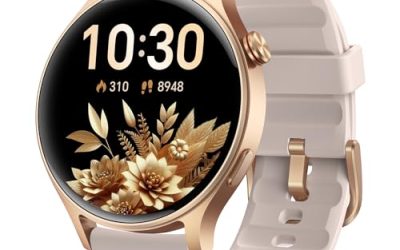
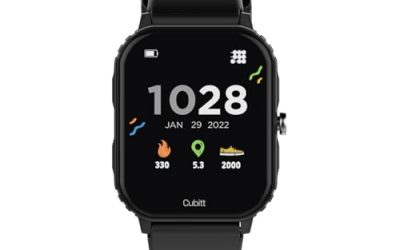
The DIVOAZBVO is a feature-packed smartwatch with 120 sports modes, a 1.83-inch HD display, heart rate and sleep monitoring, IP67 water resistance, and Bluetooth calling. It is meant for people who want fitness tracking and phone features in one device. Someone who wants to answer a call during a walk, glance at sleep data in the morning, and log a jog on the same device is the intended buyer.
- Strength: a large display shows more data at a glance.
- Strength: heart rate, sleep tracking, and calls add everyday value.
- Trade-off: the title does not state built-in GPS, so run-distance accuracy may depend on the phone.
Skip it if you need precise pace data or a small face. It is more of a lifestyle smartwatch than a dedicated running tool. Treat its running numbers as rough guides and compare them against a known distance, such as a measured track, before trusting them.
Which One Fits Your Situation
You are training for a 10K or half marathon
The Garmin Forerunner 165 supports a structured plan with built-in GPS and recovery features. It is the sensible choice for a runner who wants to see progress.
You just started running
The Garmin Forerunner 55 offers daily suggested workouts and simple GPS tracking without overwhelming you. Run by effort first and look at the numbers afterward. A few weeks of consistent easy runs will teach more than any metric.
You have a small wrist and a minimalist mindset
The Timex Ironman Transit 33mm is the compact option. It measures time and laps, and it stays quiet while you focus on your stride.
You want a stylish watch for runs and everyday wear in 2026
The Golden Hour in rose gold suits the gym and the office. If you also want heart-rate and call features, the DIVOAZBVO smartwatch covers that ground.
Common Mistakes
- Choosing a watch without built-in GPS and expecting accurate outdoor pace.
- Judging a watch by the number of sports modes instead of the two you will use.
- Ignoring case size and strap length on a smaller wrist.
- Expecting the best-case battery claim during daily GPS runs.
- Buying a style watch and expecting it to replace a dedicated running tracker.
Related guides
- What Is The Best Budget Most Responsive Gaming Mouse Wired
- Low Latency Gaming Headphones Usb-C 2.4 Ghz Wireless
- Low Latency Gaming Headphones Usb-C Dongle 2.4 Ghz
Frequently Asked Questions
Do I need GPS on a running watch?
For outdoor pace and distance without a phone, yes. For treadmill and track work, a basic chronograph may be enough.
Is a smaller watch less accurate?
No. Accuracy depends on sensors and GPS, not case size. A 33mm or 43mm case can be just as capable as a larger one. If a watch feels too large on the wrist, it will also bounce more during a run, which is a comfort issue rather than an accuracy one.
How long should a running watch battery last?
Headline figures are usually quoted for light use, and GPS recording drains a battery faster. Plan for charging after a few long runs, and treat headline numbers as best-case. If you run most days, a model with a longer listed battery life will mean fewer evenings spent tethered to a charger.
Can I swim with these watches?
Waterproof ratings differ. Pool use needs a swim-rated watch. Check the exact rating for each model before swimming, and rinse the strap after salt water or sweat.