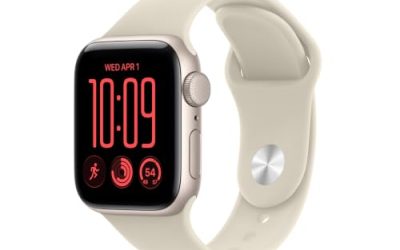
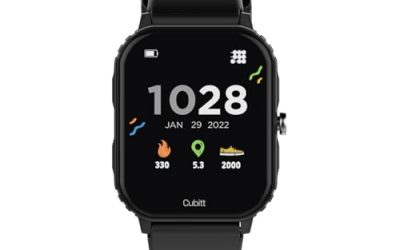
Some days you run, some days you ride, and every few weeks a swim or a trail day gets thrown in. That mix is what separates a multisport GPS watch from a plain running watch: one device has to switch profiles, keep satellite lock in different conditions, and stay alive through a long training block without a charger in the bag. If your week looks like a triathlon schedule or a general outdoor routine, the shopping question is how much watch you need, because the price tiers climb fast and the extra features are not equally useful.
This guide narrows the field to five watches from the listings: three premium Garmin models with AMOLED displays, one rugged Garmin built around solar charging, and a generic military-style watch for buyers who want GPS and sport tracking at a fraction of the cost. Everything below is judged from the listed specs only, with no claims about accuracy or battery life beyond what the titles state, so use it to build a shortlist for 2026 and then confirm the details on the maker’s page.
Our Top Picks

Top 3 picks at a glance
Quick Picks
As an Amazon Associate we earn from qualifying purchases at no extra cost to you.


| Product | Best for | Key spec from the title |
|---|---|---|
| Garmin fenix 9 Pro | Remote adventures with messaging | Titanium, 51mm, inReach connectivity, AMOLED display |
| Garmin epix Pro (Gen 2) | Bright display on a smaller case | Sapphire, 47mm, AMOLED, built-in flashlight |
| Garmin fenix 8 | Divers and all-round premium use | AMOLED, GPS, built-in flashlight, dive-rated |
| Garmin Instinct 3 Solar | Rugged, outdoor, charge-light use | 45mm, solar charging, metal-reinforced bezel |
| Military Smart Watch | Budget GPS with many sport modes | Built-in GPS, 1.43″ AMOLED, 3ATM, 178 sport modes |
How to Choose
Look for real multisport profiles
A multisport watch should offer separate profiles for running, cycling, and swimming, and ideally a chained triathlon mode that moves between them without stopping the clock. Premium Garmin titles use the phrase “Multisport” directly. Cheaper watches advertise large numbers of sport modes, but a count like 178 mostly signals variety in labels, not depth of metrics, so look for what each mode records beyond a timer. Ask three questions: does the swim profile count laps, does the bike profile pair with outside sensors, and can the watch save a custom multi-sport sequence? If the spec sheet is silent on any of them, assume the feature is basic.
Match the display and case size to your wrist
AMOLED screens are brighter and easier to read in the sun, while solar or memory-in-pixel screens favor battery life. Case size matters for comfort: the 43mm to 51mm range here goes from slim to large, and a 51mm titanium watch can feel oversized on a small wrist during sleep tracking. Check the lug width and strap options before committing to the largest case. A good rule is to wear a cardboard cutout of the case diameter on your wrist for a day; if it catches on sleeves or jackets, step down a size.
Think about connectivity and safety
If you head out of cell range, satellite messaging is a real feature. The fenix 9 Pro title lists inReach connectivity, which relies on a subscription separate from the watch. Without that need, a built-in flashlight, a compass, and reliable GPS are enough. A 3ATM rating means splash and short immersion protection, which is not the same as swim-lane use. For regular pool or open-water sessions, look for a higher water rating on the maker’s page, and treat dive-rated claims as a separate category that only some premium models make.
Ignore feature counts, mind the ecosystem
Do not pay extra for a long list of health tiles you will never open. Heart rate, sleep, and recovery screens are on nearly every watch here, so the real difference lies in GPS reliability and durability. Budget watches cut corners on app polish, map support, and long-term software updates. Garmin watches plug into a mature training platform and a wide range of third-party apps, which counts when you want years of history in one place. Before buying any lesser-known brand, check how often its companion app updates and whether it exports workout files you can move to another service later.
The 5 Best Options
Garmin fenix 9 Pro
This titanium 51mm watch combines an AMOLED display with inReach connectivity, aimed at athletes who disappear into the backcountry and still want to message home. A Solar charging variant exists in the listings, which is worth comparing if your weeks are mostly outdoor. It is the flagship choice for someone who sees the watch as safety gear as well as a trainer. The titanium build and large case also suggest it is meant to be worn daily through rough conditions rather than saved for race day.
- Strength: Titanium case with a premium multisport GPS feature set.
- Strength: inReach connectivity for communication beyond cell coverage.
- Trade-off: 51mm is large and sits at the premium price tier, with satellite service costing extra.
Skip it if you never leave cell range or you have a small wrist.
Garmin epix Pro (Gen 2) Sapphire
The epix Pro in 47mm pairs a Sapphire lens with an AMOLED display and a built-in flashlight, positioned as a high-performance smartwatch for athletes who want a vivid screen without the biggest case. It suits runners and cyclists who check pace data in bright light and train most days, and it sits in the premium tier alongside the fenix family. The Sapphire lens is the detail to notice for anyone who has scratched a watch face against rock or a bike frame.
- Strength: AMOLED display with a Sapphire lens for scratch resistance.
- Strength: Built-in flashlight helps with early runs and campsite chores.
- Trade-off: It is a previous-generation model, so newer lineups may have newer features.
Skip it if satellite messaging or solar charging matters.
Garmin fenix 8
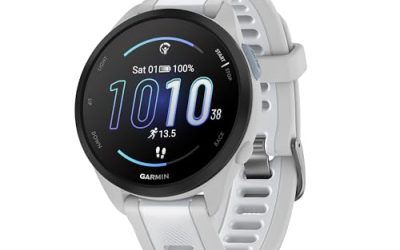
The fenix 8 comes in a 43mm Sapphire edition and a 51mm black edition, and the titles call out AMOLED, GPS, a built-in flashlight, and dive-rated construction. That size choice is its edge: smaller wrists can take the 43mm model, and larger wrists the 51mm. It is a fit for triathletes who also dive or snorkel and want one watch for it all, and for anyone who wants a long-term daily companion that handles flashlight duty, navigation, and workout tracking in a single device.
- Strength: Dive-rated build suits water-heavy multisport schedules.
- Strength: Two case sizes cover more wrist types than most flagships.
- Trade-off: Premium pricing for features a casual runner will not use.
Skip it if you only run and want a lightweight, lower-cost watch.
Garmin Instinct 3 Solar
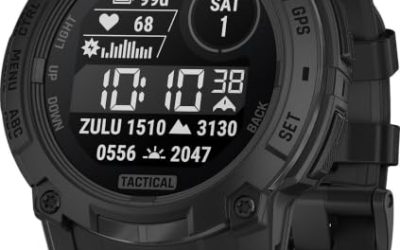
A 45mm rugged GPS smartwatch with solar charging, a metal-reinforced bezel, and 24/7 health monitoring. It is meant for hikers, hunters, and trail runners who value toughness and charging independence over a glossy screen. It sits a tier below the fenix and epix watches, which makes it the sensible midpoint for outdoors-focused buyers who do not want to pay for a flagship screen they will rarely look at in full sun anyway.
- Strength: Solar charging reduces how often you need the cable.
- Strength: Metal-reinforced bezel adds durability to a rugged design.
- Trade-off: The title does not mention an AMOLED screen, so expect a simpler display than the premium models.
Skip it if you want a bright, map-heavy display for road racing.
Military Smart Watch for Men
This generic watch lists built-in GPS, Bluetooth calling, 3ATM water resistance, a 1.43-inch AMOLED screen, a compass, a flashlight, and 178 sport modes. It is the budget-tier entry for beginners who want to try GPS tracking without a large outlay. Think of it as a gateway before committing to a training ecosystem, or as a spare watch for rough jobs where scratching a premium device would hurt. The 178-sport figure comes from the listing and should be read as a marketing count.
- Strength: AMOLED display and GPS at the lowest cost tier here.
- Strength: Bluetooth calling and flashlight add everyday convenience.
- Trade-off: Brand support, app depth, and long-term updates are unproven compared with Garmin.
Skip it if you plan to chart serious training load over years.
Which One Fits Your Situation
You train for triathlons and want one premium watch
Garmin fenix 8 is the safer all-round pick, especially if open-water practice or diving appears in your plan. Pick the case size that fits your wrist, and remember that training across three sports will push you to charge more often than a single-sport routine would.
You spend weekends far from cell service
Garmin fenix 9 Pro makes the most sense because of its inReach connectivity. Budget for the monthly service before you buy, and test the messaging setup at home before a trip rather than on the trailhead.
You want a vivid display without the largest case
Garmin epix Pro (Gen 2) in 47mm balances screen quality and size, and the flashlight is a bonus on early mornings. It also suits a runner who wants a premium display but finds the 51mm cases too bulky.
You hike hard and hate chargers
Garmin Instinct 3 Solar is built for that routine. If cost is the main limit and you only need basics, the Military Smart Watch is the experiment-friendly option.
Common Mistakes
- Choosing the largest case for bragging rights and then leaving the watch off at night because it is uncomfortable, which defeats sleep and recovery tracking.
- Paying for satellite messaging hardware without budgeting for the subscription that activates it.
- Treating sport mode counts as a quality measure when depth of metrics matters far more.
- Assuming 3ATM means pool-ready, when it generally indicates splash and brief immersion only.
- Ignoring the software ecosystem and getting stuck with an app that stops updating after a year, taking your training history with it.
Related guides
- What Is The Best Budget Most Responsive Gaming Mouse Wired
- Low Latency Gaming Headphones Usb-C 2.4 Ghz Wireless
- Mechanical Gaming Keyboards Competitive Pc Gaming
Frequently Asked Questions
What makes a GPS watch multisport instead of just running?
Multisport watches provide profiles for several activities and often a triathlon mode that chains swim, bike, and run in one session. Running-only watches focus on pace and cadence for a single sport.
Is AMOLED better than a transflective screen for sports?
AMOLED looks sharper and brighter indoors and in shade, while solar and transflective displays tend to stretch battery life. The right choice depends on whether you charge weekly or want to go longer between sessions, and on how often you read the screen in direct sunlight during races.
Do I need a premium watch to start multisport training?
No. A mid-tier or budget watch with reliable GPS and basic multisport profiles is enough to begin. Upgrade when you outgrow the metrics or want more durable materials, and resell or hand down the first watch to a friend who is just starting out.
Does a 51mm titanium watch feel too heavy?
Titanium keeps weight down relative to steel, but a 51mm case is still wide. Try one on or check the dimensions against your wrist before you commit, and consider the 43mm fenix 8 if the largest cases feel like a stretch.