The word that matters in “basic running watch” is basic. It implies a buyer who wants to know how long a run took, maybe how many laps they logged, and does not want to charge a device every other night, scroll through a notification feed, or learn an app. For that runner the real decision is between a simple digital timer with a lap memory and a step up to a GPS watch that tracks distance and pace without carrying a phone. Both camps are represented here, and the right choice comes down to whether distance data is worth added complexity.
This guide is for new runners, return-to-fitness runners, parents buying a first sports watch for a teenager, and experienced runners who want a cheap backup for race day. We compare the features written into each product title, sort them into stopwatch-only and GPS tiers, and point out where a lower-priced model quietly cuts corners. Nothing here relies on unlisted specs, so any claim about battery life, accuracy, or software is limited to what the titles themselves state.
Our Top Picks
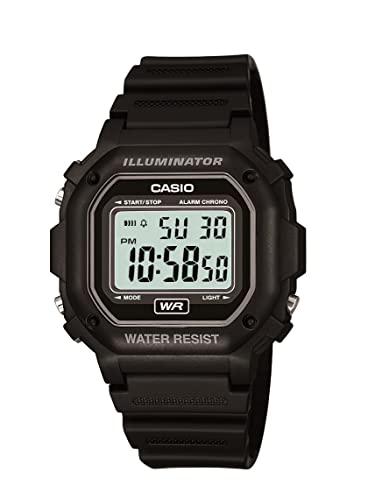 Casio Men's F108WH Illuminator Collection Black Resin Strap6 x 6 x 3 inches0.2 poundsCheck on Amazon


Top 3 picks at a glance
Quick Picks
As an Amazon Associate we earn from qualifying purchases at no extra cost to you.



| Product | Best for | Key spec from the title |
|---|---|---|
| Beeasy 49mm Digital | Feature-rich budget timer | 50M, 49mm, stopwatch, countdown, alarm, dual time |
| Timex Ironman Classic 30 | Lap-heavy training sessions | 38mm, 100-hour chronograph, 30-lap memory |
| moutarlier GPS Running Watch | Entry-level GPS tracking | Distance, average pace, 5ATM, music control |
| Garmin Forerunner 55 | Dedicated GPS runners | GPS running smartwatch |
| Casio F108WH | Simple everyday timer | Illuminator collection, resin strap |
| HANPOSH Ultra Thin | Minimalist look, large face | Ultra thin, LED screen, backlight |
| Beeasy 44mm Silicone | Smaller wrists, light feel | 44mm, 50M, silicone, ultra-thin |
| Casio F91W-1 | Classic minimalist runner | Vintage resin strap digital sport watch |
How to Choose
Stopwatch only or GPS
A digital sports watch times your runs, nothing more. You start it, stop it, and read the split. A GPS watch adds distance, pace, and a route record, which is what most runners mean when they say they want to track progress. If you run the same loop each day and know its length, a stopwatch is enough. If you change routes, run trails, or train toward a pace target, GPS is worth the extra step. Remember that GPS models need regular charging, while many simple digitals run for a long time on a coin cell.
Lap memory and timers
If you do intervals, look for a chronograph with lap memory. The Timex Ironman Classic 30 lists 30 laps, which covers most track workouts, and its title includes a 24-hour countdown timer for longer sessions. A countdown helps for run-walk plans, where you alternate set segments. Basic budget models may offer a stopwatch with only a few splits, which makes interval training clumsy. Check the title for the words “lap” or “split” before buying.
Case size and comfort
Case diameter matters on a run because a loose, heavy watch bounces. The listings here range from 38mm to 49mm. Smaller wrists are better served by 38mm to 44mm cases, while a 49mm face feels more like a statement piece. Rubber and silicone straps tolerate sweat better than leather or metal. Look for a strap with several holes so you can tighten it for running and loosen it afterward.
Water resistance and backlight
A 50M or 5ATM rating handles rain and sweat. It is not a swimming certification, so skip any plan to track pool laps unless the seller says otherwise. A backlight matters for dawn and evening runs. Cheaper models sometimes have uneven backlights that wash out the corners, so favor a named light system such as an Illuminator where available.
The 8 Best Options
Beeasy 49mm Digital
The larger Beeasy is a budget-friendly digital with a 50M rating, a 49mm case, and a rubber strap. The title lists a stopwatch, countdown timer, alarm, and dual time, which is a lot of function for a simple device. It is aimed at gym use, running, and everyday wear for people who like a bigger face that is easy to read at a glance. Think of it as a gym-to-street watch: the rubber strap and the 50M rating mean sweat, rain, and a quick rinse after a muddy run are not a worry. Buyers who juggle a work schedule and a training plan will also appreciate having a daily alarm and a second time zone on the same wrist, so one watch can handle both wake-up calls and warm-up timing.
- Strength: broad function list covers intervals, alarms, and a second time zone.
- Strength: a large face is easy to read mid-stride.
- Trade-off: 49mm can look oversized on slim wrists.
Skip it if you have a small wrist or want a discreet dress-friendly watch.
Timex Ironman Classic 30
This is the one for runners who live by their splits. The title calls out a 38mm gray case, a 100-hour chronograph with 30-lap memory, a 24-hour countdown timer, three alarms, and two time zones. The Ironman name is aimed at endurance athletes, and the spec list backs it up for people running track repeats or structured workouts. Runners building toward a half marathon often use a chronograph with lap memory to compare repeats from one week to the next, and this listing supports that habit. The 100-hour chronograph also means a long event will not outrun the timer, which matters for anyone who plans an ultra-length walk-run day.
- Strength: 30-lap memory is the deepest lap storage in this group.
- Strength: compact 38mm size suits smaller wrists.
- Trade-off: no GPS, so it does not record distance or pace on its own.
Skip it if you want the watch to count miles for you.
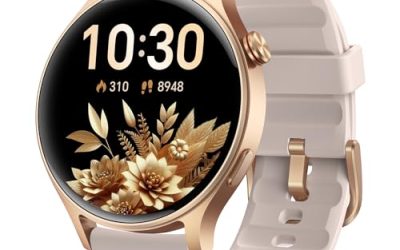
moutarlier GPS Running Watch
The moutarlier is the budget entry into GPS tracking. The title says it provides distance tracking with average pace, a 5ATM rating, a stopwatch, mileage, speed, and music control for men and women. It is for runners who want to leave the phone at home but are not ready to pay for a premium brand. It also suits people who want to compare their own pace against a goal pace without learning a full training ecosystem, since the listed feature set stays focused on distance, pace, speed, and mileage. Treat it as a stepping stone: if GPS turns out to be a habit, you can upgrade later with a clearer idea of which features you actually use.
- Strength: distance, pace, and speed in one lower-priced device.
- Strength: music control is a nice extra for casual runs.
- Trade-off: a lesser-known brand, so long-term software support is uncertain.
Skip it if you want guaranteed app support or advanced training insights.
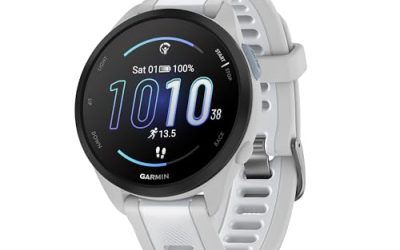
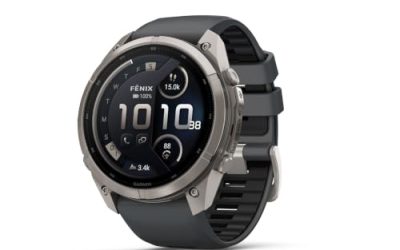
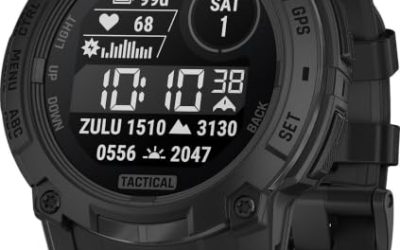
Garmin Forerunner 55
The Garmin is the established name in the GPS tier, and the title describes it as a GPS running smartwatch in black. Because the title is brief, we can only confirm the GPS function and the running focus. It suits runners who want a well-known platform and are willing to pay the mid-range tier to get it. Many new runners choose a Garmin because it is easy to find guides, accessories, and replacement straps for the line, and the Forerunner name signals a running-first design rather than a general fitness band. If you expect to run a few times a week for years, that ecosystem familiarity can be worth more than a longer feature list.
- Strength: dedicated GPS running design from a long-time sports brand.
- Strength: smartwatch features beyond basic timing.
- Trade-off: more to learn and charge than a simple digital.
Skip it if you only want a no-fuss stopwatch.
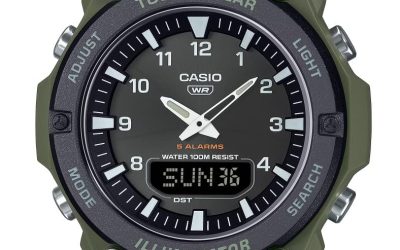
Casio F108WH
The F108WH belongs to the Illuminator Collection and comes with a black resin strap. It is a plain digital watch for runners who want a dependable timer with a backlight and nothing else to maintain. It fits in a gym bag, a race-day kit, or a school sports bag without worrying about breakage. The Illuminator name refers to Casio’s backlight system, which is the feature to care about on dark winter mornings. Because it is a basic digital, the learning curve is close to zero, which makes it a safe present for a teenager joining a cross-country team or a coworker starting a couch-to-5K plan.
- Strength: the Illuminator backlight helps in low light.
- Strength: resin strap is comfortable and sweat-friendly.
- Trade-off: the title shows no lap memory or water rating details.
Skip it if you need interval-heavy features or a documented water rating.
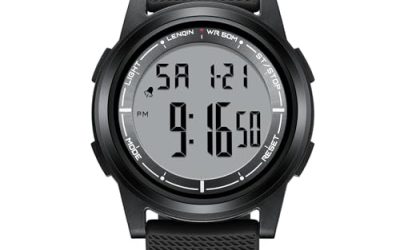
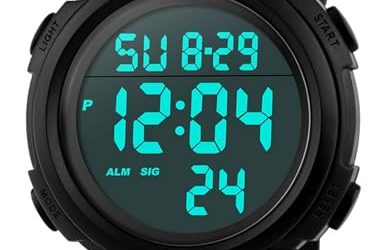
HANPOSH Ultra Thin
The HANPOSH goes for a minimalist look with an ultra-thin case, a large LED face, and a backlight. The title puts it as a sports and outdoor watch for men. It is for someone who wants a slim profile that does not snag sleeves and still handles a morning jog. The minimalist styling also means it works away from the track, so it can serve as an everyday watch for someone who does not want to wear a bulky gadget all day. Buyers who care about how a watch looks under a jacket sleeve often prefer thin cases for exactly this reason.
- Strength: thin profile feels less bulky during daily wear.
- Strength: large face is easy to read.
- Trade-off: the visible title offers few details on lap memory or timers.
Skip it if you need training features beyond a basic clock and light.
Beeasy 44mm Silicone
The smaller Beeasy is listed as ultra-thin and lightweight, with a 44mm case, a silicone strap, and a 50M rating. It carries an alarm, stopwatch, and countdown. It is a unisex option for runners who find the larger model too big, and it makes a good everyday watch outside workouts. The title shows it as suitable for men and women, and the lighter silicone strap tends to be more forgiving against skin than stiff resin. For a runner who hates feeling a watch at all, a smaller and lighter case is a practical way to stop thinking about the wrist.
- Strength: 44mm is a comfortable middle size.
- Strength: light silicone strap suits long runs.
- Trade-off: no dual time is mentioned in the visible title.
Skip it if you need two time zones or lap memory.
Casio F91W-1
The F91W-1 is the classic minimalist digital sport watch with a resin strap. It is popular because it is light, cheap, and understated, and it asks nothing of you. The case has been a fixture in sports bags for a long time, and the simple button layout means you can start and stop a timer without looking down. It is also a sensible spare for race day, when a battery-hungry GPS device is the one thing you do not want to fail on the start line. Runners who want to time a run, glance at the clock, and move on will find that enough.
- Strength: vintage design that has stayed popular for decades.
- Strength: light resin build disappears on the wrist.
- Trade-off: the visible title lists no advanced running functions.
Skip it if you want lap memory, countdowns, or GPS.
Which One Fits Your Situation
You are starting from zero
Start with the Casio F91W-1 or Casio F108WH. Both are simple, affordable timers that let you build a habit before spending on GPS gear.
You run track intervals
The Timex Ironman Classic 30 is the obvious fit with its 30-lap memory and countdown. Pair it with a clear workout plan so you use the memory.
You want distance without carrying a phone
Choose between the moutarlier GPS Running Watch for a lower-priced entry and the Garmin Forerunner 55 for an established brand. The moutarlier has the cost advantage; the Garmin has the longer track record.
You need a smaller, lighter watch
The Beeasy 44mm Silicone and the HANPOSH Ultra Thin are the least bulky options here. The Beeasy adds a countdown and alarm, while the HANPOSH leans toward a slim look.
Common Mistakes
- Buying GPS when a stopwatch would do. If you run one known loop, the added charging routine may not be worth it.
- Ignoring lap memory. A watch that stores only a few laps will frustrate you during interval work.
- Choosing a case that is too large. A 49mm face bounces on a slim wrist and rubs during longer runs.
- Assuming 50M means swim-ready. It protects against sweat and rain, not pool training.
- Trusting unlisted features. If the title does not say lap memory, GPS, or a backlight, plan as if it does not have them.
Related guides
- What Is The Best Budget Most Responsive Gaming Mouse Wired
- Low Latency Gaming Headphones Usb-C 2.4 Ghz Wireless
- Low Latency Gaming Headphones Usb-C Dongle 2.4 Ghz
Frequently Asked Questions
Do I need GPS to be a serious runner?
No. Many runners train with a stopwatch and a measured route. GPS becomes useful when you vary routes or chase a specific pace.
How often do GPS watches need charging?
It varies by model and use. The Garmin and moutarlier titles do not list a battery duration in the visible text, so check the full listing before deciding.
Is a 38mm watch too small?
Not for most wrists. A 38mm case like the Timex Ironman suits smaller wrists and keeps weight down on long runs.
What should I look for in 2026 beyond price?
Prioritize strap comfort, a reliable backlight, and a feature set that matches your training. A well-fitted simple watch beats a feature-packed one that sits unused.