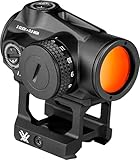
The best red dot sights for fast, clear targeting are the Aimpoint ACRO P-2 for enclosed pistol use, Trijicon RMR Type 2 for proven open-emitter durability, Holosun EPS for a compact enclosed pistol optic, Aimpoint CompM5 for hard-use rifles, and Holosun HS403B or Vortex Crossfire Red Dot for affordable range setups.
The right choice depends less on maximum brightness than on four practical questions: whether the emitter is protected from debris, how easily the optic fits your mounting footprint, how long the battery should last, and whether the dot remains crisp for your eyes. The comparison below separates those trade-offs instead of treating every red dot as interchangeable.
As an Amazon Associate we earn from qualifying purchases at no extra cost to you.



Top 3 picks at a glance
Quick comparison: the leading choices
| Model | Best use | Emitter | Dot options | Battery claim | Mounting note | Typical market range |
|---|---|---|---|---|---|---|
| Aimpoint ACRO P-2 | Duty or defensive pistol | Enclosed | 3.5 MOA | Up to about 50,000 hours | ACRO-specific footprint | Usually $600–$750 |
| Trijicon RMR Type 2 | Rugged pistol or compact rifle | Open | 3.25 or 6.5 MOA | Up to about 4 years, setting-dependent | RMR footprint | Usually $450–$600 |
| Holosun EPS | Compact pistol with enclosed emitter | Enclosed | 2, 6, or 32 MOA variants | Up to about 50,000 hours, setting-dependent | EPS footprint; adapter compatibility varies | Usually $300–$450 |
| Aimpoint CompM5 | Professional or hard-use rifle | Open tube | 2 MOA | Up to about 50,000 hours | Standardized 30 mm-style mounting solutions | Usually $850–$1,100 |
| Holosun HS403B | Budget rifle or range carbine | Open tube | 2 MOA | Up to about 50,000 hours | Common micro-tube mounts | Usually $130–$200 |
| Vortex Crossfire Red Dot | Entry-level range rifle | Open tube | 2 MOA | Up to about 50,000 hours on low settings | Uses common low and lower-third mounting options | Usually $120–$200 |
Battery figures are manufacturer claims and vary substantially with brightness, temperature, battery quality, and storage conditions. Treat them as planning figures, not guarantees. A fresh battery and a periodic function check matter more than a headline runtime number.
Best red dot sights by use case
Best enclosed pistol optic: Aimpoint ACRO P-2
The ACRO P-2 is the strongest choice when a pistol optic may encounter rain, dust, lint, or repeated holster use. Its enclosed emitter prevents the most common open-emitter problem: an obstruction between the LED and the shooter’s eye. The 3.5 MOA dot is a useful middle ground—small enough for precise aiming while still visible during rapid presentation.
Its main limitation is compatibility. The ACRO footprint is not the same as the RMR, Shield, or common micro-red-dot footprints, so a slide cut or adapter plate must specifically support it. Confirm the optic cut, screw pattern, screw length, and required torque before ordering. For a pistol already cut for RMR, an RMR-footprint optic may be the simpler choice.
Best proven open-emitter pistol optic: Trijicon RMR Type 2
The RMR Type 2 remains compelling because it is compact, widely supported, and available in practical dot sizes. The 3.25 MOA version favors a balance of speed and precision; the 6.5 MOA version is easier to see quickly, particularly for users whose vision makes very small dots appear distorted.
The open emitter is its key compromise. Water or debris can obscure the dot, and the exposed glass needs more attention than an enclosed optic. For a clean range environment, that may be an acceptable trade for its mature mounting ecosystem and compact shape. For daily carry in dirty or wet conditions, compare it directly with an enclosed optic.
Best value enclosed pistol optic: Holosun EPS
The Holosun EPS provides the enclosed-emitter advantage in a compact format and is available in several reticle configurations. Some versions offer a simple dot, while others combine a dot and circle. A plain dot generally creates the least visual clutter; a circle-dot reticle can be faster to acquire but may feel busy at distance.
Check the exact EPS variant before buying. “EPS” models and “EPS Carry” models are not interchangeable in every mounting situation, and adapter plates can change optic height. A plate that raises the sight may require a different-height front sight for a usable backup sight picture.
Best hard-use rifle optic: Aimpoint CompM5
For a rifle expected to remain ready for long periods, the CompM5 combines a compact tube design, a clear 2 MOA dot, and very long claimed battery life. The 2 MOA dot is well suited to a magnifier because it remains relatively fine when the image is enlarged.
Mount selection matters as much as the optic. A low mount is appropriate for some platforms, while an absolute or lower-third co-witness mount is more common on modern carbines with backup iron sights. Choose the height based on the rifle, stock position, and whether you want the iron sights visible through the optic rather than choosing solely by brand.
Best budget rifle and range options: Holosun HS403B and Vortex Crossfire Red Dot
The HS403B and Crossfire Red Dot are sensible choices for a recreational carbine, rimfire rifle, shotgun used at moderate distances, or a first red-dot setup. Both use familiar tube-style layouts and common mounting solutions, making replacement mounts and risers easier to find.
They do not offer the same extreme-duty margin, optical refinement, or environmental confidence as premium models. That distinction matters for hard professional use, but it is less important for a sight that is stored correctly, checked before use, and used mainly at the range.
Reticle clarity: why a smaller dot is not always better
Dot size is measured in MOA. At 100 yards, 1 MOA covers approximately 1.05 inches, so a 2 MOA dot covers about 2.1 inches and a 6 MOA dot about 6.3 inches. At 25 yards, those apparent sizes are approximately 0.5 inch and 1.6 inches respectively.
A 2 MOA dot is usually preferable for rifles, longer pistol distances, and magnifier use. A 3–3.5 MOA dot is a versatile pistol compromise. A 6 MOA dot can be faster to find at close range, but it covers more of the target and may expose vision-related flare more clearly.
If the dot looks like a starburst, comma, or cluster of dots, first lower the brightness. Excess brightness makes astigmatism and optical reflections more visible. If the shape remains distorted, look through the optic with the other eye, clean both lenses, and consider whether corrective lenses or a small aperture test changes the appearance. Do not assume a more expensive optic alone will correct an eye issue.
Battery life: a practical power-budget calculation
Suppose a sight advertises 50,000 hours at a low setting. Converting that figure gives:
50,000 hours ÷ 24 ÷ 365 = approximately 5.7 years.
That is a useful upper-bound estimate, not a maintenance schedule. If cold weather, brighter settings, aging batteries, and storage losses reduce the practical figure to one quarter of the claim, the planning runtime becomes roughly 12,500 hours, or 17 months. A sensible routine is to install a fresh battery on a fixed annual schedule, record the installation date, and carry a spare when the optic is used away from home.
Solar-assisted models can reduce battery dependence in bright conditions, but solar support is not a substitute for a charged battery in darkness, indoor ranges, or shaded environments. Shake-awake features also trade convenience for a small amount of additional power use and should be evaluated against the optic’s stated sleep behavior.
Mounting compatibility decision matrix
| Your situation | Look for | Likely best direction | Check before purchase |
|---|---|---|---|
| Factory optic-ready pistol | Exact slide footprint | Match the cut directly | Screw length, plate thickness, backup sight height |
| Duty-style pistol in rain or dust | Enclosed emitter | ACRO P-2 or Holosun EPS class | ACRO, EPS, and EPS Carry footprints are different |
| Rifle with backup iron sights | Absolute or lower-third co-witness mount | CompM5 or another tube optic | Mount height and rail standard |
| Rimfire or casual range rifle | Lightweight common mount | HS403B or Crossfire class | Rail type, included riser, and return-to-zero needs |
| Rifle plus magnifier | Fine dot and compatible optical height | 2 MOA rifle optic | Magnifier height, eye relief, and flip-to-side clearance |
How to choose in four steps
- Identify the platform and footprint. Start with the slide cut or rail, not the optic brand. An inexpensive optic that bolts on directly can be a better system than a premium model requiring an unsuitable adapter.
- Choose emitter protection. Select enclosed for frequent carry, bad weather, or dusty use. Select open for a smaller, established design when the environment is controlled and the mounting ecosystem matters most.
- Match dot size to distance and eyesight. Choose 2 MOA for rifle precision and magnifier use, 3–3.5 MOA for general pistol use, and 6 MOA when rapid close-range visibility is the priority.
- Set brightness only as high as necessary. The dot should be visible against the target without producing a large glowing halo. Recheck the setting in the lighting where the optic will actually be used.
Frequently asked questions
Can an enclosed-emitter optic be used on any pistol cut?
No, an enclosed-emitter optic must match the pistol’s slide cut or use a specifically compatible adapter plate. The ACRO footprint differs from RMR, Shield, and common micro-red-dot footprints, while EPS and EPS Carry models are not interchangeable in every mounting situation. Confirm the optic cut, screw pattern, screw length, required torque, and backup-sight height before ordering.
What should I do if the red dot looks blurry or star-shaped?
First lower the brightness, because excessive brightness can make astigmatism and reflections more visible. If the distortion remains, look through the optic with the other eye, clean both lenses, and consider whether corrective lenses or a small-aperture test changes the appearance. A more expensive optic alone may not correct an eye-related issue.
Is a circle-dot reticle better than a simple dot?
Not necessarily; the better choice depends on whether you prefer speed or a less cluttered sight picture. A plain dot generally creates less visual clutter, while a circle-dot reticle can be faster to acquire but may feel busy at distance. Check the exact optic variant because reticle configurations differ among models and versions.
What optic height should I choose for a rifle with backup iron sights?
Choose the height according to the rifle, stock position, and whether you want the iron sights visible through the optic. An absolute or lower-third co-witness mount is common on modern carbines, while a low mount suits some platforms. Confirm the rail standard and mount height rather than choosing solely by optic brand.
Can I rely on a claimed battery runtime for several years?
No, treat the advertised runtime as a planning figure rather than a guarantee or maintenance schedule. A claim of 50,000 hours converts to approximately 5.7 years under stated conditions, but cold weather, brighter settings, aging batteries, and storage losses can reduce practical runtime. Installing a fresh battery annually and carrying a spare is a sensible routine.
Final verdict
For the broadest mix of speed, clarity, and ruggedness, the Aimpoint ACRO P-2 is the premium enclosed pistol choice, while the Holosun EPS offers a more accessible route to the same emitter protection. The Trijicon RMR Type 2 remains a strong open-emitter option when footprint support and compact durability are priorities. On rifles, the Aimpoint CompM5 is the hard-use benchmark, while the Holosun HS403B and Vortex Crossfire Red Dot make more sense for budget-conscious range setups. The best red dot sight is ultimately the one whose footprint, dot size, mount height, and brightness controls match the platform and the shooter’s actual conditions.