Capacity is the first number everyone looks at on a power bank, and it is also the easiest one to get wrong. A 5,000mAh magnetic pack that clips to the back of a phone and a 60,000mAh brick meant for a campsite are both called portable chargers, yet they solve opposite problems. The decision behind this keyword is really about where the charger will live: a jacket pocket, a carry-on, a car console or a tent.
This guide compares eight options that range from slim pocket packs to oversized multi-device banks, and it is written for commuters, travelers, campers and anyone who has watched a phone die at ten percent on a map screen. The comparisons rely on what each listing states, such as capacity, wattage, built-in cables and port count, rather than on any claims about real-world run time. Pay close attention to the airline rule of thumb in the first section, because it eliminates some of these models for flying.
Our Top Picks
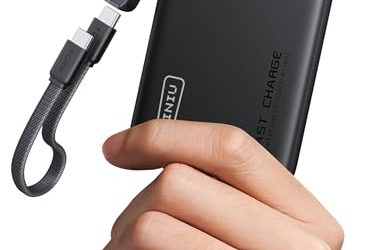
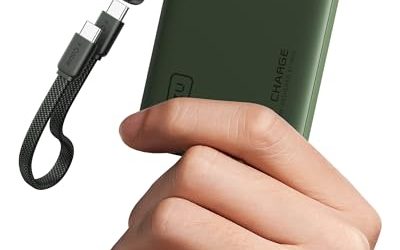
 INIU 10000mAh 45W Fast Charging Portable ChargerSmall Size5.26 x 2.7 x 0.5 inches0.5 poundsCheck on Amazon

Top 3 picks at a glance
Quick Picks
As an Amazon Associate we earn from qualifying purchases at no extra cost to you.




| Product | Best for | Key spec from the title |
|---|---|---|
| INIU 10000mAh 45W | Fast-charging travel pack | 10000mAh, 45W, flight-safe, detachable USB-C cable |
| Miady 2-Pack 10000mAh | Sharing between two people | 2-pack, slim, 3 outputs, 2 inputs |
| 10000mAh 22.5W with Built-in Cables | No-cable-hunting convenience | 22.5W, 2 built-in cables, 4 outputs |
| Anker 621 MagGo | iPhone owners wanting a magnetic pack | 5,000mAh, magnetic, USB-C cable |
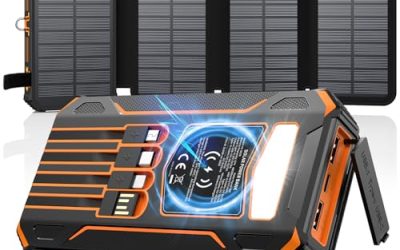
| OHOVIV 50000mAh | Camping and long trips | 50000mAh, 4 built-in cables, 22.5W |
| 60000mAh with 3-in-1 Cable | Maximum capacity | 60000mAh, 22.5W, charges 5 devices |
| 2-Pack 5200mAh PD USB-C | iPhone backup in a pocket | 5200mAh PD, built-in USB-C connector, 2-pack |
| citicr 10000mAh PD20W | Banks that plug into the wall | 10000mAh, PD20W, built-in wall plug |
How to Choose
Capacity and what it means in practice
Capacity in milliamp-hours tells you how many times a phone can be refilled, though conversion losses mean you never get the full figure. A common rule is that a 10,000mAh pack delivers about one and a half to two full charges for a typical phone, and a 5,000mAh pack roughly one. Packs like the 50000mAh OHOVIV and the 60000mAh model hold several phone charges, or run a tablet, but they are heavy and slow to recharge. Match capacity to your longest stretch away from a wall outlet rather than choosing the largest number.
Flight rules are a hard limit
Airlines generally cap carry-on power banks at about 100 watt-hours, which works out to roughly 27,000mAh at the usual 3.7V cell rating. That means the 5,000mAh to 10,000mAh packs here are fine for flights, and the INIU explicitly calls itself flight-safe. The 50000mAh and 60000mAh models exceed the typical limit, so treat them as car, camping and home-backup devices and check your airline’s rules before flying with one.
Wattage, ports and cables
Output wattage decides how quickly a phone refills. The INIU lists 45W, which can feed a laptop or a fast-charging phone, while several others list 22.5W or PD20W, suitable for most phones. Built-in cables, as on the OHOVIV, the 22.5W 10000mAh pack and the citicr, mean one less thing to forget. Multi-output designs, such as the Miady’s three outputs, let two devices charge at once, but total output is typically shared. Check whether you need USB-C, Lightning or both. Also consider recharge time: a larger bank takes much longer to refill from a typical wall adapter, so a pack that cannot fully recharge overnight is more of a liability than a benefit. Packs that list two inputs, as the Miady does, offer more than one way to recharge, which is handy when you travel with mixed cables.
What to ignore, and where cheap packs cut corners
Ignore the “10 times for iPhone 15” or “charges 5 devices” style of claims as run-time guarantees; they are best-case marketing. Budget banks often cut corners on actual capacity, heat management and certification, so prefer listings with stated output wattage and recognizable cell, safety or brand names. LED displays, found on the 60000mAh model and the citicr, are genuinely useful for knowing the remaining charge, whereas aesthetic color options are not worth paying for.
The 8 Best Options
INIU 10000mAh 45W
This compact pack aims at frequent travelers. The title lists 10000mAh capacity, 45W fast charging, a smaller body, flight-safe positioning and a detachable USB-C cable, as an external battery for phones and more. It is the closest thing in this group to a do-everything travel pack: small enough for a jacket pocket, strong enough on paper to feed a tablet or even a light laptop, and clear about its airline suitability.
- Strength: 45W output is the highest wattage in the group, useful for faster phone or small laptop top-ups.
- Strength: flight-safe capacity suits carry-ons without any doubt.
- Trade-off: the detachable cable is one more small item you can lose.
Skip it if you want built-in cables or a magnetic attachment, or if you need a much larger reserve.
Miady 2-Pack 10000mAh
Two slim 10000mAh packs in a single purchase. The title lists dual USB, three outputs and two inputs, and positions the pair for backpacks, travel and camping. Having a second bank changes how you use them: one lives in the bag fully charged as an emergency reserve, while the other goes through the daily cycle of use and recharge.
- Strength: two packs means one can stay charged while the other is in use, or you can split them with a partner.
- Strength: three outputs and two inputs add flexibility.
- Trade-off: the title lists no wattage, so fast-charge performance is unclear.
Skip it if you need a stated high-wattage output or you only want a single pack.
10000mAh 22.5W with Built-in Cables
An unbranded all-in-one for people who forget cables. The title lists 10000mAh, 22.5W fast charging, two built-in cables, four outputs, two inputs and 5V/3A charging for universal travel. It suits someone who wants to grab a single object from a drawer and know that a phone, earbuds and a second device can all be connected without hunting for leads.
- Strength: built-in cables remove the need to carry a separate lead.
- Strength: four outputs can charge multiple devices.
- Trade-off: built-in cables can fail or fray, and then you rely on the remaining ports.
Skip it if you want a recognizable brand name or the highest possible wattage.
Anker 621 MagGo
The only magnetic option here. The title lists a 5,000mAh magnetic portable charger with a USB-C cable, compatible with iPhone 16, 15 and 14 series models. It targets the commuter who wants a charger that stays attached to the phone during a train ride and then disappears into a bag, trading raw capacity for convenience.
- Strength: magnetic attachment keeps the pack on the phone, so there is no cable dangling in a pocket.
- Strength: a trusted brand name and a thin travel format.
- Trade-off: 5,000mAh gives roughly one top-up, the lowest capacity of the group beside the 5200mAh pair.
Skip it if you use an Android phone that lacks magnets or need several charges between wall visits.
OHOVIV 50000mAh
The OHOVIV is a high-capacity pack with four built-in cables. The title lists 50000mAh, 22.5W fast charging, a claim of 55 percent in 30 minutes and ten phone charges for an iPhone 15, aimed at camping and travel.
- Strength: very large capacity covers multi-day outings or shared use.
- Strength: four built-in cables handle different devices without a cable bag.
- Trade-off: the capacity exceeds the usual airline carry-on limit and the unit is large to carry.
Skip it if you fly often or want a pocketable battery.
60000mAh with 3-in-1 Cable
The highest capacity here, designed for the long haul. The title lists 60000mAh, 22.5W fast charging, a 3-in-1 cable, a claim of charging five devices and an LED display, for camping, road trips and emergencies.
- Strength: the LED display shows remaining charge at a glance.
- Strength: capacity is enough for a long outage or a group trip.
- Trade-off: it is bulky and will not be allowed in most carry-on bags.
Skip it if you need a pack that slips into a pocket, or if you travel by air.
2-Pack 5200mAh PD USB-C
A pair of pocket-size backup batteries. The title says it is for iPhone 17, 16 and 15 series, with upgraded 5200mAh capacity, PD fast charging and a built-in USB-C connector, so no separate cable is required. It is aimed at iPhone owners who want an emergency top-up that lives in a coat pocket or car door, not a major power reserve for a weekend away.
- Strength: the built-in USB-C connector means nothing extra to carry.
- Strength: two units allow one to stay in a bag or car as a spare.
- Trade-off: capacity is only enough for roughly one phone top-up.
Skip it if your phone uses a different connector or you need several full charges.
citicr 10000mAh PD20W
The citicr stands out for its built-in wall plug. The title lists 10000mAh, PD20W, built-in cables, a wall plug, an LED display and a purple finish, with the ability to charge five devices at once. This design appeals to people who dislike carrying a separate wall adapter, since the pack can plug straight into an outlet in a hotel room or airport lounge and refill itself while you charge your devices.
- Strength: the built-in wall plug lets the pack recharge without a separate adapter.
- Strength: LED display and built-in cables streamline daily use.
- Trade-off: a built-in plug and cables can add bulk compared with slim packs.
Skip it if you want the thinnest possible profile or the highest wattage.
Which One Fits Your Situation
You fly regularly and need a laptop-capable boost
The INIU 10000mAh 45W is the sensible choice, since the flight-safe capacity and 45W output cover both phone and light laptop needs.
You use an iPhone and hate cables
Pick the Anker 621 MagGo for its magnetic attachment, or the 2-Pack 5200mAh PD USB-C for built-in connectors and a spare unit.
You camp or face power outages
The 60000mAh model with the LED display or the OHOVIV 50000mAh gives multi-day capacity. Keep them for the car, tent or home, not the airport.
You want to share with a partner or keep one at work
The Miady 2-Pack covers two people or two locations, so you always have a charged bank nearby.
Common Mistakes
- Buying the largest capacity and then discovering it cannot travel in a carry-on.
- Assuming the stated mAh equals usable phone charges; conversion loss always reduces it.
- Ignoring connector type, such as Lightning versus USB-C, on packs with built-in cables.
- Expecting full wattage when several devices are plugged into one bank.
- Skipping the display or indicator lights, then guessing how much charge is left.
Related guides
- What Is The Best Budget Most Responsive Gaming Mouse Wired
- Low Latency Gaming Headphones Usb-C 2.4 Ghz Wireless
- Low Latency Gaming Headphones Usb-C Dongle 2.4 Ghz
Frequently Asked Questions
How many phone charges does a 10000mAh power bank give?
Typically about one and a half to two, because some energy is lost in conversion. A 5,000mAh pack gives about one, and the largest packs here give many more.
Can I take a power bank on a plane?
Power banks go in carry-on bags, not checked luggage, and are generally limited to about 100 watt-hours, which is why the 10000mAh packs are fine and the 50000mAh and 60000mAh models are not.
Does fast charging need a special cable?
For PD or 45W output, use a cable rated for the wattage. The INIU detachable cable and built-in cables cover this, but third-party cables can limit speed.
How long does a power bank last before it needs replacing?
Lithium cells age with cycles and heat. For 2026 purchases, expect noticeably reduced capacity after a few years of regular use, and replace any pack that swells or overheats.