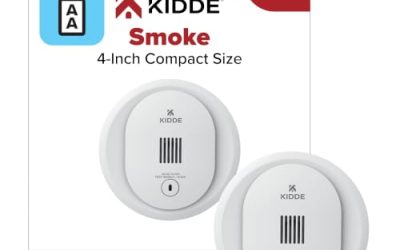
Smoke alarms come in two sensing styles, and the difference matters more than most shoppers realize. Ionization units react quickly to flaming fires but are notorious for screaming every time someone sears a steak or makes toast. Photoelectric units use a light beam and chamber that respond best to slow, smoldering fires, the kind that start in a couch cushion or an overloaded outlet at night, and they tend to produce fewer cooking-related false alarms. If you are searching for photoelectric detectors specifically, the real decision is not the sensor type. It is how the alarm is powered and how many you need.
This guide is for homeowners and renters who want to replace aging alarms, outfit a new floor plan, or stop the midnight chirp of a dying battery. The eight listings below split into two camps: sealed ten-year battery alarms that stick to the ceiling with no wiring, and hardwired interconnected alarms with a 9V backup that tie into existing house power. Pick the camp first, then choose the pack size that matches your bedrooms, hallways, and levels.
Our Top Picks


Top 3 picks at a glance
Quick Picks
As an Amazon Associate we earn from qualifying purchases at no extra cost to you.


| Product | Best for | Key spec from the title |
|---|---|---|
| SITERWELL 10-Year Battery Alarm | Single-room replacement | Photoelectric sensor, 10-year life, low-battery warning |
| X-Sense SD2J0AX 1-Pack | Trying one unit first | 10-year battery, UL 217 certified, one-button hush |
| X-Sense SD2J0AX 5-Pack | Mid-size multi-level homes | Five photoelectric alarms, fewer cooking nuisance alarms |
| Heiman Wireless 3-Pack | Linked alarms with no wiring | Wireless interconnected, photoelectric, 10-year life |
| SITERWELL Hardwired Interconnected | Homes with existing wiring | Hardwired, 9V backup, test/silence button |
| X-Sense SD2J0AX 3-Pack | Small homes and apartments | Three alarms, UL 217 certified |
| X-Sense SD2J0AX 10-Pack | Large homes, landlords | Ten alarms, 10-year battery |
| Siterlink Hardwired Interconnected | Hardwired replacement set | Photoelectric, 9V battery backup, test/silence button |
How to Choose
Decide between sealed battery and hardwired
A sealed battery alarm mounts with a couple of screws and needs no electrician, which makes it the default for renters and for rooms without a junction box. A hardwired alarm draws house power and keeps a 9V battery as backup, so it survives an outage but must match your existing wiring harness. If your ceiling already has wired alarms, a hardwired replacement is usually the cleaner swap. If it does not, do not open walls just to chase a feature.
Check the certification and sensor
Look for the UL 217 mark in the listing, which covers smoke alarm performance in the United States. Confirm the word photoelectric appears in the title, not just a generic smoke alarm label. Some features, such as a hush button that silences nuisance alarms for a few minutes, are genuinely useful near kitchens. Ignore vague marketing like tiny design unless you actually have a tight mounting spot, and ignore decorative extras that do nothing for detection speed.
Match the quantity to the layout
Fire codes generally call for an alarm inside every bedroom, outside each sleeping area, and on every level including the basement. Count those spots before you pick a pack. A three-bedroom, two-story house often lands at five or six units, which is why multipacks beat buying singles. Overbuying a ten-pack is wasteful unless you manage several units or a rental property. Write the room list on paper first, then add one spare so a failed unit never leaves a bedroom unprotected.
Understand the ten-year clock
A sealed ten-year battery is tied to the life of the alarm itself, not just the cell. When the unit reaches its end date, you replace the whole alarm, and the date is stamped on the back. Budget models can cut corners with louder-than-needed chirps, thinner plastic, or no hush function. Mid-range sealed alarms usually add the hush button; premium wireless sets add the interconnect radio.
The 8 Best Options
SITERWELL 10-Year Battery Alarm
This single battery-powered alarm is aimed at someone replacing one failing unit or adding coverage to a spare room. The listing highlights a photoelectric sensor and a ten-year product life with a low-battery warning, so there is no routine battery swapping to track.
- Strength: photoelectric sensing paired with a long sealed life keeps maintenance minimal.
- Strength: a low-battery warning function gives an early nudge before the alarm goes quiet.
- Trade-off: the title does not mention interconnection or a hush button, so it works alone.
Skip it if you want every alarm to sound together when one trips. A household with several rooms to cover will be better served by a multipack that shares one design and one replacement date.
X-Sense SD2J0AX 1-Pack
The single-unit version of the SD2J0AX is a practical test purchase for shoppers who want to see how the design fits before committing to a bigger set. The title lists a ten-year battery, UL 217 certification, a photoelectric sensor, and a one-button hush for cooking nuisance alarms.
- Strength: UL 217 certification is stated plainly.
- Strength: fewer cooking nuisance alarms plus one-button hush suit kitchens and open-plan layouts.
- Trade-off: one unit cannot cover a whole home, and the title shows no wireless linking.
Skip it if you already know you need four or more alarms; the multipacks usually bring the per-unit cost down into a lower tier. It also pairs well with a bigger set later, since the model number stays the same.
X-Sense SD2J0AX 5-Pack
A five-pack lines up with the typical two-level house: one per bedroom hallway, one per floor, and one near the stairs. It carries the same ten-year battery, UL 217 certification, and photoelectric design as the rest of the SD2J0AX family.
- Strength: five identical units simplify installation and later replacement dates.
- Strength: one-button hush helps when the oven runs hot.
- Trade-off: these are standalone alarms per the title, so a fire in the basement will not sound upstairs.
Skip it if your home is a studio or one-bedroom; the three-pack is a better size, and leftover units tend to sit in a drawer.
Heiman Wireless 3-Pack
Heiman is the only battery-powered pick here that advertises wireless interconnection. Three photoelectric alarms with a ten-year product life are described as tiny, which helps in tight hallways and smaller rooms.
- Strength: wireless interconnection means one alarm triggers the others without running cable.
- Strength: a compact body fits narrow mounting spots.
- Trade-off: the title does not list UL 217 the way the X-Sense titles do, so confirm certification on the box before relying on it.
Skip it if you want a visible certification claim in the product title, or if you prefer a brand whose listing spells out the nuisance-alarm features.
SITERWELL Hardwired Interconnected
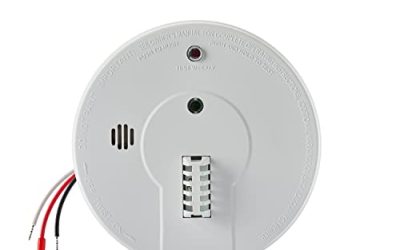
This is the pick for homes that already have wired alarms on the ceiling. The title calls out a photoelectric sensor, hardwired interconnection, a 9V backup battery, and a test and silence button.
- Strength: interconnection over house wiring links every wired alarm.
- Strength: the 9V backup keeps protection running through a power outage.
- Trade-off: installation involves electrical connections, which many renters cannot do.
Skip it if you are renting or if your ceiling has no existing wiring; paying an electrician to add runs defeats the point of a simple swap.
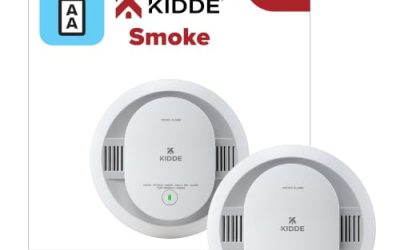
X-Sense SD2J0AX 3-Pack
Three alarms fit a one- or two-bedroom apartment or a small ranch house: one in the bedroom hall, one in the living area, one near the kitchen entrance. The title repeats the ten-year battery, UL 217 certification, and fewer cooking nuisance alarms.
- Strength: a right-sized set for smaller floor plans.
- Strength: the sealed battery means no wiring or ladder gymnastics beyond mounting.
- Trade-off: not wirelessly linked per the listing, so each alarm sounds only for its own area.
Skip it if you want a single trigger to alert the entire house, because the listing describes ordinary standalone behavior.
X-Sense SD2J0AX 10-Pack
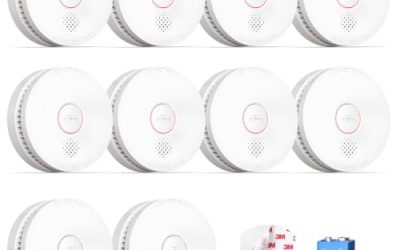
The ten-pack is built for volume: large multi-story homes, small rental properties, or anyone who wants spares on hand for the next ten years. Each unit is the same photoelectric, UL 217 certified model with a ten-year battery.
- Strength: one purchase covers a big layout or several apartments with identical hardware.
- Strength: matching units make landlord record keeping simple.
- Trade-off: it is more units than most households need.
Skip it if you only have a handful of rooms to cover; the three-pack or five-pack will leave nothing unused.
Siterlink Hardwired Interconnected
Siterlink targets the same buyer as the hardwired SITERWELL: a house with existing ceiling wiring and a desire for linked, photoelectric alarms. It lists a 9V battery backup and a test and silence button.
- Strength: hardwired interconnection ties alarms together throughout the structure.
- Strength: the test and silence button is useful for confirming function and quieting nuisance trips.
- Trade-off: it needs compatible wiring and some electrical comfort, and the backup 9V needs periodic replacement.
Skip it if you want a screw-and-forget sealed unit with no battery chores and no wiring compatibility questions.
Which One Fits Your Situation
Renting a two-bedroom apartment
The X-Sense SD2J0AX 3-Pack gives you a bedroom hallway alarm, a living area alarm, and a spare, all without touching the wiring. The hush button helps if your kitchen opens straight into the living space, and the matching units keep future replacement dates in sync.
Replacing alarms in a wired house
Go with the SITERWELL Hardwired Interconnected set or the Siterlink alternative. Both keep a 9V backup and let every alarm in the house sound together, which matters more the bigger the home gets. A fire in a far bedroom is much easier to catch when the hallway and the basement alarms announce it together.
Wanting linked alarms with no electrician
The Heiman Wireless 3-Pack is the one battery option in this lineup that advertises wireless interconnection. Check the box for certification markings before you finalize, and keep every wireless alarm in the same product family so the signals match.
Managing a large property
The X-Sense SD2J0AX 10-Pack standardizes every unit, so replacement dates line up across rooms and a single spare covers any unit that fails. It also helps if several tenants call about chirps, since every alarm behaves the same way.
Common Mistakes
- Assuming every smoke alarm uses photoelectric sensing; read the title for the word.
- Mixing wired and sealed alarms and expecting them to link with each other.
- Skipping bedrooms because the hallway already has an alarm.
- Ignoring the manufacture date, then discovering the ten-year clock was running before you installed.
- Mounting an alarm right beside a kitchen doorway or bathroom, which invites nuisance trips.
Related guides
- What Is The Best Budget Most Responsive Gaming Mouse Wired
- Low Latency Gaming Headphones Usb-C 2.4 Ghz Wireless
- Mechanical Gaming Keyboards Competitive Pc Gaming
Frequently Asked Questions
Are photoelectric detectors better than ionization ones?
They respond faster to smoldering fires and are less prone to cooking false alarms, which is why many safety guides favor them for bedrooms and hallways. Some buyers add a dual-sensor unit, but the listings here are photoelectric.
Can I mix hardwired and battery alarms?
Usually not as a linked group. Interconnection generally works within one product family, so keep a hardwired set with hardwired units and a wireless set with its own wireless units.
How often should I replace these alarms?
The listings advertise a ten-year product life, so plan to replace the full unit at that mark. Hardwired models also need their 9V backup battery swapped on a regular schedule.
Do I need one in every room?
Most guidance calls for alarms inside each bedroom, outside each sleeping area, and on every level. Living rooms and basements are common additions in 2026 layouts, so count rooms before buying a pack.