Plenty of households do not want a thermostat that asks them to build a weekly schedule. A non-programmable model does one job: it holds the temperature you set until you change it. That simplicity suits rental units where the landlord wants fewer support calls, a parent’s home where a large-digit display beats a touchscreen, a workshop or vacation cabin that sees irregular use, and anyone replacing a failed dial thermostat who simply wants the heat to come on without a manual.
The decision here is less about features and more about fit. Almost every option below is built for a conventional single-stage system with one heating stage and one cooling stage, so the real work is confirming that your furnace and air conditioner match, and that the wiring on the wall will work. In 2026 the field is crowded with near-identical white boxes, so this guide focuses on the specs in each listing and how to separate a good match from a headache.
Our Top Picks
Top 3 picks at a glance
Quick Picks
As an Amazon Associate we earn from qualifying purchases at no extra cost to you.


| Product | Best for | Key spec from the title |
|---|---|---|
| Suuwer Non-Programmable | Dim hallways and bedrooms | 1 Heat/1 Cool single-stage, blue backlight |
| Heagstat Non-Programmable | Basic swap with a white display | Single-stage, up to 1 Heat/1 Cool, white backlight |
| Unbranded Digital Energy-Saving Thermostat | First-time DIY installers | 1 Heat/1 Cool, easy DIY install, white backlight |
| Aowel Non Programmable | Rooms where humidity matters | Humidity display, LCD blue backlit screen |
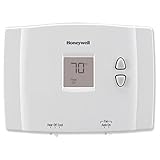
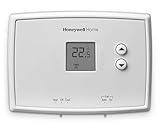
| Honeywell Home RTH111B1024 | Buyers who want a familiar brand | Digital non-programmable, model RTH111B1024 |
| Honeywell Home RTH111B | Same brand, alternate listing | Digital non-programmable, model RTH111B |
| ELECTECK 2 Pack | Two-zone homes or rentals | 2 pack, single stage electric and gas/oil systems |
| Unbranded Single-Stage Thermostat (blue) | Budget single-unit replacement | 1 Heat/1 Cool, easy DIY install, blue backlight |
How to Choose
Match the system type before anything else
Nearly every listing here says single-stage and 1 Heat/1 Cool. That means one stage of heating and one of cooling, the arrangement found in most basic furnaces paired with a central air conditioner. If your system has two heating stages, is a heat pump with auxiliary heat, or uses a millivolt furnace, a 1 Heat/1 Cool model may not be right. Baseboard electric heaters usually need a line-voltage thermostat, which is a different product entirely. Read the labels on your existing wiring before ordering. A useful rule of thumb: if your old thermostat has a switch marked “heat pump” or a terminal labeled O/B, treat that as a warning sign and look at heat pump thermostats instead. If it has only a heat and cool switch and a fan switch, you are almost certainly in single-stage territory, which is where every model in this guide belongs.
Check the wiring and power source
Low-voltage thermostats typically need a few wires, often labeled R, W, Y, and G. Some also use a common wire, called C, while others rely on batteries. Photograph your old thermostat’s wiring before disconnecting anything, and compare it with the instructions for the new unit. If you have fewer wires than a unit needs, look at models designed to run on batteries rather than forcing a workaround. Turning the power off at the breaker before you start is not optional. After mounting, run the system through a heating and cooling call to confirm the furnace and compressor both respond, and listen for the fan starting properly.
Pay attention to the display and the controls
Without a schedule, the display becomes the whole interface. Backlight color is a matter of preference: blue suits dark bedrooms, white tends to be easier to read for older eyes. Look for large digits, a clear separation between set temperature and room temperature, and physical buttons that you can press without hunting through menus. A humidity readout, as on the Aowel, is a bonus, not a requirement, and should not drive the decision. Also consider where the thermostat sits: a unit in a hallway that you pass often benefits from a display you can read at a glance, while one inside a rental should have a limited set of buttons that tenants cannot misconfigure.
Where budget models cut corners
Unbranded models usually have thin instructions and limited support, so check that mounting hardware, wire labels, and a printed diagram are included. Branded models often cost more because they come with documented compatibility and clearer guidance. Ignore buzzwords like energy-saving unless the unit gives you a verifiable feature, such as adjustable temperature differential or a clear fan switch. A thermostat that cannot reliably hold a set temperature is no saving at all, so favor a simple, well-documented design over a long feature list.
The 8 Best Options
Suuwer Non-Programmable
The Suuwer is aimed at conventional single-stage systems with 1 Heat/1 Cool and a blue backlight. It is a simple replacement for buyers who want the thermostat to disappear into the wall and just work, especially in rooms where a bright white display would be annoying at night.
- Strength: the blue backlight is easy on the eyes in a dark bedroom or hallway.
- Strength: it is a no-schedule design, so setup is about wiring and not menus.
- Trade-off: the title offers no extras such as a humidity display, so the feature list is minimal.
Skip it if your system has two heating stages or you want a thermostat with a recognizable brand name.
Heagstat Non-Programmable
Heagstat describes this one as a non-programmable thermostat for a conventional single-stage system, up to 1 Heat/1 Cool, with a white backlight. The phrase “up to” suggests it also works with simpler systems, which makes it flexible for rentals where equipment varies from unit to unit.
- Strength: the white backlight is clear and high-contrast for everyday reading.
- Strength: “up to 1 Heat/1 Cool” signals compatibility with a range of simple setups.
- Trade-off: it is another unbranded-style listing with little feature detail in the title.
Skip it if you need heat pump support or advanced scheduling.
Unbranded Digital Energy-Saving Thermostat
This listing leads with its function: a digital non-programmable thermostat for single-stage systems, 1 Heat/1 Cool, easy DIY install, and a white backlight. It fits owners who want a quick weekend swap without calling an HVAC technician.
- Strength: easy DIY install is part of the pitch, which helps first-time installers.
- Strength: the white backlight keeps the readout clear.
- Trade-off: no brand name in the title makes it harder to compare support and documentation.
Skip it if your system is anything other than single-stage or you prefer an established manufacturer.
Aowel Non Programmable
The Aowel adds a temperature control with humidity display on an LCD blue-backlit screen. For homes where dry winter air or a damp basement is a concern, that extra readout gives a quick sense of indoor conditions without a separate gadget.
- Strength: the humidity display is a useful extra for a thermostat in a main living area.
- Strength: the blue LCD works well at night.
- Trade-off: the humidity readout is informational, so do not expect it to control a humidifier or dehumidifier.
Skip it if you want the simplest possible display or require compatibility beyond 1 Heat/1 Cool.
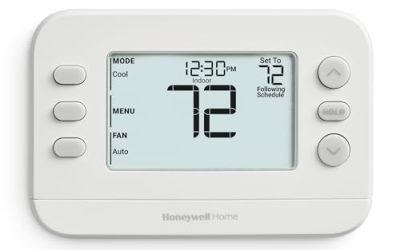
Honeywell Home RTH111B1024
Honeywell Home is the familiar brand on this list, and the RTH111B1024 is a digital non-programmable model. It suits buyers who prefer a known name with easy-to-find installation help, or who are replacing an older Honeywell and want the process to feel familiar.
- Strength: a recognizable brand and a specific model number make it easy to look up documentation.
- Strength: a digital display with no schedule keeps operation easy for any household member.
- Trade-off: the title gives few specs, so confirm system compatibility on the product page.
Skip it if you want a humidity readout or need to buy several units at a lower cost per thermostat.
Honeywell Home RTH111B
This second Honeywell listing carries the shorter model name RTH111B, again as a digital non-programmable thermostat. The pair of listings is useful for comparison shopping, since you can pick whichever is available in the quantity or condition you want.
- Strength: same trusted brand and simple digital design as the other Honeywell listing.
- Strength: a model number you can search for manuals and wiring diagrams.
- Trade-off: with two near-identical Honeywell listings, it is easy to confuse the variants, so match the full model before ordering.
Skip it if you are looking for a feature-rich thermostat or a multi-pack.
ELECTECK 2 Pack
The ELECTECK ships as a two-pack of digital non-programmable thermostats, 1 Heat/1 Cool, in white. The title says it is compatible with single-stage electrical and gas/oil systems, so it fits a duplex, a small rental, or a house with two separate zones.
- Strength: two thermostats in one box suit multi-zone homes and landlords.
- Strength: compatibility with both electric and gas/oil systems is stated.
- Trade-off: if you only need one thermostat, the second sits unused.
Skip it if you have a single zone or a heat pump with auxiliary heat.
Unbranded Single-Stage Thermostat (blue)
This unbranded listing offers a non-programmable thermostat for single-stage systems with 1 Heat/1 Cool, easy DIY installation, and a blue backlight. It suits budget-conscious replacement jobs where a basic display and straightforward control are all that matter.
- Strength: DIY-friendly installation is highlighted in the title.
- Strength: blue backlight is easy to read in low light.
- Trade-off: limited brand information makes it harder to gauge support and manuals.
Skip it if you want recognizable branding or a humidity display.
Which One Fits Your Situation
You are replacing a failed thermostat in a typical house
The Honeywell Home RTH111B1024 is the low-drama choice, with a model number you can look up and a design most installers recognize. If a local HVAC technician ever needs to service the system, a familiar brand also reduces back-and-forth about what is on the wall.
You own a duplex or two-zone setup
The ELECTECK 2 Pack covers both thermostats in one box and states compatibility with single-stage electric and gas/oil systems. A landlord can install both on the same afternoon and keep one consistent interface for tenants, which cuts down on confusion and service calls.
You care about humidity
The Aowel Non Programmable adds a humidity display on a blue backlit LCD, which helps in dry-winter or damp-basement homes. Treat the number as a quick reference, not a precise instrument, and place it away from direct sun or a supply vent.
You want the simplest DIY swap on a tight budget
The unbranded Digital Energy-Saving Thermostat or the Suuwer both focus on easy installation and a plain interface. Photograph the old wiring first and shut off the breaker. Between the two, pick the backlight color you find easier to read, since the core control is the same.
Common Mistakes
- Installing a 1 Heat/1 Cool thermostat on a heat pump or a two-stage furnace without checking compatibility.
- Forgetting to photograph the existing wires before disconnecting them.
- Putting a low-voltage thermostat on a baseboard electric heater that needs a line-voltage model.
- Choosing by backlight color alone and ignoring wiring and power needs.
- Expecting energy savings from a thermostat that cannot hold a stable temperature or that the household constantly overrides.
Related guides
- What Is The Best Budget Most Responsive Gaming Mouse Wired
- Low Latency Gaming Headphones Usb-C 2.4 Ghz Wireless
- Low Latency Gaming Headphones Usb-C Dongle 2.4 Ghz
Frequently Asked Questions
Are non-programmable thermostats still worth buying?
Yes, for households with steady routines or irregular occupancy. They are simpler, cheaper, and easier for guests and older relatives to use. If everyone leaves the house on a predictable weekday schedule, though, a programmable model may save more.
Will these work with a heat pump?
Most listings here are for 1 Heat/1 Cool single-stage systems. Heat pumps with auxiliary heat usually need a model rated for 2 Heat/1 Cool, so check the compatibility chart.
Do I need a C-wire?
It depends on the model. Some use batteries or draw power from existing wires, while others require a common wire. Confirm before purchase.
Can I install one myself?
Many homeowners can, if they shut off power at the breaker and label each wire. If the wiring looks unusual or you see line-voltage connections, hire a professional. Plan for about thirty minutes, plus time to patch and repaint any wall marks left by the old plate.