Ductless mini splits are efficient, but most ship with a handheld infrared remote that gets lost in a couch cushion and has no schedule worth using. That gap is why a separate mini split thermostat exists. The catch is that these products work in different ways: some are small smart boxes that copy the infrared signals of your remote, while others are wall controls designed to talk to a particular system. Choosing wrong means a device that cannot control your unit at all, so the real decision is about compatibility first and features second.
This guide is for owners of wall-mounted ductless units who want phone control, scheduling and voice commands, and for people running window or portable air conditioners who want the same upgrade. Six options are compared from their listed specs, covering smart AC controllers, a wall-mounted thermostat, and a sensor-based approach for vent systems. It helps to know your brand, whether your unit has a wired wall-control port, and whether heat pump heating matters to you. For 2026 shoppers, voice assistant support and a free app are common across the group, so the differences come down to how each device connects and what extra sensing it adds.
Our Top Picks



Top 3 picks at a glance
Quick Picks
As an Amazon Associate we earn from qualifying purchases at no extra cost to you.
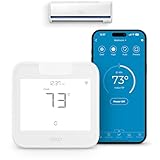


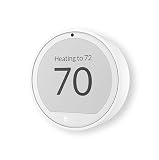
| Product | Best for | Key spec from the title |
|---|---|---|
| Breez Max | App-driven control with AI features | Smart WiFi for mini-split, window, portable AC; free app |
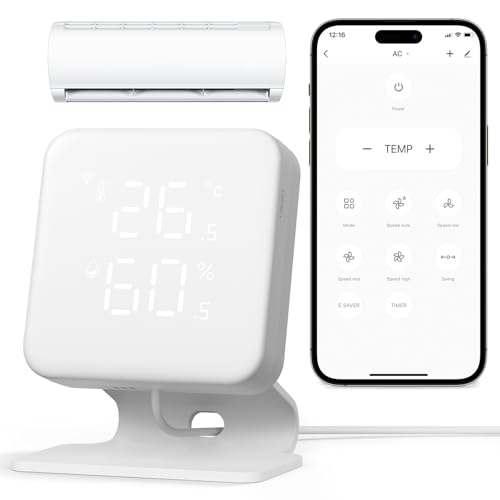
| WOOX Smart AC Controller | Seeing temperature and humidity on the unit | Built-in temperature and humidity LED display, IR remote |
| MRCOOL Smart WiFi Thermostat | A programmable wall control | Alexa and Google Assistant, 24V heating and cooling |
| WenzhiIoT AC Controller | Budget smart-home integration | Tuya Smart Life, WiFi, mini-split, window and portable AC |
| Flair Puck 2 | Flair vent owners with a mini split | Temperature sensor and thermostat for Flair Smart Vent Systems |
| Sensibo Air PRO 3-pack | Multiple rooms plus air quality | Air quality sensor, mini split, window, portable AC control |
How to Choose
Confirm how the controller talks to your unit
Smart AC controllers in this category generally sit in line of sight with the indoor unit and relay commands from your phone, replacing the handheld remote. Wall thermostats like the MRCOOL are wired or tied to a specific system and offer a more permanent setup. Before buying, check whether your unit supports a wired wall control, whether it uses an infrared remote, and whether the controller lists your brand. A mismatch here is the number one reason these devices are returned.
Match the controller to the number of units
One controller usually handles one indoor unit. A multi-head system with three rooms means three controllers, which makes a multi-pack such as the Sensibo three-pack far more economical than buying singles. Count heads, not outdoor condensers, and place each controller where it has a clear view or a clean wired connection to its unit.
Sensing, schedules and voice
Look for a built-in temperature sensor, ideally with humidity, since the unit’s own sensor sits high on the wall and often reads warm. Schedules, geofencing and away modes cut energy use more than any single hardware feature. Voice assistant support, such as Alexa or Google Assistant, is worth having if you already run a smart home, and Tuya Smart Life compatibility helps if you want devices from several brands on one app.
What to ignore and where budget models cut corners
Skip buzz phrases and award mentions when comparing; what matters is brand compatibility and app stability. Budget controllers may lack a humidity readout, have a cluttered app or rely on a cloud service that can change. Also verify that the product handles heating if you use a heat pump, since some listings only mention cooling in the title. Finally, think about where the controller will live: a device that needs line of sight cannot hide behind a curtain or a shelf, and one that plugs into a wall outlet needs power nearby, so decide on placement before you order.
The 6 Best Options
Breez Max
The title describes a smart WiFi thermostat for mini-split, window and portable air conditioners, with AI-based technology and a free app. It suits a homeowner who wants one controller type across several kinds of units, from a bedroom mini split to a window AC in an office. The AI branding suggests automated learning, though the title gives no detail beyond that. Buyers who like to keep every cooling device on one app, whether a bedroom ductless head or a window unit in a workshop, are the likely audience, since the same interface would handle both.
- Strength: works across mini-split, window and portable AC types.
- Strength: free app for scheduling and remote control.
- Trade-off: AI features are only named, not described, so expect to confirm what they do before relying on them.
Skip it if you want a hardwired wall control.
WOOX Smart AC Controller
A controller with a built-in temperature and humidity LED display and an IR remote function. Seeing the room reading on the device itself is helpful when the wall unit’s sensor is placed high and reads warm. It supports mini splits, window and portable ACs and heat pumps. That mix of room reading and remote-style control makes it a sensible upgrade for someone whose current remote is worn out and whose wall unit keeps cycling because it thinks the room is warmer than it is.
- Strength: built-in temperature and humidity display gives an independent room reading.
- Strength: listed for heat pumps as well as cooling-only units.
- Trade-off: it is a smart remote style device and depends on line of sight to the indoor unit.
Skip it if you want a thermostat mounted on the wall.
MRCOOL Smart WiFi Thermostat
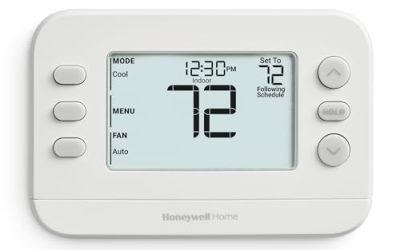
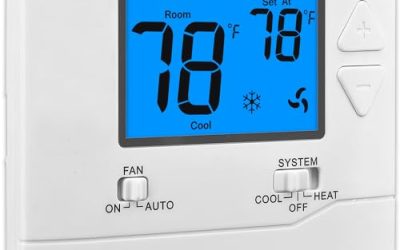
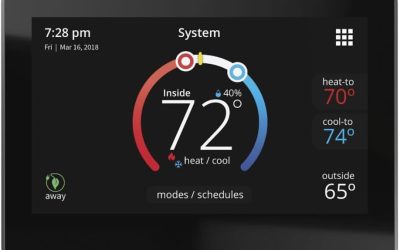
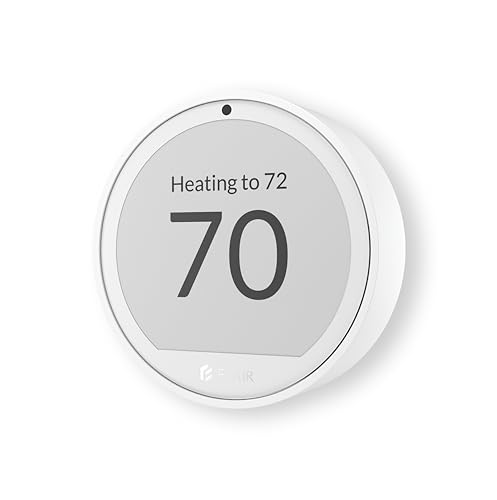
This is the wall-mounted option, described as a programmable wall control with Alexa and Google Assistant support and 24V heating and cooling. It appeals to owners who want a conventional thermostat look instead of a small box near the unit. Matching it to compatible MRCOOL systems is the key step. Because it is a wall control rather than a pocket-size relay, it also makes sense in a household where several people adjust the temperature and nobody wants to hunt for a remote or open an app first.
- Strength: programmable wall control with voice assistant support.
- Strength: 24V heating and cooling support.
- Trade-off: compatibility is narrower than universal controllers, so confirm it works with your system.
Skip it if your unit is another brand or uses only a remote.
WenzhiIoT AC Controller
A smart air conditioner controller built on the Tuya Smart Life platform, with WiFi, and compatible with voice assistants according to the title. It is for buyers who already use Smart Life devices and want the AC in the same app. It is the sort of device a hobbyist picks up to automate a shop or garage unit alongside lights and plugs, and the voice assistant mention in the title means routines such as cooling the room before you arrive are possible.
- Strength: Tuya Smart Life integration folds the AC into an existing smart-home setup.
- Strength: works with mini-split, window and portable AC.
- Trade-off: the title mentions no display or humidity reading.
Skip it if you want a more polished standalone app.
Flair Puck 2
The title calls it a temperature sensor and thermostat for Flair Smart Vent Systems and mini split control. It targets homes that already use Flair vents and want to add a mini split to the same zoning logic. A room-by-room sensor is useful where a ductless head serves a space that the central system struggles to heat or cool, such as a converted garage or an addition over the kitchen.
- Strength: combines a sensor with thermostat control.
- Strength: fits Flair vent systems directly.
- Trade-off: its value depends on already owning or buying into Flair vents.
Skip it if you have no Flair equipment, because outside that system it is a niche purchase, and a universal smart AC controller will usually be simpler and easier to set up.
Sensibo Air PRO 3-Pack
Three Sensibo controllers that double as air quality sensors, aimed at mini split, window and portable AC control. A three-pack fits a three-head system or a house with several rooms. The air quality sensing is a reasonable bonus for allergy-prone households, since a cooling controller doubles as a room monitor, and one app can track all three rooms side by side.
- Strength: air quality sensing alongside climate control.
- Strength: three controllers per box covers several rooms.
- Trade-off: buying three at once is more than a single-room home needs.
Skip it if you have only one unit, since two of the three controllers would sit unused, and a single controller from another brand costs less and does the same basic job.
Which One Fits Your Situation
You have a single mini split in a bedroom
The WOOX Smart AC Controller is a good fit, because its display shows temperature and humidity at the unit and it covers heat pumps. It lets you compare the unit’s own reading with a second one in the room, which is often where comfort problems show up.
You want a thermostat on the wall
Look at the MRCOOL Smart WiFi Thermostat, as long as your system is compatible. A fixed wall control feels like a normal thermostat and avoids the pocket-remote problem entirely, which suits a household with children or guests.
You manage a multi-room home
The Sensibo Air PRO 3-pack handles three rooms and adds air quality sensing. With one box you get matching controllers, so every head follows the same schedule logic and the same app layout.
You already use Smart Life or Flair
Pick the WenzhiIoT controller for Smart Life, or the Flair Puck 2 if you run Flair vents. Both make the most sense when they plug into a setup you already own instead of starting a new ecosystem from scratch.
Common Mistakes
- Buying a controller without checking whether it supports your brand or remote type.
- Placing an infrared-style controller where furniture, a curtain or a tall plant blocks the indoor unit.
- Assuming one controller can run several indoor heads when each head needs its own device.
- Overlooking heat pump support when you need heating, then discovering the app only offers cooling modes.
- Ignoring Wi-Fi band limits on the router; many smart controllers connect only on the 2.4 GHz band, so check before setup.
- Leaving the old remote’s schedule or timer active, which then fights with the new app.
Related guides
- What Is The Best Budget Most Responsive Gaming Mouse Wired
- Low Latency Gaming Headphones Usb-C 2.4 Ghz Wireless
- Mechanical Gaming Keyboards Competitive Pc Gaming
Frequently Asked Questions
Do I need a thermostat for a mini split?
Not strictly, since the unit works with its remote. A smart controller adds scheduling, phone control and in some cases a second room sensor, which is where most of the value comes from.
Will these work with any brand?
Universal controllers cover many brands, but check the listed compatibility before you buy. Wall controls like the MRCOOL are more specific, so confirm the model of your indoor unit first.
Can one controller run two units?
Usually no. Plan on one controller per indoor head, because each head has its own receiver and its own settings. A multi-pack lowers the cost when you have several rooms.
Is a humidity display useful?
Yes, because humidity influences how warm or cool a room feels and how much the unit works in dry mode. A reading you can see at a glance makes it easier to tune settings.