
Best High-End Smart Mattresses With Sleep Tracking
The best high end smart mattresses with sleep tracking technology are the Eight Sleep Pod 4 Ultra for advanced temperature and recovery data, the Sleep Number Climate360 for adjustable firmness on both sides, and the ReST Performance Bed for the most customizable pressure support.
These systems are not identical products. Eight Sleep adds a sensor-equipped cooling and heating cover to an existing mattress, while Sleep Number and ReST use air chambers to change firmness. That difference matters: a temperature cover can preserve the feel of your current mattress, whereas an adjustable air bed can actively alter support under your shoulders, hips, and legs.
As an Amazon Associate we earn from qualifying purchases at no extra cost to you.
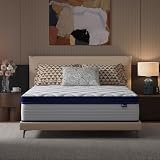

Quick comparison
| System | Sleep metrics | Temperature control | Firmness control | Subscription | Best fit |
|---|---|---|---|---|---|
| Eight Sleep Pod 4 Ultra | Sleep duration, time in bed, heart rate, HRV trends, respiratory rate, movement, sleep stages and disturbances | Independent left/right water-based heating and cooling; roughly 55–110°F target range, depending on mode and conditions | No direct mattress firmness adjustment | Advanced analytics and some automation generally require an Autopilot membership; commonly about $15–$25 per month equivalent, depending on plan and term | Couples who already like their mattress and prioritize thermal comfort |
| Sleep Number Climate360 | SleepIQ-based sleep duration, movement, heart-rate-related trends and sleep-quality insights | Active temperature balancing with warming and cooling features; exact performance varies by room temperature, bedding and settings | Independent air firmness, commonly rated on a 5–100 scale | Core tracking is generally included; optional services and policies can change | Partners needing different firmness and climate settings |
| ReST Performance Bed | Pressure distribution, position-related data and adjustable-support feedback; sleep-stage reporting is less central | Usually depends on the mattress, protector and bedroom climate rather than integrated active cooling | Five-zone air control, with separate settings for shoulders, lumbar, hips and legs depending on configuration | Typically no central paid analytics membership for basic operation | People with pressure-point or posture concerns who want granular support control |
1. Eight Sleep Pod 4 Ultra: best for temperature and recovery tracking
Choose the Pod 4 Ultra if overheating, sweating or sharing a bed with a temperature-sensitive partner is your primary problem. Its active layer circulates temperature-controlled water through a cover, giving each sleeper an independent setting. The Ultra version also adds more comprehensive under-bed sensing and automatic elevation features than a basic temperature cover.
What it tracks well
The system is designed to estimate sleep duration, time asleep, sleep interruptions, movement, heart-rate trends, heart-rate variability and breathing-related metrics. These are useful for comparing your own nights over time. For example, you can test whether lowering your side by 3–5°F reduces wake-ups without relying on a vague “sleep score.”
However, treat sleep stages as estimates rather than clinical measurements. A mattress sensor does not measure brain waves, so it cannot match a polysomnography study for diagnosing sleep disorders. Heart rate and respiratory rate can also become less reliable when a sleeper moves, shares blankets, or lies partly off the sensing area.
Important ownership trade-off
The hardware is expensive, and the most useful automation and historical insights are tied to a recurring membership. A typical complete setup often lands in the roughly $3,000–$5,000 range before installation or promotional differences, while the membership can add approximately $180–$300 per year. If you plan to keep the system for five years, that subscription alone may add $900–$1,500.
Its other limitation is support: the Pod changes thermal comfort but does not make a soft mattress firmer or a firm mattress softer. Buy it for temperature control, not as a substitute for an adjustable-support mattress.
2. Sleep Number Climate360: best for couples who need different firmness
The Climate360 is the more versatile choice when two people disagree about firmness as well as temperature. Each side can have a separate air-pressure setting, and many models use a 5–100 firmness scale. One sleeper can use a softer setting while the other chooses a firmer setting without putting separate mattresses on the same bed frame.
Where it stands out
- Independent support: Dual air chambers reduce the compromise created by a single shared foam comfort layer.
- Temperature features: Climate controls can warm or cool each side, although bedding thickness and room temperature strongly affect results.
- Partner separation: Adjustable air chambers can reduce some motion transfer, though the foam comfort layer and frame still matter.
- Broad size availability: Queen, king and split-king configurations are the most practical choices for couples; availability of less common sizes should be checked before ordering.
SleepIQ is most useful as a trend tool. Look for changes in sleep duration, restlessness and consistency rather than assuming every nightly score is a precise measurement. The bed may detect that you moved, but it cannot explain whether the cause was noise, pain, temperature, caffeine or stress.
Firmness calibration that actually works
Start around the middle of the available firmness scale rather than immediately choosing the softest or firmest setting. Sleep on that setting for three nights, then adjust by 5–10 points. If your pelvis sinks and your lower back feels strained, increase firmness. If your shoulder or hip feels compressed, reduce firmness or add a thinner comfort layer. Make one change at a time so the tracking data has a chance to reveal whether support improved.
High-end Climate360 configurations commonly cost several thousand dollars and can exceed $8,000 depending on size, base and options. The absence of a central paid tracking subscription can make the long-term cost easier to predict, but the initial purchase price is usually higher than a conventional mattress.
3. ReST Performance Bed: best for pressure-zone customization
The ReST Performance Bed is aimed at shoppers who want support adjusted by body zone rather than only one firmness value per side. Its air system can distribute pressure across multiple zones, which is valuable for side sleepers, athletes, and people who need to experiment with shoulder, lumbar and hip support.
Its most distinctive data is pressure mapping. That makes it different from systems focused mainly on sleep staging or recovery scores. A pressure map can help answer a practical question: is a sore shoulder caused by excessive pressure, or is the bed failing to support the torso and leaving the spine out of alignment?
How to set it up
- Begin with the manufacturer’s neutral or automatic setting.
- Lie in your usual sleep position for 10 minutes and check whether your spine feels level rather than bent toward the mattress.
- Lower the shoulder-zone support slightly for side sleeping if the shoulder feels pinched.
- Increase lumbar or hip support in small increments if your waist feels unsupported.
- Keep each adjustment for at least two nights unless it creates immediate pain or numbness.
ReST is less compelling if your main goal is detailed sleep-stage reporting or active cooling. You will also need to account for the mattress, sheets and protector when judging pressure readings; thick cushioning can change the feel between your body and the sensor layer.
Decision matrix: which smart bed fits your situation?
| Your priority | Best direction | Why | What to give up |
|---|---|---|---|
| You wake hot and your partner wakes cold | Eight Sleep Pod 4 Ultra or Climate360 | Independent temperature zones | Higher complexity and ongoing operating costs |
| You and your partner need different firmness | Climate360 | Separate air-pressure settings on each side | Large upfront cost and less conventional mattress feel |
| You have pressure-point or alignment concerns | ReST Performance Bed | Zone-based adjustment and pressure feedback | Less emphasis on full sleep-stage analytics and cooling |
| You love your current mattress | Eight Sleep Pod 4 Ultra | Adds sensing and climate control without replacing the mattress | No firmness correction if the mattress is already unsuitable |
| You dislike subscriptions | ReST or Climate360 | Core adjustment is less dependent on a recurring analytics plan | Potentially fewer automated recovery insights |
Bed-size fit and installation checks
Do not compare only the mattress label. A smart system may require a compatible base, clearance for pumps, a nearby electrical outlet, and enough room for its control unit. A split king is usually two Twin XL sides, not two standard twins. Measure the room, doorway, stairwell and bed frame before ordering.
For couples, a king or split king gives the sensing zones enough separation to assign data and controls correctly. A queen can work, but movement from one sleeper may influence the other person’s readings more easily. A full or twin setup is better suited to one sleeper unless the manufacturer explicitly supports a two-person configuration.
Also budget for power. A 60-watt control unit running continuously for 24 hours uses about 1.44 kilowatt-hours per day. At $0.20 per kWh, that is approximately $0.29 per day, or about $105 per year. Actual consumption varies because heaters, pumps and cooling systems cycle rather than drawing maximum power constantly.
What to verify before buying
- Whether sleep-stage, HRV and recovery features require a subscription.
- Whether the advertised size matches your existing base and sheets.
- Whether both partners receive separate profiles and separate temperature controls.
- How data is exported, deleted and retained if you cancel service.
- Whether the return policy covers opened mattresses, bases, covers and subscription fees separately.
- Whether the app supports your phone’s operating system and provides useful historical graphs rather than only a nightly score.
For most shoppers, the final choice is simple: buy the Eight Sleep Pod 4 Ultra for the strongest thermal and recovery-focused package, the Climate360 for dual firmness plus climate control, or the ReST Performance Bed when pressure mapping and zone-by-zone support matter more than sleep-stage analytics.
Frequently asked questions
Can these smart mattresses diagnose sleep disorders?
No. The article says mattress-based sleep stages are estimates rather than clinical measurements because these systems do not measure brain waves. They cannot match a polysomnography study for diagnosing sleep disorders. Heart-rate and respiratory-rate readings may also become less reliable when a sleeper moves, shares blankets, or lies partly off the sensing area.
Which option works with a mattress I already own?
The Eight Sleep Pod 4 Ultra is the option designed to add sensing and temperature control to an existing mattress. This can preserve the feel of a mattress you already like. However, it does not correct unsuitable firmness, so it should be chosen for thermal comfort and tracking rather than as a way to make a mattress softer or firmer.
Do all three systems actively cool the mattress?
No. Eight Sleep provides active, water-based heating and cooling through its cover, and Sleep Number Climate360 includes warming and cooling features on each side. ReST is less compelling when active cooling is the main goal; its performance depends more on the mattress, protector, sheets, bedroom climate and other bedding conditions.
How should I interpret the sleep data from these beds?
Use the data primarily to compare your own nights over time, rather than treating every score or detected stage as a precise measurement. Look for changes in sleep duration, restlessness and consistency. The systems may detect movement, but they cannot determine whether it was caused by noise, pain, temperature, caffeine or stress.
What should couples consider beyond separate firmness settings?
Couples should consider whether they need independent temperature settings, support settings or both. Eight Sleep and Climate360 offer independent temperature control, while Climate360 also provides separate air-pressure settings. ReST offers zone-based support adjustment. Queen, king and split-king configurations are practical choices for couples, but size availability should be checked before ordering.


