
The best heated dog houses for cold weather combine a thermostat-controlled heating panel or pad limited to 100-110°F surface temperature, R-8 or higher insulated walls, and a self-closing insulated door with raised floor to keep wind and moisture out while maintaining safe, consistent warmth without overheating.
For most owners, the right choice comes down to your dog’s size and whether you have access to power at the shelter location. A wired low-voltage radiant heater is safest and most efficient for sustained sub-freezing temperatures, while an insulated-only house with a removable self-warming pad is better for milder cold or off-grid setups. Use the criteria below to match your climate, dog size, and power budget before you look at specific models.
As an Amazon Associate we earn from qualifying purchases at no extra cost to you.

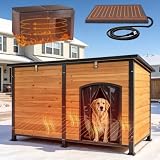
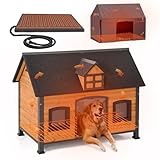

Top 3 picks at a glance
How to Choose a Safe Heated Dog House
1. Heating System Type and Safety
Not all heat is safe for enclosed dog houses. The systems that reliably pass safety standards for pets share three features: low surface temperature, chew-resistant cords or fully concealed wiring, and automatic shutoff.
- Thermostat-controlled radiant panel (wall-mounted): Usually 30-60 watts. Heats the air and the dog via radiant energy without hot spots. Best for small to medium houses where the dog could lie directly on a floor pad. Surface stays under 110°F and cycles on/off via built-in thermostat.
- Heated floor pad with steel-wrapped cord: Usually 40-96 watts. Pressure-activated or thermostat-controlled. Safer than space heaters because it only warms the contact area. Look for MET or UL listing for pet products and a removable, washable cover rated for outdoor use.
- Self-warming / reflective insert (no electricity): Mylar layer reflects body heat. No burn risk and no power needed, but only effective down to about 25°F if the house is well insulated. Good for barns, kennels, or dogs that chew cords.
Avoid ceramic space heaters, heat lamps, or any heater without a tip-over and overheat shutoff inside a dog house. They create fire risk, dry the air excessively, and can burn paws and noses in a small enclosure. All wiring should be routed through the wall and protected with conduit; never run an extension cord through the door flap.
2. Insulation and Weather Sealing
Heating is wasted without insulation. Look for double-wall construction with EPS or polyurethane foam. Walls and roof should be at least 1.5 inches thick with an advertised R-value of R-8 to R-13. A raised floor (2-4 inches off the ground) with an air gap and foam insert prevents conductive heat loss to frozen ground or concrete.
- Door: Self-closing, flexible vinyl door with magnetic seal retains up to 70% more heat than an open doorway. For extreme cold below 10°F, a double-door or vestibule design is significantly more effective.
- Seams and roof: Tongue-and-groove joints, weather stripping, and a sloped, hinged roof with drip edge prevent water intrusion. A bottom drain channel or slightly sloped floor lets you hose out moisture without pooling.
- Material: High-density polyethylene or insulated wood composite resists rot and is easier to clean than untreated wood. Wood needs a waterproof sealant and will require more maintenance.
3. Interior Dimensions by Dog Size
A house that is too large will not retain body heat; too small restricts movement and forces the dog against a heater. The ideal interior allows the dog to stand, turn around, and lie down with its legs extended, with about 6 inches of clearance on each side and 8-12 inches above the back when standing.
| Dog Size Class | Example Breeds | Ideal Interior (L x W x H) | Heater Wattage | Door Opening |
|---|---|---|---|---|
| Small (under 25 lbs) | Jack Russell, Beagle, Cavalier | 24″ x 18″ x 18″ | 30-40W panel or pad | 8″ x 11″ |
| Medium (25-50 lbs) | Border Collie, Cocker Spaniel, Husky | 32″ x 24″ x 24″ | 40-60W panel or pad | 10″ x 14″ |
| Large (50-85 lbs) | Labrador, German Shepherd, Boxer | 40″ x 28″ x 30″ | 60-80W panel | 12″ x 18″ |
| Extra Large (85+ lbs) | Great Dane, Mastiff, Saint Bernard | 48″ x 32″ x 32″ | 80-96W panel + insulated floor | 14″ x 20″ |
If your dog is between sizes, size up for length but add straw or a pad to reduce excess air volume in severe cold. For two dogs sharing a house, add 50% floor area, not double, so they can share body heat.
4. Energy Use and Power Budget: Worked Calculation
Heated dog houses are low-draw devices, but you should calculate operating cost and whether your outdoor circuit can handle it, especially if you use a heated water bowl on the same line.
Example: A medium house with a 60W thermostat-controlled radiant panel in a climate where nights average 20°F. The thermostat typically runs at a 35-45% duty cycle once the house is warm.
- Power draw when active: 60 watts
- Estimated duty cycle: 40% (24 minutes per hour heating)
- Average watts over time: 60 x 0.40 = 24 watts
- Daily energy use: 24 watts x 24 hours = 576 watt-hours or 0.576 kWh per day
- Monthly energy use: 0.576 x 30 = 17.28 kWh
- Monthly cost at $0.15/kWh: 17.28 x $0.15 = $2.59 per month
Even at 100% continuous operation during a cold snap, that same 60W heater uses only 1.44 kWh per day ($6.48 per month). By comparison, a 100W heat lamp running constantly would use 2.4 kWh per day and introduce a much higher burn risk. If you are on solar or a long extension run, choose the lowest wattage panel that matches your dog size class and add insulation before adding watts.
5. Cleaning Access and Durability
Heated houses need more frequent cleaning because warmth plus moisture breeds bacteria. Prioritize these features:
- Hinged or removable roof: A roof that opens to 90 degrees lets you remove the heater pad, disinfect the floor, and replace bedding without crawling inside. Look for a prop rod or hinge lock.
- Removable floor and heater cover: The heated pad should lift out completely and have a machine-washable cover. Sealed electronics with IPX4 or higher moisture resistance last longer.
- Drainage: A removable drain plug or slight floor slope makes rinsing simple and prevents urine or meltwater from sitting against the heater.
Composite plastic houses usually clean faster than wood. If you use straw, replace it when damp; if you use a pad, wash the cover weekly in winter.
Decision Matrix: Which Class Fits Your Situation
| Your Situation | Recommended Class | Why |
|---|---|---|
| Power available at house, temps often below 20°F, dog outdoors 6+ hours | Insulated double-wall house + 60-96W thermostat panel | Maintains 45-55°F interior reliably, lowest burn risk, low energy use |
| Power available but dog is a heavy chewer or puppy | Insulated house + wall-mounted radiant panel (no floor pad) | Keeps all heat elements and cords out of reach |
| No power or only occasional power, temps 25-40°F | Insulated house with self-closing door + self-warming reflective pad and straw | No electrical risk, retains body heat effectively in milder cold |
| Extreme cold below 0°F, large or senior dog | Extra-insulated house (R-13) with vestibule + 80W+ panel and heated floor pad on thermostat | Dual heat sources prevent cold floor, vestibule cuts wind chill inside |
| Rainy or snowy climate, house on soil or deck | Raised plastic composite house with drain channel and hinged roof | Prevents rot, keeps heater dry, easiest to sanitize |
What to Check Before Buying
- Verify the heater is specifically rated for pet houses with an automatic thermostat between 45°F and 55°F interior air temperature. A heater that only has an on/off switch without temperature control can overheat a small house.
- Confirm cord length and protection. A 6-foot steel-wrapped cord with chew guard is standard. If your outlet is further than that, install a weatherproof outlet closer rather than using an extension cord.
- Measure your dog from nose to tail base and floor to shoulders, then compare to interior dimensions, not exterior. Many listings show exterior first.
- Check weight and anchoring. In windy areas, an empty lightweight house can slide. Models usually weighing 35-60 lbs or with ground anchors stay put.
- Budget expectation: insulated-only houses usually fall in the $120-$250 range, while insulated houses with factory-installed thermostat-controlled heating usually fall in the $250-$550 range depending on size and insulation rating.
Setup and Safe Use Tips
Place the house on a level, well-drained spot facing away from prevailing wind, ideally with a windbreak like a fence. Elevate it if the ground holds water. Set the heater per instructions and let it cycle for 2-3 hours before introducing the dog. Check interior temperature with a thermometer at dog height; it should stabilize at 45-55°F when outside is freezing, not 70°F+. Keep bedding thin and flat over a heated pad so heat transfers correctly and the thermostat reads accurately. Inspect the door flap, seal, and cord guard monthly through winter.
Frequently Asked Questions
What temperature should a heated dog house maintain?
Aim for 45-55°F interior when the dog is inside. This is warm enough to prevent hypothermia and frostbite but cool enough that the dog does not overheat in a heavy coat or struggle to re-acclimate when going outside. A thermostat that cycles off above 55°F provides this range automatically.
Can a heated dog house be too hot?
Yes, if it lacks a thermostat or is oversized in wattage for the interior volume. Surfaces over 110°F can burn skin with prolonged contact. Choose a thermostat-controlled panel or pad limited to that range and size the watts to the house volume using the table above.
Do I need a heated dog house if my dog has a thick double coat?
Double-coated breeds tolerate cold better but still lose heat through an uninsulated floor and wind exposure. In sustained temperatures below 25°F or with wind chill, an insulated house with a self-closing door is strongly recommended even for Huskies and Malamutes. Add electric heat if temperatures regularly drop below 15°F or the dog is older, very young, or short-coated on the belly.
Is straw or a heated pad better in winter?
For powered houses, a thermostat-controlled pad is more consistent and drier than straw, which can trap moisture and mold if not changed often. In unpowered houses, dry straw over an insulated, raised floor is the best low-tech option. Do not use blankets or thick comforters that can bunch up and block the door or cover the thermostat sensor.


