
The best garden fencing for deer protection is an 8-foot tall woven wire or high-tensile fixed-knot fence with 6-inch vertical spacing and graduated horizontal spacing, while a 7.5-foot polypropylene deer netting works for moderate pressure gardens when installed with proper tension and angled top support.
As an Amazon Associate we earn from qualifying purchases at no extra cost to you.

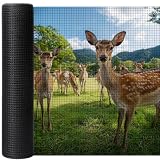

Top 3 picks at a glance
How Height and Deer Pressure Determine Your Fence Choice
White-tailed deer can clear a 6-foot fence from a standing jump if they have a clear landing zone, and mule deer can jump even higher. Height is not about intimidating deer, it is about exceeding their vertical jump commitment. Deer will not jump what they cannot see over or gauge a safe landing for.
- Low pressure (occasional sightings, urban edge): 7 to 7.5 feet is often sufficient, especially if the fence is visible and has a top line or flagging. Deer in these areas are less food-stressed and will detour to easier forage.
- Moderate pressure (regular trail, rural gardens, orchards nearby): 7.5 to 8 feet is the standard recommendation from university extension services. This covers most eastern and midwestern gardens.
- High pressure (herd bedding nearby, heavy winter browsing, large rural acreage): 8 feet minimum. For gardens under 40×40 feet, consider adding a 45-degree outward extension or two offset strands of electrified wire at 10 and 18 inches outside the main fence to create a 3D depth barrier.
A common mistake is building a 6-foot privacy fence and expecting it to stop deer. It will not. If municipal height limits restrict you to 6 feet, you need a double fence design instead: two 5 to 6-foot fences spaced 4 to 5 feet apart. Deer will not attempt the broad jump between them.
Materials Compared for Deer Fencing
Material choice affects visibility, lifespan, maintenance, and whether deer test the fence with their nose and body weight.
| Fence Type | Typical Height | Mesh / Wire Spacing | Lifespan | Cost Per Linear Foot (Materials Only) | Best Use Case |
|---|---|---|---|---|---|
| Fixed-Knot Woven Wire (high-tensile, Class 3 galvanized) | 7.5 – 8 ft | 6 in vertical, graduated 3 in at bottom to 6-8 in at top | 20 – 30 years | usually $1.50 – $3.00 | Permanent vegetable gardens, orchards, high pressure |
| Welded Wire (14-gauge galvanized) | 6 – 8 ft | 2×4 in | 10 – 15 years | usually $1.00 – $2.50 | Small to medium gardens, low-moderate pressure |
| Polypropylene Deer Netting (UV-stabilized, 700+ lb break strength) | 7.5 – 8 ft | 1.75×1.75 in square | 7 – 12 years | usually $0.30 – $0.80 | Large gardens, seasonal protection, budget installs |
| High-Tensile Electric (5-7 smooth wires) | 5 – 6 ft with electrification | 10-12 in wire spacing | 15 – 20 years (charger dependent) | usually $0.50 – $1.20 plus charger | Acreage, baited training required, not for small family gardens alone |
| Chain Link with Privacy Extensions | 8 ft (6 ft + 2 ft extension) | 2 in diamond | 15 – 20 years | usually $8.00 – $16.00 installed | Where code requires chain link and deer topping is added |
Which material holds up in practice?
Fixed-knot woven wire is the agricultural standard because the knot does not slip under deer impact. Unlike welded wire, it flexes and returns without breaking welds. Look for 12.5-gauge high-tensile wire with Class 3 galvanization. The graduated spacing is intentional: 3-inch spacing at the bottom prevents fawns and rabbits from crawling under, while wider spacing at the top saves weight and cost.
Polypropylene netting is effective because deer cannot see it well and dislike the unstable feel when they push it, but it must be kept taut. Loose netting tangles deer and will fail in snow load. Choose black netting with at least 650 lb burst strength and UV treatment rated for 800+ KLy. Avoid thin monofilament netting sold as bird net; deer will walk through it.
Electric fencing alone is not recommended for a small backyard garden with children and pets. It works best as a supplemental outside offset wire to train deer away from a physical barrier. If you use it, a low-impedance charger delivering 5,000 to 7,000 volts on the line is required.
Mesh Size and Ground Clearance Explained
Deer fencing fails at the bottom more often than the top. A gap larger than 6 inches at ground level invites fawns, and a fence that does not contact the ground invites deer to nose underneath.
- Bottom 24 inches: Use mesh no larger than 3×6 inches or 2×4 inches. This also excludes rabbits and groundhogs if you use 1-inch hex or 2×4 welded wire as a skirt.
- Middle and top: 6×6 inches or 6×12 inches is acceptable. Deer will not try to squeeze through mesh they can see; the risk is jumping, not threading.
- Ground clearance: Keep it at 0 to 2 inches max. On uneven ground, add a 12 to 18-inch apron of wire bent outward at 90 degrees and pinned with ground staples. This prevents digging and crawling without trenching.
- Visibility: For nearly invisible poly netting, tie white flagging or reflective tape every 6 to 8 feet at 4 and 7 feet high for the first month. Once deer learn the barrier, the flagging can be removed.
Gate and Access Design That Does Not Create a Weak Point
Most deer intrusions happen through gates left open or gates that are too short. Treat the gate as part of the fence system, not an afterthought.
- Match gate height to fence height exactly. A 6-foot gate on an 8-foot fence creates a visual invitation to jump. Use a full-height frame or add a welded wire top panel.
- Use a single swing or double swing gate with a rigid steel or aluminum frame. Flexible netting gates sag and leave gaps. For netting fences, build a framed gate and stretch the same netting across it.
- Install a self-closing hinge and a gravity latch or spring closer if you have frequent foot traffic. The best fence fails if it is left open for an hour at dusk when deer move.
- Seal the bottom gap. Add a 2×6 kick board or a wire skirt to keep clearance under 2 inches. On gravel or slope, install a ground board or threshold bar.
- For vehicle access, use a 10 to 12-foot double gate with a center drop rod. Add a removable 18-inch wire apron across the driveway threshold when closed in high-pressure areas.
Decision Matrix: Match Your Garden to the Right System
| Your Situation | Garden Size | Deer Pressure | Recommended System | Post Spacing & Type |
|---|---|---|---|---|
| Suburban backyard, HOA limited to 6 ft | Under 1,000 sq ft | Low | Double fence: two 5 ft welded wire fences, 4 ft gap OR 6 ft fence + 18 in outward angled single wire | 8 ft T-posts or 4×4 wood, 8 ft spacing |
| Standard raised bed garden | 1,000 – 2,500 sq ft | Moderate | 7.5 ft polypropylene netting on round fiberglass or metal posts with top tension cable | 10 ft posts (2 ft in ground), 10-12 ft spacing |
| Permanent vegetable garden + fruit trees | 2,500 – 10,000 sq ft | Moderate to High | 8 ft fixed-knot woven wire, graduated mesh, with framed gate | 12 ft pressure-treated 4-5 in wood or steel, 12 ft spacing + braces at corners/gates |
| Large homestead / acreage edge | Over 10,000 sq ft | High | 8 ft fixed-knot woven wire + offset electric wire 18 in outside at 30 in height | 12 ft wood line posts, 15-20 ft spacing, H-brace assemblies |
Installation Calculation: How Much Fence and How Many Posts You Need
Before buying, calculate linear footage, posts, and corner bracing so you do not end up short. Use this worked example for a common garden size.
Example garden: 40 feet x 60 feet (2,400 sq ft)
- Perimeter: (40 + 60) x 2 = 200 linear feet. Add 10% waste/overlap: 200 x 1.10 = 220 feet to purchase.
- Line posts: If spacing posts every 10 feet, you need 200 / 10 = 20 intervals. For a rectangular fence with four corners you need 20 posts including corners. If using 12-foot spacing, 200 / 12 = 16.7, round up to 18 posts including corners and gate posts.
- Corner and gate bracing: Every corner and every gate post needs bracing. For this garden with one 4-foot gate, that is 4 corners + 2 gate posts = 6 braced posts. Use H-braces or diagonal braces with 8-foot horizontal rails.
- Fencing rolls: Poly netting often comes in 7.5×100 ft or 7.5×165 ft rolls. For 220 feet you need three 100-ft rolls (300 ft total) or two 165-ft rolls. Fixed-knot woven wire comes in 12.5-gauge, 8 ft x 100 ft or 330 ft rolls. One 330-ft roll covers this garden.
- Ground apron (optional but recommended): Add 18 inches of apron along the bottom. That is 200 x 1.5 ft = 300 sq ft of additional welded wire or hex wire if you choose a full apron.
For larger plots, the same math scales quickly. A half-acre square (approx. 147 ft per side) needs 588 linear feet plus waste, which is about 647 feet to purchase, and at 12-foot spacing requires roughly 49 posts. Buying a 330-foot roll means you need two rolls with leftover for gates and repairs.
Installation Choices That Prevent Failure
Posts and footings
Wood posts should be pressure-treated to ground-contact rating (UC4A or UC4B) and set 30 to 36 inches deep for an 8-foot fence. In frost-prone or high-wind areas, set corners and gate posts in concrete or tamped gravel. T-posts work for netting and light welded wire but will lean over time under woven wire tension unless corner assemblies are wood or steel.
Tension and support
Woven wire needs a top tension wire or top rail and should be stretched with a fence stretcher, not by hand. Poly netting needs a top tension cable (7×19 galvanized aircraft cable or 1,200 lb monofilament) and ideally a bottom cable. Attach netting to the cable with hog rings or UV zip ties every 12 to 18 inches to prevent sagging.
Slope and terrain
On slopes, step the fence or follow the contour with shorter post spacing (8 feet instead of 12). Do not leave triangular gaps under the fence on downhill sides. Use longer posts on the downhill side and trim the bottom wire to follow grade, or add a graduated apron.
Snow and wind
In heavy snow regions, poly netting can collect ice and sag. Fixed-knot wire sheds snow better. If you must use netting, use breakaway zip ties at the top cable so snow load releases the netting rather than pulling posts.
FAQ
Can I use a 6-foot fence with an angled top extension to reach 7.5 feet?
Yes. A 6-foot fence with a 18 to 24-inch outward angle at 45 degrees is widely used where 8-foot fencing is not allowed. Extend the posts and run 2 to 3 offset wires or a short section of welded wire on the angle. The outward depth makes deer misjudge the jump more effectively than a vertical 7-foot fence.
Will fishing line or single-strand wire stop deer?
No. Single-strand fishing line or a lone wire at 30 inches may startle deer once, but deer quickly learn to step over or duck under it when food pressure is high. It is not a reliable garden barrier by itself. Use it only as a supplemental offset in front of a real fence.
How do I protect the fence line from deer pushing under the edge?
Pin the bottom wire to the ground with 6-inch or 9-inch ground staples every 3 to 4 feet, add a bottom tension wire threaded through the mesh, and install an outward apron of 14-gauge welded wire or 1-inch hex netting 18 inches out from the fence base. Mow and keep vegetation clear so deer do not use brush as a launching point.


