
Top 3 picks at a glance
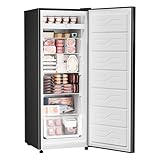
Best Convertible Freezer Refrigerators in 2026
The best convertible freezer refrigerators are four-door models with a separately controlled middle drawer, because they let you turn freezer space into refrigerator, deli, beverage, or soft-freeze storage without warming the main food compartment.
For most households, the best balance is a 22–29 cu. ft. French-door refrigerator with a convertible drawer offering at least three temperature modes. Choose a larger four-door model when you regularly store frozen food, and choose a simpler top-freezer or bottom-freezer design when low energy use and purchase price matter more than flexibility.
As an Amazon Associate we earn from qualifying purchases at no extra cost to you.


Quick comparison
| Type or example | Typical conversion range | Usable capacity | Energy pattern | Best for |
|---|---|---|---|---|
| Samsung Bespoke 4-Door Flex models | Freezer, refrigerator, and flexible middle-zone modes; commonly about -8°F to 41°F across zones | Approximately 25–29 cu. ft. nominal capacity | Moderate to high, especially with ice makers and connected features | Households wanting the widest day-to-day configuration options |
| Four-door refrigerator with convertible drawer | Usually about 0°F to 41°F, with several preset modes | Approximately 22–28 cu. ft. | Moderate; drawer insulation and compressor design matter | Families that need both freezer capacity and flexible fresh-food storage |
| French-door refrigerator with convertible drawer | Usually refrigerator, deli, beverage, or freezer settings | Approximately 20–27 cu. ft. | Moderate to high | Fresh-food storage with occasional extra freezer demand |
| Convertible bottom-freezer refrigerator | Often approximately 0°F to 39°F in the lower compartment | Approximately 18–24 cu. ft. | Low to moderate | Smaller kitchens and buyers prioritizing efficiency |
| Dedicated convertible freezer | Commonly about -11°F to 50°F, depending on the mode | Approximately 7–17 cu. ft. | Moderate when used as a freezer; often lower when lightly loaded as a cooler | Bulk storage, garages, entertaining, or a second refrigerator |
These are useful comparison ranges rather than universal guarantees. Manufacturers may specify set-point limits, while the actual food temperature varies with room temperature, loading, door openings, and air circulation. Always check the installation guide for the exact model.
Head-to-head: what matters most
1. Conversion range and useful modes
A wide numerical range is less important than the number of genuinely useful presets. A compartment that can be set from 0°F to 41°F covers the important food-storage jobs: frozen meat, ice cream, deli items, drinks, and extra vegetables. Some models add a soft-freeze setting around 23–28°F, which is useful for meat that will be cooked within a few days because it stays firmer than refrigerator food but is easier to portion than fully frozen food.
Look for independent control of the convertible zone. If changing the zone also changes the main freezer or refrigerator, it is not a true flexible compartment. A good design allows the main freezer to remain at approximately 0°F while the drawer operates near 34°F for drinks or deli food.
2. Usable capacity versus advertised capacity
Nominal cubic feet include areas that are difficult to use, such as space around ice makers, narrow door bins, and the clearance above drawers. A 28-cu.-ft. refrigerator may not hold substantially more everyday food than a well-designed 25-cu.-ft. model if its shelves are shallow or its ice system occupies a large section.
For practical planning, assume that only about 75–85% of advertised capacity is convenient for regularly accessed food. A household that needs 12 cu. ft. of actual refrigerator storage should therefore consider models advertised at roughly 15–16 cu. ft. of refrigerator space, not exactly 12 cu. ft.
Convertible zones also create a trade-off: every cubic foot moved from freezer mode to refrigerator mode is not necessarily a one-for-one gain in useful fresh-food space. Wire baskets and dividers may reduce packing flexibility, while a drawer configured for drinks can waste space around bottles.
3. Energy use and the conversion penalty
Refrigerators generally use more electricity when they have multiple evaporators, several ice makers, exterior displays, and frequently opened drawers. A convertible compartment may also use more energy while changing temperature because the compressor runs for extended periods.
Here is a simple annual-cost calculation. Suppose a model uses 650 kWh per year and local electricity costs $0.18 per kWh:
650 kWh × $0.18 = $117 per year
If frequent conversion and heavy door opening raise real-world consumption by 10%, the difference is:
650 × 0.10 × $0.18 = $11.70 per year
That means paying substantially more for a flexible model may not be financially justified by energy savings alone. Flexibility, capacity, and convenience are usually the reasons to buy one. Compare the yellow EnergyGuide label rather than assuming a smaller refrigerator is automatically cheaper to run; some compact models have less insulation or older compressor technology.
4. Compartment layout
Four-door designs usually provide the best separation between food categories. Two upper doors reduce the amount of cold air lost when opening the refrigerator, while a center drawer keeps frequently used food accessible. The downside is a wider collection of narrow bins and less room for very large trays.
A conventional French-door layout is better for wide platters, sheet pans, and large containers. A convertible lower drawer adds flexibility, but it may reduce the height available for frozen pizza boxes or tall freezer baskets.
Dedicated convertible freezers are the most efficient choice for bulk storage. They usually have fewer complicated compartments and can be switched between freezer and refrigerator duty, but they do not replace the convenience of a full refrigerator with organized fresh-food drawers.
5. Controls and temperature feedback
Prefer a model with an internal digital control panel, a physical or clearly labeled mode selector, and a visible temperature alarm. App control is convenient, but it should not be required for basic temperature changes. A refrigerator is a poor fit if a power outage, disconnected Wi-Fi network, or software update prevents you from selecting freezer mode.
Temperature displays also require interpretation. The displayed setting is not the same as the temperature of every item inside. For food safety, keep the refrigerator compartment at 40°F or below and the freezer at 0°F. After changing modes, place an inexpensive refrigerator thermometer in the compartment and allow it to stabilize before loading valuable food.
Which type fits your situation?
| Your situation | Best choice | Why |
|---|---|---|
| You buy frozen food in bulk but sometimes need extra refrigerator space | Large four-door model with an independently controlled middle zone | It preserves a main freezer while converting only the flexible section |
| You host parties and need drink or deli storage | French-door model with a drawer that reaches approximately 34–39°F | The drawer can hold cans, bottles, cheese, and prepared food without opening the main compartment |
| You have a small kitchen or high electricity rates | Convertible bottom-freezer model in the 18–22-cu.-ft. class | It reduces exterior size, feature count, and likely standby consumption |
| You need garage or basement storage | Dedicated convertible freezer rated for the intended ambient temperature | It provides bulk capacity, but garage temperature limits must be checked before purchase |
| You change modes only once or twice a year | Standard refrigerator plus a separate freezer may be better value | A conversion feature adds cost and complexity that may go unused |
How long does switching take?
Manufacturers commonly quote several hours for a mode change, but reaching the target setting and safely cooling newly loaded food are different events. An empty flexible compartment may approach its new setting in roughly 4–12 hours. A compartment full of warm groceries can take 12–24 hours or longer.
Use this process:
- Move temperature-sensitive food to another cold compartment before changing modes.
- Select the new mode with the control panel, then leave the drawer closed.
- Wait at least 6 hours before checking the displayed temperature.
- For a freezer conversion, wait until the compartment is near 0°F before loading frozen food.
- After loading, allow another 12–24 hours for the food itself to stabilize.
Do not repeatedly switch modes during a single day. Frequent changes waste energy, create uneven temperatures, and can leave food in the danger zone even when the display appears normal.
Best buying priorities
Choose conversion range first if you have a changing household, capacity and layout first if you cook or shop in bulk, and energy label performance first if the refrigerator will run in a hot room or be used for many years. Also measure door swing, hinge clearance, depth with handles, and the path through doorways. A refrigerator that fits the cabinet opening but cannot open its drawers fully is not a practical upgrade.
The strongest all-around choice is a four-door refrigerator with a separately controlled flexible drawer, independent main freezer, usable capacity around 20–24 cu. ft., and a straightforward control panel. Buyers who need maximum volume should accept higher purchase and energy costs for a larger Bespoke-style four-door design. Buyers who rarely convert compartments should spend less on a conventional refrigerator and put the remaining budget toward a separate, efficient freezer.
Frequently asked questions
Can a convertible compartment replace a refrigerator’s main freezer?
Usually, no: the main freezer can stay near 0°F while an independently controlled zone switches to refrigerator settings. That makes the flexible compartment useful for extra fresh-food or drink storage without changing the main freezer. A dedicated convertible freezer can switch between refrigerator and freezer duty, but it does not provide the organized fresh-food drawers of a full refrigerator.
Is a displayed temperature the same as the temperature of the food?
No: the displayed setting is not necessarily the temperature of every item inside. Actual food temperature can vary with room temperature, loading, door openings, and air circulation. After changing modes, use a refrigerator thermometer and let the compartment stabilize before loading valuable food. Keep refrigerator food at 40°F or below and the freezer at 0°F.
Can I put a convertible freezer in a garage or basement?
Only if the model is rated for the ambient temperature where it will be installed. The article recommends checking garage temperature limits before buying, since a dedicated convertible freezer’s suitability depends on those limits. Check the exact model’s installation guide rather than assuming that every convertible freezer is appropriate for a garage or basement.
What should I do with food before changing the compartment’s mode?
Move temperature-sensitive food to another cold compartment before switching modes. Select the new mode on the control panel and leave the drawer closed while it cools. For freezer mode, wait until the compartment is near 0°F before adding frozen food; after loading, allow another 12–24 hours for the food itself to stabilize.
How can I tell whether a convertible zone is independently controlled?
Check whether the flexible zone can change temperature while the main freezer stays at approximately 0°F. If switching the zone also changes the main freezer or refrigerator, it is not a true flexible compartment. The article recommends looking for independent control so the middle drawer can, for example, operate near 34°F for drinks or deli food.


