Most fatal home fires happen while people are asleep, which makes the bedroom the one room where a smoke detector earns its keep. The decision behind this keyword is narrower than “which alarm is good”: it is which alarm will wake you reliably, will not shriek at 3 a.m. because a battery is running low, and will not go off every time someone showers or cooks across the hall. That points toward photoelectric sensing, a sealed long-life battery or a hardwired setup, and a hush button within easy reach.
This guide is for homeowners and renters fitting out sleeping rooms, parents planning a child’s room, and anyone replacing an old chirping unit. Every product below is a smoke alarm, and each is judged on what its listing states: sensor type, battery arrangement, certification, and convenience features. Whatever you pick, local fire codes and the manufacturer’s instructions decide placement, so treat this as a shortlist rather than a code reference. A quiet detail worth planning for: the best alarm in the world still fails if the bedroom door is closed and the only unit sits down the hall, so count rooms first and models second.
Our Top Picks
 SITERWELL Smoke Detector Fire Alarms 9V Battery Operated1 Pack3.93 x 3.93 x 1.37 Inches0.22 poundsCheck on Amazon

Top 3 picks at a glance
Quick Picks
As an Amazon Associate we earn from qualifying purchases at no extra cost to you.


| Product | Best for | Key spec from the title |
|---|---|---|
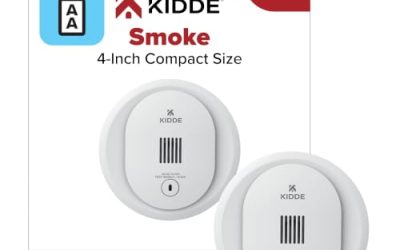
| Kidde 10SDR Compact | Small bedrooms and dorm rooms | AA battery, 4-inch body, LED lights, 85 dB |
| X-Sense SD2J0AX | Set-and-forget sleeping rooms | 10-year battery, UL 217, photoelectric, hush button |
| SITERWELL 10-Year Alarm | Sealed-battery simplicity | 10-year product life, photoelectric, low-battery warning |
| SITERWELL 9V Alarm | Easy battery swaps | 9V battery, photoelectric, silence button |
| SITERWELL Hardwired Interconnected | Whole-floor alerts with backup | Hardwired, 9V backup, interconnected |
| SITERLINK GS509A 4-Pack | Outfitting several bedrooms | 4 pack, 9V replaceable battery, photoelectric |
How to Choose
Sensor type and certification
Start here because it is the one thing you cannot change after installation. Photoelectric sensors respond well to slow, smoldering fires, the kind that start in bedding or upholstery, and they cause fewer nuisance alarms from cooking than older ionization designs. Every pick here lists a photoelectric sensor. Look for UL 217 on the listing, since it is the US safety standard for smoke alarms; the X-Sense title states it outright, while others should be confirmed on the product page or box.
Power source: sealed battery, replaceable battery, or hardwired
A sealed 10-year battery removes the middle-of-the-night low-battery chirp for a decade and suits renters. A replaceable 9V or AA battery is cheaper upfront but requires you to track dates and keep spares. Hardwired units with battery backup keep working during outages and can be interconnected so every alarm sounds together, which matters when the fire starts in a kitchen two doors from a sleeper.
Loudness, hush features, and low-battery behavior
A standard smoke alarm sounds around 85 dB at about ten feet, and the Kidde title states exactly that figure. Heavy sleepers, children, and anyone with hearing loss may need interconnection, so a distant alarm adds volume, or a specialized bed-shaker device. A test and silence button lets you quiet a false alarm without removing the unit, and a low-battery warning should be a brief chirp, not a continuous alarm.
Placement and what to ignore
The common guidance is one alarm inside every bedroom, one outside each sleeping area, and one on every level. Ignore marketing about “smart” features if you only need dependable detection, and ignore multipack claims unless the count matches the rooms you actually need. Budget models cut corners on documentation, mounting hardware, and sensor longevity, so favor products that state their certification and product life. If a bedroom has a bathroom attached, keep the alarm a few feet from the door so steam does not trigger it every morning.
The 6 Best Options
Kidde 10SDR Compact Smoke Alarm
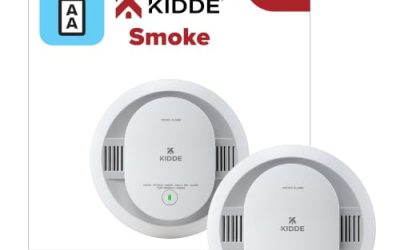
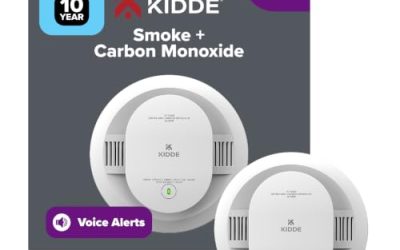
Kidde’s 10SDR is a 4-inch, AA battery-powered alarm with LED status lights and an 85 dB horn. The compact body makes it a natural fit for small bedrooms, studio apartments, and dorms where a bulky ceiling unit looks out of place. The listing calls it ideal for homes and small spaces, which fits a single sleeper who wants basic protection without wiring or a monthly routine of testing complicated features.
- Strength: LED status lights let you confirm operation at a glance in a dark room.
- Strength: the 4-inch footprint suits tight ceilings and small spaces.
- Trade-off: it relies on replaceable AA batteries, so you must track swap dates.
Skip it if you want a sealed battery you never have to touch, or if the room has a very high ceiling that makes battery swaps awkward.
X-Sense SD2J0AX Photoelectric Alarm
The SD2J0AX combines a 10-year battery, UL 217 certification, and a photoelectric sensor designed to reduce cooking nuisance alarms. A one-button hush feature rounds it out. It is listed as both single units and a larger multipack, so a family can buy one per bedroom plus hallway units in a single order and keep every alarm on the same model and the same replacement date.
- Strength: the sealed battery removes routine battery changes for the product life.
- Strength: nuisance-alarm reduction and a hush button suit bedrooms near kitchens or bathrooms.
- Trade-off: a sealed battery means replacing the entire unit at end of life.
Skip it if you prefer a unit with a user-replaceable battery.
SITERWELL 10-Year Photoelectric Alarm
This SITERWELL model advertises a 10-year product life, a photoelectric sensor, and a low-battery warning function. It suits houses where the goal is to install alarms once and forget about them, such as a guest room that is used rarely and where nobody would notice a battery slowly fading for months.
- Strength: the 10-year life reduces maintenance across a bedroom hallway.
- Strength: the low-battery warning prevents silent failure late in the unit’s life.
- Trade-off: the listing is less detailed about certification than the X-Sense title.
Skip it if the certification mark is the first thing you check.
SITERWELL 9V Battery Photoelectric Alarm
The 9V SITERWELL pairs a photoelectric sensor with a silence button and a low-battery warning. It is the practical choice for buyers who prefer swappable batteries and easy installation, because the title stresses a simple mount and the batteries can be bought at any hardware store on short notice.
- Strength: standard 9V batteries are inexpensive and available almost anywhere.
- Strength: the silence button handles false alarms without a ladder trip to pull the battery.
- Trade-off: you are responsible for replacing batteries on schedule.
Skip it if you do not want recurring maintenance on every bedroom unit, or if you often forget what month you last changed a battery.
SITERWELL Hardwired Interconnected Alarm
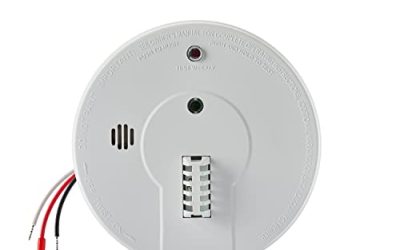
This unit is photoelectric, hardwired into household power, and backed by a 9V battery, with interconnection so multiple alarms sound together. A test and silence button is included. Because several units can be linked, it works well for a hallway-plus-bedrooms layout where one trigger should alert the entire floor, including children’s rooms at the far end.
- Strength: interconnection means a fire in the kitchen sounds in the bedroom.
- Strength: the 9V backup keeps it working through a power outage.
- Trade-off: hardwiring typically calls for an electrician or compatible existing wiring.
Skip it if you rent or lack ceiling wiring where the alarm needs to go, or if you are unsure about working with household electrical circuits.
SITERLINK GS509A 4-Pack
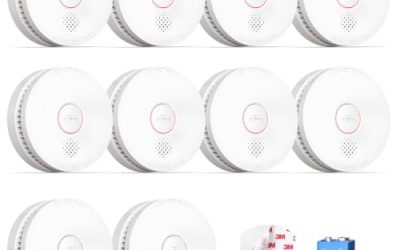
The GS509A is sold in a four-pack with 9V replaceable batteries and a photoelectric sensor. A test-silence button is listed. It is aimed at households outfitting several bedrooms in one purchase, and the sensor named here is photoelectric, which is the type most buyers want in sleeping rooms.
- Strength: four units cover multiple sleeping rooms at once.
- Strength: photoelectric sensing is listed alongside a test-silence control.
- Trade-off: four 9V batteries mean four separate replacement dates to track.
Skip it if you only need one alarm, since the pack would waste units.
Which One Fits Your Situation
You rent a one-bedroom apartment
The X-Sense SD2J0AX needs no wiring and no battery changes, and it comes off the ceiling cleanly when you move. Mount one in the bedroom and one in the hallway outside it. Because the unit is sealed, there is nothing to open or refill, which also helps if a landlord inspects the property and wants to see working alarms with clear dates.
You are fitting out a family home with four bedrooms
The SITERLINK GS509A 4-Pack covers every sleeping room in one go. Set a calendar reminder for battery swaps and keep spare 9V cells in a drawer. Label each unit with the install date in marker on the back so nobody has to guess which room is due next.
You are building or renovating
The SITERWELL Hardwired Interconnected unit lets you tie every bedroom and hallway together so a fire anywhere triggers alarms everywhere. Plan the wiring before drywall closes, and place a unit in each bedroom, in the hall, and at the top of the stairs. The battery backup then covers any night when the power fails during a storm.
You have a tiny room or dorm
The Kidde 10SDR Compact fits where a larger body would feel intrusive, and its LED lights confirm operation without a test press. Pair it with a spare set of AA batteries stored with the room’s other essentials, and check it on the first of every month.
Common Mistakes
- Installing an alarm only in the hallway and leaving the bedroom itself uncovered, so a closed door muffles the signal.
- Mounting units in the corner where walls meet the ceiling, where airflow can keep smoke away.
- Pulling the battery after a cooking false alarm and forgetting to put it back.
- Mixing very old and new units on an interconnected circuit without checking compatibility.
- Ignoring the manufacture date on a sealed-battery alarm until it starts chirping years later, instead of noting the replacement year when you install it.
Related guides
- What Is The Best Budget Most Responsive Gaming Mouse Wired
- Low Latency Gaming Headphones Usb-C 2.4 Ghz Wireless
- Low Latency Gaming Headphones Usb-C Dongle 2.4 Ghz
Frequently Asked Questions
Do I need a smoke alarm inside every bedroom?
Common fire-safety guidance says yes: one inside each bedroom, one outside each sleeping area, and one on every level. Local code may add requirements, so check your area’s rules.
Are photoelectric alarms better than ionization for bedrooms?
Photoelectric sensors are generally better at detecting smoldering fires and cause fewer cooking-related false alarms. Many households choose them for rooms near kitchens and bathrooms. If you are unsure, a photoelectric model is the safer default for a sleeping space because bedding fires tend to smolder before they flame.
How often should I replace a smoke alarm?
Plan on replacing the whole unit around ten years from the manufacture date, which is printed on the back. Sealed 10-year models are built around that cycle. Test the alarm monthly with the test button, and replace any unit that fails the test regardless of its age.
What does an interconnected alarm do?
When one unit detects smoke, every connected alarm sounds. That is valuable in a larger home, where a fire far from the bedroom might not otherwise wake you in 2026 or any other year.