
Top 3 picks at a glance
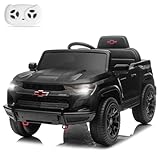
Best 12V Ride-On Cars for Kids
The best 12V ride-on cars for most families are the Power Wheels Dune Racer for grass and mixed yards, the Power Wheels Jeep Wrangler for younger children who need a slower, more predictable ride, and the Peg Perego John Deere Ground Force for larger children who need higher ground clearance and a stronger weight rating.
A 12V ride-on is usually the practical middle ground between a small 6V vehicle and a faster 24V model. Expect roughly 2.5–5 mph, around 45–90 minutes of intermittent driving per charge, a 110–180 lb vehicle weight, and a 12V lead-acid battery that may need 8–14 hours to recharge. Actual results depend heavily on the child’s weight, temperature, tire traction, hills, grass length, and whether the vehicle has one or two motors.
As an Amazon Associate we earn from qualifying purchases at no extra cost to you.
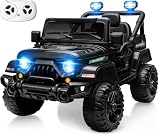


Quick comparison of the best 12V ride-on cars
| Model or type | Typical age | Speed | Weight limit | Typical runtime | Charge time | Best surface |
|---|---|---|---|---|---|---|
| Power Wheels Jeep Wrangler | 2–4 years | 2.5 and 5 mph | Up to 65 lb | 45–75 minutes | 8–12 hours | Pavement, short grass |
| Power Wheels Dune Racer | 3–7 years | 2.5 and 5 mph | Up to 130 lb | 45–90 minutes | 8–12 hours | Grass, pavement, packed dirt |
| Power Wheels Ford F-150 | 3–7 years | 2.5 and 5 mph | Up to 65 lb | 45–75 minutes | 8–12 hours | Pavement, firm lawn |
| Peg Perego John Deere Ground Force | 2–7 years | 2.5 and 4.5 mph | Up to 85 lb | 60–90 minutes | 10–14 hours | Grass and uneven yards |
| 12V two-seat ride-on SUV | 3–6 years | 2.5–4 mph | Up to 110 lb combined | 35–70 minutes | 8–12 hours | Pavement and short grass |
Specifications vary by production version, battery condition, and regional configuration, so check the manual for the exact model before buying. The runtime figures above are useful planning ranges rather than guaranteed continuous-drive times.
Best overall: Power Wheels Dune Racer
The Power Wheels Dune Racer is the strongest all-round choice when the vehicle will be used on both pavement and grass. Its open layout makes it easier for a child to climb in and out, while the wide rear tires provide more stability than narrow-wheeled toy cars. A typical version has two forward speeds, reverse, a 12V battery, and a maximum speed near 5 mph.
Its main advantage is the weight limit, commonly around 130 lb. That gives it more useful growing room than many licensed single-seat trucks. It is also less likely to bog down under a heavier child than a compact 12V car with a 65 lb limit. The trade-off is size: it needs more storage space and may be awkward in a narrow yard.
Choose it if:
- Your yard includes short grass, packed dirt, and paved paths.
- You want a vehicle that can accommodate a larger preschool or early-school-age child.
- Stability and weight capacity matter more than a realistic enclosed-car appearance.
Best for younger children: Power Wheels Jeep Wrangler
The Power Wheels Jeep Wrangler is better suited to a smaller child who needs a familiar pedal-and-steering layout without the bulk of a two-seat SUV. The common 12V configuration offers a low speed around 2.5 mph and a higher speed near 5 mph, with a parent-controlled high-speed lockout on many versions.
It performs well on pavement and short, dry grass. It is less suitable for long wet grass, steep slopes, loose gravel, or deep sand because its smaller footprint and modest ground clearance can make the drive motors work harder. The usual weight limit is about 65 lb, so it is a poor value if your child is already close to that figure with clothing and shoes included.
Best use case
Buy this style for a two- to four-year-old using a mostly flat driveway, patio, or maintained lawn. If the child is tall or heavy for their age, move up to the Dune Racer or a larger 12V truck rather than relying on the advertised age range.
Best for uneven grass: Peg Perego John Deere Ground Force
The Peg Perego John Deere Ground Force is a tractor-style 12V ride-on designed around outdoor use rather than a smooth-road driving experience. Its agricultural styling reflects useful design choices: larger tires, useful clearance, and a body that handles lawn transitions better than many low-slung toy cars. Typical versions reach about 4.5 mph and support a child weighing up to approximately 85 lb.
It is a good choice for a yard with gentle bumps, short-to-medium grass, and firm soil. It still is not a miniature off-road vehicle. Wet turf, steep inclines, thick weeds, and soft mud can overwhelm a 12V drivetrain, especially when the child is near the weight limit or towing an attached trailer.
The tractor’s slower top speed is an advantage for first-time drivers. It gives the child enough movement to learn steering while reducing the sudden acceleration that can make a light ride-on difficult to control.
Best 12V truck-style option: Power Wheels Ford F-150
The Power Wheels Ford F-150 suits children who prefer a realistic pickup design and will drive mostly on flat, firm surfaces. It commonly has a 12V battery, two forward speeds, reverse, and a top speed around 5 mph. The truck bed is useful for lightweight toys, but it should not be treated as a passenger seat or loaded with heavy objects.
Compared with the Dune Racer, the F-150 is usually more dependent on good traction and a reasonable load. Many versions are rated around 65 lb, making the model better for a younger or lighter child than for a large seven-year-old. Its larger body can also make turning harder in a small yard.
How to match a 12V ride-on to your yard
| Yard condition | What to prioritize | Suitable choice | What to avoid |
|---|---|---|---|
| Flat driveway or patio | Low-speed control, compact turning circle | Jeep Wrangler or compact 12V car | Large two-seat SUV with long turning radius |
| Short, dry grass | Traction and at least 65 lb capacity | Dune Racer, F-150, or Ground Force | Lightweight ride-ons with hard plastic wheels |
| Uneven lawn | Ground clearance and larger tires | John Deere Ground Force | Low sports-car-style bodies |
| Long or wet grass | Lower load, dry conditions, realistic expectations | Ground Force on maintained sections | Any 12V ride-on used on saturated or tall grass |
| Loose gravel or sand | Wide tires and a firm, shallow route | Dune Racer, if the surface is compacted | Deep sand and steep gravel slopes |
Runtime: a useful calculation before you buy
A typical 12V ride-on battery may be rated at 7 Ah. Its nominal energy is approximately:
12 volts × 7 amp-hours = 84 watt-hours.
If two motors together draw an average of 70 watts while moving, the theoretical runtime is:
84 Wh ÷ 70 W = 1.2 hours, or about 72 minutes.
Real runtime is lower or higher because motors draw more current while starting, climbing, and moving through grass. A heavy child on a slope may reduce that figure to 35–50 minutes, while a small child driving on smooth pavement with frequent stops may approach 90 minutes. This is why a larger battery capacity alone does not guarantee longer playtime: motor gearing, tire grip, load, and terrain are equally important.
Battery and charging considerations
Most 12V ride-ons use sealed lead-acid batteries. They are inexpensive and durable, but they are heavy and should normally be charged after each substantial play session. A full charge commonly takes 8–14 hours. Do not leave a battery unused for months without charging it, because deep discharge can permanently reduce capacity.
- Charge indoors or in a dry, ventilated area using the supplied charger.
- Allow the vehicle to cool after demanding use before charging.
- Stop using the battery if the case swells, leaks, becomes unusually hot, or smells abnormal.
- Replace the battery with the same voltage and a compatible connector and physical size.
- Do not expect a 24V battery or improvised charger to be a safe upgrade for a 12V vehicle.
Decision guide by child and use case
- Small two- to four-year-old on pavement: choose the Power Wheels Jeep Wrangler or another compact 12V model with a low-speed lockout.
- Three- to seven-year-old on grass and pavement: choose the Power Wheels Dune Racer for its larger weight limit and broad tires.
- Child who mainly drives on an uneven lawn: choose the Peg Perego John Deere Ground Force for clearance and outdoor-oriented gearing.
- Child who wants a realistic pickup: choose the Power Wheels Ford F-150, provided the weight limit leaves comfortable headroom.
- Two children riding together: consider a genuine two-seat 12V vehicle, but check the combined weight limit. A rear seat does not automatically make a single-seat model safe for two passengers.
Frequently asked questions
Can a 12V ride-on handle hills?
A 12V ride-on may struggle on steep slopes, especially with a heavier child. The article notes that hills increase motor demand and can reduce runtime, and that steep inclines can overwhelm the John Deere Ground Force. For better performance, use these vehicles on firm, relatively flat surfaces and avoid steep hills.
Can two children ride in a 12V ride-on?
Only consider two children together in a vehicle specifically designed as a two-seat ride-on. The article lists a 12V two-seat SUV with a combined weight limit, but the provided decision guide does not finish its recommendation. Check the exact model’s manual and weight rating rather than assuming a single-seat vehicle can carry a passenger.
Is a ride-on’s advertised age range enough to choose the right model?
No; check your child’s weight and the vehicle’s weight limit as well as the age range. The article cautions that a child who is tall or heavy for their age may need a larger model, and recommends leaving comfortable weight-limit headroom. Include clothing and shoes when considering the child’s weight.
What surfaces should a 12V ride-on avoid?
Avoid saturated or tall grass, deep sand, soft mud, and steep slopes. The article explains that these conditions can overwhelm a 12V drivetrain, particularly when the child is near the weight limit or towing a trailer. Loose gravel can also be difficult; a firm, shallow route is preferable.
Can I upgrade a 12V ride-on with a 24V battery?
No; the article advises against using a 24V battery or an improvised charger as an upgrade. Use a replacement battery with the same voltage and a compatible connector and physical size. Charge with the supplied charger, and stop using the battery if it swells, leaks, becomes unusually hot, or smells abnormal.
Final recommendation
For the widest range of children and yard surfaces, the Power Wheels Dune Racer is the best 12V ride-on car to start with. Choose the Power Wheels Jeep Wrangler when compact size and gentle early driving matter most, or the Peg Perego John Deere Ground Force when grass and uneven ground are the priority. Whichever model you select, leave at least 10–15 lb of unused weight capacity, measure the narrowest gate or storage doorway, and treat advertised runtime as a best-case range rather than a guarantee.


