On a backpacking trip every ounce is argued over, and a phone that dies at mile 14 is more than an inconvenience: it is your map, your camera, your emergency contact and often your headlamp backup. That is the real question behind “portable chargers for backpacking.” You are not asking which power bank holds the most energy. You are asking which one holds enough energy for the number of days between outlets, without adding a brick’s worth of weight to a pack that is already full.
This guide is for weekend hikers, thru-hikers planning multi-day stretches, and travelers who want a power bank that works for both the trail and the airport. The six picks include compact 10000mAh banks, a larger solar-assisted unit and one foldable solar panel, and each is judged only on the capacity, ports and features its title lists. For 2026 trips the main trade-off is between pure capacity, built-in cables that save weight and a panel that adds endless but slow charging when the sun cooperates.
Our Top Picks
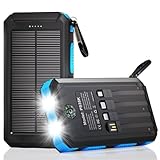
 charmast Portable Charger Power Bank with Reinforced Built-in5.67 x 2.64 x 0.71 inchesCheck on Amazon


Top 3 picks at a glance
Quick Picks
As an Amazon Associate we earn from qualifying purchases at no extra cost to you.




| Product | Best for | Key spec from the title |
|---|---|---|
| INIU 10000mAh 45W | Fast top-ups on short trips | 10000mAh, 45W fast charging, detachable USB-C cable |
| charmast 10000mAh | Cable-free packing | Built-in 4 cables, 6 outputs, 3 inputs, carry-on friendly |
| Durecopow Solar Power Bank | Long weekends with sun | 20,000mAh, 4 cables, 3 ports, solar charging |
| 2-Pack 10000mAh Power Banks | Groups sharing the load | Two 10000mAh banks, 37Wh each, flight-safe |
| HELLEE 15000mAh | Slim mid-capacity carry | 15000mAh, built-in 4 cables, 22.5W fast charging |
| FlexSolar 15W Foldable Panel | Extending a trip past a few days | 15W, IP67 waterproof, lightweight, 5V USB output |
How to Choose
Capacity for the days between outlets
A modern phone battery holds roughly 3000 to 5000mAh, and real-world delivery from a power bank is usually around 60 to 70 percent of its rated capacity. A 10000mAh bank therefore gives about one and a half to two phone charges. A 20000mAh bank stretches to three or four. Add a camera, GPS watch or headlamp, and the numbers drop quickly, so estimate your total device draw before packing. A simple rule is to list every device, note its battery size, and add 30 percent as a buffer for cold nights, because low temperatures cut both battery output and phone runtime.
Weight and cables are the hidden costs
Capacity costs weight, and the titles here do not give grams, so check the product details before buying. Built-in cables, as on the charmast and HELLEE, save you from carrying and losing loose cords. Detachable cables are easier to replace when one fails. Whichever you choose, pack a short, sturdy cable and keep everything in a dry pouch. Also look at port count and whether the bank can charge itself and a device at once, since pass-through charging helps when you have one outlet at a hostel.
Flight safety and watt-hours
Airlines generally allow power banks up to 100Wh in carry-on bags, and titles that list 37Wh for a 10000mAh unit are showing the number a gate agent might ask about. A 20000mAh bank sits near 74Wh, which is still under the common limit. Power banks must travel in carry-on luggage, never in checked bags, so a flight-safe label matters if the trailhead requires a flight.
Solar: what it can and cannot do
A small panel gives slow, weather-dependent charging, and a solar strip built into a power bank is more of an emergency trickle than a real recharging method. A separate folding panel, such as the FlexSolar, can feed a phone directly during the day. For trips of four days or fewer, a bigger battery is usually lighter and more reliable than adding a panel.
The 6 Best Options
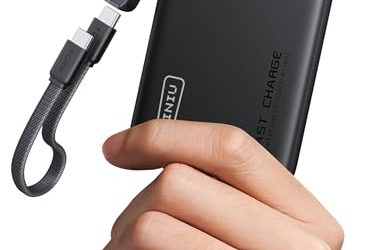
INIU 10000mAh 45W Fast Charging Portable Charger
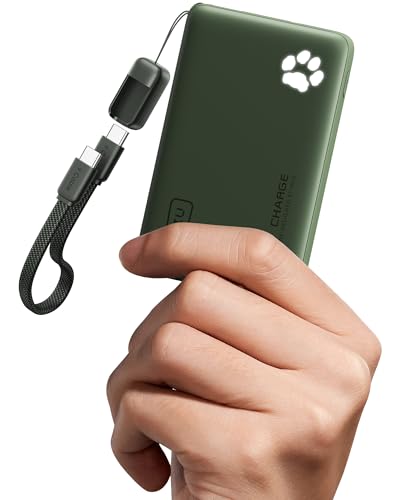
The INIU lists 10000mAh, 45W fast charging and a detachable USB-C cable, and the title calls it a smaller travel power bank that is flight-safe. It is the sensible pick for a one- or two-night trip where you want quick top-ups at camp and a bank that doubles as a travel charger.
- Strength: the 45W output can top up a phone quickly and may handle a tablet or small laptop.
- Strength: the compact size and flight-safe wording suit a hike that begins with a flight, and the detachable cable is easy to swap if one fails.
- Trade-off: 10000mAh covers only a couple of phone charges, so longer trips need a bigger bank or a panel.
Skip it if you are out for four or more days without outlets, or if you need a built-in cable. Since it relies on a loose USB-C lead, it also asks you to keep track of one more small item in the pack.
charmast 10000mAh Power Bank with 4 Built-in Cables
The charmast packs four reinforced built-in cables, six outputs and three inputs into a 10000mAh body that is labeled for carry-on travel. It is aimed at hikers who dislike tangled cords and want to charge several devices at once.
- Strength: built-in cables remove the need to carry separate cords.
- Strength: six outputs let a phone, watch and headlamp charge in parallel, which saves time at a crowded camp spot.
- Trade-off: a built-in cable that frays or breaks is harder to replace than a detachable one.
Skip it if you want the highest charging wattage or a bank with a removable cable for easy repair. Group trips with several phones may also want more capacity, because ten thousand milliamp-hours disappears quickly when three people share it.
Durecopow Solar Charger Power Bank 20,000mAh
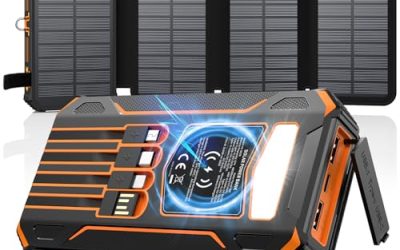
This 20,000mAh unit lists four cables, three ports, fast charging, a USB-C connection and a solar panel. The capacity is the highest of the power banks here, which makes it a candidate for multi-day trips, with the solar panel meant as a backup.
- Strength: the 20,000mAh capacity can cover three or four phone charges.
- Strength: built-in cables and multiple ports reduce loose gear.
- Trade-off: larger capacity means more weight, and the small solar panel is slow, so do not count on it for a full recharge.
Skip it if you are counting every ounce on a minimalist weekend trip, or if you would rather keep solar gear completely separate from the battery. It also takes noticeably longer to refill at home, so plan an overnight charge before departure.
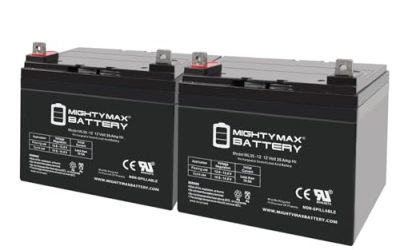
2-Pack 10000mAh Portable Chargers
This two-pack of 10000mAh power banks lists three outputs, two inputs and 37Wh per unit with a slim, flight-safe design. Two banks can be split between hikers in the same group or kept as a main and a backup.
- Strength: two units provide redundancy, so a single failure does not leave you without power.
- Strength: the slim bodies fit pack pockets and hip belts easily.
- Trade-off: the combined weight is higher than one equivalent 20000mAh bank.
Skip it if you hike alone and prefer to carry one larger bank. The title also does not mention built-in cables or a fast-charging wattage, so expect to bring your own cords and plan on moderate charging speed. Buyers who like one tidy device should look at the larger single banks instead.
HELLEE 15000mAh Portable Charger with Built-in Cables
The HELLEE lists 15000mAh, four built-in cables, a slim shape, a design that is 45 percent smaller than comparable units according to its title, and 22.5W fast charging with a 30-minute claim. It sits between the 10000mAh and 20000mAh options, which makes it a reasonable pick for a three-day trip with a phone and a small camera or watch.
- Strength: 15000mAh gives roughly two to three phone charges in a slim body.
- Strength: the 22.5W output speeds up charging at camp.
- Trade-off: at 22.5W it will not match the 45W bank for tablets or laptops.
Skip it if you need a high-wattage port for non-phone devices or a detachable cable. Hikers who prefer a repairable, swappable cord may also find it limiting. If you often charge a camera or headlamp, double-check which ports are compatible before relying on it for a long trip.
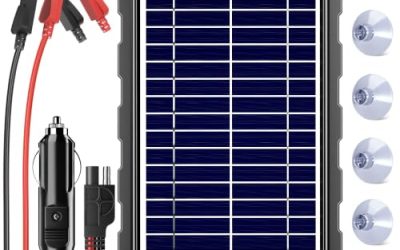
FlexSolar 15W Foldable Solar Panel Charger
This is the only panel in the set: 15W, foldable, IP67 waterproof and described as lightweight, with a 5V USB output. It is meant for emergency charging on hikes and camping trips, and it works best when strapped to the outside of a pack.
- Strength: it can keep charging as long as the sun is out, so it extends multi-day trips beyond what a single battery could cover.
- Strength: the IP67 rating handles rain and dust.
- Trade-off: it has no internal battery, and output drops sharply in shade or cloud.
Skip it if your route is heavily forested or you need power at night. Pair it with a power bank if you plan to rely on it, since a panel alone cannot store energy for the evening. It is best seen as a trail accessory, not a replacement for a battery.
Which One Fits Your Situation
A two-night trip with one phone
The INIU 10000mAh is enough capacity and gives quick refills at camp. Charge it fully the night before, and use airplane mode on the trail to stretch the battery further.
A five-day trek with a phone and a watch
The Durecopow 20,000mAh offers the most stored energy. Pair it with the FlexSolar 15W panel if the route is sunny and open.
A group of two or three
The 2-Pack of 10000mAh banks lets you split capacity and share the weight across packs, and if one is lost or fails the group still has power.
A hiker who hates tangled cords
The charmast 10000mAh and the HELLEE 15000mAh both build the cables in. Choose the HELLEE if you want more capacity.
Common Mistakes
- Buying on mAh alone and ignoring weight and real-world efficiency.
- Counting on a built-in solar strip to fully recharge a bank.
- Leaving a power bank in a hot car or a freezing tent, which shortens battery life.
- Packing a cable that is too short to reach a phone in a pocket.
- Forgetting that power banks must go in carry-on bags on a flight.
Related guides
- What Is The Best Budget Most Responsive Gaming Mouse Wired
- Low Latency Gaming Headphones Usb-C 2.4 Ghz Wireless
- Mechanical Gaming Keyboards Competitive Pc Gaming
Frequently Asked Questions
How many phone charges does a 10000mAh bank give?
Usually about one and a half to two, since conversion losses reduce the usable amount. Colder weather and older phone batteries can lower that figure, so treat it as a planning estimate.
Is a solar panel worth carrying?
For trips under four days, a bigger battery is usually lighter and more reliable. A panel makes sense on longer, sunny routes when you can strap it to your pack.
Can I take a power bank on a plane?
Generally yes, in carry-on bags only and under the airline’s watt-hour limit, commonly 100Wh. A 10000mAh bank at 37Wh is well within that.
Do built-in cables work better than detachable ones?
They save weight and reduce clutter, but a broken built-in cable is harder to fix. Many hikers carry a spare short cable either way.