AGM batteries are less forgiving than the flooded lead-acid type. They are sealed, they dislike overvoltage, and a charger with the wrong profile can shorten their life without any obvious warning. That is why shopping for an AGM charger is different from grabbing any box with clamps. The decision comes down to matching amperage to your battery size, confirming the charger offers a profile your AGM can use, and deciding whether you need a slow maintainer or something that can also boost a weak battery.
This guide is for owners of motorcycles, boats, RVs, UTVs, classic cars, and daily drivers with AGM start-stop batteries who want a smart charger that can sit connected for months. The eight listings below are compared on what their titles state. None of the titles names an AGM mode outright, so check the manual or the seller before buying in 2026, and use the sections below to narrow down amperage and features.
Our Top Picks
Top 3 picks at a glance
Quick Picks
As an Amazon Associate we earn from qualifying purchases at no extra cost to you.





| Product | Best for | Key spec from title |
|---|---|---|
| NOCO GENIUS10 | Cars, trucks, and larger batteries | 10A, 6/12V, desulfator |
| E-FAST 25A | 12V/24V fast charging | 25A, 200s booster mode |
| TowerTop 2/10/25 Amp | Multi-rate charging with engine start | 2/10/25 amp, winter mode |
| NOCO GENIUS1 | Small maintenance duty | 1A, 6/12V |
| NOCO GENIUS5 | Mid-size general use | 5A, 6/12V |
| Schumacher SC1281 | Charging with engine start help | 6A, 100A engine start |
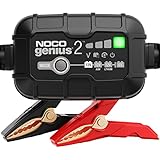
| NOCO GENIUS2 | Motorcycles and small batteries | 2A, 6/12V |
| Schumacher SC1280 | Higher-amp charging | 15A, 3A trickle charge |
How to Choose
Match amperage to battery size and patience
A common rule of thumb is to charge at roughly ten to twenty percent of the battery’s amp-hour capacity. A 1A or 2A unit suits motorcycle, lawnmower, and powersports batteries and is ideal for months of storage. A 5A to 10A charger suits typical car and SUV batteries, while 15A to 25A is aimed at big trucks, boats, and RVs. Higher amperage finishes sooner, but pushing too many amps into a small AGM can cause heat. If you are torn between two sizes, the lower one is the safer choice for a battery that will be connected for weeks, while the higher one is better when you need a battery ready by morning.
Look for temperature compensation and a maintain mode
AGM charging voltage should shift with temperature, which is why temperature compensation in a title is a useful sign. A true maintainer or float mode keeps the battery topped off without overcharging, so you can leave the charger connected all winter. Chargers that only offer a fixed rate and no float stage are better treated as short-term chargers. Check, too, that the display or lights clearly show when charging has finished, since an unclear status panel is a common source of guesswork.
Voltage options and extra functions
Most listings here support 6V and 12V, which covers vintage vehicles and modern ones. One listing adds 24V support for equipment with paired batteries. Extras such as desulfation, repair, or booster modes can help revive neglected batteries, but treat them as bonuses rather than guarantees, and ignore any claim that promises to restore a battery that is physically damaged or frozen. Never charge a battery that is visibly cracked, bulging, or frozen solid, since that is a safety issue rather than a settings problem.
Where budget chargers cut corners
Cheaper units tend to skimp on reverse-polarity protection, spark-proof clamps, thick cables, and clearly labeled modes. A model that lets you pick the battery type with one clearly marked button is easier to use correctly than one with a confusing menu. Always verify AGM compatibility on the manual page, since the title alone is not proof.
The 8 Best Options
NOCO GENIUS10
The GENIUS10 is a 10A charger and maintainer for 6V and 12V batteries, with overcharge protection, a desulfator, temperature compensation, and a force mode in the title. That feature stack makes it a flexible choice for cars, trucks, and boats where a single unit has to cover a range of battery sizes. It suits owners who want a do-it-all garage charger and plan to leave it connected for long stretches.
- Strength: temperature compensation helps tune charging to the environment.
- Strength: force mode can wake a deeply discharged battery for charging.
- Trade-off: it costs more than entry-level units and may be oversized for small motorcycle batteries.
Skip it if you only maintain a tiny battery and want the smallest, simplest charger.
E-FAST 25A
This 25A smart charger covers both 12V and 24V systems and adds a 200s booster mode, an adjustable amp trickle setting, and a desulfator. It is aimed at owners of trucks, boats, or equipment who need fast charging and want one box that handles different battery banks without buying separate units. The booster mode named in the title is intended for batteries that have dropped too low for a normal charge to begin, which is a common problem after a long winter.
- Strength: 12V and 24V support covers heavy equipment and paired battery banks.
- Strength: adjustable trickle current allows tailoring to the battery.
- Trade-off: it drops 6V support, so it will not suit older vintage vehicles.
Skip it if you have a small or 6V battery, since 25A is more than you need.
TowerTop 2/10/25 Amp
The TowerTop lists three charging rates in one body (2, 10, and 25 amp) on 12V systems, plus engine start, auto desulfator, battery repair, and a winter mode. The selectable rates let one charger serve a small motorcycle battery today and a truck battery next month. It appeals to households with a mix of vehicles that vary widely in size.
- Strength: three selectable rates cover small to large batteries.
- Strength: winter mode is aimed at cold-weather charging.
- Trade-off: more modes can mean a steeper learning curve and more room for error.
Skip it if you want a plain maintainer with one simple button.
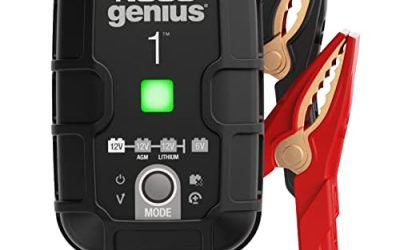
NOCO GENIUS1
The GENIUS1 is a 1A, 6V/12V charger and maintainer with overcharge protection, desulfation, temperature compensation, and force mode. The low amperage is a feature: it is designed for slow, patient topping off of small batteries such as those in motorcycles, lawn tractors, and seasonal toys that sit unused for months.
- Strength: gentle 1A rate suits small batteries and long storage.
- Strength: temperature compensation and overcharge protection are named.
- Trade-off: far too slow to recharge a depleted car battery in a reasonable time.
Skip it if you need to charge automotive batteries quickly.
NOCO GENIUS5
The GENIUS5 sits in the middle of the family at 5A, with 6V/12V support and the same protective feature set. It is the likely sweet spot for a household with a car, a motorcycle, and perhaps a boat battery, giving a faster charge than the 1A and 2A units without jumping to the larger 10A size.
- Strength: a balanced rate for both small and mid-size batteries.
- Strength: overcharge protection and temperature compensation are listed.
- Trade-off: it does not include the engine start feature found on other models.
Skip it if you need a jump-start function or work with very large battery banks.
Schumacher SC1281
The SC1281 is a 6A charger and maintainer for 6V/12V batteries, with a 100A engine start and a 12A to 30A boost range in the title. It also lists restoration of batteries and an alternator check. That combination suits drivers who want a charger that can double as an emergency helper for a weak battery in a driveway.
- Strength: engine start gives a way out of a dead battery situation.
- Strength: the battery and alternator check adds diagnostic value.
- Trade-off: the title does not mention temperature compensation or an AGM mode.
Skip it if you want a dedicated long-term maintainer rather than a multi-purpose tool.
NOCO GENIUS2
The GENIUS2 is a 2A, 6V/12V unit with the usual NOCO feature set: overcharge protection, desulfator, temperature compensation, and force mode. At two amps it is a natural fit for motorcycles, ATVs, and garden equipment, and it still has enough output to handle slow recovery of a small automotive battery given a full day.
- Strength: a good size for small powersports batteries.
- Strength: the maintain feature set is complete for storage duty.
- Trade-off: it takes a long time to bring a large car battery back.
Skip it if your main battery is in a truck, RV, or boat with big capacity.
Schumacher SC1280
The SC1280 pairs a 15A charge rate with a 3A trickle charge on 6V/12V batteries, with restore and microprocessor control in the title. It suits owners of larger vehicles who want a quicker charge and a gentle maintenance mode in the same unit. Fully automatic operation means less manual setup for people who dislike fiddling with settings.
- Strength: 15A speeds up recharging for larger batteries.
- Strength: the separate 3A trickle charge handles long-term maintenance.
- Trade-off: the title does not state temperature compensation, so check the manual.
Skip it if you only own small motorcycle-size batteries.
Which One Fits Your Situation
You store a motorcycle or ATV over winter
The NOCO GENIUS2 is the right size for small batteries, with the GENIUS1 as a lower-output alternative for very small ones. Both are meant to stay connected for weeks without attention, which is exactly how seasonal vehicles are usually stored.
You own several vehicles of different sizes
The TowerTop 2/10/25 Amp lets a single unit serve everything from a small battery to a big truck, while the NOCO GENIUS5 is the simpler middle-ground pick.
You run a boat or equipment with 24V banks
The E-FAST 25A is the only listing here that supports both 12V and 24V, which makes it the practical choice.
You want help with a dead battery
The Schumacher SC1281 pairs charging with a 100A engine start and an alternator check, so it doubles as a roadside backup. Keep in mind it is a multi-purpose tool, so if you also want a charger that lives on the battery all winter, pair it with a smaller maintainer.
Common Mistakes
- Assuming any smart charger is AGM safe without checking the manual.
- Buying a high-amp charger for a small battery and generating excess heat.
- Leaving a basic charger without a float mode connected for months.
- Expecting desulfator or repair modes to revive a battery that is damaged or frozen.
- Connecting the clamps in the wrong order or without checking polarity first.
Related guides
- What Is The Best Budget Most Responsive Gaming Mouse Wired
- Low Latency Gaming Headphones Usb-C 2.4 Ghz Wireless
- Low Latency Gaming Headphones Usb-C Dongle 2.4 Ghz
Frequently Asked Questions
Can I use a regular charger on an AGM battery?
Sometimes, but it is risky. AGM cells need controlled voltage, so use a smart charger with a suitable profile and confirm compatibility in the manual.
What amperage do I need?
Plan on roughly ten to twenty percent of the battery’s amp-hour rating. Small powersports batteries do well on 1A to 2A, cars on 5A to 10A, and big banks on 15A to 25A.
Is it safe to leave a charger connected all winter?
A smart charger with a float or maintain mode is designed for it. Avoid leaving simple, fixed-rate chargers attached for long periods. Keep the charger in a ventilated, dry spot, away from fuel and loose clutter, and unplug it from the wall before connecting or removing clamps.
Does a desulfator really restore old batteries?
It can help with mildly sulfated batteries, but it cannot fix internal damage. Treat it as a helpful extra, not a repair guarantee. A battery that holds a charge for only a few days, or that swells or leaks, should be replaced rather than coaxed along.