Nobody wants a smoke detector that shrieks every time someone makes toast, and the temptation after a few false alarms is to pull the battery. That is the dangerous outcome this whole category should help you avoid. The realistic goal is a detector that is far less prone to nuisance alarms, not one that is guaranteed to never trigger, because no responsible product makes that promise and a detector that never alarmed would be useless. The practical question is which design choices cut the annoying alerts without dulling the real ones.
This guide is for households where the kitchen sits close to a hallway, where steam from showers drifts into the corridor, or where earlier detectors caused so many false alerts that they ended up in a drawer. Eight options are covered, from photoelectric models with sealed ten-year batteries to simple battery alarms from established brands. Details come from the product titles, and a buyer in 2026 should always confirm local fire-code requirements and follow the manufacturer’s placement guidance.
Our Top Picks


Top 3 picks at a glance
Quick Picks
As an Amazon Associate we earn from qualifying purchases at no extra cost to you.


| Product | Best for | Key spec from the listing |
|---|---|---|
| X-Sense SD2J0AX 5-Pack | Whole-home coverage with fewer cooking alarms | 10-year battery, UL 217, photoelectric |
| Kidde Compact 10SDR | Small spaces and simple replacement | AA battery, 4-inch, LED status lights, 85 dB |
| SITERWELL Hardwired Photoelectric | Homes with hardwired wiring | 9V backup, interconnected, test and silence button |
| X-Sense Interconnected SD19-W 6-Pack | Large homes wanting wireless linking | Up to 18 wireless detectors, 10-year battery |
| SITERWELL 9V Battery Photoelectric | Bedrooms and low-cost add-ons | 9V battery, small, photoelectric |
| First Alert SMI100 2-Pack | Two rooms from a familiar brand | Battery-operated, 2-pack |
| First Alert SMI100 1-Pack | Single replacement | Battery-operated, 1-pack |
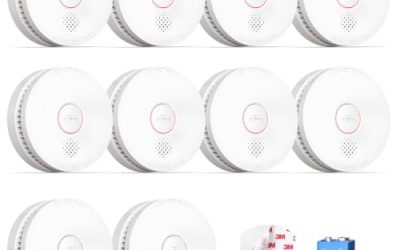
| X-Sense SD2J0AX 10-Pack | Large houses and multi-unit buildings | 10-year battery, UL 217, 10 units |
How to Choose
Photoelectric versus ionization sensing
The sensing method influences how often cooking fumes trigger the alarm. Photoelectric detectors respond to the larger particles in smoldering fires and are generally less prone to nuisance alarms from toast and frying than ionization types. Several listings here call out photoelectric sensors and fewer cooking alarms, including the X-Sense models and both SITERWELL units. Some safety guidance suggests homes benefit from both technologies, so check local guidance and do not assume one type fits every room. Near kitchens, a photoelectric unit placed at the advised distance is the common starting point, and the listings that omit a sensor type, like the Kidde and First Alert entries, leave you to confirm it on the product page.
Placement does half the work
The most effective way to reduce false alarms is to avoid mounting a detector within about ten feet of a stove, oven, or shower, as manufacturers and fire codes commonly advise. Put units on each level, inside sleeping areas, and outside bedrooms, following the instructions in the box. A detector in the wrong spot will alarm regardless of its technology. A hush or silence button, named on the X-Sense and SITERWELL listings, lets you quiet a nuisance alarm temporarily without disabling the unit. Dust, cooking grease, and insects also trigger alerts over time, so a quick vacuum of the vents twice a year helps.
Power, battery life, and interconnection
A sealed ten-year battery, as named on the X-Sense listings, removes the chirping low-battery warning that often drives people to remove cells. AA and 9V models are cheaper up front but need periodic battery changes. Interconnection means that when one unit alarms, the others sound too, which is valuable in a multi-story house where a fire in the basement might not be heard upstairs. The X-Sense SD19-W lists up to 18 wireless detectors, and the SITERWELL hardwired unit lists an interconnected design with a 9V backup battery. Hardwired units need mains wiring and are best installed by a qualified person if you are unsure.
Certifications and what to ignore
Look for UL 217, named on the X-Sense SD2J0AX listings, as evidence of compliance with the standard for smoke alarms. Ignore volume figures chasing decibel numbers beyond the standard, and be wary of unverified claims of zero false alarms. Budget alarms cut corners on sensor protection from dust and insects, which is a common cause of nuisance alarms, and on documentation. All detectors have a service life, typically about ten years from manufacture, after which the whole unit should be replaced even if it seems to work. Check the date printed on the back of any unit before you install it.
The 8 Best Options
X-Sense SD2J0AX 5-Pack
The title lists a 10-year battery, UL 217 certification, a photoelectric sensor, fewer cooking nuisance alarms, and a one-button hush. It suits a mid-size home that wants several detectors with low maintenance, particularly one where the kitchen opens toward a hallway and every earlier alarm was a cooking alarm.
- Strength: photoelectric sensing and a stated focus on fewer cooking alarms.
- Strength: sealed 10-year battery avoids battery swaps and low-battery chirps.
- Trade-off: the listing does not state interconnection, so units sound individually.
Skip it if you need linked alarms across floors, since the wireless linking model below is built for that job.
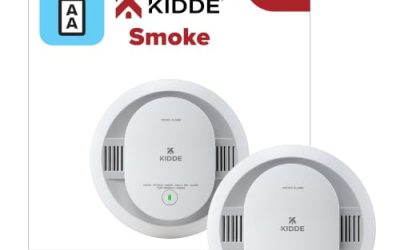
Kidde Compact 10SDR
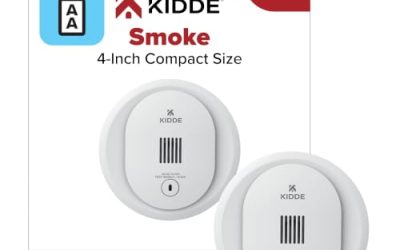
A 4-inch battery-powered alarm with LED status lights, an 85 dB alarm, and an AA battery, intended for homes and small spaces. It is a practical replacement for a worn-out unit in a bedroom, a studio apartment, or a small hallway where a bulky detector looks awkward.
- Strength: compact body suits small rooms and tight ceilings.
- Strength: LED status lights give a quick visual check that the unit is working.
- Trade-off: the title does not mention false-alarm reduction or a sensor type.
Skip it if reduced nuisance alarms are your main goal and you want that stated in the listing.
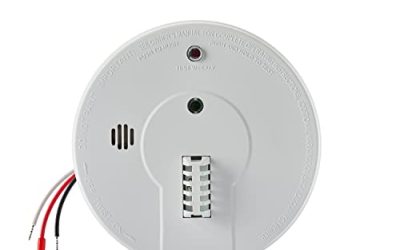
SITERWELL Hardwired Photoelectric Smoke Detector
This hardwired model lists a photoelectric sensor, a 9V backup battery, an interconnected design, and a test and silence button. It fits homes that already have mains-wired detector bases in the ceiling, where swapping the unit is a like-for-like job and the backup battery keeps protection going during an outage.
- Strength: interconnection with battery backup for power cuts.
- Strength: the silence button helps with nuisance events without disabling the alarm.
- Trade-off: hardwiring usually calls for wiring skills or an electrician.
Skip it if you have no existing wiring for detectors, or if your current wiring uses a different connector.
X-Sense Interconnected SD19-W 6-Pack
The listing highlights a 10-year battery, up to 18 wireless detectors in one network, one alarm sounding all units, fewer false alarms, and easy installation. It is built for larger houses or multi-story homes, where running new wires between floors would be expensive and disruptive.
- Strength: wireless interconnection without running wires through walls.
- Strength: sealed battery and a stated false-alarm focus.
- Trade-off: a six-pack is more units than a small home needs.
Skip it if you only need one or two detectors, or if your building already has a hardwired system.
SITERWELL 9V Battery Photoelectric Detector
A small battery-operated alarm with a photoelectric sensor, described as reducing false alarms and easy to install. It suits renters and simple add-ons, such as a bedroom that was missing coverage, and it needs no wiring or special tools beyond a screwdriver.
- Strength: photoelectric sensing in a compact body.
- Strength: no wiring, simple installation in minutes.
- Trade-off: a 9V battery needs periodic replacement, so set a reminder.
Skip it if you want a sealed long-life battery or wireless interconnection.
First Alert SMI100 2-Pack
A two-pack of battery smoke alarms from a familiar brand. The title gives few details, so it is best seen as a straightforward option for two rooms, such as a pair of bedrooms, where you value a recognized name and a simple purchase over a long feature list.
- Strength: recognized brand name with a model number that is easy to look up.
- Strength: two units in one pack for paired rooms.
- Trade-off: the title does not describe sensor type or false-alarm features.
Skip it if reducing nuisance alarms is the priority and you want that confirmed up front.
First Alert SMI100 1-Pack
The single-unit version of the same alarm. It is useful for replacing one expired or malfunctioning detector without buying extras, for instance in a hallway where the old unit is the only one that needs attention before an inspection or a move.
- Strength: buy only what you need.
- Strength: familiar brand and model number simplify matching a replacement.
- Trade-off: sparse listing details, as with the two-pack.
Skip it if you need several units, because the multi-pack options spread the cost better.
X-Sense SD2J0AX 10-Pack
The same SD2J0AX detector in a ten-unit bundle, with a 10-year battery, UL 217, photoelectric sensing, and fewer cooking nuisance alarms. It fits large homes, small rental buildings, or anyone replacing every detector in one go so that all units expire on the same schedule.
- Strength: enough units to cover a big property in one purchase.
- Strength: the same low-maintenance design as the smaller pack.
- Trade-off: too many for an ordinary household, and no interconnection is stated.
Skip it if you need only a few detectors or want wireless linking.
Which One Fits Your Situation
Your kitchen opens onto a hallway
Choose a photoelectric model with a hush button, such as the X-Sense SD2J0AX 5-Pack, and mount it well away from the stove. Pair it with a range hood fan used during frying, and the number of nuisance alerts should fall noticeably.
You have a multi-story house
The X-Sense Interconnected SD19-W 6-Pack links detectors wirelessly, so one alarm sounds all. That matters at night, when a fire two floors below must wake the people sleeping upstairs.
You already have hardwired alarms
The SITERWELL hardwired photoelectric model matches that setup, and it keeps a battery backup. Confirm the connector style on your existing mounting base before ordering.
You need a quick bedroom replacement
The SITERWELL 9V photoelectric or the Kidde Compact is easy to place, and the First Alert SMI100 is a familiar fallback. Mark the install date on each unit so you know when it reaches the end of its life.
Common Mistakes
- Removing the battery after a false alarm instead of relocating or silencing the unit.
- Mounting a detector too close to a kitchen or bathroom, where steam and cooking fumes are routine.
- Assuming any detector can guarantee zero false alarms.
- Keeping a detector past its service life of around ten years.
- Buying only one unit for a multi-room home that needs several.
Related guides
- What Is The Best Budget Most Responsive Gaming Mouse Wired
- Low Latency Gaming Headphones Usb-C 2.4 Ghz Wireless
- Mechanical Gaming Keyboards Competitive Pc Gaming
Frequently Asked Questions
Can a smoke detector be completely free of false alarms?
No. Photoelectric sensing and proper placement reduce nuisance alarms, but a detector that never sounded could not warn you about a real fire. Treat claims of zero false alarms with suspicion.
What does UL 217 mean?
It is a safety standard for smoke alarms. A listing that names it indicates the product was designed to meet that standard, which is worth looking for.
Should I choose a 10-year battery?
Sealed batteries remove the low-battery chirp and the temptation to pull cells, but you must replace the whole unit at the end of its life. Replaceable AA or 9V batteries cost less up front but need attention.
How many detectors do I need?
Fire guidance typically calls for one in each bedroom, outside sleeping areas, and on every level. Check your local code and the instructions that come with the product.