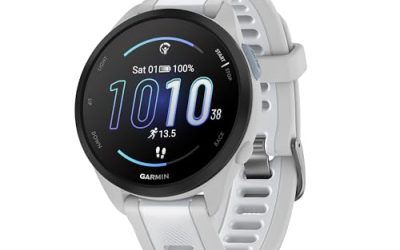
A running watch has one job that a phone strapped to an arm cannot match: it records distance, pace and heart rate on your wrist without draining a phone battery or bouncing around in a pocket. The decision is not about finding the most advanced device. It is about matching the watch to the kind of runner you are, whether that means a first 5K on a plan, a weekly habit with some recovery tracking, or an all-day health companion that also records runs.
This guide looks at seven Garmin watches that show up for running searches: the Forerunner 55, 70 and 165, and the vívoactive 5. They share built-in GPS and Garmin’s training features, but differ in how much coaching, recovery and daily health data they add. The sections below explain which specs to check, how to tell a running-first watch from a lifestyle watch and which choice makes sense in 2026 for a beginner, a returning runner or a runner who wants more from a single device.
Our Top Picks


Top 3 picks at a glance
Quick Picks
As an Amazon Associate we earn from qualifying purchases at no extra cost to you.


| Product | Best for | Key spec from the title |
|---|---|---|
| Garmin Forerunner 165 (Black) | Runners wanting training and recovery tools | 43mm, built-in GPS, Garmin Coach |
| Garmin Forerunner 55 | Simple GPS running on a budget tier | Daily suggested workouts, up to 2 weeks battery |
| Garmin Forerunner 165 (Whitestone) | The same watch in a lighter finish | 43mm, GPS, essential training features |
| Garmin vívoactive 5 (Black) | All-day health tracking with GPS | 42mm, sleep coach, Body Battery |
| Garmin vívoactive 5 (Ivory) | The same watch in a light color | 42mm, 24/7 health monitoring |
| Garmin Forerunner 55 (Black, second listing) | Another route to the same GPS watch | GPS running smartwatch |
| Garmin Forerunner 70 | Beginners wanting a training plan | 43mm, adaptive training plan, daily workouts |
How to Choose
Built-in GPS is the baseline
For running, built-in GPS lets you leave your phone at home and still record distance, pace and route. All seven watches here list built-in GPS or are sold as GPS running watches. Without it, a watch has to borrow your phone’s location, which defeats much of the point of running with a watch. Keep in mind that GPS accuracy can dip near tall buildings and dense tree cover, so a clear start location and a short wait for a satellite lock are worth building into your routine.
Coaching and recovery features
Garmin Coach, daily suggested workouts and adaptive training plans tell you what to run each day. Recovery features estimate when you are ready to push again. A beginner usually benefits from a watch that tells them what to do, while an experienced runner may already follow a plan and care more about data than guidance. Be wary of paying for features you will not open, since many runners end up using pace, distance and heart rate and ignoring the rest of the menu.
Battery life and size
Battery life matters on long runs and across a week of training. The only listing here to state it is the Forerunner 55, with up to 2 weeks in smartwatch mode. Case sizes of 42 or 43mm suit most wrists. Check the product page for battery hours in GPS mode before committing to a long-race plan. A watch that survives a week of training but dies halfway through a marathon is a poor match, so look at the continuous GPS figure, not just the smartwatch-mode figure.
Running-first versus lifestyle watch
The Forerunner line focuses on training. The vívoactive 5 leans toward 24/7 health monitoring, sleep coaching and an energy tracker called Body Battery. If you run three days a week and want all-day health data, the lifestyle watch may fit better. If running dominates your week, the Forerunner line is the more focused choice. Note that a basic fitness band with no GPS was left out of this lineup, because it cannot record a route without a phone.
The 7 Best Options
Garmin Forerunner 165 (Black)
A 43mm running smartwatch with built-in GPS for distance, pace and speed, essential training and recovery features, and Garmin Coach support. It is aimed at runners who want structured guidance and recovery tracking in a compact case, and sits above the entry-level Forerunner in features. A runner preparing for a 10K or half marathon, who wants the watch to suggest harder and easier days instead of guessing, is the typical match, and the compact case keeps it comfortable for sleeping and everyday wear.
- Strength: training and recovery features are named in the title.
- Strength: Garmin Coach provides plan-based guidance for race goals.
- Trade-off: it sits above the entry-level model in the premium-leaning mid-range tier.
Skip it if you only want to log basic runs on a tight budget.
Garmin Forerunner 55
An entry-level GPS running watch that lists daily suggested workouts and up to 2 weeks of battery life. It suits people who want to start recording runs and get simple guidance without paying for advanced features. Someone who runs a few mornings a week, forgets to charge devices and just wants reliable GPS and a nudge on what to do next will find the long battery claim the most compelling line on the listing.
- Strength: battery life of up to 2 weeks is stated in the title.
- Strength: daily suggested workouts help beginners decide what to run.
- Trade-off: it is an older, simpler model than the 165 and 70.
Skip it if you want the newest training features or recovery tools.
Garmin Forerunner 165 (Whitestone)
The same Forerunner 165 in a whitestone finish, with built-in GPS, essential training and recovery features and Garmin Coach. Choose it when you want the same feature set and a lighter look than black. Colors are a personal call, but a lighter case can be a better fit for smaller wrists or for someone who wears the watch to work and does not want it to look like pure training gear.
- Strength: identical GPS and training features to the black version.
- Strength: a lighter finish suits those who prefer a less sporty look.
- Trade-off: lighter colors can show wear and dirt more readily.
Skip it if you prefer a dark, low-key watch.
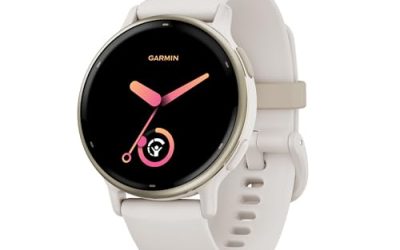
Garmin vívoactive 5 (Black)
A health and fitness GPS smartwatch at 42mm, with 24/7 health monitoring, built-in sports apps, a sleep coach and the Body Battery energy monitor. It is suited to runners who care about overall well-being as much as workout statistics. A person who runs, lifts and walks, and who wants one watch to show sleep and energy trends, may prefer this broader approach to a pure running watch that treats everything off the road as secondary.
- Strength: sleep coach and Body Battery add day-long health context.
- Strength: built-in GPS and sports apps let it record runs.
- Trade-off: it is less running-focused than the Forerunner models.
Skip it if you want a dedicated running coach and training plan.
Garmin vívoactive 5 (Ivory)
The same vívoactive 5 in an ivory color, with 42mm sizing, 24/7 health monitoring, sports apps and sleep and energy features. It is a style choice for those who want a lighter watch for everyday wear. Since the specs match the black version, the decision is mostly aesthetic, and the ivory finish may suit anyone who dresses up the watch with a variety of outfits or prefers a gentler tone than black.
- Strength: the same health and fitness feature set in a light color.
- Strength: it works as an everyday watch as well as a workout device.
- Trade-off: light bands show sweat marks over time.
Skip it if you want a darker finish or focused run coaching.
Garmin Forerunner 55 (Black, second listing)
A second listing for the Forerunner 55 GPS running smartwatch in black. The title is brief and does not repeat the daily workouts and battery claims from the first listing, so compare the product pages. A shopper who simply wants the cheapest route to a GPS running watch from a well-known brand can treat the two Forerunner 55 listings as interchangeable and choose by availability and return terms.
- Strength: it is the same entry-level GPS running watch.
- Strength: offers another purchase option if the first listing is unavailable.
- Trade-off: this title lists fewer details than the other Forerunner 55 entry.
Skip it if you want to see the battery and workout features spelled out.
Garmin Forerunner 70
A 43mm beginner-level running smartwatch that lists pace, distance and heart rate, daily suggested workouts and an adaptive training plan. It is built for new runners who want a watch to guide them as their fitness changes. Someone returning from a break, or training for a first 5K, benefits from a plan that adapts instead of a fixed schedule that falls apart after a missed week.
- Strength: an adaptive training plan adjusts guidance as you progress.
- Strength: daily suggested workouts and heart rate tracking are named.
- Trade-off: it targets beginners, so experienced runners may want more advanced metrics.
Skip it if you already follow a plan and want advanced analysis.
Which One Fits Your Situation
You are starting to run
The Garmin Forerunner 70 and the Garmin Forerunner 55 both lean on daily suggested workouts to guide beginners.
You are training for a race
The Garmin Forerunner 165 lists Garmin Coach and recovery features, which support plan-based training. Pair it with a realistic race date and let the plan guide the weekly mileage rather than adding extra runs by feel.
You want a simple watch that lasts between charges
The Garmin Forerunner 55 states up to 2 weeks of battery life, which makes it forgiving for people who charge rarely. Its second listing is the same watch, so choose based on availability. For a lighter finish with the same training tools, the Forerunner 165 in Whitestone is the alternative.
You want an all-day health watch that also runs
The Garmin vívoactive 5 adds sleep coaching, Body Battery and 24/7 monitoring. Choose the black version for a sportier look or the ivory version for a softer tone with the same listed features.
Common Mistakes
- Buying a lifestyle watch when running is the main goal.
- Assuming every listing for the same model states the same features.
- Ignoring battery life in GPS mode before a long race.
- Paying for training plans you will not follow.
- Choosing color first and features second.
Related guides
- What Is The Best Budget Most Responsive Gaming Mouse Wired
- Low Latency Gaming Headphones Usb-C 2.4 Ghz Wireless
- Low Latency Gaming Headphones Usb-C Dongle 2.4 Ghz
Frequently Asked Questions
Do I need a running watch with GPS?
If you want accurate pace and distance without a phone, yes. Built-in GPS records routes independently.
What is Body Battery?
It is Garmin’s energy monitor that estimates how much energy you have throughout the day. It is listed on the vívoactive 5.
Is the Forerunner 55 still worth buying?
It is a simple option for logging runs with guided workouts. Newer models add more training and recovery tools.
Can I use a running watch every day?
Yes. Most can track steps, heart rate and sleep along with workouts, although the vívoactive leans most heavily toward daily wear.