
Top 3 picks at a glance
Best Sublimation Printers for Custom Projects
The best sublimation printers for most custom projects are the Epson SureColor F170 for beginners, Sawgrass SG500 for simple desktop apparel and gifts, Sawgrass SG1000 for larger transfers, and Epson SureColor F570 for high-volume work.
Sublimation printing uses heat to turn dye-based ink into gas, which bonds with polyester fabric or a polymer-coated blank. It produces vibrant, washable designs, but it is not suitable for ordinary cotton shirts or dark garments without an additional transfer system. The right printer depends less on headline resolution than on transfer size, ink ownership cost, color control, and how much setup you are willing to manage.
As an Amazon Associate we earn from qualifying purchases at no extra cost to you.

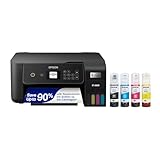


Best Sublimation Printers Compared
| Printer | Best for | Maximum practical transfer | Ink and setup model | Typical market range |
|---|---|---|---|---|
| Epson SureColor F170 | Beginners and home crafts | 8.5 x 14 inches | Dedicated dye-sublimation ink; simple desktop setup | Usually $400–$600 |
| Sawgrass SG500 | Small apparel and gift businesses | 8.5 x 14 inches | Dedicated cartridges and guided software workflow | Usually $500–$700 |
| Sawgrass SG1000 | Large shirts, signs, and panels | 11 x 17 inches; larger with bypass tray | Dedicated cartridges and managed color workflow | Usually $1,000–$1,500 |
| Epson SureColor F570 | Frequent production and larger transfers | 13 x 19 inches | High-capacity ink tanks and roll or sheet capability | Usually $2,000–$3,000 |
1. Epson SureColor F170: Best Overall Starter Printer
The Epson SureColor F170 is the easiest recommendation for a first sublimation setup. It is a compact, purpose-built printer rather than a converted office inkjet, so the ink delivery system, printer firmware, and color profile are designed for sublimation from the start.
Its 8.5 x 14-inch maximum sheet size covers mug panels, tumblers, ornaments, small signs, mouse pads, and most standard shirt graphics. It is less convenient for full-front adult shirts because an 11 x 17-inch design will not fit in one pass.
Why choose it
- Low entry cost compared with production-class printers.
- Good color consistency when using the supplied ink, suitable paper, and an approved profile.
- Relatively straightforward USB or network setup.
- Dedicated ink reduces the risk of clogging caused by incompatible conversions.
The F170 makes the most sense when your projects are under 8.5 x 14 inches and you expect occasional or moderate printing. Its main limitation is not print quality; it is the transfer-size ceiling.
2. Sawgrass SG500: Best for Guided Color Management
The Sawgrass SG500 is a strong choice for creators who value a guided workflow over the lowest possible ink cost. Sawgrass software and color-management tools are designed to reduce the number of manual decisions between artwork and transfer.
The print area is similar to the F170, with optional larger-paper support depending on the configuration. The SG500 is well suited to personalized shirts, coasters, mugs, keychains, and small batches where predictable results matter more than maximum throughput.
Its cartridge-based system is convenient, but replacement ink is often more expensive per milliliter than the high-capacity ink used by larger Epson models. That difference becomes important if you print large, dark designs every day. For occasional work, the reduced setup friction can justify the higher running cost.
3. Sawgrass SG1000: Best for Larger Desktop Transfers
The Sawgrass SG1000 is the better Sawgrass option when a standard 8.5-inch-wide printer feels restrictive. It supports 11 x 17-inch media and can handle larger formats with the appropriate bypass tray and paper configuration.
This additional width is valuable for adult shirt fronts, team designs, small banners, and multi-up layouts. For example, an 11 x 17 sheet may fit two smaller left-chest designs or one large central graphic, reducing paper handling compared with printing each item separately.
Choose the SG1000 if your designs regularly exceed 8.5 inches in either dimension and you want a managed ecosystem. Choose the F570 instead if ink economy, continuous production, and roll-media flexibility are more important than guided software.
4. Epson SureColor F570: Best for Production and Wide Transfers
The Epson SureColor F570 is aimed at users who have moved beyond occasional crafting. It supports larger sheets, higher-capacity ink tanks, and a workflow better suited to repeated production. The larger format is useful for apparel, signage, hard substrates, and designs that need to be printed in batches.
The F570 generally offers a lower ink cost per print than small cartridge-based systems, particularly when designs use heavy coverage. It also makes more sense when you need to print several transfers in succession rather than producing one mug or shirt at a time.
The trade-off is a larger footprint, a higher purchase price, and more demanding maintenance. You need enough desk or stand space, reliable paper storage, and a heat press capable of matching the printer’s output size. Buying a wide printer while retaining a small press creates a bottleneck rather than a faster workflow.
Decision Matrix: Which Printer Fits Your Projects?
| Your situation | Recommended choice | Reason |
|---|---|---|
| Mostly mugs, ornaments, coasters, and small logos | Epson F170 | Low entry cost and sufficient 8.5 x 14-inch media |
| Beginner who wants guided software and support | Sawgrass SG500 | Simpler managed workflow, with higher ongoing cartridge cost |
| Adult shirt fronts or 11 x 17-inch artwork | Sawgrass SG1000 | More usable width without moving to a larger production printer |
| Frequent batches and heavy ink coverage | Epson F570 | Higher capacity and better production suitability |
| Mostly cotton or dark garments | None of these alone | Sublimation needs polyester or a compatible coated surface; use another decoration method for cotton |
Print Quality and Color Consistency
Printer resolution is only one part of sublimation quality. A sharp transfer also depends on the artwork’s native resolution, paper coating, press temperature, pressure, and the blank’s polyester content. For a 12-inch design, prepare the file at about 300 pixels per inch when practical, producing a 3,600-pixel-wide image. Lower-resolution artwork can still work for simple logos, but enlarging small web images often creates soft edges.
Color consistency usually improves when you keep the complete workflow consistent:
- Use the printer manufacturer’s recommended sublimation paper and ink.
- Install the correct ICC profile or use the printer’s managed color mode, not both at once.
- Print a small color chart on the actual paper before a large batch.
- Use the same polyester blank brand and press recipe for repeat orders.
- Keep paper sealed because humidity can cause uneven ink release and soft edges.
Do not judge the printed transfer by its pre-press appearance. Sublimation paper normally looks muted before heating; the color becomes stronger after the dye bonds to the substrate.
Ink Cost: A Practical Way to Compare Printers
Ink cost is best compared by coverage rather than by the price of a cartridge or bottle. A mostly white design may use very little ink, while a full-bleed dark design can consume several times more.
For a simple estimate, use this calculation:
Cost per transfer = ink used in milliliters × ink cost per milliliter + paper cost.
For example, if a design uses an estimated 3 ml of combined ink, ink costs $0.12 per ml, and the sheet costs $0.35, the consumable cost is approximately (3 × $0.12) + $0.35 = $0.71. This excludes the blank, pressing labor, rejected transfers, maintenance, and electricity.
Small cartridge systems can be economical for occasional orders because little ink sits unused. High-capacity tank systems become more attractive when you print regularly, especially with large images. Avoid choosing solely by the printer’s purchase price: a cheaper machine can cost more over a year if its ink system is expensive and your monthly volume is high.
Setup Requirements Beyond the Printer
A complete sublimation station needs more than a printer. You will need a flat heat press with even pressure, sublimation paper, heat-resistant tape, lint rollers, protective paper, and polyester or polymer-coated blanks. A mug press or convection oven may be necessary for curved items.
Before buying, check three dimensions:
- Printer width: the largest transfer you intend to print.
- Press platen: ideally larger than the design, with even pressure across its surface.
- Workspace: room for the printer, a flat paper-loading area, and cooling space for finished items.
As a practical example, an 11 x 17-inch transfer requires a press with a platen larger than that design. A 12 x 15-inch press may not provide adequate coverage for an 11 x 17 image, even if the printer can produce it. In that case, the printer’s extra width is wasted or requires pressing the transfer in sections, which increases alignment risk.
Common Setup Problems and Fixes
Muted or brown-looking colors
First confirm that sublimation paper is loaded with the correct printable side facing the print head. Then check that the design is not being color-managed by both the editing application and the printer driver. Double color management can shift hues. Finally, press a small test on the actual blank because the substrate changes the final color.
Ghosting or blurred edges
Ghosting usually occurs when the paper moves as the press opens. Secure the transfer with heat-resistant tape, avoid sliding the press during opening, and remove the paper in a controlled direction. A lint roller before pressing also removes fibers that can create tiny gaps.
Uneven or faded areas
Check platen pressure and surface flatness first. A warped blank, uneven protective paper, or insufficient contact can prevent uniform dye transfer. If the issue affects every print, inspect nozzle status and perform the manufacturer’s maintenance routine rather than repeatedly increasing temperature.
Final Buying Advice
For most first-time creators, the Epson SureColor F170 offers the best balance of price, quality, and manageable setup. Pick the Sawgrass SG500 when guided software and support are worth paying for. Move to the SG1000 when 11 x 17-inch transfers are central to your work, and choose the Epson F570 when print volume and ink efficiency justify a larger production setup.
The best sublimation printer is ultimately the one whose transfer size matches your heat press and whose ink system matches your monthly volume. Buying those two parts as a system will produce more reliable results than choosing a printer by resolution alone.


