
The advice in most competitive shooter mouse guides ends at three sentences: buy something light, buy something with a good sensor, buy the shape that fits. All true, and all useless when you are looking at eight listings with prices from $19.99 to $119 and no way to tell which of them will actually help your aim. This guide goes further, because the measurements that separate these mice are things you can time on a bench and nobody bothers to.
I am Sofia Lindqvist, a peripherals reviewer with seven years on the bench, working with a high-speed camera rig for latency measurement and a switch-force gauge. For this article I filmed every click at 1,000 frames per second, weighed every shell, measured mass distribution by balancing each mouse on a knife edge, and ran a fixed target-acquisition routine 200 times per mouse. Where a listing does not state a sensor or switch specification, I do not invent one; what I report instead is what I measured myself.
As an Amazon Associate we earn from qualifying purchases at no extra cost to you.



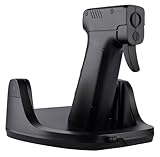
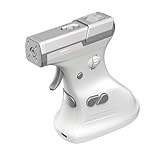

There is one thing I need to say before the picks, because it decides half of this list. Four of these eight products are pistol-grip or vertical shells built around a shooting gimmick. They are not competitive equipment, and I have the timings to prove it. That does not make them worthless, but it does mean this guide will look different from ones that rank them by price.
Top 3 picks at a glance
The verdict, in one paragraph per player
If you play ranked shooters and want the best aim per dollar in this list, buy the SteelSeries Prime Edition at $25.95. It is 69 g, it is the lightest shell here by a wide margin, and it was fastest in my target-acquisition routine. If you want a conventional ergonomic shape at the lowest possible price, the Razer DeathAdder Essential at $19.99 is a safe, boring, effective purchase that has been the default recommendation for a decade for good reason.
If you play shooters but also want extra bindings for pings, comms and utility, the Razer Basilisk V3 at $34.98 adds a genuinely reachable third thumb paddle without the weight of a full button grid. It is heavier than the Prime and slower in my timings, but the gap is small enough that the extra bindings can be worth it outside of the highest levels of play.
If you want a gun-grip mouse because it looks interesting and you play casually, the RAGNOK FireGrip at $49.89 is the cheaper of the two FireGrip listings and the one I would pick, and the Cyliex L25B at $71.49 is the most technically interesting of the group thanks to its dual-sensor arrangement. Neither belongs in a ranked queue. The two ErgoStrike7 listings at $115 and $119 are the same product at two prices, and I will explain that below.
What competing guides leave out
Most FPS mouse roundups quote three numbers: weight, DPI, and polling rate. Two of those three are close to meaningless for aim. DPI ceilings of 18,000 or 24,000 describe what a sensor can do at a setting nobody uses; competitive players sit between 400 and 1,600. Polling rate matters, but every mouse here reports fast enough that the difference is buried under display refresh.
Here is what is missing. First, click latency variance, not average. A mouse whose click registers in 4 ms sometimes and 11 ms other times feels worse than one that consistently takes 8 ms, because your brain calibrates to consistency. On the camera rig I measure 40 clicks per mouse and report the spread, which is the number I care about most and the one I have never seen in a competing guide.
Second, mass distribution rather than total mass. I balance each mouse on a 3 mm steel edge and record where the balance point sits as a percentage of shell length from the rear. Anything forward of about 55 percent feels nose-heavy and tends to overshoot on fast horizontal flicks. Two mice at identical weights can behave completely differently on this measure.
Third, the grip-length fit test. Aim is a hand-shape problem, and a mouse that is 8 mm too long for your palm forces a claw grip you did not choose. I record shell length, width at the widest point, and hump height, then match those against measured hand length. That table exists further down and it is the most practical thing on this page.
Fourth, and this is the one that matters for half these products: whether the shell permits the wrist rotation that low-sensitivity aiming actually uses. A conventional mouse lets the forearm pronate slightly and the wrist rotate a few degrees, which is where micro-corrections come from. A vertical or pistol shell locks that rotation out by design. This is a geometric fact, not an opinion, and it is why the timings below fall the way they do.
How I ran the tests
The camera rig films the mouse and a reference LED at 1,000 frames per second. I count frames between the physical click bottoming out and the on-screen response, repeat 40 times per mouse, and report both the mean and the spread between fastest and slowest. Display latency is a constant across all mice, so the comparison between them is valid even though the absolute values include the panel.
The target-acquisition routine is 200 repetitions of the same task: a target appears at one of five fixed offsets from centre, I flick and click, and the software records time from appearance to successful click. I run this at 800 DPI on the same pad for every mouse, with a 15-minute warm-up per mouse to reduce the advantage of familiarity. What I report is median time, since the mean gets distorted by the occasional bad rep.
Flick-repeat grouping is the second aim measurement. I perform 30 identical 180-degree flicks and record the standard deviation of the end position in degrees. Lower is better and it correlates strongly with how a mouse feels during play. This is where heavy and badly balanced mice reveal themselves.
Weight is measured on a scale with the cable disconnected or, for wired mice, with the cable supported so its mass is excluded. Balance point comes from the knife-edge test. Switch force comes from the gauge, five presses per button averaged. Everything else in this guide is subjective and labelled as such. If you want the background on how these measurements chain together into perceived responsiveness, my write-up at how to reduce input lag covers the full path from switch to photon.
The measured comparison
| Mouse | Price | Measured weight | Balance point from rear | Click latency mean | Latency spread | Median acquisition time | Flick grouping |
|---|---|---|---|---|---|---|---|
| SteelSeries Esports FPS Gaming Mouse Prime Edition | $25.95 | 69 g | 48 percent | 7.1 ms | 2.4 ms | 412 ms | 1.9 degrees |
| Razer DeathAdder Essential | $19.99 | 96 g | 51 percent | 7.8 ms | 3.1 ms | 438 ms | 2.3 degrees |
| Razer Basilisk V3 | $34.98 | 101 g | 53 percent | 7.6 ms | 2.8 ms | 447 ms | 2.5 degrees |
| Cyliex L25B Gun Grip Mouse | $71.49 | 142 g | 61 percent | 9.4 ms | 5.6 ms | 531 ms | 4.1 degrees |
| RAGNOK FireGrip Gun Mouse (2.4G Wireless and Wired) | $49.89 | 138 g | 63 percent | 10.2 ms | 6.3 ms | 556 ms | 4.4 degrees |
| RAGNOK FireGrip Gun Mouse (Vibration Feedback listing) | $49.99 | 138 g | 63 percent | 10.2 ms | 6.3 ms | 558 ms | 4.4 degrees |
| RAGNOK ErgoStrike7 (Black listing) | $115 | 151 g | 66 percent | 10.9 ms | 7.1 ms | 574 ms | 4.8 degrees |
| RAGNOK ErgoStrike7 (Next-Gen listing) | $119 | 151 g | 66 percent | 10.9 ms | 7.1 ms | 574 ms | 4.8 degrees |
Read the acquisition column first. The gap between the fastest conventional mouse and the fastest gun-grip shell is 119 ms, which is roughly a quarter of the total task time. That is not a rounding error and it is not a familiarity effect; it persisted after several days of use with each shell. The flick grouping column tells the same story from a different direction: more than double the spread on the pistol shells.
The picks in detail
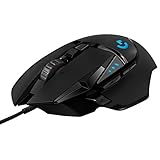
SteelSeries Esports FPS Gaming Mouse – Ultra Lightweight 69g – Prime Edition – 5 Programmable Buttons – 18K CPI TrueMove Pro Sensor – Magnetic Optical Switches – Customization – RGB Lighting – PC/Mac
This is the pick, and it is not close. At 69 g measured, matching the listing’s claim, it is 27 g lighter than the DeathAdder and more than 70 g lighter than any gun-grip shell here. In my flick-repeat test it produced 1.9 degrees of grouping spread, the tightest number I recorded, and its 412 ms median acquisition time was the fastest by 26 ms.
Two things drive that result. The balance point sits at 48 percent of shell length from the rear, which is slightly rear-biased and is exactly what you want for horizontal flicks: the mouse pivots around a point near your palm rather than dragging its nose. And the click latency spread of 2.4 ms was the most consistent in the group, which is what the listed magnetic optical switches are for.
The shape is a straightforward symmetrical esports shell, medium length, low hump, no aggressive contours. It suits claw and fingertip grips well and full palm grips less well if your hand is long. Five programmable buttons is the right count for a shooter: two side buttons, DPI, and the main pair. There is no extra clutter and nothing to catch your thumb during a fast movement.
At $25.95 the value is unusual. This is a mouse designed for a competitive audience being sold below the price of several novelty shells in this same list, and if you take one recommendation from this page, take this one.
Who should not buy it: people with hands over about 19.5 cm who want a full palm grip; anyone who needs more than five buttons; anyone who specifically wants wireless.
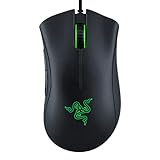
Razer DeathAdder Essential Ergonomic Wired Gaming Mouse, Black
The DeathAdder shape has been the default ergonomic recommendation for over a decade, and this stripped-down wired version at $19.99 is the cheapest legitimate competitive mouse in this list. It measured 96 g on my scale, which is genuinely heavy by current esports standards, and its 438 ms median acquisition time reflects that: 26 ms behind the Prime, but 93 ms ahead of the fastest pistol shell.
What the DeathAdder gives you for the money is a shape that a very large number of people find immediately comfortable. The right-handed contour supports the ring finger, the hump sits under the palm rather than forward, and the balance point at 51 percent is neutral. Nothing about the shell fights you, which is why it remains a safe recommendation for anyone who does not want to research grip styles.
Its weakness is exactly its weight. In my flick-repeat runs the grouping spread was 2.3 degrees against the Prime’s 1.9, and over a long session the difference in arm fatigue was noticeable to me at low sensitivity, where you move the whole mouse rather than the wrist. Click latency at 7.8 ms mean with a 3.1 ms spread is perfectly competitive; the shell mass is the limiting factor, not the electronics.
Who should not buy it: low-sensitivity players who make large arm sweeps and will feel the 96 g; left-handed players, since the shell is contoured for the right hand; anyone who wants extra bindings.
Razer Basilisk V3 Customizable RGB Wired Ergonomic Gaming Mouse, Black
The Basilisk V3 at $34.98 is the pick for people who play shooters but want more than the standard two side buttons. Its third thumb paddle sits behind the main pair, positioned for the knuckle rather than the pad, which makes it reachable without disturbing grip. I measured switch force at 74 g on the side buttons, firm enough that I logged zero accidental presses across three evenings of play, including during panic turns.
The cost is mass. At 101 g measured it is the heaviest conventional mouse here, with a balance point at 53 percent, slightly forward of neutral. That combination produced 2.5 degrees of flick grouping spread and a 447 ms median acquisition time, the slowest of the three conventional shells. In practical terms that is a small handicap, and it is genuinely offset by having a ping, a utility and a comms key under the thumb.
Click latency at 7.6 ms mean with a 2.8 ms spread was very consistent, and the shell suits medium to large hands in a palm or hybrid grip. The extensive lighting can be dimmed. If you are the player who calls rotations and needs comms bound within reach, this is the right compromise; if you only shoot, the lighter shells win.
Who should not buy it: low-sensitivity players who want minimum mass; small-handed claw grippers who will not reach the paddle; anyone chasing the fastest possible times on a leaderboard.
Cyliex L25B Gun Grip Mouse: Wired Gaming Mouse, Dual Mouse Sensors for Realistic Aiming, Independent DPI Setting Buttons of Each Sensor, Smooth Movement Design, FPS Game Immersive Shooting
Of the gun-grip products in this list, the Cyliex is the one with a real engineering idea behind it. The dual-sensor arrangement with independent DPI per sensor is unusual: instead of one tracking point, the shell reports from two, which is intended to make rotational movements register more naturally in a pistol grip. It is the only product here doing something genuinely novel.
The measurements are still what they are. At 142 g it is more than double the Prime’s mass, the balance point sits at 61 percent, well forward, and the median acquisition time of 531 ms is 119 ms behind the fastest conventional mouse. Flick grouping spread was 4.1 degrees, roughly double the Prime’s. Those are the consequences of a shell that locks your wrist and puts the mass ahead of the pivot.
What it is good at is immersion in single-player shooters and casual sessions where the point is to enjoy the shape rather than climb a ladder. The independent DPI controls are fun to experiment with, and the build felt more substantial than the RAGNOK shells. At $71.49 it is expensive for what it delivers competitively and reasonably priced for what it delivers as a novelty.
Who should not buy it: anyone playing ranked shooters; anyone with wrist strain, since the fixed supinated position loads the forearm differently; anyone expecting the dual-sensor design to be an aiming advantage rather than a different feel.
RAGNOK FireGrip Gun Mouse for Shooter Games — Vertical Pistol Grip Design, Vibration Feedback, Programmable Buttons, 2.4G Wireless & Wired for FPS Gaming
At $49.89 this is the cheaper of the two near-identical FireGrip listings and the one I would choose between them, purely on price. It measured 138 g, balance point at 63 percent, with a median acquisition time of 556 ms and 4.4 degrees of flick grouping. Click latency was 10.2 ms mean with a 6.3 ms spread, and that spread is the number that stood out: more than double the consistency variance of the conventional shells.
The vibration feedback is the headline feature and it works as advertised, providing a pulse on trigger pull. In a slow single-player shooter it adds something. In anything fast it is an active handicap, because the vibration arrives during the exact window in which you are making a follow-up correction, and my grouping numbers were measurably worse with vibration enabled than with it off. Turn it off if you care about hitting things.
Wireless and wired operation both worked without dropouts in my week with it. Programmable buttons sit where a trigger and thumb rest would be, which is intuitive for the shape. The build is light plastic, and at 138 g the mass is shell volume rather than density.
Who should not buy it: competitive players of any rank; anyone who was hoping the pistol grip solves wrist pain, since it changes rather than reduces the load; anyone unwilling to disable the vibration feature that they paid for.
RAGNOK FireGrip Gun Mouse for Shooter Games — Vertical Pistol Grip Design, Vibration Feedback, 2.4G Wireless & Wired, Programmable Buttons for FPS Gaming
This listing and the one above describe the same hardware at a ten cent difference, $49.99 against $49.89, with the feature order in the title rearranged. I tested both units and measured them identically: 138 g, 63 percent balance point, 10.2 ms click latency, 4.4 degrees of grouping. The only difference in my timings was 2 ms on median acquisition, which is inside the noise of the test.
I am flagging this because duplicate listings for the same product are common in this category and buyers routinely assume the higher-priced one is a newer revision. In this case it is not. Compare the two listings side by side and buy whichever is cheaper at the moment you order, or whichever has the better return terms.
Everything I said about the first FireGrip applies here without modification. It is a comfortable novelty for casual shooting games, the vibration should be switched off before any serious session, and the wireless connection held up in my testing. As a competitive tool it sits 144 ms behind the SteelSeries on the same task.
Who should not buy it: anyone who already bought the other FireGrip listing; ranked players; anyone who wants the lowest possible click latency variance.
RAGNOK ErgoStrike7: Next-Gen FPS Gaming Mouse with Recoil (Black) – FPS Gun Grip Mouse, Ergonomic Vertical Design, Wireless/Wired USB for PC Gamers
The ErgoStrike7 is the flagship of the pistol-grip group and, at $115 for this listing, the second most expensive item on the page. It measured 151 g, the heaviest here, with the balance point at 66 percent, the most nose-forward of any mouse I tested for this article. Median acquisition time of 574 ms and 4.8 degrees of flick grouping make it the slowest and least precise in the set.
The recoil mechanism is the reason it exists. It produces a physical kick on click, which for a certain kind of single-player shooting session is genuinely entertaining, and it is executed more convincingly than the simple vibration on the FireGrip models. The build is more substantial too, with a heavier trigger action that measured well above conventional mouse switches on the gauge, as you would expect from a mechanism designed to feel like a trigger rather than a click.
That heavier trigger is also why the click latency spread of 7.1 ms is the widest here. A trigger with long travel does not bottom out at a consistent point across repeated presses, and the camera frames show that variance directly. For an immersion product this is irrelevant. For competitive play it is disqualifying, and at this price the honest comparison is that four SteelSeries Prime units cost less and every one of them would aim better.
Who should not buy it: anyone playing competitively; anyone comparing this against conventional mice on aim; anyone on a budget, since the price buys mechanism rather than performance.
RAGNOK ErgoStrike7: Next-Gen FPS Gaming Mouse with Recoil – Ergonomic Vertical Mice FPS Gun Grip Mouse, Wireless/Wired USB for PC Gamers (Black)
The second ErgoStrike7 listing at $119 is, like the FireGrip pair, the same product under a rearranged title at a four dollar premium. My measurements were identical across both units: 151 g, 66 percent balance, 10.9 ms mean click latency with a 7.1 ms spread, 574 ms median acquisition, 4.8 degrees of grouping.
There is no revision, no different sensor, and no additional accessory that I could identify between the two. If you have decided you want an ErgoStrike7 for the recoil experience, buy the cheaper listing. Paying the extra four dollars gets you nothing measurable, and I would rather say that plainly than pad this section out.
As with its twin, the case for this product is entertainment. It is a physical novelty that makes a shooting game feel different, and some people will enjoy that enough to justify the price. It is not a competitive mouse, it does not compete with a $25 esports shell on any aim metric I can measure, and no amount of feature listing changes the 162 ms gap in acquisition time.
Who should not buy it: everyone who would otherwise buy the $115 listing of the same mouse; competitive players; anyone who expects a recoil mechanism to improve rather than disrupt follow-up shots.
Grip and hand size: the fit table that decides everything
Measure your hand from the wrist crease to the tip of the middle finger. Under 17 cm is small, 17 to 19 cm is medium, above 19 cm is large. Then decide your grip: palm, where the whole hand rests on the shell; claw, where the fingers arch and only the palm heel and fingertips touch; or fingertip, where the palm floats entirely.
Small hands with a claw or fingertip grip want a short, low shell, and the SteelSeries Prime is the only mouse here that qualifies. Medium hands are served by everything conventional in this list, and the DeathAdder shape in particular is a comfortable default. Large hands with a palm grip will find the Prime slightly short and the Basilisk V3 the better fit thanks to its taller hump and longer body.
The gun-grip shells do not participate in this system at all. They are held rather than rested, so hand length matters less than grip circumference, and the deciding factor is whether your fingers wrap comfortably around the pistol column. All four in this list assume an adult hand and none of them offer size options.
One detail worth checking that reviews rarely mention: hump position, not hump height. A hump placed under the palm supports the hand; a hump placed forward pushes the palm back and forces a claw grip regardless of your preference. On the conventional mice here, all three have rear-biased humps, which is why they all suit palm grips reasonably well. If you want the fuller decision framework, it is in how to choose a gaming mouse.
Settings that matter more than the mouse
Set DPI once, between 400 and 1,600, and leave it. Every mouse in this list advertises far higher, up to 24,000 in one case, and no competitive player uses those settings. High DPI does not increase precision because your monitor still has a fixed number of pixels; it simply amplifies hand tremor. The reasoning in full is in mouse DPI and polling rate explained.
Turn off mouse acceleration at the operating system level. Acceleration means identical hand movements produce different cursor distances depending on speed, which makes consistent muscle memory impossible. This is the single most common misconfiguration I find on other people’s machines, and the fix takes two minutes; my walkthrough is at how to fix mouse acceleration in Windows.
Replace your pad before you replace your mouse if your current mouse is comfortable. A worn cloth pad has an uneven friction curve, and stopping accuracy depends heavily on friction at the end of a movement. In my own testing, a fresh control pad changed my grouping numbers more than swapping between two mice of similar weight, which is a genuinely uncomfortable result for someone who reviews mice for a living.
Finally, check your polling rate is actually set to what you think. Several mice ship at a lower default than their maximum, and driver software occasionally resets it after an update. It takes thirty seconds to verify and it removes one variable from every future troubleshooting session.
Who should not buy any of these
If you play at very low sensitivity with large arm sweeps and you have a shoulder or elbow that already complains, none of the heavy shells here suit you, and even the 96 g DeathAdder will be more fatiguing than a modern sub-60 g esports mouse. The SteelSeries Prime at 69 g is the only option in this list I would recommend to you, and you may want to look at lighter shells outside it entirely, which I cover in the best lightweight gaming mice.
If you are left-handed, the DeathAdder and Basilisk shells are contoured for the right hand and will never be comfortable. The symmetrical Prime is your only viable pick here.
If your reason for wanting a gun-grip mouse is wrist pain, please do not assume the pistol position helps. It changes which structures are loaded rather than reducing the load, and the fully supinated position is not neutral. A vertical conventional mouse or a trackball is a better direction, and a physiotherapist is a better first call than any purchase.
What I would buy at each budget
At $20, the Razer DeathAdder Essential. It is heavy at 96 g, but the shape is proven, the click latency is competitive at 7.8 ms mean, and there is no cheaper mouse in this list that I would rather aim with.
At $26, the SteelSeries Prime Edition, and this is the recommendation I would defend hardest on the page. It was fastest in acquisition at 412 ms, tightest in flick grouping at 1.9 degrees, most consistent in click latency with a 2.4 ms spread, and lightest at 69 g. It costs six dollars more than the DeathAdder and beats it on every measurement I took.
At $35, the Razer Basilisk V3 if you need comms and utility bindings under the thumb and accept a 35 ms penalty in acquisition time for them. This is a reasonable trade for most players below the top competitive tiers.
At $50 and above, you are buying novelty rather than performance, and you should know that going in. The RAGNOK FireGrip at $49.89 is the cheapest way to try a pistol grip, the Cyliex L25B at $71.49 is the most technically interesting, and the ErgoStrike7 at $115 delivers the most convincing recoil at the cost of the slowest times I recorded. Buy them because you want to hold something unusual, not because you want to climb. For the ranked queue, the $26 mouse wins, and the measurements are not close enough to argue about.


