
The best gaming mouse for The Finals is the Logitech G305 Lightspeed for most players because it combines reliable wireless performance, a practical shape, low operating complexity, and a sensible mid-range position; competitive players who prefer a heavier, feature-rich wired mouse should choose the Razer Basilisk V3, while tight budgets are best served by the Razer DeathAdder Essential or Redragon M612. The Finals rewards rapid camera turns, accurate tracking during vertical movement, quick weapon swaps, and consistent aim while sliding, climbing, and using gadgets, so the right mouse is not simply the one with the highest DPI number. Shape, weight, connection stability, button placement, sensor behavior, and the ability to keep your sensitivity consistent matter more. This roundup compares eight listed mice across budget levels and play styles, including lightweight wireless, ergonomic palm-grip designs, programmable-button models, and basic wired choices. The recommendations below focus on what each mouse is suited to, what trade-offs it makes, and how it fits a practical setup for The Finals rather than treating a specification sheet as a complete buying decision.
Top 3 picks at a glance

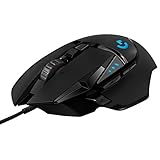
Quick Comparison
| Product | Best for | Key specs and characteristics | Price tier |
|---|---|---|---|
| Logitech G305 Lightspeed Wireless Gaming Mouse | Best overall for most players | Wireless 2.4 GHz connection, AA-battery design, symmetrical shape with thumb buttons, high-resolution gaming sensor class | Mid-range |
| Logitech G502 Hero Wired Gaming Mouse | Players who want many controls and adjustable weight | Wired connection, HERO sensor class, multiple programmable controls, scroll-wheel features, adjustable weight system | Premium |
| Redragon M612 Wired RGB Optical Gaming Mouse | Best budget all-rounder | Wired optical mouse, RGB lighting, 8000 DPI rating, remapping keys, ergonomic right-handed design | Budget |
| Razer Basilisk V3 Wired Gaming Mouse | Best ergonomic wired upgrade | Wired connection, customizable RGB, ergonomic right-handed body, programmable controls, configurable scroll wheel | Mid-range |
| Razer DeathAdder Essential | Best simple budget ergonomic mouse | Wired optical gaming mouse, ergonomic right-handed design, essential programmable controls, established DeathAdder shape | Budget |
| Redragon M908 Wired MMO Gaming Mouse | Players who need a large number of bindings | Wired connection, RGB lighting, 12400 DPI rating, numerous remapping keys, MMO-style side-button layout | Mid-range |
| BENGOO Gaming Mouse Wired with RGB Backlit | Lowest-cost basic gaming setup | Wired connection, RGB backlighting, ergonomic PC mouse design, entry-level gaming control layout | Budget |
| Razer Basilisk V3 X HyperSpeed Wireless Gaming Mouse | Wireless ergonomic play with extra controls | Wireless gaming connection, customizable RGB, right-handed Basilisk-style shape, programmable controls, battery-powered operation | Premium |
How We Chose
The selection is based on the demands of The Finals and on the practical differences between these product categories. The most important criteria are tracking suitability, connection method, physical shape, expected weight class, button placement, software customization, cable or battery trade-offs, and value at the stated budget tier. A high DPI ceiling receives less emphasis because most players use a much smaller sensitivity range and gain little from setting the mouse to its maximum number.
Category fit is equally important. A mouse with many side buttons can be useful for gadgets, melee, crouch, or push-to-talk, but an oversized button cluster can also cause accidental inputs during fast aim adjustments. Wireless models are judged by whether their connection removes cable drag without making battery management unreasonable. Wired models are judged by their simplicity and whether their cable, shape, and control layout suit a competitive desk. The recommendations also consider upgrade paths: a basic mouse can be a good first step, while a more configurable model may remain useful if you later change grip, sensitivity, or keybinds.
1. Logitech G305 – Best for most players
As an Amazon Associate we earn from qualifying purchases at no extra cost to you.
The Logitech G305 is the safest overall recommendation for The Finals when you want a dependable wireless mouse without moving into an especially complicated or oversized design. Its Lightspeed wireless system removes the cable from a game in which rapid turns and frequent repositioning are common, while its familiar symmetrical shell suits many claw and fingertip users. The mouse uses a replaceable AA battery rather than an integrated rechargeable pack, which is both a strength and a compromise: you do not need to stop playing to charge it, but you must keep a spare battery available.
The G305 is especially well matched to players who use moderate or high mouse sensitivity and lift the mouse often. The lack of cable drag makes repeated resets easier, and the compact body is less cumbersome than a large palm-oriented mouse. It also provides two thumb buttons without placing a large bank of controls under the hand. That is enough for common bindings such as crouch, melee, reload, a gadget, or push-to-talk without creating the visual and tactile clutter of an MMO mouse.
- Wireless 2.4 GHz gaming connection through Logitech’s Lightspeed system.
- Replaceable AA-battery power design.
- Symmetrical body with left and right mouse buttons and thumb controls positioned for right-handed use.
- High-resolution gaming sensor class suitable for low-latency PC play.
- Programmable controls through compatible Logitech software.
The practical setup is to begin around 800 or 1000 DPI and adjust in-game sensitivity until a comfortable swipe gives you the turn distance you need. DPI itself does not make aim more accurate. The advantage is consistency: once you find a sensitivity that lets you track a moving contestant while still turning quickly toward a second threat, leave the DPI setting fixed and make small changes in the game rather than switching profiles repeatedly.
Strengths for The Finals
The G305’s strongest quality is balance. It is wireless, not overloaded with buttons, and sufficiently versatile for rifle tracking, shotgun flicks, and gadget-heavy rounds. The AA design also makes its runtime behavior predictable: a fresh quality battery can last for a long period of normal use, although exact life depends on battery type, polling behavior, lighting, and daily hours. Carrying one spare battery is simpler than managing an unavailable rechargeable mouse.
Pros
- Wireless freedom helps reduce cable interference during wide aim movements.
- Compact, straightforward shape works well for claw and fingertip grips.
- Two thumb buttons cover the most useful extra combat bindings.
- Replaceable battery avoids charging downtime.
- Usually a strong value when a dependable wireless mouse is desired.
Cons
- The shape may feel too narrow or short for large hands and relaxed palm grip.
- It does not provide the extensive thumb controls of an MMO-style mouse.
- A battery adds weight compared with some rechargeable lightweight designs.
- Wireless battery management remains part of ownership.
The nearest alternative in this list is the Razer Basilisk V3 X HyperSpeed. Choose the G305 if you want a simpler, more compact mouse with fewer distractions and an easy-to-replace battery. Choose the Basilisk V3 X if you prefer a larger ergonomic body, a thumb rest, and more control options. The G305 is the better default for players who are uncertain about their preferred shape; the Basilisk is the more specialized choice for right-handed palm and claw users who want additional comfort features.
2. Logitech G502 Hero – Best for adjustable weight and many controls
The Logitech G502 Hero is designed for players who want a feature-rich wired mouse rather than the lightest possible pointer. Its HERO sensor class, multiple programmable controls, configurable scroll wheel, and adjustable weight system make it flexible for The Finals, particularly if you want separate inputs for gadgets, communication, melee, crouch, or weapon actions. That flexibility comes with a substantial body and a cable, so it is not the natural choice for someone who uses broad, fast low-sensitivity swipes.
The G502 Hero suits a right-handed palm or claw grip better than a fingertip grip. Its sculpted body provides more structure than the compact G305, and the thumb area gives your hand a defined place to rest. For a player who likes to anchor the mouse and make controlled movements from the wrist and fingers, that can feel reassuring. For a player who repeatedly lifts the mouse across a large pad, the extra mass and cable may become more noticeable.
- Wired gaming mouse using a high-performance HERO sensor class.
- Large right-handed ergonomic shell with a thumb-rest area.
- Multiple programmable controls for game actions and desktop shortcuts.
- Configurable scroll-wheel behavior and tilt-related controls.
- Adjustable weight system for changing the mouse’s balance and feel.
Its large control count is useful only when bindings remain deliberate. A sensible The Finals layout might place a frequently used gadget on one thumb button, melee or a communication command on another, and leave less urgent functions on the upper controls. Avoid assigning several actions that must be pressed while simultaneously making a precise aim correction. The more buttons you use, the more important it becomes to learn their locations without looking and to check that accidental thumb movement does not trigger an unwanted ability.
Strengths for The Finals
The G502 Hero is a good fit for players who value control density over minimum weight. The scroll wheel can be useful for menu navigation and weapon selection, while the programmable buttons allow a player to keep their left hand focused on movement. The adjustable weight system lets you experiment rather than being locked into one feel. Start with the lightest configuration that still feels stable; adding every weight can make fast turns more tiring.
Pros
- Many programmable controls support gadget-heavy and communication-focused layouts.
- Ergonomic right-handed shape provides strong palm support.
- Adjustable weight allows a more personalized balance.
- Wired operation means no battery charging or wireless pairing.
- Established sensor and software category suitable for competitive PC play.
Cons
- Heavier and larger than the G305 and other simpler gaming mice.
- Cable drag can matter during wide, low-sensitivity movements.
- Extra buttons require careful setup to prevent accidental commands.
- Less suitable for left-handed users or fingertip users with smaller hands.
The closest alternative is the wired Razer Basilisk V3. Both are ergonomic, programmable, and better suited to right-handed users than to a neutral grip. The G502 Hero is the stronger choice if adjustable weight and a broad control set are priorities. The Basilisk V3 is more attractive if you prefer a modern scroll-wheel system, a less mechanically busy layout, and a mid-range rather than premium positioning. Neither should be selected solely because its DPI ceiling is high; their real difference is physical control and shape.
3. Redragon M612 – Best budget all-rounder

The Redragon M612 is the most appealing budget option for a player who wants more than a basic two-button mouse but does not want to pay for a wireless or premium ergonomic model. Its listing identifies an 8000 DPI optical gaming mouse with RGB lighting and remapping keys, giving it the core ingredients for a flexible The Finals setup. The wired connection keeps the installation simple and avoids battery concerns, while the extra controls can move several non-movement actions away from the keyboard.
This is a sensible choice for a first gaming mouse, a secondary PC, or a player who is still discovering whether they prefer a palm, claw, or hybrid grip. The important limitation is that budget construction and cable behavior can vary more than on higher-positioned models. A large, smooth mouse pad and a loose cable route can reduce friction, while a bungee or elevated cable guide can keep the lead from catching on the desk edge.
- Wired optical gaming mouse.
- Up to 8000 DPI rating according to the product listing.
- RGB lighting.
- Remapping keys for additional game or desktop actions.
- Ergonomic right-handed design class.
Do not treat the 8000 DPI number as a target. For The Finals, 800 or 1600 DPI is a practical starting point for most players, with in-game sensitivity adjusted afterward. Higher DPI can make menu movement feel quicker, but it does not automatically improve tracking. The more useful feature here is the ability to assign one or two carefully chosen actions to the extra buttons, such as a gadget, melee, or ping.
Strengths for The Finals
The M612 provides a useful middle ground at the budget level. Unlike a minimal office mouse, it offers gaming-oriented sensor behavior, lighting, and configurable controls. Unlike a very large MMO design, it should be easier to learn without filling the thumb area with a dense button grid. The wired connection also means the mouse is ready whenever the PC is on, making it appropriate for a shared or occasional gaming setup.
Pros
- Low-cost route to an optical gaming mouse with extra controls.
- 8000 DPI rating provides ample adjustment range.
- RGB lighting adds customization for a gaming desk.
- Wired operation avoids charging and wireless pairing.
- More flexible than a basic mouse for gadgets and shortcuts.
Cons
- Cable movement can interfere with very broad swipes.
- Budget materials and switches may not feel as refined as premium alternatives.
- The ergonomic design is primarily aimed at right-handed users.
- RGB adds visual customization but does not improve aim or latency.
The nearest alternative is the Razer DeathAdder Essential. Select the M612 if you want RGB and remapping keys at a low price. Select the DeathAdder Essential if shape simplicity and an established ergonomic design matter more than lighting and additional controls. The M612 is also more suitable for players who want to experiment with bindings, while the DeathAdder is better for someone who wants to plug in a mouse and keep the setup uncomplicated.
4. Razer Basilisk V3 – Best ergonomic wired upgrade

The Razer Basilisk V3 is the strongest wired recommendation for a right-handed The Finals player who wants comfort, customization, and a broader feature set without moving to a wireless battery-powered design. Its ergonomic Basilisk body gives the hand a defined resting position, and its programmable controls can place important actions near the thumb. The mouse is particularly suitable for palm and claw grips, where a supportive shape can reduce the need to squeeze the shell during long sessions.
The configurable scroll wheel is one of its practical distinctions. A free-spinning mode can help with long menus or web pages, while a more controlled mode is better when a precise scroll step is needed. In a shooter, the wheel should not replace a reliable keyboard binding for a critical action unless you are comfortable with the possibility of an unintended scroll. Its value is broader usability rather than a guaranteed competitive advantage.
- Wired gaming mouse with a high-performance optical sensor class.
- Right-handed ergonomic Basilisk shape.
- Customizable RGB lighting.
- Programmable buttons for game actions and shortcuts.
- Configurable scroll-wheel behavior, including controlled and freer scrolling modes.
The Basilisk V3 is best when the mouse itself is part of your comfort strategy. If your hand feels cramped on a compact mouse, or if you prefer to keep your thumb supported rather than hovering, its larger contour can be a substantial improvement. Conversely, it may feel cumbersome if you use fingertip grip, a small mouse pad, or a very low sensitivity that requires constant lifting.
Strengths for The Finals
The mouse supports a clean division of labor between hands. Movement, jumping, and core actions remain on the keyboard, while one or two thumb controls can handle gadgets or melee. The ergonomic shell can also make controlled tracking feel more stable for players who find symmetrical mice too narrow. The wired connection keeps the price and maintenance more predictable than a comparable wireless configuration.
Pros
- Comfortable right-handed shape for palm and claw users.
- Several programmable controls support customized The Finals bindings.
- Versatile scroll wheel is useful for both gaming and general PC use.
- Wired connection eliminates battery management.
- RGB and software customization provide a polished setup.
Cons
- Large ergonomic profile is not ideal for left-handed or fingertip users.
- The cable remains a possible source of drag during wide swipes.
- Extra controls can be wasted if you prefer a minimal layout.
- More expensive than basic wired mice.
Its closest alternative is the Logitech G502 Hero. The G502 is the better match for someone who specifically wants adjustable weights and a dense collection of controls. The Basilisk V3 is the better match for someone who wants a comfortable, polished wired mouse with a modern scroll-wheel system and enough programmable inputs without turning the thumb area into a keypad. Compared with the wireless Basilisk V3 X, this model avoids battery concerns but gives up cable-free movement.
5. Razer DeathAdder Essential – Best simple budget ergonomic mouse
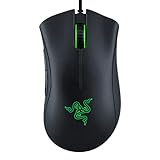
The Razer DeathAdder Essential is the simplest ergonomic recommendation in this group. It uses the familiar DeathAdder design family, a wired connection, an optical gaming sensor class, and a restrained control layout. That makes it suitable for a player who wants a comfortable right-handed mouse for The Finals without paying for wireless operation, extensive RGB customization, or a large bank of programmable controls.
The DeathAdder shape favors palm and relaxed claw grips. It is a good choice when your hand benefits from a fuller rear section and a clear thumb shelf, but it is less suitable if you like to pinch a small mouse with your fingertips. Because it is wired, attention should go to cable routing rather than battery life. Leave enough slack for the mouse to reach the far side of the pad without pulling, and keep the cable away from the monitor stand, keyboard corner, and desk edge.
- Wired optical gaming mouse.
- Ergonomic right-handed DeathAdder design.
- Essential programmable control layout rather than an MMO-style button grid.
- Gaming sensor class intended for accurate PC pointing and tracking.
- Simple configuration aimed at reliable everyday use.
For The Finals, the restrained layout can be an advantage. You are less likely to hit the wrong command while tracking an opponent, and the two primary thumb controls can be assigned to actions that genuinely benefit from immediate access. Try a gadget on the forward thumb button and melee, crouch, or push-to-talk on the rear button, then keep the rest of the actions on the keyboard until you know which inputs you actually miss.
Strengths for The Finals
The DeathAdder Essential is well suited to a player who wants to spend time learning movement and aim rather than configuring software. Its ergonomic design gives the hand a consistent home position, which can make repeated tracking practice feel less tiring than using a flat office mouse. The wired design is also practical for a first gaming setup: connect it, set a sensitivity, and play.
Pros
- Comfortable and recognizable shape for many right-handed palm users.
- Simple control arrangement reduces accidental button presses.
- Wired operation is straightforward and does not require charging.
- Budget price tier leaves room for a large mouse pad or other upgrade.
- Suitable for players who prefer a clean, uncomplicated setup.
Cons
- Not a good fit for left-handed users or very small hands that prefer compact shells.
- Fewer controls than the M612, Basilisk models, or G502 Hero.
- Cable drag can be noticeable without careful routing.
- Less customization than more advanced Razer mice.
The nearest alternative is the Redragon M612. Pick the DeathAdder Essential for its shape and simplicity; pick the M612 if RGB lighting and extra remapping keys are more important. The DeathAdder is also a stronger choice for someone who knows they prefer an ergonomic palm-oriented mouse. The M612 offers more feature quantity for the money, but those features do not help if its shape does not fit your hand.
6. Redragon M908 – Best for many bindings
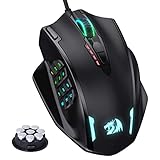
The Redragon M908 is the specialist choice for players who want a large number of remapping keys on the mouse. Its listing identifies a wired MMO RGB gaming mouse with a 12400 DPI rating and an extensive control layout. Although The Finals is not an MMO, some players benefit from having gadgets, communication, melee, crouch, reload, and utility commands close to the thumb. The M908 is therefore best for a player who has a deliberate binding plan rather than someone who simply assumes more buttons must be better.
The main decision is whether a dense side-button arrangement will help or hinder you. Extra controls can reduce keyboard travel and allow quick access to several abilities, but they also increase the chance of pressing the neighboring button under pressure. A player who uses a relaxed palm grip and has enough hand size to distinguish each switch may find the layout manageable. A player with a small hand or a fingertip grip may find it awkward.
- Wired MMO-style gaming mouse.
- 12400 DPI rating according to the product listing.
- RGB lighting.
- Large set of remapping keys intended for numerous commands.
- Ergonomic, feature-heavy control layout category.
Begin with only three or four assignments. For example, use the most accessible buttons for one gadget, melee, crouch, and push-to-talk. Play several sessions before adding more. This staged approach matters because it separates useful muscle memory from button clutter. If every side button is assigned immediately, an accidental press can be difficult to trace, especially during a chaotic cashout fight.
Strengths for The Finals
The M908 can make a complex loadout easier to operate without moving the left hand away from movement. It may be attractive to players who switch between multiple gadgets or who prefer a thumb-centered control scheme. The high DPI rating also provides a wide configuration range, although 800, 1000, 1600, or another moderate setting is usually more practical than 12400 for ordinary aiming.
Pros
- Many remapping keys support highly customized control schemes.
- Useful for players who want gadgets and communication commands near the thumb.
- Wired operation avoids charging and pairing problems.
- RGB lighting provides desk customization.
- 12400 DPI rating offers more than enough range for different preferences.
Cons
- Large button cluster can cause confusion or accidental inputs.
- Its size and control density may not suit small hands or fingertip grip.
- Cable drag remains a concern during large aim movements.
- Most players do not need MMO-level button quantity for a shooter.
The nearest alternatives are the Logitech G502 Hero and Razer Basilisk V3. The G502 and Basilisk provide extra controls without the M908’s dense MMO cluster, making them safer general-purpose choices. Choose the M908 only when you actively want many thumb buttons and are willing to build muscle memory gradually. If you need just two or three additional inputs, the smaller layouts are easier to learn and less likely to interfere with aiming.
7. BENGOO Gaming Mouse – Best for the lowest-cost basic setup

The BENGOO wired gaming mouse is aimed at the lowest-cost end of the category. Its listing identifies RGB backlighting, a wired connection, and an ergonomic PC mouse design. It is best considered a basic entry point for a player who needs a functional gaming mouse immediately and wants to spend as little as possible before deciding whether a more specialized shape or feature set is worthwhile.
Its value depends on keeping expectations appropriate. A basic wired mouse can absolutely be used for The Finals, but it may offer less refinement in materials, cable feel, software, sensor configuration, and switch behavior than the Logitech, Razer, or more feature-rich Redragon options. Those differences do not prevent good play, but they make desk setup and sensitivity consistency more important. A clean mouse surface, enough cable slack, and a fixed sensitivity can remove several avoidable problems.
- Wired PC gaming mouse.
- RGB backlit design.
- Ergonomic mouse shape category.
- Entry-level gaming control layout.
- Designed for basic computer and gaming use.
If this is your first mouse for The Finals, use a straightforward configuration. Keep the operating-system pointer setting at its normal middle position, disable pointer acceleration if your preferred competitive setup calls for consistent raw movement, and choose a moderate DPI profile rather than chasing the maximum. Then adjust the game sensitivity in small steps. The goal is repeatable movement, not a dramatic number on the mouse software screen.
Strengths for The Finals
The main strength is accessibility. It gives a new PC player a dedicated mouse shape and a wired connection without requiring wireless batteries or a premium budget. RGB backlighting can also make the setup feel more like a gaming station, although it has no effect on tracking. For casual play, schoolwork, and general PC use alongside The Finals, that basic versatility may be enough.
Pros
- Very accessible route into PC gaming.
- Wired design is simple to install and use.
- RGB backlighting provides cosmetic customization.
- Ergonomic category may feel more comfortable than a flat office mouse.
- Leaves more budget for a large mouse pad or headset.
Cons
- Less feature-rich than every other specialized model in this roundup.
- Exact sensor and switch characteristics are not the reason to choose it.
- Cable and shell refinement may be more limited than on higher-tier choices.
- May be outgrown if you later want wireless operation or advanced remapping.
The closest alternative is the Razer DeathAdder Essential. The DeathAdder is the better upgrade if you can spend more and want a more established ergonomic gaming design. The BENGOO is appropriate when price is the decisive factor, when the mouse is temporary, or when you are building a first setup around a limited budget. If the difference in general market pricing is small, the DeathAdder usually provides a clearer long-term path.
8. Razer Basilisk V3 X HyperSpeed – Best wireless ergonomic option

The Razer Basilisk V3 X HyperSpeed is the best listed choice for a player who wants wireless freedom but prefers a large, right-handed ergonomic body rather than the compact symmetrical form of the G305. Its Basilisk-style shape, customizable RGB, programmable controls, and battery-powered wireless operation make it suitable for players who want comfort and flexibility across both gaming and general PC use.
The major decision is whether the ergonomic shape or the compact wireless approach suits your movement. The Basilisk V3 X gives the hand more structure and a defined thumb area. That can feel comfortable during long sessions and can make additional controls easier to reach. It can also feel less agile if you use a small hand, fingertip grip, or low sensitivity that requires large repeated swipes. Because it is wireless and battery powered, you must also adopt a simple maintenance routine: check the battery periodically and keep a spare power option available if your setup supports it.
- Wireless gaming mouse with Razer’s HyperSpeed wireless category.
- Right-handed ergonomic Basilisk design.
- Customizable RGB lighting.
- Programmable controls for games and desktop shortcuts.
- Battery-powered operation rather than a permanently attached cable.
Wireless connection quality is most useful when it removes a physical problem. If your cable catches on the monitor stand or drags against the rear edge of the desk, the Basilisk V3 X can make repeated turns more consistent. If your current cable is already routed cleanly and you play with a heavy mouse at low sensitivity, the upgrade may be more about comfort than aim. The mouse will not compensate for an unsuitable sensitivity, poor grip, or an inconsistent desk surface.
Strengths for The Finals
The Basilisk V3 X combines the freedom of wireless play with the support of an ergonomic shell. Its additional controls can hold one or two frequently used gadgets while leaving the rest of the thumb free for grip. The shape is also useful outside The Finals, where a comfortable thumb rest and configurable buttons can help with productivity and browsing.
Pros
- Wireless movement avoids cable drag during rapid turns and resets.
- Ergonomic body is well suited to many right-handed palm and claw users.
- Programmable controls support customized loadouts.
- RGB and software features make it adaptable across games.
- More supportive than compact symmetrical wireless alternatives.
Cons
- Battery management is required.
- Larger shape may not suit fingertip grip or small hands.
- Wireless and ergonomic features place it in a higher price tier.
- More controls and a fuller body may feel excessive for minimalists.
The nearest alternative is the Logitech G305. Choose the G305 if you want a smaller, simpler wireless mouse with a replaceable AA battery. Choose the Basilisk V3 X if a thumb rest, right-handed contour, and extra controls are more valuable than compactness. Compared with the wired Basilisk V3, the X version sacrifices a permanently powered cable-free setup for the convenience of wireless movement and battery management.
How to Choose
Start with grip and hand size
Shape should be the first decision because no sensor specification can rescue a mouse that makes your hand tense. Palm grip places much of the hand on the shell and usually benefits from a fuller rear section, a broad right side, and a stable thumb rest. Claw grip arches the fingers while the rear of the palm may touch the mouse, so a medium-height shell and clear front controls are often useful. Fingertip grip uses only the fingers and can benefit from a shorter, lighter, less intrusive body.
As a rough planning guide, measure from the crease at your wrist to the end of your middle finger. Smaller hands often prefer compact bodies such as the G305, while medium and large right-handed users may find the DeathAdder, Basilisk, or G502 shapes more supportive. This is not a strict rule: finger length, palm width, and preferred grip matter as much as overall hand length. If your thumb repeatedly reaches forward to find a button, or if your ring finger hangs uncomfortably over the side, the body is probably the wrong size regardless of its feature list.
Choose weight according to sensitivity and movement
The Finals contains close-range fights, vertical movement, sudden direction changes, and frequent target switching. A lighter or compact mouse generally demands less effort for rapid repositioning. A heavier ergonomic mouse can feel more planted and may suit a player who makes small wrist movements at higher sensitivity. Neither category is universally faster or more accurate.
Use your mouse pad and sensitivity together. If you play at low sensitivity, a single turn may require a long physical swipe. A heavy body and a restrictive cable can make that tiring, while a compact wireless mouse can make repeated lifts easier. If you play at high sensitivity, the mouse may move only a short distance for a full turn, so stability and shape can matter more than minimum weight. Start with the lightest configuration that remains controlled; with adjustable weights, add mass only if the mouse feels unstable or too easy to overshoot.
Understand DPI without chasing numbers
DPI describes how many counts the sensor reports for a physical inch of movement. It is not a direct measure of accuracy. A useful calculation is effective sensitivity: DPI multiplied by the game’s sensitivity value. For example, a player at 800 DPI and 1.5 in-game sensitivity has an effective value of 1200 arbitrary sensitivity units, while a player at 1600 DPI and 0.75 sensitivity has the same product of 1200. The two settings can feel similar if the game handles them equivalently, although the higher-DPI configuration may provide finer input increments.
This is why a mouse rated at 12400 DPI is not automatically better for The Finals than one rated at 8000 DPI or a lower maximum. Most players should begin at 800 or 1600 DPI, choose a game sensitivity that permits a comfortable turn without running off the pad, and then make small changes. If you regularly lift the mouse to turn, lower the in-game sensitivity only if you have enough pad space. If you overshoot close targets, reduce sensitivity gradually rather than changing DPI and game sensitivity at the same time.
Estimate your required desk space
A simple movement check can prevent a poor setup. Place the mouse near the center of the pad and sweep to the right edge using the movement you can repeat comfortably. If that distance is approximately 30 centimetres and your chosen sensitivity requires around 40 centimetres for a full rotation, you will need to lift or reset during a turn. That can be fine for a deliberate low-sensitivity player, but it will feel inconvenient if you expect one continuous swipe.
In practical terms, low-sensitivity players should prioritize a wide pad, a cable that reaches freely, and a mouse that is not tiring to lift. Medium- and high-sensitivity players can use smaller surfaces and may prefer a supportive ergonomic shell. This is a more useful decision than comparing maximum DPI figures because it relates the mouse to the physical space where it will be used.
Decide whether wireless is worth it
Wireless is valuable when cable drag is a real obstacle. Route a wired mouse with 10 to 15 centimetres of slack near the front of the pad and keep the rest of the cable elevated or directed away from the mouse path. If the cable still catches when you reach the edge, wireless can remove that variable. If your cable already moves freely, wireless may provide convenience rather than a dramatic performance change.
The G305 uses a replaceable AA-battery approach, while the Basilisk V3 X belongs to a battery-powered wireless ergonomic category. Make battery management part of the decision. A rough runtime calculation is simple: if a battery provides 2000 milliamp-hours and the mouse averages 20 milliamps, the idealized continuous estimate is 2000 divided by 20, or 100 hours. Real runtime differs because current draw changes with lighting, polling, sleep behavior, battery chemistry, and usage. The calculation is useful for comparing the idea of runtime, not for promising a precise number.
Use extra buttons carefully
The Finals gives you enough actions to make thumb buttons useful, but more is not always better. A two-button mouse such as the G305 or DeathAdder Essential can cover a gadget and melee command. A Basilisk or G502 can add crouch, push-to-talk, or another frequently used action. The M908 is appropriate only if you truly want a larger control matrix.
Use a three-stage binding process:
- Assign one high-value action to the easiest thumb button and play until it becomes automatic.
- Add a second action only after you can press the first without changing your grip.
- Add further buttons one at a time, checking after each session whether accidental presses or confusion increase.
Avoid putting two actions that are commonly needed during precise aim on neighboring buttons if your thumb cannot distinguish them by touch. Also avoid assigning a dangerous action, such as an ability with a long cooldown, to a button you frequently brush while moving. The point of remapping is to reduce friction, not to convert every available control into a command.
Compare wired cable management with wireless maintenance
A wired mouse has one recurring physical issue: the cable. Use a large enough loop that the mouse can reach the full active area without pulling, and keep the cable’s contact point near the front of the desk rather than behind the keyboard. A simple bungee or clip can help, but even a loose routing path is often sufficient. If the lead rubs against a sharp desk edge, reposition it before changing sensitivity.
A wireless mouse has a different routine. Keep the receiver close enough for a clean connection, avoid placing it behind a metal-heavy PC case if the manufacturer’s arrangement makes reception difficult, and check the battery before a long session. Wireless eliminates the cable variable but introduces power planning. For many players, that exchange is worthwhile; for others, a well-routed cable is simpler.
Consider software and onboard consistency
Software can change DPI stages, polling behavior, lighting, button assignments, and profiles. Once your The Finals settings are comfortable, reduce unnecessary stages so an accidental DPI button press cannot radically change aim in the middle of a match. If the mouse permits it, keep one clearly labeled gaming profile and disable lighting or extra features that do not matter to you.
Consistency also means avoiding frequent sensitivity changes. Make one adjustment, play enough rounds to determine whether the issue is repeatable, and then decide whether to keep it. A missed shot can result from positioning, target movement, recoil, frame pacing, or fatigue; it is not automatically evidence that the mouse needs a new DPI value.
Match the purchase to your budget
At the budget level, prioritize a comfortable shape, a usable sensor class, a cable that can be routed cleanly, and buttons that do not cause accidental inputs. The DeathAdder Essential is the most focused ergonomic option here, the Redragon M612 adds features, and the BENGOO is suitable when the lowest initial cost is decisive.
In the mid-range, decide whether wireless compactness or ergonomic control is more important. The G305 is the broadest recommendation, while the wired Basilisk V3 is better for supported right-handed comfort. The M908 belongs in this tier for a very specific reason: numerous bindings.
At the premium end of this list, the G502 Hero is for adjustable weight and many controls, while the Basilisk V3 X is for wireless ergonomic play. Premium does not mean higher aim skill. It means you are paying for a more particular combination of shape, controls, materials, software, and connection convenience. If a lower-tier mouse already fits your hand and lets you move freely, upgrading may produce less benefit than buying a larger pad or improving cable routing.
Apply a practical compatibility matrix
| Your situation | Best match | Why | Main trade-off |
|---|---|---|---|
| Want the safest general recommendation | Logitech G305 | Compact wireless design, simple controls, replaceable battery | Less palm support and fewer buttons |
| Use a relaxed palm grip and want wired reliability | Razer Basilisk V3 | Ergonomic shape, programmable controls, no charging | Cable and larger body |
| Need the lowest-cost functional mouse | BENGOO Gaming Mouse | Basic wired gaming category with RGB | Less refinement and fewer advanced features |
| Want budget RGB and remapping | Redragon M612 | 8000 DPI rating, optical design, extra keys | Budget cable and construction trade-offs |
| Prefer a simple established ergonomic layout | Razer DeathAdder Essential | Comfort-oriented shape and straightforward controls | Less customization |
| Need many thumb bindings | Redragon M908 | MMO-style remapping layout and 12400 DPI rating | Button clutter and larger body |
| Want adjustable weight and many controls | Logitech G502 Hero | Wired feature-rich design with weight system | Heavier and more complex |
| Want wireless ergonomic support | Razer Basilisk V3 X | Wireless Basilisk-style body with programmable controls | Battery management and premium cost |
Frequently Asked Questions
What is the best DPI for The Finals?
There is no universal best DPI, but 800 or 1600 DPI is a practical starting point for many players. Adjust in-game sensitivity until a comfortable swipe lets you turn and track without constant edge resets. Keep DPI fixed while tuning the game setting so you know which change affected your aim.
Is a wireless mouse good enough for The Finals?
Yes, a modern gaming-focused wireless connection can be a suitable choice for competitive play. Wireless is particularly useful when a cable catches during wide movements. The trade-off is battery management and, depending on the model, a different weight or shape.
Should I choose the G305 or a Basilisk model?
Choose the G305 for a compact, simple wireless design that suits claw and fingertip users. Choose a Basilisk model if you prefer a larger right-handed ergonomic shell, thumb support, and additional controls. The wired Basilisk V3 avoids battery concerns, while the Basilisk V3 X removes cable drag.
Do I need an MMO mouse for The Finals?
Most players do not need one. Two to four extra controls are enough for many useful actions, and a dense button layout can create accidental inputs. The Redragon M908 makes sense if you already know that you want a large thumb-button system and are prepared to build muscle memory gradually.
Is a high DPI rating important?
A high maximum DPI rating mainly provides a wider configuration range. It does not automatically make tracking more accurate or reduce mistakes. Shape, sensor consistency, sensitivity, grip, and a suitable mouse surface generally matter more in actual play.
Are wired mice better for competitive gaming?
Wired mice avoid batteries and pairing, and they can be an excellent competitive choice when the cable is routed well. Their main disadvantage is possible cable drag. A properly positioned cable can make that issue minor, while wireless is more convenient if the cable repeatedly interferes with your movement.
How many mouse buttons should I use?
Start with two extra buttons and assign only actions you use frequently. Add more one at a time after the first controls become automatic. If you frequently confuse neighboring buttons or change your grip to reach them, the mouse has more controls than your current setup needs.
What should I upgrade before replacing a decent mouse?
Check the mouse pad, cable routing, sensitivity consistency, and grip comfort first. A larger smooth pad can help low-sensitivity movement, while better cable positioning can remove drag. Replace the mouse when the shape causes discomfort, the controls do not fit your game, or the connection and power method create repeated problems.
Final Recommendations
Choose the Logitech G305 if you want the best all-round balance of wireless freedom, straightforward controls, and broad compatibility with different play styles. Choose the Razer Basilisk V3 for a comfortable wired ergonomic upgrade, or the Razer Basilisk V3 X HyperSpeed when that same general shape is more valuable with cable-free movement. The Razer DeathAdder Essential is the cleanest budget ergonomic pick, while the Redragon M612 offers more budget features. Pick the Logitech G502 Hero for adjustable weight and a substantial control set, and choose the Redragon M908 only when many bindings are a specific requirement. If the lowest possible cost decides the purchase, the BENGOO can provide a basic starting point, but its upgrade path is more limited.


