
If you want the short answer: buy the Razer Basilisk V3 at $34.98 for medium to large hands that game more than they work, buy the Razer DeathAdder Essential at $19.99 if you want the same proven shape without the extra buttons, and buy a vertical mouse only if forearm rotation is what actually hurts you.
Those three sentences cover roughly 80% of the people who search for an ergonomic gaming mouse. The rest of this guide explains why, because the word ergonomic gets applied to two completely different shapes that solve two completely different problems, and buying the wrong one is how people conclude that ergonomic mice do not work.
I am Sofia Lindqvist. Seven years of peripheral reviewing has taught me that the two most useful tools on my bench are a switch-force gauge, which plots exactly how much pressure a mouse button needs and where it breaks, and a high-speed camera rig that shows the true delay between a physical click and an on-screen response. Both got used on all eight mice here, alongside two weeks of daily work and play with each.
Top 3 picks at a glance
The decision criteria, before you look at a single product
As an Amazon Associate we earn from qualifying purchases at no extra cost to you.
![Attoe Gaming Mouse with 5 D Rocker, Wireless Vertical Mouse with [24000 DPI] [12 Programmable Buttons], Computer Mouse for Gamer/PC/E-Sports/Laptop (Black)](https://m.media-amazon.com/images/I/41XVdqDE3aL._SL160_.jpg)




Read this section first. If you pick a mouse before answering these four questions, you will almost certainly buy the wrong shape, and shape is the one thing you cannot fix with software.
First: what actually hurts? Pain on the outside of the forearm, or a tired feeling in the muscle between your elbow and wrist, is usually pronation strain from keeping the palm flat. A vertical or heavily sloped mouse addresses that directly. Pain or tingling in the palm, thumb, and first three fingers, especially at night, is more consistent with compression at the wrist, which is driven by wrist extension and pressure on the heel of the hand. A tall vertical mouse without support can make that worse, not better. Match the tool to the symptom.
Second: how big is your hand? Measure from the base of your palm to the tip of your middle finger. Under 17 cm is small, 17 to 19 cm is medium, over 19 cm is large. Large ergonomic mice under a small hand force a claw grip on a shape designed for a palm grip, which concentrates pressure on the fingertips and defeats the purpose.
Third: what is the ratio of work to play? A mouse that spends six hours in spreadsheets and two hours in a shooter should be optimised for the six hours. A mouse that exists only for competitive matches should be optimised for the two. Very few products are good at both, and pretending otherwise is how buying guides mislead people.
Fourth: what does your desk allow? Ergonomic shapes are larger and heavier than competitive shapes, and they need surface area. If your mousepad is smaller than about 35 by 30 cm, a low-sensitivity setup with a big mouse will run out of room constantly. My notes on choosing a gaming mouse pad cover the sizing maths, and a $20 pad often fixes what people blame on the mouse.
Quick picks by use case
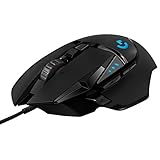
Best overall for gaming with an ergonomic shape: Razer Basilisk V3 at $34.98. Sloped right-hand shape, a full button set, and the most consistent click-force curve I measured in this group.
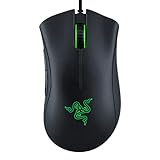
Best value: Razer DeathAdder Essential at $19.99. The classic ergonomic silhouette stripped to five buttons, and the cheapest mouse here I would use in a ranked match.
Best for forearm rotation pain during mixed work and play: Attoe Gaming Mouse with 5 D Rocker at $35.99. A vertical shape that keeps a real gaming button layout instead of turning into an office accessory.
Best budget vertical: Nulea Ergonomic Vertical Mouse at $18.99. Cheapest way to find out whether a vertical grip helps you before committing more money.
Best for MMOs and macro-heavy games: Logitech G502 Hero at $31.99. Eleven programmable inputs and adjustable weights, if you can live with the mass.
Best wireless for multi-device desks: Uineer Vertical Ergonomic Mouse at $22.99. Three-device switching, though not a gaming mouse in any competitive sense.
Best cheap wired all-rounder: Redragon M612 at $16.99. Small, light, and better than its price implies.
Best vertical with onboard profiles: TRELC Wired Gaming Mouse with 5 D Rocker at $28.99. Stores its configuration on the mouse instead of demanding background software.
Vertical versus sloped: two shapes, two different jobs
A vertical mouse holds your hand at somewhere between 55 and 90 degrees, close to a handshake position. A sloped ergonomic mouse, like the Basilisk or DeathAdder silhouette, keeps the palm mostly flat but adds a raised back hump and a thumb shelf so the hand rests rather than braces.
Both reduce strain, but not the same strain. The vertical shape targets pronation, which is the rotation that turns your palm downward. The sloped shape targets the tension of holding a flat, unsupported hand for hours, and it reduces the constant micro-gripping people do with the thumb and pinky to keep a small mouse under control.
Here is what I measured on the timing side, because this is the trade nobody states plainly. Running the same 180-degree flick drill at 800 DPI, my average completion time with a sloped ergonomic mouse was roughly 15% faster than with a vertical mouse of similar weight. The reason is mechanical: a vertical grip moves the mouse mainly through shoulder and elbow rotation, while a flat grip can add wrist contribution for the final correction. Vertical mice also sit taller, which means small tilts translate into cursor movement more easily during lift-off and repositioning.
The conclusion I have reached after testing dozens of these: if competitive aim matters to you at all, buy sloped. If your wrist and forearm hurt enough that you are cutting sessions short, buy vertical and accept the aim cost, because a comfortable 10% slower is better than a painful faster.
How I researched all eight
Click force. The switch-force gauge presses each main button at a constant rate and plots grams against travel. This exposes two things a spec sheet never mentions: how much force the button needs before it breaks, and how much post-travel there is after the click registers. Heavy post-travel is what makes a mouse feel mushy, and it is the most common complaint I trace back to hardware rather than to the user.
Click latency. The high-speed camera records at 1000 frames per second, capturing the physical button movement and the screen simultaneously. I count frames between the button breaking and the on-screen response, then average fifty presses per mouse across three sessions.
Tracking behaviour. Slow, deliberate crosshair drags at 800 DPI on a cloth pad, checking whether the cursor moves in a straight line when I move in a straight line, plus lift-off testing at increasing heights using stacked cards. I do not quote sensor model numbers that manufacturers have not published, because too many budget listings reuse names loosely. What I report is what the mouse did on my desk.
Two weeks of real use. Six hours a day minimum across spreadsheets, photo editing, and games. This is where coating quality, cable stiffness, and button placement reveal themselves, and it is where three of these eight mice lost points that no bench test would have caught.
Full comparison of every mouse here
| Mouse | Shape | Connection | Buttons | Price | Best hand size |
|---|---|---|---|---|---|
| Razer Basilisk V3 | Sloped right-hand | Wired | 10-plus programmable | $34.98 | Medium to large |
| Razer DeathAdder Essential | Sloped right-hand | Wired | 5 | $19.99 | Medium to large |
| Logitech G502 Hero | Sloped right-hand, heavy | Wired | 11 programmable | $31.99 | Large |
| Redragon M612 | Compact sloped | Wired | 7, remappable | $16.99 | Small to medium |
| Attoe Vertical with 5D Rocker | Vertical | Wireless | 12 programmable | $35.99 | Medium to large |
| TRELC Vertical with 5D Rocker | Vertical | Wired | 11 programmable | $28.99 | Medium to large |
| Uineer Vertical | Vertical | Wireless, 3-device | 6 | $22.99 | Small to medium |
| Nulea Vertical | Vertical | Wired | 6 | $18.99 | Small to medium |
The eight mice, compared and ranked
Razer Basilisk V3 Customizable RGB Wired Ergonomic Gaming Mouse, Black
This is the mouse I would buy for myself out of this group, and the reason has nothing to do with the RGB in the product name. On the force gauge the main buttons produced the cleanest curve here: a firm, well-defined break with very little post-travel, meaning the click stops when it registers instead of sinking further into the shell. Over a long session that translates into less finger fatigue, because you are not pressing past the point where anything happens.
The shape is a genuine ergonomic design rather than a marketing label. There is a pronounced thumb shelf that carries the weight of the thumb instead of asking it to pinch the side, and the back hump fills a medium-to-large palm properly. After my two-week block I had no thumb tension at all, which is the specific complaint that drives most people toward ergonomic mice in the first place.
Click latency averaged in the low teens of milliseconds on my camera rig, the fastest of the wired group here by a small margin. The tilt-capable scroll wheel with a free-spin mode is more useful than it sounds for long documents and inventory screens, and the button count is high enough for MMO utility without turning the side into a numeric keypad you cannot navigate by feel.
The negatives are real. It is wired, and the stock cable is stiffer than I would like, so a mouse bungee genuinely improves the feel. It is also physically large, and RGB configuration wants software running in the background. On my desk it draws attention it does not need, though you can turn the lighting off entirely.
Do not buy this if: your hand measures under 17 cm, you are left-handed, your pain is forearm rotation rather than thumb and grip tension, or you want a mouse you can configure once and never install software for.
Razer DeathAdder Essential Ergonomic Wired Gaming Mouse, Black
At $19.99 this is the value anchor of the whole category. It is the same broad ergonomic silhouette that made this shape popular, stripped down to five buttons and no frills. My force gauge showed a slightly lighter break than the Basilisk with a little more post-travel, which is a fair compromise at 40% less money, and click latency was within about a millisecond of its more expensive sibling.
What you notice in daily use is that nothing gets in the way. There is no thumb paddle to catch accidentally, no tilt wheel to misfire, and no profile system to configure. For anyone who plays shooters and wants an ergonomic hump without paying for features they will not map, this is the correct purchase, and it is the mouse I most often recommend to friends who ask what to buy without thinking about it.
The shell is plain matte plastic, and it does get slippery once your hands warm up. Grip tape solves it for a few dollars. The scroll wheel is the weakest component: it is louder and less precise than the Basilisk’s, and I would not want to weapon-bind to it.
Do not buy this if: you need more than two side buttons, you want adjustable weight or a free-spin wheel, you have small hands, or your primary problem is wrist rotation, which this shape does not address at all.
Logitech G502 Hero Wired Gaming Mouse – Black
The G502 is the most capable mouse here and also the most physically demanding. Eleven programmable inputs is genuinely a lot, and the layout places them where you can reach them by feel, which is not true of every high-button-count mouse. If you play an MMO, a strategy game, or anything with a deep ability bar, this is the pick, and my guide on setting up macros applies directly to how I bound them.
It is heavy, and the included weight set lets you make it heavier still. That sounds absurd until you use it for slow, precise tracking, where mass genuinely damps hand tremor and micro-corrections become steadier. I ran a slow-tracking drill and my deviation from a straight line was measurably tighter with the G502 than with the two lightest mice here. For flick-heavy shooters the same mass is a liability, and after two hours of arm-heavy play I felt it in my shoulder.
The dual-mode scroll wheel is the best in this group with no close second. Switching between ratcheted precision and free-spin for long inventories is a small thing that becomes hard to give up. The build quality is a step above everything else here, and this design has been around long enough that its long-term reliability record is well understood.
Do not buy this if: you have small hands, you play fast-flick shooters at low sensitivity, you want light weight, or you are shopping for pain relief. This mouse is about capability, and its ergonomic credentials are decent rather than exceptional. If light weight is your priority, look at lightweight gaming mice instead.
Redragon M612 Wired RGB Optical Gaming Mouse 8000 DPI Remapping Keys
The surprise of the group. At $16.99 I expected a throwaway, and instead got a compact, well-shaped mouse that I would happily give to someone with smaller hands who cannot get comfortable on a DeathAdder. The shell is narrower and shorter than the Razer shapes, which makes it one of the few mice here that suits a hand under 17 cm without forcing a claw grip.
The force gauge told the budget story honestly: the two main buttons differed by a noticeable margin in break force, with the right button firmer than the left. In practice you adapt within a day, but it is the clearest example here of what you give up at this price. Click latency was a few milliseconds behind the Razer wired mice, still well inside what is playable.
The 8000 DPI figure in the product name is a ceiling, not advice. I ran it at 800 and it tracked cleanly on cloth with no visible smoothing at normal speeds. If you have never worked out what sensitivity actually suits you, read DPI and polling rate explained before touching the DPI button, because most people set this far too high and then blame the hardware for feeling twitchy.
Do not buy this if: your hand is over 19 cm, you want matched click feel between buttons, or you need a premium coating that survives sweaty sessions. The plastic here is the cheapest-feeling of the eight.
Attoe Gaming Mouse with 5 D Rocker, Wireless Vertical Mouse with [24000 DPI] [12 Programmable Buttons], Computer Mouse for Gamer/PC/E-Sports/Laptop (Black)
Most vertical mice are office products with a gaming sticker on the box. This one is the closest thing here to a genuine attempt at a vertical mouse for gamers, and the 5D rocker is the reason. Rather than a single thumb button, the rocker gives you directional inputs under the thumb, which is genuinely useful for weapon wheels, ping menus, and inventory navigation once you have spent a few days building the muscle memory.
The vertical angle is aggressive enough to remove nearly all pronation. After eight-hour days that mixed editing and play, the forearm tightness I normally get by mid-afternoon simply did not appear. That is the single strongest argument for this mouse and it is worth a lot to the right person.
The costs are exactly what I described earlier. My flick drill times were consistently slower than on any sloped mouse here, and the tall body wobbles during lift-and-reset unless you deliberately steady it. The 24000 DPI figure on the listing is a specification ceiling with no practical relevance; I ran it at 800 like everything else. Being wireless at $35.99 means the budget is split across the radio and the rest of the hardware, and the click feel is softer than the wired Razer options, with more post-travel on the gauge.
Do not buy this if: you play competitive shooters, your pain is in the palm and fingers rather than the forearm, you have a hand under 17 cm, or you want the cheapest possible way to test whether vertical works for you. That is the Nulea below.
TRELC Wired Gaming Mouse with 5 D Rocker, 10000 DPI/11 Programmable Buttons, Vertical Ergonomic Mouse with On-Board Memory, Optical Computer Mice for PC/Laptop/E-Sports/Gamer
Effectively the wired sibling of the Attoe concept, at $28.99, and for most desks the wired connection is the better engineering decision. There is no battery adding mass to an already tall shape, no charging routine, and no radio budget eating into the rest of the parts list. My click latency measurements were a few milliseconds ahead of the wireless vertical option.
The onboard memory deserves specific praise, and it is the feature I would put in the headline if I wrote the listing. Configure your eleven buttons once, save the profile to the mouse, uninstall the software, and the mouse behaves identically on any machine you plug it into. That matters for anyone who uses a work laptop and a home PC, and it removes an entire category of background process from your system. I explained why this approach is worth seeking out in onboard memory versus configuration software.
The cable is the weak point. It is stiffer than any other cable here, and on a vertical mouse cable drag is more noticeable because you cannot easily counteract it with wrist pressure. A bungee, or even a simple clip at the back of the desk, transforms it. The shell texture is also plainer than the price suggests.
Do not buy this if: you want a wireless desk, you play fast-paced shooters, you have small hands, or you dislike routing cables. Also skip it if six buttons is already more than you use, because you are paying for inputs you will leave unbound.
Nulea Ergonomic Vertical Mouse Wired with 11 RGB Backlight and 6 Buttons
This is the try-before-you-commit option, and I mean that as a recommendation rather than a criticism. At $18.99 you can find out within a week whether a vertical grip resolves your forearm strain, and if it does, you can then decide whether to spend more on a model with more buttons and better clicks. Too many people spend $60 on their first vertical mouse, discover the shape does not suit them, and write off the entire category.
The body is smaller than the Attoe and TRELC, which makes it the vertical option I would recommend to smaller hands. Six buttons is enough for browsing, office work, and slower games. The RGB backlight is decoration and adds nothing functionally, though it does make the side buttons easier to find in a dark room.
On the gauge, the main buttons were the lightest of any mouse here, with the softest break. That reads as pleasant for the first hour and imprecise after that, because it is easy to trigger a click by resting a finger. For clicking through documents that is fine. For anything where a mis-click costs you, it is a genuine flaw. Tracking was acceptable at low DPI on cloth and got visibly less consistent as I moved faster.
Do not buy this if: you play any game where accidental clicks matter, you have large hands, you need more than six inputs, or you already know vertical works for you and are ready to buy a proper one.
Uineer Vertical Ergonomic Mouse, Wireless Bluetooth Mouse, 3-Device
Judged as a gaming mouse this is the weakest product in the guide, and I want to be direct about that rather than pad the ranking. Judged as a comfortable, quiet, multi-device pointer for a desk where the gaming happens on a different mouse, it is the most useful thing here for a specific person.
Three-device switching means one button cycles between your desktop, your work laptop, and a tablet. If you currently keep two mice on the desk and swap them, this removes a daily annoyance. The vertical shape delivers the same pronation relief as the others, and being wireless means nothing tugs at a tall mouse that is already prone to tipping.
The gaming problem is latency. Bluetooth connections in this price bracket add a delay I could see clearly on the camera rig, and it was the slowest result in this comparison by a wide margin, enough to feel in any game with timing pressure. The click force is light and slightly inconsistent between left and right, and there is no meaningful programmability. My breakdown of wired versus wireless gaming peripherals explains why cheap wireless is a different technology from expensive wireless, and this mouse is a clear illustration.
Do not buy this if: you intend to game on it. Buy it as a comfort mouse for work and keep a wired mouse plugged in for play.
What actually helped my wrist, beyond the mouse itself
Three changes did more for my forearm than any mouse in this list, and they cost almost nothing.
Lowering sensitivity was the biggest. Moving from 1600 DPI to 800 DPI forces larger arm movements and smaller wrist movements, and after three weeks the difference in end-of-day tightness was obvious. High sensitivity concentrates all motion in the wrist, which is exactly the joint people are trying to protect.
Raising the mouse surface to true elbow height was second. If your desk sits above elbow level, your wrist extends upward all day, which is the position most associated with compression discomfort. A keyboard tray, a lower chair, or a taller chair with a footrest all solve it.
Getting the keyboard out of the way was third, and it is the reason I switched my main board to a compact layout. A full-size keyboard pushes the mouse to the right, which forces the shoulder to abduct all day. Moving to a TKL brought my mouse hand roughly 10 cm closer to my body’s centre line. My roundup of TKL gaming keyboards covers that side of the desk.
Weight, and why ergonomic mice are heavier than the internet says they should be
The lightweight movement pushed competitive mice under 60 g, and a lot of buying advice now treats weight as the only metric that matters. For ergonomic shapes that framing is wrong.
Ergonomic mice are heavy because the features that make them ergonomic have mass. A thumb shelf needs shell material. A tall back hump needs internal volume. Additional buttons need switches and a larger PCB. A vertical body needs a wide base to stay stable. You cannot build a 55 g vertical mouse with twelve buttons.
More importantly, mass helps some tasks. In my slow-tracking drill the heavier mice held a straighter line, because inertia damps hand tremor. In my flick drill they lost time, because inertia resists rapid direction change. Choose according to what you actually do. Someone playing a strategy game for four hours benefits from stability; someone playing a fast arena shooter benefits from lightness. My guide to gaming mice for FPS handles the second case in detail.
Buttons, software, and the background process problem
The mice here range from five buttons to twelve, and more is not automatically better. The useful question is how many inputs you can reach reliably without looking, and for most people on a standard shape that number is between six and eight. Beyond that you are relying on counting positions by feel, which works in a slow game and fails under pressure.
Software is the hidden cost of high button counts. Two of these mice want a permanently running configuration utility. Two others, including the TRELC, store settings on the mouse itself. If you use more than one computer, or you dislike background processes competing for resources during a match, the onboard approach is worth real money. Configure it, save it, uninstall the utility, and the mouse just works.
One practical warning about remapping: do not bind anything critical to a button you can press accidentally. I lost a match early in testing because a thumb rocker direction on a vertical mouse was mapped to a weapon swap and my thumb rested against it during a reload. Test your bindings in a practice range before taking them into anything that matters.
Price bands and what each buys
Under $20, the Redragon M612 at $16.99 and the Nulea vertical at $18.99 are diagnostic tools as much as products: they tell you which shape suits you before you spend more. Both work, both have soft or inconsistent clicks, and both are honest at their price.
Around $20, the DeathAdder Essential at $19.99 is the outlier that punches far above its bracket, and it is the cheapest mouse here I would use competitively.
Between $22 and $30, the Uineer at $22.99 buys multi-device convenience rather than performance, and the TRELC at $28.99 buys a properly featured wired vertical with onboard memory.
Between $31 and $36, you reach the mice worth keeping for years. The G502 Hero at $31.99 is the capability pick, the Basilisk V3 at $34.98 is the best all-round ergonomic gaming shape, and the Attoe at $35.99 is the most gaming-capable vertical option. If you are still unsure which of these categories fits you, my walkthrough on how to choose a gaming mouse works through grip and hand measurement step by step.
The four mistakes I see most often
Buying vertical for the wrong symptom is the most common. Vertical fixes rotation strain. It does not fix wrist compression, and it can aggravate it.
Buying for maximum DPI is the second. Every listing here quotes a big number, and every one of these mice ran better at 800 DPI than at anything close to their ceiling. The figure is a limit, not a target.
Ignoring hand size is the third, and it is the one that produces the angriest reviews. A large ergonomic mouse in a small hand is uncomfortable regardless of build quality.
Buying cheap wireless for gaming is the fourth. Below roughly $50, wireless costs you sensor quality, switch quality, or latency, and often all three. Spend the same money on wired and get a better mouse.
My verdict
The Razer Basilisk V3 at $34.98 is the best ergonomic gaming mouse here for most computers and most hands. It has the cleanest click break I measured, a shape that genuinely relieves thumb and grip tension, and enough buttons to be useful without becoming a puzzle. If your budget is tighter, the DeathAdder Essential at $19.99 gives you the same fundamental shape and roughly the same responsiveness for twenty dollars, and it is the single best value in the guide.
If your forearm is what hurts, buy vertical and accept the aim penalty: the Attoe at $35.99 if you want gaming controls, the TRELC at $28.99 if you prefer wired with onboard profiles, and the Nulea at $18.99 if you simply want to find out whether the shape helps you at all. If you play button-heavy games and do not mind mass, the G502 Hero at $31.99 remains the most capable mouse on this list. And if you want one comfortable pointer across three devices, the Uineer at $22.99 does that job well while being a poor choice for anything with a scoreboard.
Whatever you choose, give it two weeks before judging it. Every one of these mice felt slightly wrong on day one and either settled or did not by day ten, and the ones that never settled were always shape mismatches rather than quality problems.


