
Walk into any home office or gaming setup today and you’ll notice one of two things glowing behind the desk: a wash of color spilling across the wall, or a clean bar of white light sitting on top of the monitor. Both come from LED technology, both plug into USB, and both cost less than a dinner out — yet they solve completely different problems. A strip is about atmosphere; a bar is about seeing your keyboard without squinting. Understanding that distinction is most of the decision, but the details of price, placement, and long-term upkeep matter too. Here’s how the two compare when the question is specifically what belongs on or around your monitor.
Top 3 picks at a glance
Quick Verdict
If your goal is ambiance — bias lighting behind the screen, color that reacts to music, a room that feels like a scene — an RGB light strip is the right tool. If your goal is task lighting that reduces eye strain during long work or gaming sessions without adding glare to the display, a monitor light bar wins decisively. Many people eventually buy one of each, since they serve different roles: the strip sets the mood, the bar does the work. Budget-conscious buyers should note that decent strips start around $10 while serviceable light bars start around $14, so trying both isn’t a financial stretch.
As an Amazon Associate we earn from qualifying purchases at no extra cost to you. Product prices and availability are accurate as of the date shown and are subject to change.


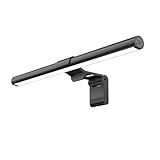
Side by Side
| Factor | RGB Light Strip | Monitor Light Bar |
|---|---|---|
| Primary purpose | Ambient and decorative lighting | Task and eye-care lighting |
| Comfort for desk work | Neutral to negative; colored glow doesn’t illuminate documents well | Excellent; forward projection avoids screen glare |
| Typical length/size | 16 to 100 feet per roll, roughly 0.4 inches wide | About 12 to 18 inches wide, 1 to 2 inches deep |
| Power draw | 1 to 3 watts per foot depending on density | Roughly 5 watts total |
| Price range | $10 to $40 for consumer rolls | $14 to $60 for mainstream models |
| Installation | Adhesive backing; measure, cut, stick, route cables | Counterweight clip rests on monitor bezel in seconds |
| Maintenance | Adhesive can fail; dust collects on exposed strips | Occasional dusting; nothing adhesive to fail |
| Portability | Poor once installed; removing often damages paint | Excellent; lift off and clip to any screen |
| Look | Invisible hardware, visible effect; fills a room | Sleek single object; lights the desk, not the room |
| Best for | Bedrooms, gaming rooms, renters decorating walls | Home offices, students, anyone with eye strain |
Where Rgb Light Strip Wins
Room-scale atmosphere. A light bar lights about two square feet of desk. A 100-foot roll like the KSIPZE 100ft RGB strip, which sells for around $9.99, can outline an entire ceiling perimeter, wrap a desk, and trace a shelving unit in one purchase. Nothing else in lighting comes close on coverage per dollar.
Color and effects. Strips offer millions of colors, music sync, and scene modes through smartphone apps. RGBIC strips like the Govee 16.4ft model ($14.99) go further, letting different segments display different colors simultaneously for gradient and chasing effects that a mono-color bar simply can’t produce.
Bias lighting for contrast. A dim strip mounted behind the monitor reduces the harsh contrast between a bright screen and a dark wall, which many viewers find easier on the eyes than sitting in a pitch-black room. It’s not precise task lighting, but it genuinely helps during movies and casual evening use.
Flexibility of placement. Strips bend, cut at marked points, and conform to curves — under cabinets, behind TVs, along stairs. A bar only works where there’s a flat top edge to clip onto.
Where Light Bar for Monitor Wins
Actual eye comfort. A monitor light bar throws light forward and downward onto your desk while an asymmetric optical design keeps light off the screen itself. That means no reflections, no glare, and a lit workspace for reading papers or spotting your keyboard. This is the single biggest reason to choose a bar, and models like the Quntis Computer Monitor Lamp ($39.95) build their entire pitch around it with auto-dimming and touch control.
Frees up desk space. A bar sits on top of the monitor, so it replaces a desk lamp entirely. If your desk is 24 inches deep and already crowded, reclaiming the lamp’s footprint matters.
Color temperature control. Bars offer selectable color temperatures — typically 2700K warm to 6500K cool — with dimming. That’s what you want for daytime focus work (cool, bright) and evening wind-down (warm, dim). Strips prioritize saturated colors over tunable white light, and their “white” mode often looks slightly blue or greenish because it’s RGB-mixed rather than a dedicated diode.
Zero-install simplicity. A counterweight bar like the Samphon 11.8-inch model, at around $13.99, clips on and works immediately, with no adhesive, no app pairing, and no cable routing along the wall. It also moves with you — dorm, office, second monitor, done.
Cleanliness of light. Bars use focused optics, so the light lands where you need it. Strips wash everything, including places you didn’t want lit.
Cost Over 5 Years
Light strip route: A quality 16.4-foot RGBIC roll runs $15 to $30. Strips run roughly 15 to 30 watts for a typical bedroom installation; at 5 hours nightly, that’s about $8 to $15 in electricity over five years at average US rates. Adhesive failure is the real cost driver — budget one replacement roll or fresh mounting clips ($10 to $20) over five years. Realistic total: $35 to $65.
Light bar route: Bars cost $14 to $60 up front and draw about 5 watts — roughly $5 to $8 of electricity over five years at the same usage. There’s little to replace; LED bars are typically rated for 25,000 to 50,000 hours, well beyond five years of evening use. Realistic total: $20 to $70.
Both: Many setups land around $55 to $100 over five years for the pair, which is why the combined approach is so common.
Which One for Your Home
Small Apartment
Go strip-first. In a studio or one-bedroom, lighting does double duty as decor, and a single roll can make a rental-grade room feel intentional. A 32- to 65-foot strip along the ceiling line behind the TV and desk covers multiple zones from one app. Add a budget bar later if you start working from home.
Family with Kids or Pets
Lean toward the light bar as your desk solution, and use strips carefully. Curious hands and adhesive strips don’t mix well — strips near the floor get peeled, chewed, or yanked. Keep strips above 6 feet or behind furniture, and choose app-controlled models so you can power everything down remotely. The bar, mounted up on the monitor, is safely out of reach while still giving you proper light for after-bedtime work.
Rental
The bar is the safer core purchase — it leaves no marks whatsoever. Strips are usually fine too since quality adhesive-back strips remove cleanly from painted walls if pulled slowly at a low angle, but landlords differ, and damaged paint can cost you a security deposit. If you use strips, mount them to furniture and trim rather than drywall, and keep the backing film until you’re sure you’ll stay.
Long-Term Home
Invest in both, and buy up in quality. For strips, look at 24-volt RGBIC systems with dedicated controllers and soldered connections rather than the cheapest clip-together kits — they hold up for years and integrate with smart home routines. For the bar, spend in the $35 to $60 range to get auto-dimming, a wide color-temperature range, and a sturdier counterweight that fits ultrawide monitors up to 40 inches. By 2026, expect app ecosystems to keep improving, so choosing brands with good software support pays off.
FAQ
Can I use an RGB light strip as my main desk light?
Not effectively. Strips produce colored, diffuse glow — great for mood, poor for reading or working. Even at full white, a strip behind your monitor won’t illuminate your keyboard or documents the way a forward-projecting light bar does.
Do monitor light bars cause glare on the screen?
Quality bars are designed with asymmetric optics that angle light away from the panel, so glare is minimal to none. Cheap generic bars can scatter light onto the screen, which is one reason it’s worth buying from a brand that specifies its optical design.
Will a light bar fit my ultrawide or curved monitor?
Most bars fit monitors from roughly 20 to 40 inches, including many ultrawides, using a weighted clip. Check the listed fit range before buying — flat ultrawides near 49 inches may exceed some models’ capacity, and deep curves can affect how squarely the bar sits.
Do RGB strips use much electricity?
No. Consumer strips draw about 1 to 3 watts per foot, so a typical 16-foot installation uses 15 to 30 watts — comparable to one old incandescent nightlight and pennies per month at evening-only use.


