
Every desk setup eventually hits the same moment: you look down, see a snarl of power bricks, monitor cables, USB lines, and charger cords dangling behind your legs, and realize the problem isn’t going to solve itself. The two most popular fixes are cable sleeves and cable raceways, and while both hide cords, they solve genuinely different problems. A sleeve bundles cables together — think of a flexible tube you feed your existing wires through. A raceway is a rigid or semi-rigid channel that mounts to a surface and conceals cables inside it. Choosing between them comes down to where your cables travel, how often you change your setup, and who shares your home.
This guide breaks down both options honestly, including where each one disappoints, so you can spend $10 or $50 once instead of buying the wrong thing twice.
As an Amazon Associate we earn from qualifying purchases at no extra cost to you. Product prices and availability are accurate as of the date shown and are subject to change.


Top 3 picks at a glance
Quick Verdict
Get a cable sleeve if your cables run horizontally along a desk, behind an entertainment center, or anywhere you frequently unplug and rearrange gear. Sleeves cost $8–$15 for enough material to handle most desks, install in minutes, and — as a bonus — stop pets from chewing through cords. A split sleeve like the Alex Tech 10ft 1/2-inch cord protector wraps around existing cables without disconnecting anything, and the 25ft version ($14.99) covers multi-monitor and sit-stand configurations with room to spare.
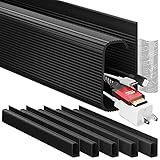
Get a cable raceway if your problem is vertical — cables running from a wall-mounted monitor or TV down to the floor, or a mess hanging visibly under a standing desk. Raceways fully conceal cables inside a channel, which looks cleaner from a seated position and in video calls. Under-desk raceway kits like the EVEO 6-unit J-channel kit (96 inches of total coverage for $16.97) or an adjustable cable spine such as the Ultimate Setup Vertebrae ($49.90, extends to 133 cm) mount under the desk and move with a sit-stand frame.
For most home offices, the honest answer is both: a raceway or spine for the vertical drop under the desk, and a sleeve for the horizontal bundle running along the floor to the outlet.
Side by Side
| Factor | Cable Sleeve | Cable Raceway |
|---|---|---|
| Installation time | 5–15 minutes, no tools | 20–45 minutes, adhesive or screws |
| Typical price range | $8–$20 for 10–25 ft | $15–$60 depending on coverage |
| Aesthetic | Visible bundle, looks tidy but present | Nearly invisible once painted or matched to surface |
| Flexibility for changes | Excellent — slide cables in and out anytime | Poor to moderate — reopening channels is fiddly |
| Pet protection | Excellent — thick sleeve resists chewing | Moderate — cables inside are safe, but exposed channels can be pried |
| Best mounting surface | None needed — wraps cables directly | Smooth, flat surfaces (desk underside, wall, baseboard) |
| Maintenance | Wipe occasionally; slide off to replace a cable | Dust collects in open J-channels; adhesive can fail over years |
| Rentability | Zero damage, fully removable | Adhesive versions are removable; screwed versions leave holes |
| Durability | 3–7 years; fabric versions can fray | 5–10+ years for rigid plastic channels |
| Best for | Horizontal runs, frequent setup changes, pet owners | Vertical drops, under-desk routing, camera-facing areas |
Where Cable Sleeve Wins
Frequent reconfiguration. Split sleeving has a lengthwise opening, so you can lift a USB cable or power cord out without cutting anything or unwrapping the whole bundle. If you swap monitors, add a dock, or move your desk even twice a year, this alone justifies the choice. Raceways, by contrast, often require peeling adhesive or removing clips to access cables.
Pet and chew protection. This is underrated. A 1/2-inch braided or polyethylene sleeve puts a tough barrier between a cat or puppy and a $30 charging cable. It’s the reason many cord protector listings lead with pet safety — it genuinely works for most casual chewers, though a determined large dog can still defeat thin sleeving.
Cost per foot. The Alex Tech 10-foot sleeve runs $8.99, and the 25-foot version is $14.99 — roughly 60–90 cents per foot. Comparable raceway coverage typically costs $1.50–$3 per foot once you add mounting clips or adhesive tape.
Works on any surface. Sleeves don’t care whether your cables run across carpet, wood, metal, or air. Raceways need a clean, flat mounting surface for adhesive to hold reliably.
No permanent installation. Nothing sticks to your desk, wall, or floor. If you move, the sleeve moves with you.
Where Cable Raceway for Desk Setup Wins
Vertical cable drops. The classic eyesore: a hanging loop of cables between your desk and the wall outlet, swinging every time you bump the desk or adjust a standing frame. A cable spine like the Ultimate Setup Vertebrae (133 cm maximum length, adjustable in segments) mounts under the desk and travels smoothly with sit-stand motion, containing the entire drop in one flexible black column. Sleeves can’t do this — they bundle cables but don’t anchor or guide them.
Video-call appearances. If your desk faces a camera, everything under it is visible on calls. A raceway or spine reads as intentional design; a sleeved bundle still looks like a sleeved bundle.
High-capacity routing. A 16mm-tall J-channel like those in the EVEO under-desk kit (six 16-inch channels, 96 inches total) swallows power bricks and thick HDMI cables that simply won’t fit through a 1/2-inch sleeve. If your setup includes a desktop PC, two monitors, and a dock, you’ll likely need raceway capacity somewhere.
Heat management for dense power runs. Bundling many high-wattage cables tightly in a sleeve — say, a gaming PC (500–800W), two monitors (30–50W each), and chargers — reduces airflow around them. Raceways keep cables separated in an open channel. This matters more for peace of mind than safety in most home setups, but it’s worth knowing.
Cost Over 5 Years
Cable sleeve route: One 25-foot sleeve at $14.99 covers a typical two-monitor desk and floor run. Add a replacement sleeve around year four if it’s in a high-traffic, sun-exposed spot ($10–$15). Five-year total: roughly $15–$30.
Cable raceway route: An under-desk J-channel kit at $17 handles most desks. If you add a premium cable spine for a standing desk, that’s $50 up front. Adhesive mounts occasionally need re-taping (a few dollars in replacement tape), and aggressive repositioning may mean buying a second kit. Five-year total: roughly $17–$75.
Combined (recommended for most): A spine or raceway kit plus a 25-foot sleeve lands around $65 all-in, which reliably outlasts the cheap-and-easy cycle of buying zip ties, Velcro straps, and adhesive clips repeatedly — items that tend to fail or look worse within months.
Which One for Your Home
Small Apartment or First Desk
Start with a sleeve. A $9–$15 split sleeve cleans up the visible mess immediately, requires zero commitment, and packs up when you move. If your desk sits against a wall with the outlet hidden behind it, you may never need anything more.
Family with Kids or Pets
Sleeve first, raceway second. A 1/2-inch cord protector sleeve is the single most effective pet-chew deterrent at this price. For households with crawling toddlers, add adhesive J-channels under the desk edge so no loose cords dangle at grab-height. Avoid screwed-in raceways near floor level until kids are older.
Rental Apartment
Sleeves are risk-free, and self-adhesive raceway kits like the EVEO J-channel set are designed to remove cleanly from painted and laminate surfaces — peel slowly and warm the adhesive with a hair dryer if needed. Skip anything that requires screws into walls or desk undersides. Total spend: $25 or less for a full setup.
Long-Term Home Office
Invest in the raceway, especially if you own a standing desk. An adjustable cable spine at around $50 plus a J-channel kit gives you a permanently clean under-desk zone that survives hundreds of height adjustments. Then sleeve the floor run from desk to outlet for pet protection and a finished look. Budget $60–$80 once and you’re done for the life of the desk.
FAQ
Can I use a cable sleeve and a raceway together?
Yes, and it’s the most common professional-looking setup: raceway or spine under the desk for the vertical drop, then a sleeve bundling the horizontal run across the floor to the outlet. The two solve different legs of the same journey.
Will a cable sleeve really stop my cat from chewing cords?
For most cats, yes — a 1/2-inch polyethylene or braided sleeve is tough enough to frustrate casual chewers. It’s not a guarantee against a determined animal, so pair it with bitter apple spray on the sleeve’s exterior if your pet is persistent.
Do adhesive raceways fall off over time?
Quality kits applied to a clean, smooth, dry surface typically hold for years, but dust, texture, or humidity can weaken the bond. Wipe the surface with rubbing alcohol first, press firmly for 30 seconds per section, and let the adhesive cure 24 hours before loading cables. For heavy power bricks, choose screw-mounted channels.
What size cable sleeve do I need?
Measure the diameter of your bundled cables, then choose a sleeve roughly 25–50% larger so cables slide easily. A 1/2-inch sleeve handles two to four standard cables plus one power cord; for a full gaming setup, look at 3/4-inch or 1-inch sleeves. For length, 10 feet covers a basic desk, while 25 feet leaves comfortable margin for floor runs and future changes.


