
A good pc joystick should feel like a natural extension of your hands rather than a peripheral you are constantly fighting. The right stick returns to center smoothly, registers small inputs without dead zones swallowing them, and stays planted on your desk when you muscle through a hard turn in a warbird or a heavy jet. The wrong one wobbles, loses calibration mid-session, or costs more in frustration than it saves in time.
The eight models here span a wide range of prices and priorities. Some focus purely on flight accuracy with Hall effect sensors and minimal trim. Others bundle a throttle quadrant for HOTAS setups that replicate commercial cockpits. One is designed for farm equipment simulators instead of aircraft. Choosing well means matching the hardware to the software you actually fly, not the spec sheet that sounds best.
As an Amazon Associate we earn from qualifying purchases at no extra cost to you.


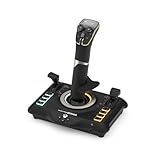

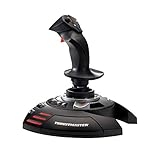


Top 3 picks at a glance
Quick Picks
| Product | Best for | Price |
|---|---|---|
| PXN 2113PRO | First-time buyers on a strict budget | $49.99 |
| Thrustmaster T16000M FCS | Combat flight sim precision | $79.99 |
| Turtle Beach VelocityOne | Universal platform flexibility | $139.99 |
| Thrustmaster SimTask FarmStick | Farming simulator players | $129.95 |
| Thrustmaster T-Flight Stick X | Casual flight sims with ergonomics | $56.85 |
| Logitech G X56 HOTAS | Full HOTAS on a moderate budget | $199.99 |
| Thrustmaster T-Flight Hotas One | Entry-level HOTAS with console use | $96.99 |
| Thrustmaster TCA Sidestick Airbus | Aviation enthusiasts wanting realism | $89.99 |
How We Picked
We evaluated these controllers against four criteria that matter most for this category. Sensor type determines long-term consistency: Hall effect and contactless systems resist the drift that plagues older potentiometer designs. Programmable button count affects how quickly you can map complex commands without reaching for the keyboard. Build quality and desk grip determine whether the stick fights back during sustained maneuvers. Finally, software support and ecosystem compatibility decide whether you can update firmware and remap controls years after purchase.
The 8 Best PC Joystick in 2026
PXN 2113PRO
This is the pc joystick that breaks the entry price barrier without feeling like a toy out of a discount bin. Owners report decent spring-centering and a compact footprint that suits small desks. It uses USB plug-and-play with no driver installation on Windows, which matters if you are setting up a secondary rig or handing it to someone new to simulation.
- Pro: Aggressive price makes it the cheapest credible stick in this roundup.
- Pro: Simple USB connection with minimal software overhead.
- Con: Potentiometer-based sensors may develop dead zones or drift faster than Hall effect alternatives.
Skip it if you fly Microsoft Flight Simulator or IL-2 with any regularity and expect the stick to feel precise after several months of daily use.
Thrustmaster T16000M FCS
The T16000M occupies a sweet spot that very few competitors match. It uses Hall effect sensors, meaning there is no physical contact wearing down over time. The FCS variant adds two extra axis hats for combat pilots who need weapon system controls without lifting hands from the stick. It is also one of the rare joysticks sold as a standalone stick without a bundled throttle, keeping the price under eighty dollars while offering sensor accuracy found on units costing twice as much.
- Pro: Hall effect sensors deliver consistent input with no measurable wear.
- Pro: Dedicated combat controls (T.H.T. grip, extra hats) suit military flight sims.
- Con: Base is lightweight and can slide under aggressive inputs without a non-slip mat.
Skip it if you need a throttle quadrant included or if your primary game is a civilian airliner sim.
Turtle Beach VelocityOne Flightstick
Turtle Beach targeted the cross-platform market with this stick, and it shows. The VelocityOne works on Xbox and PC simultaneously, features a digital LCD that displays in-game data, and uses contactless magnetic sensors for durability. The design language is unmistakably modern, with a sleek base and a grip that favors a relaxed hand position. It costs more than the Thrustmaster alternatives but justifies that gap if you switch between console and PC regularly or want visual feedback without alt-tabbing.
- Pro: Contactless sensors and a wide operating range reduce input fatigue.
- Pro: Built-in LCD provides real-time data without a secondary screen.
- Con: Limited game-specific integration compared to Thrustmaster and Logitech ecosystems.
Skip it if you play exclusively on PC and prefer the deepest mapping libraries found in competing software.
Thrustmaster SimTask FarmStick
This one is in the list for a specific audience: Farming Simulator players who want to move beyond keyboard-and-mouse. The FarmStick uses the same proven Hall effect sensor platform as Thrustmaster’s flight line but reorganizes buttons around agricultural controls like gearbox selectors and implement triggers. The ergonomic shape suits long sessions where your hand stays on the stick for hours. At its price, it undercuts dedicated farming wheels while offering more precision than a gamepad.
- Pro: Hall effect sensors with a control layout purpose-built for farming sims.
- Pro: Compatible with Thrustmaster’s T.A.R.G.E.T. script editor for custom profiles.
- Con: Single-purpose design makes it a poor choice if you also want one stick for aircraft.
Skip it unless Farming Simulator is your primary or only use case.
Thrustmaster T-Flight Stick X
The T-Flight Stick X is a budget-friendly option that leans on ergonomics rather than cutting-edge sensors. Its grip angle and thumb rest position are designed for extended sessions with less wrist strain, a detail that casual flight sim players notice after an hour in the cockpit. It uses a potentiometer system with a contactless throttle twist on the base, a hybrid approach that keeps cost low while improving the most wear-prone component. At roughly fifty-seven dollars, it sits between the PXN entry point and the T16000M’s precision tier.
- Pro: Comfortable grip geometry reduces fatigue during longer sessions.
- Pro: Contactless throttle twist adds durability at a low price.
- Con: Potentiometer stick axes may drift with heavy use over time.
Skip it if you demand the absolute best sensor precision and are willing to pay a few more dollars for it.
Logitech G X56 HOTAS
The X56 remains one of the most complete HOTAS bundles you can buy without crossing into five-digit territory. It pairs a throttle quadrant with a separate joystick, offers three interchangeable spring sets for the stick tension, and includes a staggering number of programmable inputs. The throttle alone covers combat, civil aviation, and space sims with its slider banks and rotary controls. RGB lighting is cosmetic but helps identify physical buttons in a dark room. Its main trade-off is size: this setup demands a proper desk with room for two separate units.
- Pro: Interchangeable springs let you tune stick tension to personal preference.
- Pro: Extremely high programmable control count supports complex keybindings.
- Con: Large dual-unit footprint requires a dedicated desk setup.
Skip it if desk space is limited or if you fly simple arcade titles that need fewer than ten inputs.
Thrustmaster T-Flight Hotas One
This is the cheapest complete HOTAS set with both a stick and a throttle that works on Xbox consoles and PC alike. The T.A.R.G.E.T. software gives access to scripting, and the throttle quadrant includes enough levers and buttons for most single-engine and light aircraft simulations. Build quality feels a step below the more expensive Thrustmaster kits, with more plastic flex in the throttle body, but the core sensor platform is solid for the price bracket.
- Pro: True HOTAS convenience at a low entry cost.
- Pro: Xbox and PC compatibility makes it useful on multiple platforms.
- Con: Throttle quadrant feels less rigid than pricier alternatives.
Skip it if you play demanding military sims where throttle precision under G-heavy maneuvers matters more than button count.
Thrustmaster TCA Sidestick Airbus Edition
Aviation fans who love the feel of a modern airliner cockpit gravitate toward the TCA Sidestick. It replicates the Airbus side-stick controller layout, uses Hall effect sensors, and features a slim profile that sits neatly beside a keyboard without dominating your desk. The design is authentic enough to feel like a piece of real equipment, and the button placement mirrors actual Airbus workflows. It is a standalone stick, so you will need a separate throttle or keyboard for thrust management.
- Pro: Authentic Airbus side-stick design and feel.
- Pro: Hall effect sensors with a compact, desk-friendly form factor.
- Con: No bundled throttle; you must source a separate quadrant for full control.
Skip it if you fly military or propeller aircraft where the side-stick geometry feels wrong compared to a traditional center-stick layout.
Buying Guide
Sensor Type and Long-Term Accuracy
Potentiometer-based sticks degrade because physical contacts wear with every movement. Hall effect sensors measure magnetic field changes with no contact, so they maintain calibration far longer. If you fly daily, the upfront cost difference pays for itself in years of consistent input before drift forces replacement or recalibration. For casual weekend sessions, a potentiometer stick may last the life of your game library.
Programmability and Software Ecosystem
A stick with twelve unremappable buttons forces you to build keyboard shortcuts on top of it. Thrustmaster’s T.A.R.G.E.T. editor and Logitech’s G HUB both let you layer axes, buttons, and hat switches into composite commands. Check whether your primary simulator natively supports the software you choose. IL-2 and DCS handle Thrustmaster profiles well; X-Plane users often prefer manual assignment through its built-in control mapper.
Desk Footprint and Grip Stability
Lightweight bases slide under hard pull inputs, which is the most common complaint in owner reviews across every price tier. Look for rubber feet, weighted bases, or plan to mount the stick to a panel. The Logitech X56’s dual-unit layout needs nearly two feet of desk width. A compact stick like the TCA Sidestick fits beside a keyboard without rearranging your entire setup.
Our Verdict
The Thrustmaster T16000M FCS is the top pc joystick in this group for anyone flying combat or general aviation sims on a focused budget. Its Hall effect sensors, combat-oriented extras, and sub-eighty-dollar price make it the best balance of precision and value. For the tightest budgets, the PXN 2113PRO at $49.99 gets you started with minimal compromise on basic usability. If your priority is a complete HOTAS experience with deep customization, the Logitech G X56 earns its higher price through spring-swappable tension and control density that no single stick can match.
FAQ
Do I need a throttle to go with my pc joystick?
Not always. Single-stick models work well for arcade-style flight games, space sims, and helicopter titles where thrust is secondary to attitude control. For fixed-wing simulations focused on engine management, a throttle quadrant or twist-handle adds meaningful control depth and reduces keyboard reliance.
What is the difference between Hall effect and potentiometer sensors?
Potentiometers rely on a physical wiper contacting a resistive track, so that contact point wears over time and introduces dead zones or drift. Hall effect sensors read magnetic position changes without any physical contact, which means the output signal stays consistent for the life of the device.
Can I use a PC joystick on a console?
Only joysticks explicitly labeled as Xbox-compatible work on consoles. USB flight sticks without a console license will not be recognized by PlayStation or Xbox systems. The Turtle Beach VelocityOne and Thrustmaster Hotas One are among the few models that bridge both worlds.
Is the 2026 market better than previous years for budget sticks?
Hall effect sensors have become standard even on models under eighty dollars, a feature that was exclusive to premium hardware in earlier generations. Entry-level pricing is more competitive now, so the gap between the cheapest usable stick and a mid-range precision tool has narrowed considerably.


