
Choosing between a leather desk mat vs felt desk mat for office use sounds like a small decision until you’re staring at two very different products and realizing they solve completely different problems. A leather desk mat is fundamentally a protective surface — smooth, wipeable, and formal. A felt desk mat is a comfort and sound product — soft, quiet, and casual. Buy the wrong one and you’ll either be fighting coffee stains on wool felt or listening to your mouse scratch across leather at 11 p.m.
The real decision a buyer faces isn’t “which material is better.” It’s “what does my desk actually need?” If you eat lunch at your desk, spill things regularly, or need a professional look for video calls, that points one direction. If you have a mechanical keyboard, hard flooring that echoes, or a shared living space, that points the other way.
As an Amazon Associate we earn from qualifying purchases at no extra cost to you. Product prices and availability are accurate as of the date shown and are subject to change.
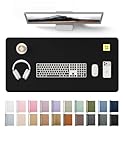


Top 3 picks at a glance
Quick Verdict
Get a leather desk mat if: you eat or drink at your desk, want a waterproof surface, or need a polished look for work calls. Options like the YSAGi PU leather mat (31.5″ x 15.8″, around $13) cover the essentials cheaply, while the Elizo real leather set (32″ x 16″, around $40) adds genuine full-grain leather that develops a patina over time.
Get a felt desk mat if: you want a softer mousing surface, quieter keyboard sound, and a warmer, modern aesthetic. The DAWNTREES felt mat (36″ x 12″, around $15) and the larger Nordik felt pad (35″ x 17″, around $25) both deliver that at a modest price.
Overall: for most home offices, leather is the safer default because of its durability and stain resistance. Felt wins on comfort, acoustics, and aesthetics — and for the right person, those matter more.
Side by Side
| Factor | Leather Desk Mat | Felt Desk Mat |
|---|---|---|
| Surface feel | Smooth, firm, slightly slick | Soft, plush, slightly grippy |
| Comfort | Firm under wrists; less cushioning | Cushioned feel; gentler on wrists during long sessions |
| Water resistance | Fully waterproof surface; liquids bead up and wipe away | Absorbs spills; stains can be permanent without immediate blotting |
| Durability | Real leather lasts 5–10+ years; PU typically 2–4 years | Typically 2–4 years before pilling, thinning, or edge wear |
| Price range | $12–$60 depending on PU vs. full-grain real leather | $12–$35 depending on thickness and size |
| Maintenance | Wipe with a damp cloth; occasional leather conditioner on real leather | Vacuum or lint-roll; spot-clean with minimal water; no machine washing for most mats |
| Noise | Keyboard and mouse clicks sound sharper, slightly louder | Dampens keyboard clack and mouse scrapes noticeably |
| Typical size | 31.5″ x 15.8″ to 36″ x 17″ | 35″ x 12″ to 36″ x 17″ |
| Look | Executive, traditional, formal | Warm, Scandinavian, modern-casual |
| Best for | Eaters/drinkers at the desk, formal offices, hot-deskers | Writers, gamers, shared living spaces, quiet home offices |
Where Leather Desk Mat Wins
Spill and stain protection. This is leather’s defining advantage. Coffee, tea, soup — anything liquid beads on the surface and wipes off with a paper towel. On felt, that same coffee soaks in within seconds. If your morning routine involves a mug within reach of your keyboard, this factor alone should decide it.
Longevity. A real leather mat like the Elizo (32″ x 16″) can genuinely last the better part of a decade. It will develop a patina — darker patches and softening where your hands and mouse rest — which most owners find attractive rather than worn. Even budget PU leather mats typically outlast felt by a year or two under identical use.
Professional appearance. On a video call, a dark leather blotter reads as “put-together” in a way felt doesn’t. If your desk appears on camera or you meet clients at home, leather skews more credible for traditional industries like law, finance, or consulting.
Easy cleaning. Crumbs, dust, and dried spills all wipe off in one motion. There’s no lint-rolling, no gentle spot-cleaning ritual, no worry about matting the fibers.
Document writing surface. A firm leather mat makes handwriting smoother and protects the desk underneath from pen pressure marks and indentations — something felt does poorly because softness lets pen tips press through.
Where Felt Desk Mat for Office Wins
Sound damping. Felt absorbs sound; leather reflects it. On a felt mat, mechanical keyboard clacks and mouse scrapes are audibly softer — a genuine difference if you work near a sleeping partner, a nursery, or thin apartment walls. This is the number one reason felt buyers give when surveyed anecdotally, and it’s real.
Mousing comfort. The slight give in a felt mat is easier on wrists during eight-hour days, and cloth- or felt-friendly mice glide consistently. Some optical and laser mice track less predictably on slick PU leather, especially glossy finishes.
Aesthetics for modern spaces. A charcoal felt pad like the Nordik (35″ x 17″, $24.97) pairs naturally with walnut desks, white shelving, and the Scandinavian-inspired look that dominates home office design heading into 2026. Leather can look out of place in those rooms — formal where everything else is casual.
Larger coverage per dollar. Felt mats tend to come in wider sizes for less money. The DAWNTREES gives you 36 inches of width for $14.89, covering both a keyboard and mouse with room to spare.
No break-in and no conditioning. Felt looks the same on day 500 as day one (short of staining). Real leather needs occasional conditioning and will look different — better to most eyes — as it ages, but if you want zero maintenance, felt’s appearance is stable.
Cost Over 5 Years
Assuming daily use in a home office:
Leather (PU): One YSAGi-style mat at $12.59–$25. Plan on replacing it every 2–3 years as the coating wears and edges peel. Five-year cost: roughly $25–$50.
Leather (real): One Elizo-style mat at $35–$60, replaced once at most. Five-year cost: roughly $40–$95 including a bottle of leather conditioner (~$10) used once or twice a year.
Felt: One mat at $14.89–$25, replaced every 2–4 years depending on pilling and staining. Five-year cost: roughly $30–$60, potentially more if a spill forces an early replacement.
The surprising takeaway: the “cheap” option isn’t clearly cheapest over time. A $40 real leather mat often outlasts two or three felt replacements, and a $13 PU mat outlasts felt for less money. Felt’s value case rests on comfort and sound, not economics.
Which One for Your Home
Small Apartment or Studio
Go felt. In a small space, your desk usually shares a room with your bed or living area, and the sound damping matters more — keyboard noise at 6 a.m. carries. Felt’s softer look also blends into multi-purpose rooms better than a formal blotter. The DAWNTREES at 36″ x 12″ suits narrow apartment desks where depth is limited.
Family with Kids or Pets
Leather, without hesitation. Juice boxes, snack crumbs, and cat hair all wipe off a leather mat; on felt, they become permanent features. A waterproof PU option like the YSAGi is the low-stakes choice — if it gets destroyed in a year, you’re out $13. Keep felt out of reach of muddy paws and sticky fingers entirely.
Rental or Temporary Setup
PU leather on a budget. You’re not investing in a desk you’ll leave behind, so the $12.59 YSAGi covers desk protection, waterproofing, and a decent mousing surface at impulse-buy pricing. It also rolls up in seconds when it’s time to move — felt mats can hold creases from rolling and collect dust in transit.
Long-Term Home
Split decision based on your habits. If this is the desk you’ll use for a decade and you take care of your things, the Elizo real leather mat is the buy-once option — the patina will mark the years of work, in a good way. If your home office is a dedicated quiet room and you type a lot (especially on a mechanical keyboard), a Nordik felt mat at 35″ x 17″ justifies itself in daily comfort and lower noise. Choose leather for protection and permanence; choose felt for feel and quiet.
FAQ
Do mice track well on leather desk mats?
Most modern optical and laser mice track acceptably on matte PU leather and full-grain leather. Very glossy or heavily coated surfaces can cause intermittent tracking. Felt offers more consistent tracking across all mouse types, which is why competitive gamers generally avoid hard leather surfaces.
Can a felt desk mat be cleaned after a spill?
Only if you act fast. Blot immediately with a dry cloth — never rub — then spot-clean with a barely damp cloth and mild soap. Water-based spills may come out; oil-based spills (salad dressing, butter) usually stain permanently. This is the fundamental weakness of felt versus leather.
Will a desk mat damage my desk finish?
Rarely, but both types can trap moisture against a desk if a wet item sits under them. Lift the mat occasionally to let the surface breathe, and never place a damp mat on untreated wood. Mats with non-slip backings — like the PU leather mats, which typically have a soft underside — are the safest for finished desks.
What size desk mat do I need?
Measure your desk’s usable width and add 2–3 inches of margin. For keyboard-plus-mouse coverage, 31–32 inches wide by 16 inches deep is the standard sweet spot (as on the YSAGi and Elizo). Narrow desks under 24 inches deep do better with a shallower mat like the DAWNTREES at 12 inches deep; oversized desks benefit from the Nordik’s 35″ x 17″ footprint.
