A running watch has one job that a general smartwatch only does halfway: record your pace and distance accurately without a phone in your pocket. That is why the first line to read in any listing is whether it has built-in GPS. Everything else, from AMOLED screens to music storage, is secondary to the question of whether the watch can log a run on its own and give you pacing, plans, and recovery guidance you can act on.
This guide is for beginners lacing up for a first 5K, club runners following structured plans, and anyone who wants to leave the phone at home. Eight listings are compared from their titles, spanning Garmin Forerunner models, a dual-band GPS option, and two general fitness smartwatches without GPS in the title. In 2026 the gap between those categories is wide, so the sections below explain which features to verify before you buy.
Our Top Picks


Top 3 picks at a glance

Quick Picks
As an Amazon Associate we earn from qualifying purchases at no extra cost to you.


| Product | Best for | Key spec from title |
|---|---|---|
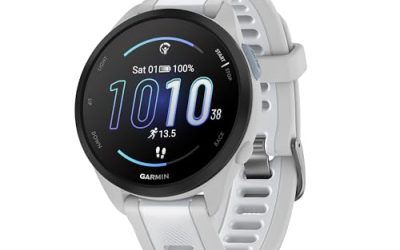
| Garmin Forerunner 165 (Black) | Training and recovery guidance | 43mm, built-in GPS, Garmin Coach |
| Garmin Forerunner 55 | A simple entry-tier GPS runner | GPS running smartwatch |
| Garmin Forerunner 165 (Whitestone) | Same features, lighter finish | 43mm, built-in GPS, Garmin Coach |
| mibro GS Active2 (first listing) | Long battery and AMOLED | Dual band GPS, 15-day battery |
| Garmin Forerunner 170 Music | Phone-free runs with music | Music on wrist, daily suggested workouts |
| 1.96-inch Fitness Smart Watch | Calls and everyday tracking | 1.96″ HD, answer/make calls, IP68 |
| mibro GS Active2 (second listing) | Alternate listing of the same model | 46mm, 1.32″ AMOLED, 150+ sport modes |
| 2.01-inch AMOLED Smart Watch | Big curved screen with calls | 2.01″ AMOLED, Bluetooth calls, IP68 |
How to Choose
Built-in GPS is the dividing line
A true running watch has its own GPS receiver so it can map your route and measure pace without a phone. The Garmin models and the mibro watch name GPS in their titles. The two generic smartwatches describe heart rate, sleep tracking, and calls but do not mention GPS, so they likely rely on a connected phone for distance. If you run without your phone, that is a deal breaker.
Battery life and display
Battery claims vary widely and depend on whether GPS is active. A 15-day claim, as on the mibro listings, is a smartwatch-mode figure and will drop sharply during long GPS runs. AMOLED screens look bright in sunlight, which helps with glanceable pace data. For marathon training or ultra distances, look for a battery claim that clearly covers GPS mode, not just standby. A rough rule is to double the length of your longest planned run and make sure the claimed GPS hours exceed it comfortably.
Training features that help you improve
Garmin Coach, built-in running plans, daily suggested workouts, and recovery metrics turn a watch into a training partner. For beginners, plans reduce guesswork on how fast and far to go. For experienced runners, recovery guidance helps avoid overtraining. Budget generic watches usually offer many sport modes but shallow training logic, so read what each mode actually tracks.
Size, comfort, and extras
A 43mm case suits smaller wrists and lighter runs, while 46mm gives more screen. Water resistance such as IP68 handles sweat and rain but is not a swimming rating. Calls and notifications are nice, but ignore feature lists with dozens of sport modes you will never use. Pick the watch whose core running data you trust. Strap comfort deserves a thought too, since a band that chafes or slips during a long run will make you leave the watch at home no matter how good the sensors are.
The 8 Best Options
Garmin Forerunner 165 (Black)
The Forerunner 165 is a 43mm running smartwatch with built-in GPS for distance, pace, and speed, plus essential training and recovery features and Garmin Coach. It suits runners who want guidance on training load and recovery without moving up to the most expensive tier. The compact size makes it comfortable on smaller wrists, and the black finish is understated enough for daily wear. For someone preparing for a 10K or half marathon, the coaching and recovery tools turn raw pace numbers into a plan, which is where a dedicated running watch earns its place.
- Strength: built-in GPS records runs without a phone.
- Strength: Garmin Coach and recovery features support structured training.
- Trade-off: it sits at a higher cost tier than generic fitness watches.
Skip it if you only want step counting and notifications.
Garmin Forerunner 55
The Forerunner 55 is a GPS running smartwatch with a simple title and a clear purpose. It is the entry-level Garmin here, suited to newer runners who want accurate pace and distance without extra complexity. Less is claimed in the title, so confirm the feature list on the product page, but the GPS and running focus place it firmly in the dedicated-watch category. Because it is an older, simpler design, it can make sense for someone who just wants to see pace and distance after each run and nothing more.
- Strength: a dedicated GPS running watch from a known sports brand.
- Strength: straightforward positioning for beginners.
- Trade-off: the title lists fewer features than the newer models.
Skip it if you want music storage or advanced recovery data.
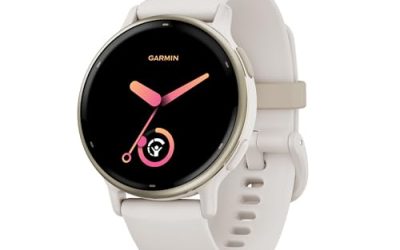
Garmin Forerunner 165 (Whitestone)
This is the same Forerunner 165 in a lighter Whitestone finish, with the same 43mm size, built-in GPS, training and recovery features, and Garmin Coach. The choice between it and the black version is about appearance: a pale case is easier to spot in a drawer or at the gym and suits runners who dislike all-black gear. Pick between the two colors on looks alone, and remember that both share the same 43mm footprint, which suits small and medium wrists.
- Strength: identical GPS and coaching features to the black version.
- Strength: a lighter, more distinctive look.
- Trade-off: lighter bands can show wear and dirt more over time.
Skip it if you prefer a stealthy, dark watch.
mibro GS Active2 (first listing)
This GPS running smartwatch offers dual band GPS, a lightweight 46mm body, built-in running plans, a 1.32 inch AMOLED display, a 15-day battery claim, and 150+ sport modes. It is aimed at runners who want a bright screen, running plans, and a long standby battery at a lower cost tier than the big-name competition. Dual band GPS is meant to improve accuracy around tall buildings and tree cover, which is where single band receivers tend to wander, so it is a thoughtful inclusion for city runners.
- Strength: dual band GPS and built-in running plans are named.
- Strength: a 1.32 inch AMOLED display and a long battery claim.
- Trade-off: the 15-day figure will not hold during continuous GPS use.
Skip it if you want the polish of an established training ecosystem.
Garmin Forerunner 170 Music
The Forerunner 170 Music is a 43mm GPS running watch with music on your wrist, pace and distance tracking, and daily suggested workouts. It suits runners who want to leave the phone behind but still have a playlist. The Black/Amp Yellow colorway also adds visibility for early-morning or evening runs. The daily suggested workouts are useful for runners who feel stuck repeating the same loop, because the watch proposes what to do next instead of leaving the choice to you.
- Strength: onboard music support removes the need to carry a phone.
- Strength: daily suggested workouts give direction.
- Trade-off: it likely sits at a higher cost tier than the basic models.
Skip it if you never run with music.
1.96-inch Fitness Smart Watch
This generic smartwatch lists a 1.96 inch HD screen, calls, IP68 water resistance, pedometer, and heart rate, sleep, and activity monitoring. The title does not mention GPS, so treat it as an everyday fitness tracker that can log runs with a phone nearby rather than a dedicated running watch. If most of your day is spent answering calls and checking sleep scores, with a few jogs each week, it covers that mix at a low cost tier.
- Strength: a large screen with call answering.
- Strength: broad health monitoring at a budget tier.
- Trade-off: no GPS is named, limiting phone-free runs.
Skip it if you want accurate standalone pace and distance.
mibro GS Active2 (second listing)
The second listing repeats the same GS Active2 title, with dual band GPS, a lightweight 46mm body, running plans, a 1.32 inch AMOLED display, a 15-day battery claim, and 150+ sport modes. Buyers should compare the two listings for color or bundle differences, because the core specs look the same. If the cost tier is the same, choose whichever listing shows the strap color and included accessories you prefer.
- Strength: the same dual band GPS and running plans.
- Strength: lightweight design for easy daily wear.
- Trade-off: duplicate listings make it harder to tell what differs.
Skip it if you want a more established brand.
2.01-inch AMOLED Smart Watch
This smartwatch advertises a 2.01 inch curved AMOLED screen, Bluetooth calling, heart rate and sleep monitoring, and IP68 waterproofing. It reads like a lifestyle watch with a running mode, since GPS is not named. It suits casual users who want a large display and call handling, with running as one of several activities. Treat any pace and distance figures from it as rough estimates unless the full product page confirms an onboard GPS receiver.
- Strength: a large curved AMOLED screen.
- Strength: Bluetooth calling and health monitoring in one device.
- Trade-off: no GPS is named, so serious pacing is less certain.
Skip it if you run races and want dependable standalone tracking.
Which One Fits Your Situation
You follow a structured training plan
The Garmin Forerunner 165 pairs Garmin Coach with recovery features, and the mibro GS Active2 offers built-in running plans at a lower tier.
You run with music and no phone
The Garmin Forerunner 170 Music is the one listing that names music on your wrist.
You are new to running
The Garmin Forerunner 55 keeps things simple with GPS and a running focus, without extra complexity. It is a comfortable starting point if you are still deciding how seriously you want to take training.
You want a bright screen and long battery on a budget
The mibro GS Active2 combines dual band GPS, an AMOLED display, and a 15-day claim at a lower cost tier.
Common Mistakes
- Assuming every smartwatch has built-in GPS.
- Judging battery life by standby claims rather than GPS-mode runtime.
- Paying for 150 sport modes while ignoring pacing and plan quality.
- Buying the biggest screen when a lighter case would be more comfortable.
- Skipping size checks, since a 43mm and 46mm case feel different on the wrist.
Related guides
- What Is The Best Budget Most Responsive Gaming Mouse Wired
- Low Latency Gaming Headphones Usb-C 2.4 Ghz Wireless
- Low Latency Gaming Headphones Usb-C Dongle 2.4 Ghz
Frequently Asked Questions
Do I need built-in GPS for running?
If you run without a phone, yes. Watches without GPS rely on your phone for distance and pace, which is less convenient.
Is a Garmin worth more than a generic watch?
Garmin models offer deeper training tools like Garmin Coach and recovery guidance. Generic watches can be cheaper but usually give less structured training support. The right answer depends on whether you want guidance or just a record of your runs.
What does dual band GPS mean?
It means the watch can use two satellite frequencies for better accuracy in cities or under trees. It is a useful extra, not a requirement.
How long should the battery last?
Look for a claim that covers GPS mode. Marathon runners need many hours of GPS, while casual runners can get by with shorter figures.