The best PS1 fighting games to buy today are Tekken 3, Street Fighter Alpha 3, and Rival Schools: United By Fate for players who want depth and lasting multiplayer value, while JoJo’s Bizarre Adventure and Darkstalkers 3 offer the best collectible upside for fans of Capcom’s 2D fighters.
Our Top Picks


Top 3 picks at a glance


How We Ranked the Best PS1 Fighting Games
For a buying decision in 2026, rarity alone is not enough. Each game below is scored on five criteria that actually matter when you are spending money on a 25+ year old disc:
- Gameplay Depth: Mechanical ceiling, character balance, and competitive longevity. Does the system hold up beyond nostalgia?
- Multiplayer Support: Quality of versus mode, number of playable characters, and how well it plays with two controllers today.
- Replay Value: Single-player modes, unlockables, and training options that keep you playing when no one else is around.
- Availability: How easy it is to find a complete, authentic copy (case, manual, disc) without chasing a niche import.
- Buying Considerations: Current market range, disc condition sensitivity, and hardware compatibility.
The 7 Best PS1 Fighting Games to Buy Today – Ranked
As an Amazon Associate we earn from qualifying purchases at no extra cost to you.
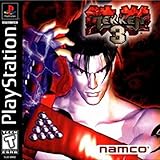
1. Tekken 3
The definitive reason to own a PS1 fighter. Tekken 3 brought the arcade’s fluid 3D movement, sidestepping, and 23-character roster home with almost no compromises. It remains the deepest 3D fighter on the system and the easiest to get a competitive match from.
Why buy it now: It is still the most common and affordable top-tier PS1 fighter. Complete copies are widely available in the budget tier for North American black-label or Greatest Hits versions, making it the best entry point. Modes like Tekken Force, Tekken Ball, and Survival give it more single-player replay value than any other 3D fighter on PS1. Two-player versus is fast, balanced, and requires no unlock grinding.
Watch for: Greatest Hits (green label) copies are identical in gameplay and often cheaper than black-label if you are not collecting for label variant.
2. Street Fighter Alpha 3
The deepest 2D fighter on PS1. With 28+ characters, three distinct fighting styles (A-Ism, V-Ism, X-Ism), and the World Tour mode, Alpha 3 offers more lab time and matchup knowledge than any other Street Fighter on the platform.
Why buy it now: If you want a fighter to learn long-term, this is it. The Ism system dramatically changes combos and meter management for every character. World Tour lets you build and level a custom character across hundreds of fights, adding dozens of hours beyond arcade mode. Availability is good, and complete copies sit in the mid-range tier.
Trade-off: The PS1 port has load times and slight animation cuts compared to the arcade or Sega Saturn version with RAM cart. For pure competitive accuracy, arcade-perfect versions on later hardware are better, but as a collectible PS1 experience, it is unmatched for depth.
3. Rival Schools: United By Fate (Shiritsu Justice Gakuen)
Capcom’s team-based 3D fighter is the best blend of accessibility and depth you can buy. Two-on-two battles, team-up supers, and a surprisingly strong story mode set it apart from Tekken and Soul Blade.
Why buy it now: Gameplay holds up exceptionally well for couch versus, and the Japanese school setting gives it a unique identity. The North American release ships on two discs: the Arcade Disc and an Evolution Disc with extra modes and characters. Prices have risen steadily and complete copies now sit in the premium tier, so condition matters more here than with Tekken 3.
Collectible note: The Japanese version is cheaper and more common, but the North American release is the collectible one. Check that the US discs carry the correct codes (SLUS-00681 for the Arcade Disc, SLUS-00771 for the Evolution Disc) and are not reproductions.
4. JoJo’s Bizarre Adventure
A port of Capcom’s CPS3 arcade fighter that plays like a faster, more expressive Street Fighter. The Stand system gives every character a puppet-style secondary fighter with its own moveset, creating huge depth once you learn Stand On/Off mechanics.
Why buy it now: It is rarer than Alpha 3 and has stronger collector demand due to the JoJo license. The PS1 port includes Super Story Mode, which recreates manga battles with unique conditions. Expect complete US copies to sit in the premium tier. The European version is also legitimate but less desired.
5. Darkstalkers 3 (Vampire Savior in Japan)

Capcom’s horror-themed 2D series at its most refined on PS1. The port is based on Vampire Savior and brings back Donovan, Huitzil and Pyron for a roster of 18 fighters, with air-dashing, chain combos, and Dark Force mechanics that reward aggression.
Why buy it now: For players who find Street Fighter too grounded, Darkstalkers is faster and more chaotic without losing depth. Its PS1 version is the only English home port of this entry from that era. Availability is moderate and complete copies sit in the mid-range to premium tier. Disc condition is critical, as the dark character art makes scratches harder to spot in photos.
6. Soul Blade (Soul Edge)
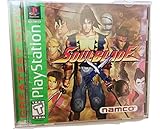
The original Soulcalibur before it was renamed. As a weapon-based 3D fighter, Soul Blade introduced 8-Way Run’s predecessor and weapon-master progression that later defined the series.
Why buy it now: It is cheaper than Rival Schools and more content-rich than Tekken 2, with Edge Master mode, unlockable characters including Soul Edge, and excellent soundtrack. In the budget tier for complete copies, it is a great second 3D fighter to pair with Tekken 3. Gameplay is slightly slower and less balanced than Tekken 3, which keeps it from ranking higher.
7. X-Men vs. Street Fighter

The tag-team crossover that started the Vs. series. While the PS1 version is limited to one-on-one tag instead of true 2v2 due to RAM constraints, it still delivers explosive Capcom vs. Marvel gameplay at home.
Why buy it now: Buy this for spectacle and roster appeal, not competitive purity. The Japan-only Saturn version, which used a RAM expansion cartridge, kept full tag-team switching, but the US PS1 release is the more affordable collectible, typically in the mid-range tier. If you want the true arcade experience, later ports on other platforms are more accurate, but on PS1, this is a fun, flashy versus game for casual sessions.
More PS1 Fighting Games Worth Owning
The seven games above are the strongest overall buys, but they are not the whole story. Most editorial rankings of the PS1 fighting library also include a handful of games that either pioneered ideas the genre still uses or simply play better with friends than their reputation suggests. These five are the best next additions once your core collection is in place.
Tekken 2

Tekken 2 is the game that made Tekken 3 possible, and it still shows up near the top of fan and critic rankings. It arrived on PS1 in 1996 with a roster of 25 characters once every sub-boss and boss is unlocked, and it introduced features that became series standards, including a dedicated Practice mode, Team Battle and Time Attack. For a 1996 release, the arcade conversion was remarkably close, and the CG ending movies for each character were a big part of why people kept unlocking fighters.
Why does it matter if you already own Tekken 3? Because the two games feel different. Tekken 2 has no real sidestep, so fights are more linear and more about the classic Tekken rhythm of pokes, throws and juggles. Characters like Jun Kazama, Lei Wulong and Bruce Irvin, some of whom were dropped or changed in later entries, give it its own identity. Players who learned the series in the PS1 era often prefer its slightly heavier, more deliberate pace.
It is also one of the easiest PS1 fighters to find. Large print runs and a Greatest Hits reprint mean it sits in the budget tier for complete copies, with little collector premium unless you specifically want a pristine black-label original. Disc condition is the main thing to check, as heavily played copies are common.
Buy it if: you love Tekken 3 and want a companion game with a different feel, or you want a cheap, deep 3D fighter for casual versus nights. Skip it if: you only want one 3D fighter, because Tekken 3 does almost everything better.
Bushido Blade

Bushido Blade is the most unusual fighting game on the system and one that editors keep ranking highly. Developed by Light Weight and published by Square in 1997, it removed health bars, timers and rounds entirely. A clean strike from a katana or a heavy weapon usually ends the fight instantly, and glancing blows wound specific limbs, so a hit to the leg forces your fighter to kneel and a hit to the arm weakens your grip.
That design turns every match into a tense spacing duel rather than a combo exchange. You pick a character and a weapon separately, switch between high, middle and low stances, and fight across large, free-roaming stages where you can run, climb and break off engagements. There is even an honour system that punishes cheap tactics in single-player. It is the opposite of the long combo strings in Alpha 3 or Tekken 3, which is exactly why it is worth owning alongside them.
Bushido Blade is not a technical tournament game in the usual sense, and its single-player content is thin compared with Soul Blade’s Edge Master mode. However, it is excellent for two-player sessions with someone who has never played a fighting game, because the one-hit-kill rule levels the field: experience helps, but a well-timed swing from a beginner still wins. Complete North American copies are usually in the budget to mid-range tier.
Buy it if: you want something completely different from the combo-driven fighters in the main list. Skip it if: you want deep single-player progression or a traditional competitive fighter.
Marvel vs. Capcom: Clash of Super Heroes

Marvel vs. Capcom is the most famous of the Capcom crossover fighters on PS1, and the 1999 PlayStation port is a genuine collectible today. The arcade original paired Marvel heroes with Capcom characters in fast two-on-two tag battles, with team hyper combos, assist characters and a giant final boss in Onslaught. It is pure spectacle: huge supers, air combos and a roster that includes Mega Man, Strider Hiryu, Spider-Man and Wolverine.
Like X-Men vs. Street Fighter above, the PS1 version had to make cuts because of the console’s limited RAM. In standard modes you cannot tag freely between characters; your partner appears only for assists, team hyper combos and counters. A PS1-exclusive Cross Over mode restores tag play, but with a twist: each player picks one character and the second member of each team is a mirror of the opponent’s pick. It is a compromise, and fans of the arcade version strongly prefer the original, but the core game is still fast and fun on PS1.
From a buying perspective, this sits firmly in the premium tier for complete North American copies, and disc-only copies are common. If you simply want to play it rather than collect it, Capcom’s Marvel vs. Capcom Fighting Collection on modern consoles includes the arcade version with full tag play. Buy the PS1 disc for the shelf and the nostalgia, not for the definitive version of the game.
Buy it if: you collect Capcom fighters or want the full Vs. series on original hardware. Skip it if: you want the arcade-accurate tag experience at the lowest cost.
Bloody Roar II

Bloody Roar II, developed by Hudson Soft and Eighting, is the cult favourite that keeps appearing in longer PS1 lists. Its hook is the beast transformation: every fighter can change into an animal form mid-match, such as a wolf, tiger, rabbit or chameleon, which restores some health, unlocks new moves and turns the pace up dramatically. Matches swing between human and beast phases, so you have to manage when to transform as carefully as you manage meter in a Capcom game.
It plays like a faster, more accessible 3D fighter than Tekken. Inputs are simple, combos are flashy, and the beast meter gives newer players a clear goal. The roster is small but distinctive, and the PS1 version includes a story mode, survival and custom options that keep solo play interesting for a while. Most retrospectives consider it the high point of the series on the original PlayStation, ahead of the first Bloody Roar.
The trade-off is depth. Bloody Roar II does not have the matchup knowledge or long-term competitive ceiling of Tekken 3 or Alpha 3, and the visual style is very much of its time. But it is one of the best party fighters on the system and a strong pick for anyone who finds Tekken too slow to learn. Complete North American copies usually sit in the mid-range tier, with the Japanese release costing more.
Buy it if: you want an energetic, easy-to-learn 3D fighter for friends. Skip it if: you only buy games with serious competitive depth.
Mortal Kombat Trilogy
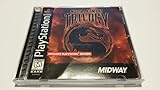
Mortal Kombat Trilogy is the PS1’s big Mortal Kombat collection, released by Midway in 1996. It combines fighters and stages from the first three games and Ultimate Mortal Kombat 3 into one package, giving it the largest Mortal Kombat roster of its era. It added an Aggressor meter that temporarily boosts speed and damage, plus Brutalities alongside the series’ Fatalities, Friendships and Animalities.
Its place in a PS1 collection is different from the Capcom and Namco games above. Mortal Kombat Trilogy is about digitised-actor style, secrets and shock value rather than tight competitive balance. It is a great game for nostalgic versus sessions and for players who grew up memorising finishing moves. The Greatest Hits reprint keeps it in the budget tier, and it is easy to find complete.
Be aware of the PS1 version’s weaknesses. Load times are noticeable, especially when the game swaps in shape-shifting characters, and balance between characters from different games is uneven. The Nintendo 64 version avoids the loading but cuts characters, so the PS1 disc remains the more complete experience despite its slowdowns.
Buy it if: you want the classic Mortal Kombat roster in one disc. Skip it if: loading pauses or uneven balance will bother you more than the nostalgia appeals.
Additional Picks at a Glance
| Game | Style | Best for | Complete-copy price tier | Availability |
|---|---|---|---|---|
| Tekken 2 | 3D, no sidestep | Tekken fans, budget versus | Budget | Very high |
| Bushido Blade | 3D weapons, one-hit kills | Tense duels, mixed-skill pairs | Budget to mid-range | High |
| Marvel vs. Capcom | 2D crossover, assists | Capcom collectors | Premium | Low to medium |
| Bloody Roar II | 3D with beast transformations | Party play, newcomers | Mid-range | Medium |
| Mortal Kombat Trilogy | 2D digitised fighters | Nostalgia, big roster | Budget | High |
Comparison Table: Price, Depth, and Availability in 2026
| Game | Characters | Multiplayer | Key Single-Player Mode | Typical Complete Price Tier | Availability |
|---|---|---|---|---|---|
| Tekken 3 | 23 | 2-player versus, excellent balance | Tekken Force / Survival | Budget | Very High |
| Street Fighter Alpha 3 | 28+ | 2-player versus, 3 Isms | World Tour (level-up system) | Mid-range | High |
| Rival Schools: United By Fate | 20 | 2-player tag-team versus | Arcade / Evolution Disc modes | Premium | Medium |
| JoJo’s Bizarre Adventure | 16 | 2-player versus, Stand mechanics | Super Story Mode | Premium | Low-Medium |
| Darkstalkers 3 | 18 | 2-player versus, air-dash heavy | Arcade / Survival | Mid-range to premium | Medium |
| Soul Blade | 10 + unlockables | 2-player weapons-based | Edge Master | Budget | High |
| X-Men vs. Street Fighter | 17 | 2-player tag (1v1 with assist) | Arcade / Versus | Mid-range | Medium |
Decision Matrix: Which PS1 Fighter Should You Buy?
Use this to match your situation to the right purchase without overspending:
| Your Situation | Best Pick | Why |
|---|---|---|
| You want one fighter for regular 2-player sessions | Tekken 3 | Best balance, fastest to learn, lowest cost, no loading frustrations |
| You want deep lab time and solo progression | Street Fighter Alpha 3 | World Tour + Ism system adds 30+ hours of unlockable content |
| You collect for future value and uniqueness | Rival Schools or JoJo’s Bizarre Adventure | Lower print runs and rising demand, especially for complete US copies |
| You want a weapon fighter that is not Tekken | Soul Blade | Distinct weapon-based combat and strong value among 3D fighters |
| You want fast, anime-style 2D action | Darkstalkers 3 | Air dashes and chain combos, faster pace than Alpha 3 |
| You are on a tight budget | Tekken 3 or Soul Blade | Both sit in the budget tier for complete copies and are easy to find in good condition |
PS1 Port vs Other Versions: When the PlayStation Disc Is the Right Choice
Almost every fighting game on this list also appeared in arcades, and several were released on the Sega Saturn or later systems. Knowing how the PS1 version compares helps you decide whether the disc is the version you actually want, or whether you are paying for nostalgia.
Where the PS1 Version Wins
Namco’s 3D fighters are the clearest case. Tekken 2, Tekken 3 and Soul Blade were built on arcade hardware closely related to the PlayStation, so their home ports are excellent and add substantial console-only content. Tekken 3’s Tekken Force and Tekken Ball, Soul Blade’s Edge Master mode and Tekken 2’s Practice mode are reasons to own these discs even if you have played the arcade versions. Bushido Blade and Bloody Roar II were designed with home consoles in mind, so the PS1 disc is the definitive original release.
Where the PS1 Version Compromises
Capcom’s 2D fighters were a much harder fit. The PS1 had only 2 MB of main RAM, and sprite-heavy games with large animations had to lose frames, add loading or cut features. Street Fighter Alpha 3 held up well thanks to its extra modes. The Vs. series suffered most: X-Men vs. Street Fighter, Marvel Super Heroes vs. Street Fighter and Marvel vs. Capcom all lost free tag-team switching on PS1. The Japan-only Saturn versions of the earlier Vs. games, using a 4 MB RAM expansion cartridge, kept tag play and more animation, which is why collectors often regard them as superior.
How to Decide
- You want the best way to play a Capcom 2D fighter today: an official modern collection using the arcade version is usually better than the PS1 disc.
- You want console-exclusive modes: the PS1 disc is the only way to get World Tour, Tekken Ball, Super Story Mode or Edge Master as they originally shipped.
- You collect PlayStation specifically: buy the PS1 discs and accept the compromises; they are part of the history.
- You mainly play 3D fighters: the PS1 versions of Namco’s games remain among the best ways to experience them.
Building a Balanced PS1 Fighting Collection
If you are starting from nothing, it helps to build around variety rather than buying every top-ranked game at once. A balanced set covers different styles so that both solo play and versus nights stay fresh.
- Start with one 3D anchor: Tekken 3 is the obvious choice, budget tier and endlessly replayable.
- Add one deep 2D fighter: Street Fighter Alpha 3 gives you long-term solo progression through World Tour.
- Add one party game: Bloody Roar II or Bushido Blade is easy for non-fighting-game friends to pick up.
- Add one weapons fighter: Soul Blade fills a different niche from Tekken and costs little.
- Finish with collectibles: Rival Schools, JoJo’s or Marvel vs. Capcom once you know which style you enjoy most, since these sit in the premium tier.
This order keeps early spending in the budget tier while covering every major style the PS1 fighting library offers, and it leaves the expensive, condition-sensitive purchases until you know exactly what you want.
Buying Considerations in 2026: Condition, Region, and Compatibility
PS1 fighters live or die on disc condition. Unlike RPGs, fighters stream data mid-match, so even light scratches can cause freezes during super animations or tag-ins. Always ask for photos of the disc’s data side under direct light and the inner hub ring for the correct product code (e.g., SLUS or SCUS). Reproductions are common for Rival Schools and JoJo’s – authentic discs have a clear, pressed hub code and professional manual printing, not inkjet.
Region matters. All PS1 consoles are region-locked. A North American PS1 cannot play Japanese imports without a mod or swap method, and PAL copies run at 50Hz with slower speed and bordered screens. For the best experience on original hardware, buy the region that matches your console. If you play on a PS2, PS3, or modern emulation, region is less of an issue, but original PS1 memory cards are still required for saves.
Memory Card and Storage Calculation
PS1 fighters are not save-heavy, but if you buy multiple titles, plan your storage. A standard PS1 memory card holds 128 KB divided into 15 blocks. Here is what these fighters actually use:
- Tekken 3: 1 block per save (system + ghost data)
- Street Fighter Alpha 3: 1 block (World Tour progress) + 1 block for settings
- Rival Schools: 1 block
- Soul Blade: 1 block
Worked calculation: If you own Tekken 3, Alpha 3, Rival Schools, and Soul Blade, you need 1 + 2 + 1 + 1 = 5 blocks. With 15 blocks total, that leaves 10 blocks free, or about 66% of the card. That means a single official memory card can comfortably hold saves for 6-8 fighters plus other genres. If you plan to do World Tour grinding in Alpha 3 with multiple characters, keep at least 3 blocks free for additional World Tour saves.
Getting Them Running Well on Modern Setups
You do not need to mod your setup heavily, but a few concrete settings improve every PS1 fighter:
- On original hardware with a modern TV: Use S-Video or RGB SCART if your TV supports it via a RetroTINK or similar scaler. Set the scaler to 2x or 3x with scanline filter off for fighters – scanlines soften sprite art in Darkstalkers and JoJo’s.
- On PS2 (backward compatible): In the PS2 browser’s PlayStation Driver settings, set Texture Mapping to Standard and Disc Speed to Fast. Fast disc speed can shorten load times in Alpha 3 and X-Men vs. Street Fighter, but switch back to Standard if a game freezes or stutters.
- On emulator (DuckStation / RetroArch): Set internal resolution to 2x for 3D fighters (Tekken 3, Soul Blade, Rival Schools) and keep 1x for 2D sprites (Alpha 3, Darkstalkers) to avoid sprite warping. Enable PGXP for perspective correction in 3D titles and set controller polling to accurate to preserve input timing.
For all fighters, use a wired controller with a good D-pad. PS1 fighters were designed around the digital pad, not the DualShock analog stick. A PS1 or PS2 pad with a clean D-pad membrane will give you more consistent quarter-circle and dragon-punch inputs.
Controllers and Accessories for PS1 Fighters
The right pad matters more for PS1 fighters than for almost any other genre, because quarter-circle and charge inputs depend on a clean, responsive D-pad. Original Sony pads are the reference, but decades-old membranes wear out and become mushy. If your originals are tired, a modern controller that plugs into the PS1 port is the simplest upgrade.
Retro Fighters Defender Pro Wireless Controller
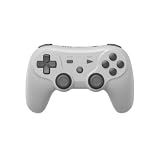
The Defender Pro is one of the few modern controllers designed to work directly on original PS1 hardware. It ships with a PS1/PS2 retro receiver that plugs into the console’s controller port, plus a USB receiver for PC, PS3, Switch, Steam Deck and MiSTer FPGA setups. That makes it useful if you play the same PS1 fighters on original hardware and through an emulator such as DuckStation, since you keep the same pad and muscle memory across both.
An upgrade to the original Defender, it adds dual-mode 2.4 GHz and Bluetooth wireless, an optional 1000 Hz polling rate, Hall Effect analog sticks that resist drift, an improved D-pad, programmable back buttons and pressure-sensitive face buttons for PS2 games that read button pressure. For fighting games, the D-pad and the back buttons are the features that matter: you can map a back button to a three-punch or three-kick macro where a game allows it, or simply use it as an extra button for Alpha 3’s six-button layout.
The obvious caveat for fighting games is wireless latency. The 2.4 GHz receiver is the better choice over Bluetooth for timing-sensitive play, and on PC you should enable the higher polling rate. Purists who care about every frame may still prefer a wired original pad, but for casual and enthusiast play the Defender Pro is a convenient way to replace worn controllers. It sits in the mid-range tier, above basic replacement pads and well below a full arcade stick.
Buy it if: your original pads are worn and you play on both original hardware and PC. Skip it if: you play competitively on original hardware and want the lowest possible input delay from a wired pad.
Other Accessories Worth Considering
- Memory card: an official Sony card is still the safest choice for saves. Modern SD-based cards can hold every PS1 save you will ever make, but stick to reputable models and back up regularly.
- Video cable: composite works, but S-Video or RGB through a scaler gives much sharper sprites in Darkstalkers, JoJo’s and Alpha 3.
- Arcade stick: older PS1-compatible sticks are rare and often need repair. A modern stick used through an emulator or a compatible adapter is usually the more practical route.
- Disc cleaning kit: a soft microfibre cloth and wiping straight out from the centre is enough for light marks. Leave deep scratches to a professional resurfacing service rather than toothpaste or other home remedies.
Modern Ways to Play These Games Legally
Original discs are the way to go for collectors, but several of the games in this guide have official modern releases that are cheaper and play better on current displays. These are worth knowing about before paying premium-tier prices for a disc you mainly want to play.
| Game | Official modern option | Notes |
|---|---|---|
| Street Fighter Alpha 3 | Street Fighter 30th Anniversary Collection | Arcade version with online play; no PS1 World Tour mode |
| Darkstalkers series | Capcom Fighting Collection | Includes Vampire Savior, the game the PS1 Darkstalkers 3 is based on |
| X-Men vs. Street Fighter, Marvel vs. Capcom | Marvel vs. Capcom Fighting Collection: Arcade Classics | Arcade versions with full tag-team play restored |
| Tekken 3 | PlayStation Classic mini console | The 2018 mini console included Tekken 3 among its built-in games |
These collections use the arcade versions rather than the PS1 ports, so you lose console-exclusive extras such as Alpha 3’s World Tour, Tekken 3’s Tekken Ball or JoJo’s Super Story Mode. That is the strongest argument for owning the PS1 disc: the extras, not the core fighting.
A Quick Checklist Before You Buy a Used PS1 Fighter
- Confirm the region matches your console: NTSC-U discs use SLUS or SCUS codes, PAL discs use SLES or SCES, and Japanese discs use SLPS, SLPM or SCPS.
- Ask for clear photos of the data side under direct light, the inner ring code, the manual and the back insert.
- Check the disc count for multi-disc games so you do not end up with an incomplete copy.
- Compare the manual print quality with known authentic examples, particularly for higher-tier games like Rival Schools, JoJo’s and Marvel vs. Capcom, which are the most commonly reproduced.
- Decide whether label matters: if you only want to play, a Greatest Hits reprint gives the same game at a lower tier.
- Ask about returns and whether the seller has confirmed the disc loads and saves.
FAQ
Are PS1 fighting games still worth buying versus newer ports?
Yes if you want the authentic PS1 experience and collectibility. Ports on newer platforms often load faster and look cleaner, but PS1 versions have exclusive modes like Tekken Ball, World Tour in Alpha 3, and Edge Master in Soul Blade that were not carried forward identically.
Which PS1 fighter is best for beginners today?
Tekken 3. Its combo system is intuitive (press strings rather than complex motion inputs), and Practice mode lets you rehearse each character’s strings at your own pace. Soul Blade is the second most beginner-friendly due to slower movement and weapon range helping new players space correctly.
Do I need a PS1 memory card in 2026?
On original hardware, yes. On PS2, you need a PS1 memory card – PS2 cards do not save PS1 games. On PS3 and emulators, saves are virtual. Third-party PS1 cards with 16x capacity often corrupt, so an official Sony 128 KB card (or a reputable modern equivalent like MemCard Pro) is safer.
What is the difference between Greatest Hits and black-label?
Gameplay is identical. Greatest Hits is a reprint with a green label and usually a lower price. Collectors pay a premium for black-label originals, but if you want to play, Greatest Hits saves money.
Which PS1 fighting games are the most collectible?
Capcom’s licensed and lower-print-run games tend to hold the highest value, especially complete North American copies of JoJo’s Bizarre Adventure, Rival Schools and Marvel vs. Capcom. Big sellers such as Tekken 3, Tekken 2 and Mortal Kombat Trilogy were printed in huge numbers and are much easier to find, so they mainly appeal to players rather than investors.
Can I play PS1 fighting games online?
Not on original hardware. The easiest legal route is an official modern collection with online play, such as the Street Fighter 30th Anniversary Collection or the Marvel vs. Capcom Fighting Collection. Some PC emulators also offer netplay for games you own, but performance depends heavily on both players’ connections.
Is an arcade stick better than a pad for PS1 fighters?
It depends on the game and on what you learned with. Capcom’s 2D fighters were designed in arcades, so a stick suits charge characters and motion inputs well. Tekken, Soul Blade and Bushido Blade play perfectly well on a good D-pad. Since PS1-compatible sticks are hard to find, most players are better off starting with a quality pad.
Are Japanese PS1 fighting games worth importing?
Sometimes. A few Japanese releases, such as Marvel vs. Capcom EX Edition or X-Men vs. Street Fighter EX Edition, are the same game as their Western counterparts under a different name, and they can be cheaper. However, you need a region-compatible way to play them, menus may be in Japanese, and some games differ slightly between regions.