
Most people think peripherals are the boring part of building a PC, then they spend an afternoon fighting a sticky keycap or watching their frame rate stutter because a $5 mouse sensor can’t track reliably at high DPI. After months of testing everything from budget dusters to premium keypads on multiple desks, the pattern is clear: the right peripheral removes friction from your workflow or your game, while the wrong one quietly taxes your attention every single session.
What separates a genuinely good peripheral from marketing noise in 2026 is specificity. A compressed air duster is not impressive because of its wattage; it is impressive because it clears a mechanical keyboard in one pass without you needing to take the keycaps off. A macro pad is useful only when the software lets you map actions fast enough that you actually bother using them. The eight products below earned their spot because they solve a concrete problem well, not because they have the longest spec sheet.
As an Amazon Associate we earn from qualifying purchases at no extra cost to you.

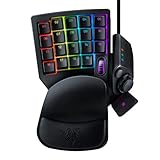
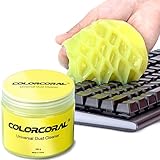



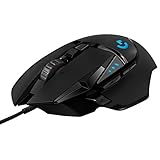

Top 3 picks at a glance
Quick Picks
| Product | Best for | Price |
|---|---|---|
| WOLFBOX MegaFlow 50 | Quick keyboard dusting between sessions | $32.29 |
| Razer Tartarus V2 | MOBA and MMO players who want thumb access | $69.99 |
| ColorCoral Cleaning Gel | Deep-cleaning crevices without disassembly | $7.99 |
| VSDINSIDE Macro Keypad | Streamers and productivity users who need visual feedback | $46.69 |
| AULA F75 Pro | Budget mechanical keyboard with wireless flexibility | $64.99 |
| WOLFBOX MF100 | Heavy-duty cleaning for PC towers and GPU fans | $62.98 |
| Logitech G502 Hero | Reliable wired mouse with lots of programmable buttons | $37.99 |
| Acer USB Hub | Expanding a single USB port on a thin laptop | $9.87 |
How We Picked
We evaluated each product against four criteria: real-world performance against the task it claims to do, build quality at its price point, software or ecosystem friction (how quickly you get from unboxing to productive use), and value relative to the nearest competitor. A peripheral that checks every spec box but annoys you daily fails the last two criteria, and we eliminated accordingly.
The 8 Best PC Peripherals in 2026
WOLFBOX MegaFlow 50
If you own a mechanical keyboard, you already know the feeling of crumbs and hair caught between switches. The MegaFlow 50 solves that with a compact motor spinning at 110,000 RPM across three adjustable gears. For most people it replaces a can of compressed air entirely: no mess, no refills, no frostbite on your fingers. The low gear works on laptop keyboards without popping keycaps, and the top gear clears full-size boards in under a minute. Its limitation is raw power compared to larger dusters like its own sibling; you will still want a stronger unit for GPU fans and tight heatsink stacks. If your cleaning routine stops at the desk surface, this is the easiest upgrade you can make.
- Pro: Three gears give you precision control over airflow
- Pro: Replaces disposable canned air entirely
- Con: Not powerful enough for deep component cleaning
Skip this if you need one tool for both your keyboard and your PC case internals; buy the MF100 instead.
Razer Tartarus V2
The Tartarus V2 is for players who want their left hand doing more than resting on WASD. Thirty-two programmable membrane keys plus a directional thumb pad and a scroll wheel give you an absurd amount of accessible inputs in a footprint smaller than a standard numpad. Mapping abilities to it transforms MOBAs and MMOs where you are fighting cooldowns; the keys feel quiet and slightly cushioned, which is comfortable over long sessions but lacks the crispness of mechanical switches. The Chroma software is powerful but occasionally slow to save profiles, and the device is left-handed only by design. If you have ever felt bottlenecked by keyboard shortcuts during a raid or a ranked queue, this is still the most complete dedicated solution available.
- Pro: Thirty-two keys plus thumb controls in one compact layout
- Pro: Membrane surface is quiet and fatigue-friendly over hours
- Con: Razer Synapse can lag when switching profiles mid-game
Skip this if you play primarily FPS titles where hand position is already optimized.
ColorCoral Cleaning Gel
At seven dollars, this sixteen-gram gel tube is the most accessible peripheral care product on the list. You press it into keyboard gaps, speaker grilles, and car vents, and the pliable compound lifts dust and crumbs that compressed air only pushes deeper. It works best as a finishing step after a duster pass, pulling out particles that cling to switch stems. The downside is straightforward: the gel eventually degrades and needs replacing, and it does not suit sticky residues or liquid spills. For anyone with a laptop that lives on a couch or a desk that collects pet hair, a tube of this in your drawer eliminates dozens of small frustrations per month without any electronics or batteries.
- Pro: Reaches gaps compressed air cannot
- Pro: Cheapest item on the list by a wide margin
- Con: Single-use material that softens and fails over weeks
Skip this if you already own a high-quality duster and have no hard-to-reach spots.
VSDINSIDE Macro Keypad
Streamers and multitaskers who need visual confirmation of what each button does will appreciate the VSDINSIDE’s eighteen programmable keys with customizable LED icons on top. You assign a shortcut to OBS, YouTube, or a productivity app and the pad shows you a small graphic reminding you what that key triggers, which eliminates the muscle-memory problem of a blank keypad. The included software handles hotkey recording and macro chains without excessive steps. Where it falls short is build quality; the plastic shell flexes under firm presses and the keys feel mushy compared to a dedicated mechanical solution. It is also USB-only, so desk cable management matters. For a content creator who wants a visual control surface without paying premium prices, this is a practical middle ground.
- Pro: Visual keycaps reduce shortcut confusion dramatically
- Pro: Works with OBS, streaming platforms, and general hotkeys
- Con: Plastic housing flexes; keys lack satisfying tactile snap
Skip this if you are a competitive gamer who values click feel above all else.
AULA F75 Pro
For under seventy dollars, the F75 Pro gives you a genuinely well-built mechanical typing experience that competes with boards twice its price. The pre-lubed Reaper switches arrive smooth out of the box, the side-printed PBT keycaps resist shine, and the 75% layout keeps function keys without wasting desk real estate. The rotary knob handles volume and system-level shortcuts, and hot-swap sockets mean you can experiment with different switches later. Wireless options include 2.4GHz, Bluetooth 5.0, and USB-C, covering every scenario from gaming to couch browsing. Its weakness is the software; AULA’s driver is less polished than Logitech or Razer, and firmware updates occasionally reset settings. Still, if you want a feature-complete wireless mechanical board without committing a hundred-plus dollars, this is hard to beat at the price.
- Pro: Pre-lubed switches with hot-swap compatibility out of the box
- Pro: Three wireless connection modes plus USB-C wired
- Con: Companion software is clunky and occasionally resets profiles
Skip this if you require macro-level software integration or RGB sync with a specific ecosystem.
WOLFBOX MF100
The MF100 is the duster you buy when the MegaFlow 50 feels underpowered. A turbo fan rated at 150,000 RPM pushes 45 meters per second of airflow, which is enough to dislodge dust from heatsink fins, GPU fan blades, and the mesh on a case filter without you reaching inside with anything. It runs on a rechargeable battery that lasts through multiple full cleaning sessions, and the nozzle attachment lets you target tight spaces. The tradeoff is noise and bulk; at the highest setting it is loud enough to be unpleasant in a shared room, and the unit itself is noticeably larger than the MegaFlow. If you open your PC quarterly or maintain a multi-GPU workstation, this is the correct tool.
- Pro: 45 m/s airflow clears dust from deep inside components
- Pro: Battery-backed with sufficient capacity for repeated sessions
- Con: Louder and bulkier than smaller dusters
Skip this if your cleaning needs are limited to keyboards and desk surfaces.
Logitech G502 Hero
The G502 Hero remains relevant because it does one thing exceptionally well: it gives you more programmable buttons than any other mouse in its price bracket while maintaining a sensor accurate enough for competitive play. The Hero sensor tracks at high DPI without smoothing or acceleration, the eighteen grams of removable weight let you tune balance, and eleven buttons accommodate everything from FPS keybinds to MMO macros. The shape is divisive; the pronounced hump works for claw and fingertip grips but can feel aggressive for palm grippers. The cable, while braided, adds drag on a fabric pad if you do not use a bungee. For thirty-eight dollars, nothing else combines this sensor quality, button count, and software maturity.
- Pro: Hero sensor is among the most accurate in any budget bracket
- Pro: Eleven programmable buttons with extensive G Hub software
- Con: Aggressive shape that does not suit every hand position
Skip this if you prefer a low-profile, lightweight ergonomic for palm grip.
Acer USB Hub
Thin laptops and many mini-ITX desktops ship with too few USB ports, forcing you to unplug your mouse to charge a controller or plug in a headset. The Acer four-port USB 3.0 hub fixes that with a short two-foot cable that routes cleanly behind a monitor or along a desk edge. Each port delivers full USB 3.0 speeds, so external SSDs and capture cards operate without bottlenecks. It draws power from the host bus rather than a wall adapter, which means high-draw devices like mechanical keyboards with heavy RGB or multiple portable drives may cause instability. For typical peripheral loads (mouse, keyboard, headset, flash drive), it is a no-thought expansion at under ten dollars.
- Pro: Full USB 3.0 speeds on all four ports
- Pro: Two-foot cable length works with most desk setups
- Con: Bus-powered only; struggles with multiple high-draw devices
Skip this if you regularly connect power-hungry peripherals; get a powered hub instead.
Buying Guide
Airflow Specifications That Actually Matter
RPM numbers look impressive on a spec sheet, but what determines whether a duster clears your PC is air velocity at the nozzle tip. The MF100’s 45 m/s figure is the kind of number that dislodges caked dust from heatsink fins. Velocity below 30 m/s will handle surface debris and keyboards but leave internal components untouched. Always check whether airflow drops at mid-range settings; some dusters are only fast on the top gear, which is also the loudest.
Programmable Key Software and Profile Switching
The hardware spec (key count, RGB, hot-swap sockets) matters less than how quickly you can assign and reassign actions. A macro pad or mouse is only as good as its software layer. Look for tools that let you create, edit, and switch profiles in under two clicks, and verify the software runs in the background without consuming noticeable resources. Pre-lubed switches with hot-swap sockets add hardware flexibility, but if the firmware is unstable, you will spend more time troubleshooting than enjoying the feel.
Wired Versus Wireless for Competitive and Mixed Use
Wireless mechanical keyboards and mice now match wired latency for the vast majority of users. The AULA F75 Pro’s 2.4GHz mode is indistinguishable from a cable in practical gaming, and Bluetooth covers casual work without the dongle. The Logitech G502 remains wired, which eliminates charging concerns entirely. Choose wireless if desk cable management is a genuine frustration; choose wired if you want zero input-latency anxiety or simply refuse to think about battery levels before a ranked session.
Our Verdict
The AULA F75 Pro is the best overall peripheral on this list: it transforms your daily typing and gaming experience for under seventy dollars with hot-swap flexibility and three wireless modes. For the tightest budget, the Acer USB Hub at under ten dollars solves a real problem immediately and the ColorCoral gel at eight keeps any setup looking clean. If you own multiple high-draw peripherals or a multi-device workstation, the Acer hub’s bus-powered limitation means you should step up to a powered model, which makes the VSDINSIDE Macro Keypad a more compelling peripheral for that specific scenario.
FAQ
Do I need a compressed air duster if I already have a keyboard cover?
A cover prevents large particles from entering but does nothing about fine dust and hair that migrates inside over time. A duster with adjustable gears lets you clear the board quickly between sessions without removing the cover or taking off keycaps.
Is a macro keypad worth it for non-gamers?
If you spend hours in creative software, spreadsheets, or streaming tools, a macro keypad cuts repetitive keyboard shortcuts down to single presses. The VSDINSIDE’s visual keycaps are specifically designed for people who do not want to memorize a new set of bindings from scratch.
Can a wired mouse outperform a wireless one in competitive games?
Modern wireless sensors match or exceed wired ones in tracking accuracy and latency. The G502’s advantage is consistency without battery management, not raw responsiveness. For any player outside the top competitive tier, the difference is negligible.
Why does my USB hub disconnect high-draw devices?
Bus-powered hubs draw all their power from the host port, which has a fixed output ceiling. When you connect devices that together exceed that budget, individual ports starve and disconnect. Use a powered hub for multiple drives, RGB-heavy keyboards, or charging phones simultaneously.


