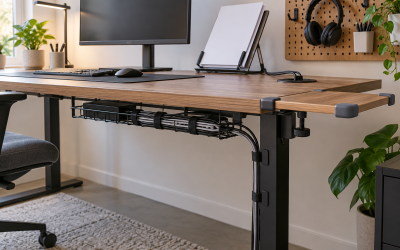
The best cable management kit for a PC setup is a combination, not a single box: a rigid under-desk tray such as the IKEA SIGNUM to hold the power strip, reusable hook-and-loop straps such as Velcro Brand ONE-WRAP to bundle runs, and either a zippered sleeve like the Alex Tech or JOTO sleeves or a raceway from D-Line or Legrand Wiremold to carry cables down to the floor. All-in-one kits sell those same pieces together, so the smart move is to judge any kit by whether it includes the three jobs every gaming desk needs: hold, bundle and route.
As an Amazon Associate we earn from qualifying purchases at no extra cost to you.


Top 3 picks at a glance
The Three Jobs a Kit Has to Do
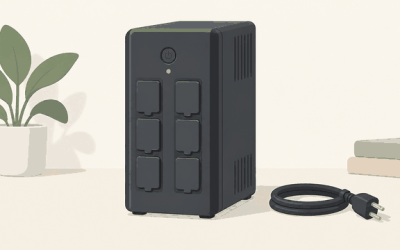
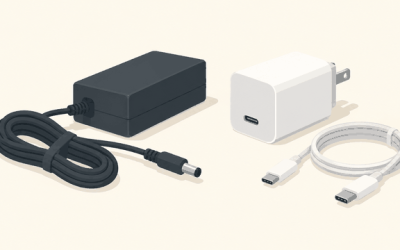
Most cable mess on a gaming desk comes from about 10 to 15 cables: PC power, two or three monitor power cables, two or three display cables, speakers, a USB hub, a lamp, phone charging and network. A kit that only contains clips and ties cannot fix that because the bulk is the power strip and the power bricks.
- Hold: a tray, basket or box that lifts the power strip and adapters off the floor. This removes the largest single visual mess.
- Bundle: reusable straps that group cables into one or two trunks. Reusable matters because a gaming PC gets upgraded.
- Route: a sleeve, spine or raceway that carries the trunk from desk to floor or wall outlet without a waterfall of loose cables.
Kit Components Compared
| Component | Example products | Capacity | Install | Typical price |
|---|---|---|---|---|
| Steel under-desk tray | IKEA SIGNUM | Power strip plus 4-6 bricks | Screws into desk underside | $15-$30 |
| Hook-and-loop straps | Velcro Brand ONE-WRAP | Bundles of 3-12 cables per strap | None | $8-$15 per pack |
| Zippered neoprene sleeve | Alex Tech, JOTO sleeves | About 8-12 cables at 1-1.5 inch diameter | Zip around cables, cut to length | $12-$25 |
| Adhesive raceway kit | D-Line, Legrand Wiremold CordMate | 3-6 cables depending on channel size | Adhesive or screws on wall/desk leg | $20-$45 |
| Adhesive cable clips | Generic multi-slot clips | 1-5 cables each | Peel and stick | $8-$15 per pack |
Worked Example: Sizing a Kit for a Dual-Monitor Desk
Take a 160cm desk with a gaming tower on the floor at the right, two monitors on arms, speakers and a wall outlet 60cm behind the desk.
- Count the trunk. PC power, two monitor power cables, two DisplayPort cables, speaker power, USB hub cable and Ethernet make eight cables between desk and floor. A 1-inch zippered sleeve fits that comfortably; a narrow raceway channel will not.
- Measure the drop. Desk height is about 74cm, plus 30cm of slack so the sleeve curves rather than pulls, gives roughly 105cm of sleeve. Most sleeves come in 50 to 60 inch lengths and can be cut, so one sleeve covers it with spare.
- Size the tray. A 6-outlet power strip is about 30cm long. A tray of at least 55-60cm leaves room for monitor and speaker bricks beside it.
- Count straps. Strap the trunk every 25-30cm along the desk underside and at both sleeve ends. On a 160cm desk that is about eight straps, plus a few for the monitor arms. A pack of 50 small straps covers this with spares for inside the PC.
Result: one tray, one 1-inch sleeve, about 12 straps and a few adhesive clips. That combination costs roughly $40 to $70 when bought separately, which is a good benchmark for judging the value of a bundled kit.
Which Kit Type Fits Your Setup
| Setup | Prioritize | Skip |
|---|---|---|
| Fixed desk against a wall | Tray plus raceway on the wall to the outlet | Long sleeves |
| Standing desk | Tray plus flexible sleeve or spine with 30-40cm extra slack | Rigid raceway between desk and floor |
| Desk in the middle of a room | Sleeve to the floor plus a floor cord cover | Adhesive wall clips |
| Glass desk | Clamp-on tray or basket, adhesive clips only on frame | Screw-mounted trays |
| Rented space | Clamp-on tray, straps, removable adhesive | Screws into walls |
What Separates a Good Kit From a Cheap One
Adhesive quality
Clips and raceways fail more from adhesive than from plastic. Foam tape works on smooth laminate and painted metal but loses grip on textured wood, raw MDF and warm surfaces near monitors or the PC exhaust. Clean the surface with isopropyl alcohol, press firmly for 30 seconds and wait several hours before loading cables. Kits that include screw holes as a backup are worth a little more.
Reusable versus single-use ties
Nylon zip ties are cheap and neat but must be cut every time you swap a GPU or add a drive. Hook-and-loop straps cost slightly more and make upgrades painless. A kit built mostly around zip ties is fine for inside a case that rarely changes, less ideal for the desk.
Sleeve diameter
Many kits include several narrow sleeves. One 1 to 1.25 inch sleeve for the main trunk is usually more useful than four thin ones, because display cables with large DisplayPort or HDMI plugs need room to pass through the zipper.
Tray strength
A loaded tray with a power strip and four bricks can weigh 2 to 3kg. Steel trays hold that without sag; thin plastic trays bow over time and can drop the strip if the adhesive mounts let go.
Inside the PC Case
A desk kit does not cover the case, but the same principles apply. Most modern cases have tie-down points behind the motherboard tray. Use hook-and-loop straps there so GPU and PSU cable changes do not require cutting, route the 24-pin and 8-pin CPU cables through the nearest grommets, and leave enough slack on the 12V-2×6 GPU power cable that it is not bent sharply near the connector. Clean cable routing helps airflow less than many expect, but it makes dust cleaning and upgrades much faster.
Install Order That Saves Time
- Unplug everything and lay cables out by destination.
- Mount the tray first and load the power strip and bricks.
- Run monitor cables down the monitor arm channels, then to the tray.
- Bundle the desk-side runs with straps every 25-30cm.
- Gather the desk-to-floor cables into the sleeve or raceway.
- Plug in, power everything on and test before trimming any sleeve or tie.
FAQ
Are all-in-one cable management kits worth it?
They are worth it when they include a tray or a sleeve large enough for your trunk. Kits made only of clips and small ties tend to leave the power strip on the floor, which is the biggest source of clutter.
Can I put a power strip in a closed cable box?
Yes for a standard strip with normal loads, but leave room for airflow and avoid stuffing hot power bricks in a sealed box. A ventilated tray is the safer default under a gaming desk.