For Marvel’s Spider-Man Remastered, a mid-range card from the current generation, such as a GeForce RTX 5060 Ti or Radeon RX 9060 XT, comfortably covers 1080p and 1440p with high settings, while a Radeon RX 9070, GeForce RTX 5070 or better is the sensible target for 4K with ray tracing. The game is old by 2026 standards, so almost any current card clears the publisher’s listed requirements; the real choice is how much headroom you want for ray-traced reflections and a high resolution.
As an Amazon Associate we earn from qualifying purchases at no extra cost to you.


Our Top Picks
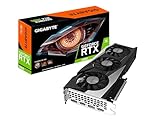
 msi Gaming RTX 3050 Ventus 2X 6G OC1.7" x 4.3" x 7.4"7.4 x 4.3 x 0.1 inches1.3 poundsCheck on Amazon


Top 3 picks at a glance
Quick picks by resolution
| Target | GPU class that fits | Examples (current or recent) | Notes |
|---|---|---|---|
| 1080p, high settings | Entry to budget tier | GeForce RTX 5050 / RTX 5060, Radeon RX 9060 XT | Far above the publisher’s list; room for ray tracing |
| 1440p, high, ray tracing on | Mid-range tier | GeForce RTX 5060 Ti / RTX 5070, Radeon RX 9060 XT 16 GB / RX 9070 | VRAM headroom matters; prefer 12 GB or more |
| 4K, high, ray tracing on | Upper mid to high-end | GeForce RTX 5070 Ti / RTX 5080, Radeon RX 9070 XT | Upscaling still helps hold a steady frame rate |
| 4K, no compromises, high refresh | Premium tier | GeForce RTX 5090 | Often limited by the processor before the card runs out |
| Older hardware, still playable | Previous generation | GTX 1060 6 GB, RX 580 8 GB class | The publisher’s own recommended tier |
What the publisher lists
The Steam page names two tiers. The minimum is an Intel Core i3-4160 or AMD equivalent, 8 GB of RAM, a GeForce GTX 950 or Radeon RX 470, and 75 GB of storage with DirectX 12. The recommended tier is a Core i5-4670 or Ryzen 5 1600, 16 GB of RAM, and a GeForce GTX 1060 6 GB or Radeon RX 580 8 GB. The page also mentions ray-traced reflections and support for DLSS and FSR upscaling. It does not publish separate ray tracing or 4K tiers, so any figure for those comes from reviewers and not from the publisher.
Because the recommended card is a decade-old mid-range part, the question for a buyer is not whether a new card can run the game, but which tier fits the resolution, refresh rate and ray tracing settings you want.
How the game uses a graphics card
Ray tracing is the main cost
TechSpot reported that turning ray-traced reflections to High cost roughly 30 percent of performance at 1080p on high-end GeForce cards and about 25 percent on high-end Radeon cards at launch. BabelTech Reviews reported a drop of up to around 44 percent at 1080p on a Radeon RX 6700 XT. Those are launch-era figures on older cards, and later patches changed behavior, but they show why ray tracing is the setting that separates the tiers. TechSpot also suggested an RTX 2080 Ti, RTX 3070 or RX 6800 as the floor for around 60 frames per second at 4K with ray tracing; current mid-range cards sit at or above that class.
VRAM
A recent settings guide says the game wants at least 6 GB of video memory at 1080p and about 10 GB at 4K to avoid texture streaming stutter. TweakTown reported 13.5 to 15 GB in use at 8K at launch. Patches have since improved memory handling, so these numbers describe worst cases from early builds. The practical reading for a buyer: an 8 GB card is enough at 1080p, a 12 GB or 16 GB card is the safer choice for 1440p with ray tracing and for 4K.
The processor often decides the ceiling
Reviewers describe the game becoming processor-limited during fast swinging, particularly with ray tracing, dense traffic and large crowds. TechSpot saw Radeon cards flatten just short of 130 frames per second while GeForce cards reached about 170 in the same scene, which it tied to driver overhead. Nixxes, the studio that ported the game, advises lowering traffic density, crowd density, ray-tracing object range and level of detail when the processor is the limit. If you pair a premium card with a weak processor, you will not see the card’s potential.
Upscaling and frame generation
The Steam page lists DLSS and FSR 2.0. A news report on a later update says the PC version gained frame generation for both vendors and XeSS, and moved FSR to version 3.1; check the in-game graphics menu for the exact list because options depend on the patch and the card. Reviewers found DLSS Quality could reconstruct some distant objects better than native 4K in the game, and that FSR 2.0 scaled less well at 1440p and below because the processor was already the limit. In practice: upscaling is most useful at 4K with ray tracing, much less useful at 1080p where the card is rarely the bottleneck.
- GeForce RTX cards can use DLSS, and RTX 40 and 50 series cards add DLSS frame generation.
- Radeon cards use FSR; the newest RX 9000 cards also support the newer FSR generations through the driver where the game allows it.
- Intel Arc cards can use XeSS where the game offers it.
Tier by tier
1080p with high settings
A GeForce RTX 5060 or Radeon RX 9060 XT is plenty. Even an older RTX 3060 or RX 6600 XT class card handles this resolution without ray tracing, though reviewers saw RDNA 2 cards struggle with ray tracing. If you play at 1080p and want a high refresh rate, spend on the processor and fast memory before the card.
1440p with high settings and ray tracing
This is the sweet spot for the RTX 5060 Ti, RTX 5070, Radeon RX 9060 XT 16 GB and RX 9070. Look for 12 GB of video memory or more. The GeForce RTX 5060 Ti and the Radeon RX 9060 XT both come in 8 GB and 16 GB variants, and the 16 GB versions are the better fit for this resolution with ray tracing on.
4K with high settings
The RTX 5070 Ti, RTX 5080 and Radeon RX 9070 XT sit in the range where 4K with ray tracing becomes practical, usually with upscaling on Quality. The RTX 5090 offers 32 GB of memory and the highest throughput, but because the game can hit a processor limit, the extra spend shows up mainly in demanding scenes.
Pick this GPU if…
| If you… | Pick | Why |
|---|---|---|
| Play at 1080p, no ray tracing | RTX 5060 or RX 9060 XT 8 GB | Far above the listed requirements |
| Want 1440p with ray-traced reflections | RTX 5060 Ti 16 GB or RX 9060 XT 16 GB, or step up to RTX 5070 / RX 9070 | More VRAM and RT throughput |
| Want 4K at a steady frame rate | RTX 5070 Ti, RTX 5080 or RX 9070 XT | Upscaling plus ray tracing at 4K |
| Prefer lower price and accept no ray tracing | Radeon RX 9060 XT or a previous-generation RX 7700 XT / 7800 XT | Raster performance is strong; RT is the weaker side |
| Own a GTX 1060 / RX 580 | Keep it for 1080p medium to high | It matches the publisher’s recommended tier |
What to skip
- Premium cards paired with old processors. The game goes processor-limited in fast traversal, so the card’s headroom is wasted.
- 8 GB cards for 4K ray tracing. Guides report streaming stutter when memory runs short at that resolution.
- Buying only for the 4K label. If you play a 1440p monitor, a 4K-class card is oversized for this title.
- Radeon cards from the RX 6000 series if ray tracing is your goal. TechSpot saw the ray tracing pipeline bottleneck the RX 6600 family. Newer RX 9000 cards are a different architecture.
Alternatives and companions
The sequel, Marvel’s Spider-Man 2, is more demanding, so if you plan to play it on the same machine, size the card for that game. Anyone building a PC for several recent games can lean toward a 16 GB card in the RTX 5060 Ti, RTX 5070 Ti or Radeon RX 9060 XT and 9070 XT range. For the processor, a Ryzen 5 7600 or 9600X, or a modern Core i5, suits 1080p to 1440p play; large-cache X3D chips help when you want a high frame rate with crowds and traffic turned up.
Frequently Asked Questions
Can an RTX 5060 run Spider-Man Remastered at 1440p?
Yes, with sensible settings. The publisher’s own requirements are modest, and the 5060 class is far above them. Turn on upscaling if ray-traced reflections push the frame rate lower than you like.
How much VRAM does the game need?
The publisher does not state a VRAM figure on its page. A recent settings guide says at least 6 GB at 1080p and around 10 GB at 4K to avoid texture streaming stutter, and patches have improved memory handling since launch. Treat 8 GB as the floor for 1080p and 12 to 16 GB as comfortable for higher resolutions.
Is DLSS or FSR better in this game?
Reviewers found little frame-pacing difference between the two at launch, and DLSS Quality drew praise for reconstructing distant detail. FSR works on all vendors’ cards. Choose whichever your card supports best.
Does ray tracing matter enough to pay for?
It adds reflections in glass and surfaces across the city, and reviewers report a cost of about a quarter to a third of the frame rate at launch. If you value those reflections and own a monitor above 1080p, a card with strong ray tracing is worth considering.
Will a faster processor give me more frames?
Often, yes, once the card is mid-range or better. Reviewers describe the game becoming processor-limited when swinging fast with high traffic and crowd density. A stronger processor raises the ceiling and smooths lows.
Is a GTX 1060 still enough?
It matches the publisher’s recommended tier, so the game runs on it at 1080p, but modern features like ray tracing are out of reach on such an old card.
Related guides
More from Amazon
Programs that pair well with the guide above. Offers and eligibility are set by Amazon and may change.
Free shipping on eligible items, Prime Video and more. Eligible new members can start with a free trial.
Start a Prime free trialAd-free music streaming. Eligible new subscribers can start with a free trial.
Try Music Unlimited freeA Prime membership for ages 18-24 with a trial period. Eligibility is set by Amazon.
See Prime for Young AdultsAudiobooks and podcasts to listen to on the go. Eligible new members can start with a free trial.
Try Audible freeAs an Amazon Associate we earn from qualifying purchases.