The best gaming PC for most players in 2026 pairs a GeForce RTX 5070 Ti or RTX 5080 (or Radeon RX 9070 XT) with an eight-core gaming processor such as the Ryzen 7 9800X3D, 32GB of DDR5 and a 2TB NVMe SSD; step down to an RTX 5060 Ti or RX 9060 XT class system for 1080p and 1440p on a tighter budget, and step up to an RTX 5090 only if you play at 4K with maximum settings. Which one is best for you depends on monitor resolution, budget tier and whether you want a prebuilt or a custom build.
As an Amazon Associate we earn from qualifying purchases at no extra cost to you.


Our Top Picks
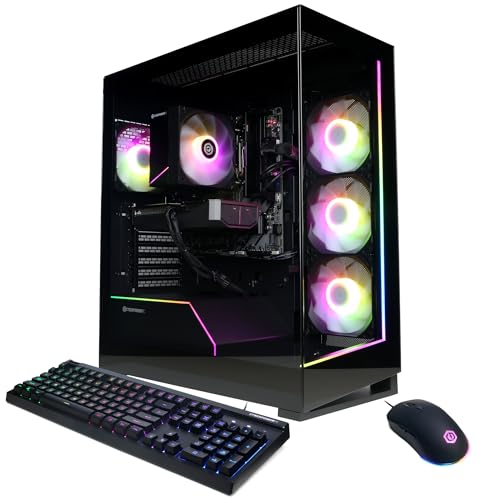
 iBUYPOWER Element Gaming PC Desktop Computer AMD Ryzen20 x 9.1 x 17.4 inches36 poundsCheck on Amazon
Top 3 picks at a glance
Best gaming PC by buyer type
| Buyer | Graphics class | Processor class | Memory and storage | Limits |
|---|---|---|---|---|
| Budget 1080p player | RTX 5060 or Radeon RX 9060 XT class | Ryzen 5 7600 or 9600X, Core Ultra 5 | 16GB to 32GB DDR5, 1TB SSD | 8GB VRAM versions can struggle with newer titles at high textures |
| Mid-range 1440p player | RTX 5060 Ti or RTX 5070 class, RX 9070 | Ryzen 7 7700 or 9700X, Core Ultra 7 | 32GB DDR5, 1TB to 2TB SSD | Not aimed at maximum ray tracing at 4K |
| High-end 1440p and 4K | RTX 5070 Ti, RTX 5080 or RX 9070 XT | Ryzen 7 9800X3D, Core Ultra 7 or 9 | 32GB DDR5, 2TB SSD | Larger power supply and cooling needed |
| Enthusiast 4K | RTX 5090 | Ryzen 7 9800X3D or 9950X3D | 32GB to 64GB DDR5, 2TB or more | Highest cost, power and case size demands |
| Gaming plus content creation | RTX 5070 Ti or above | Ryzen 9 or Core Ultra 9 | 64GB DDR5, 2TB or more | Higher cost; gaming gains from extra cores are limited |
The tiers describe performance classes, not specific prices. Model lineups change, so read the maker's specification sheet for the exact GPU, CPU, memory and power supply in any machine you consider.
What the current hardware generation looks like
NVIDIA's RTX 50-series, built on the Blackwell architecture, includes the RTX 5090 (32GB), RTX 5080 and RTX 5070 Ti (16GB each), RTX 5070 (12GB), and lower cards such as the RTX 5060 Ti and RTX 5060, according to NVIDIA's product pages. AMD's Radeon RX 9000 series features the RX 9070 XT and RX 9070 with 16GB, plus lower models such as the RX 9060 XT. On the processor side, AMD's Ryzen 9000 series on the AM5 socket includes the Ryzen 7 9800X3D, which reviewers widely describe as the leading gaming chip, while Intel's Core Ultra 200S series uses the LGA 1851 socket. Platform features include DDR5 memory, PCIe 5.0 and, on many boards, Wi-Fi 7.
Prebuilt or custom?
| Factor | Prebuilt | Custom build |
|---|---|---|
| Setup effort | Ready to use, assembled and tested by the maker | You or a builder assembles it |
| Component choice | Chosen by the maker; may include proprietary parts | Full control over power supply, SSD, cooler |
| Warranty | Single support contact for the system | Separate warranty per part unless a builder service is used |
| Value | Reviewers note good deals appear during sales | Often more performance for the same spend |
| Upgrades | Depends on how standard the parts are | Easiest path |
Well-known prebuilt lines to shortlist
- Alienware Aurora (Dell): compact designs with a focus on airflow, available with RTX 50-series graphics. Check the specification sheet for proprietary parts.
- Corsair Vengeance: built with Corsair parts and typically standard components, which reviewers often cite as upgrade-friendly.
- MSI Aegis, MPG Trident and Infinite lines: offered with Intel and AMD options in different tiers.
- ASUS ROG Strix and TUF Gaming desktops: use ASUS boards and graphics cards with a range of tiers.
- NZXT Player series: configured systems built around NZXT cases and coolers.
- Specialist builders such as Origin PC, Maingear and Falcon Northwest: offer more customisation and support at a higher tier.
The presence of a line here is not a ranking. Configurations change often, and reviewers report that value differs from model to model, so compare specific parts before you decide.
How to choose the right tier
- Start with the monitor. Resolution and refresh rate determine the GPU class you need. 1080p at 144Hz needs far less than 4K at 144Hz.
- Pick the graphics card tier. This is the biggest driver of frame rates.
- Match the processor. For gaming, an eight-core chip with strong single-thread performance is often enough. X3D chips from AMD lead in gaming benchmarks published by outlets such as Tom's Hardware and TechSpot.
- Check memory and storage. 32GB of dual-channel DDR5 and a 1TB to 2TB NVMe SSD are practical baselines for mid and high tiers.
- Look at the power supply and cooling. A named-brand power supply with headroom, and a cooler suited to the CPU's heat output, support stable performance.
Features that matter, and those that do not
- Matters: VRAM capacity for your resolution, dual-channel memory, quality power supply, case airflow, upgradeable motherboard.
- Matters somewhat: Wi-Fi 7, PCIe 5.0 SSD, front panel USB-C.
- Matters little: RGB lighting, tempered glass design, extreme memory speeds beyond the platform's sweet spot.
Common mistakes
- Buying on GPU name only. Two systems with the same GPU can differ greatly in CPU, memory and cooling.
- Choosing an 8GB graphics card for 1440p or 4K. Reviewers warn that 8GB cards can hit limits in newer games at high settings.
- Single-channel RAM. One stick slows memory bandwidth.
- Forgetting the display. A fast PC paired with a slow monitor wastes performance.
- Ignoring power supply quality. A weak unit may cause crashes or shorten the life of other parts.
- Not reading return policies. Prebuilts are large purchases, so know how returns and warranty claims work.
Alternatives
- Gaming laptops with RTX 50-series mobile GPUs if you need portability, noting that mobile graphics run at lower power than desktop cards of the same name.
- Mini PCs and small form factor desktops for desks with limited room, with tighter cooling limits.
- Handheld gaming PCs for casual or travel play, with far lower performance than a desktop.
- Last-generation desktops when discounted, such as systems based on RTX 40-series cards, which can still offer strong 1440p performance.
Frequently Asked Questions
What is the best gaming PC for 1440p?
An RTX 5070, RTX 5070 Ti or Radeon RX 9070 class system with a Ryzen 7 or Core Ultra 7 processor and 32GB of DDR5 covers most 1440p gaming at high refresh rates. Choose the upper end of that range if you want ray tracing or plan to move to 4K.
Is the RTX 5090 worth it?
It targets enthusiasts who play at 4K with maximum settings and want the most headroom. NVIDIA lists 32GB of memory on the card, and it demands a large power supply and case. For most players, an RTX 5080 or RTX 5070 Ti offers better balance.
How much RAM do I need?
32GB of DDR5 is a safe standard for gaming today. Use 16GB only in tight budget builds, and choose 64GB if you also edit video or run many apps alongside games.
Should I buy AMD or Intel?
For pure gaming, reviewers commonly favour AMD's X3D processors such as the Ryzen 7 9800X3D. Intel Core Ultra 200S chips remain good options for mixed gaming and productivity workloads. Pick based on the specific model and the platform features you need.
Are prebuilt PCs a bad deal?
Not always. Some makers offer strong configurations, especially during sales. Compare the parts list, especially the power supply, memory configuration and cooler, against what you would choose yourself.
Can I upgrade the graphics card later?
Usually, if the case has room and the power supply has the necessary connectors and capacity. Check the GPU maker's recommended system power and the card's length before upgrading.
Related guides
More from Amazon
Programs that pair well with the guide above. Offers and eligibility are set by Amazon and may change.
Free shipping on eligible items, Prime Video and more. Eligible new members can start with a free trial.
Start a Prime free trialAd-free music streaming. Eligible new subscribers can start with a free trial.
Try Music Unlimited freeA Prime membership for ages 18-24 with a trial period. Eligibility is set by Amazon.
See Prime for Young AdultsAudiobooks and podcasts to listen to on the go. Eligible new members can start with a free trial.
Try Audible freeAs an Amazon Associate we earn from qualifying purchases.