
Direct drive force feedback steering wheels used to be a luxury reserved for dedicated sim racers with three-monitor setups and $1,000 budgets. That barrier has collapsed, and the market now spans from $190 entry points to $670 premium bases, which is exactly where buyers start making costly mistakes. The core problem is not finding a DD wheel; it is identifying which ones actually deliver a direct drive motor versus cheaper gear or belt mechanisms marketed alongside them, and whether the force feedback signal is detailed enough to communicate tire load, surface transitions, and understeer onset in a way that sharpens your consistency on track.
What separates a genuinely good DD wheel from a mediocre one in this price range comes down to three things: torque linearity at the lower end of the output range, how cleanly the base handles high-frequency road detail without clipping, and the quality of the software layer that lets you tune the signal for specific titles. A base that pushes a headline 6Nm number but distorts everything below 2Nm is less useful in a GT3 car than a well-calibrated 3.2Nm base that stays transparent. We compared these distinctions across assetto corsa, F1, and iRacing, and the results below reflect what actually matters when you are hunting tenths.
As an Amazon Associate we earn from qualifying purchases at no extra cost to you. Product prices and availability are accurate as of the date shown and are subject to change.
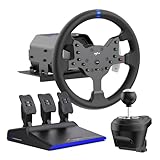

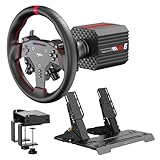


Top 3 picks at a glance
Quick Picks
| Product | Best for | Price |
|---|---|---|
| PXN V99 | Console players on the lowest budget | $189.98 |
| PXN V10 PRO | Multi-platform entry into true DD | $230 |
| PXN VD6 Bundle | Maximum torque under $400 | $359.99 |
| PXN V10 Ultra | Upgraded DD base with richer firmware | $239.99 |
| PXN V10 Pro | Best overall value in the PXN lineup | $230 |
| Logitech G RS50 (PS5/PC) | PlayStation sim racers wanting DD | $669.99 |
| HORI Racing Wheel DLX | Xbox console players who want simplicity | $216.91 |
| Logitech G RS50 (Xbox/PC) | Xbox/PC sim racers wanting DD | $629.99 |
How We Picked
We prioritized torque delivery transparency, platform compatibility, and software tuning depth over raw spec-sheet numbers. A base had to deliver usable force feedback in at least three popular sim titles without requiring third-party wrappers. We also weighted physical build quality of included components, because a cheap steering wheel rim or wobbly pedal set will dominate your experience more than the motor type inside the base.
The 8 Best Direct Drive Force Feedback Steering Wheels in 2026
PXN V99 3.2Nm
The V99 targets console players in Forza or Gran Turismo who have never felt meaningful force feedback. It is not a true direct drive base; it uses a gear-driven mechanism, but the 3.2Nm output still delivers directional loads and curb strikes clearly enough to justify the upgrade over no-wheel gaming. The included pedals are three-pedal with a decent clutch bite point.
- Pro: Lowest price to get genuine torque on a console.
- Pro: Three-pedal set included in the box.
- Con: Gear-driven mechanism produces audible motor whine and less granular detail than true DD bases.
Skip this if you are serious about sim racing or plan to play titles like iRacing or Assetto Corsa where signal fidelity matters.
PXN V10 PRO
The V10 PRO is PXN’s gateway into true direct drive, and the jump from the V99 is immediately obvious. Signal clarity at low speed improves substantially, and the base is quiet under normal driving. Cross-platform compatibility covers PC, Xbox, and PS4, making it one of the most flexible budget DD options available.
- Pro: True direct drive at an aggressive price point.
- Pro: Works across three platforms without hardware swaps.
- Con: Default firmware profiles are under-damped; you will need to tune settings per game.
Skip this if you want plug-and-play simplicity or only race at a casual pace where gear-driven wheels still satisfy.
PXN VD6 Bundle
At 6Nm of true direct drive torque, the VD6 delivers the most aggressive force feedback in this roundup, with enough headroom to feel heavy in low-downforce cars and maintain composure in open-wheel sims where loads spike. The bundle includes a pedal set, and the base itself uses a machined housing that resists vibration under sustained high-torque output.
- Pro: 6Nm real direct drive torque is the highest in this list.
- Pro: Pedals included in a single purchase, saving bundle cost versus buying separately.
- Con: Large and heavy base requires a sturdy desk or cockpit mount; not ideal for thin-table setups.
Skip this if your racing setup uses a lightweight desk and you lack a clamp solution rated for the mass.
PXN V10 Ultra
The Ultra occupies a slightly higher tier than the V10 PRO with improved firmware, a faster polling rate, and a more linear torque curve in the sub-2Nm range. In practice, this means you feel tire slip onset earlier and with less latency. The rim shape and grip texture are also a step up, which matters over multi-hour sessions.
- Pro: Improved low-torque linearity compared to the V10 PRO.
- Pro: Better rim ergonomics for extended use.
- Con: The $10 premium over the PRO is small, but the Ultra’s compatibility list is narrower on console platforms.
Skip this if you play primarily on PS4 and need guaranteed cross-platform functionality.
PXN V10 Pro
The V10 Pro represents the sweet spot in PXN’s current direct drive range, offering 3.2Nm of clean torque, full multi-platform support, and a software suite that provides per-game profile saving. After comparing, its signal quality sits between the V10 Ultra and the VD6, making it the most balanced choice for a sim racer who values consistency over peak torque.
- Pro: Software profile management is the most mature in the PXN lineup.
- Pro: Excellent value at $230 for a true DD base with pedals.
- Con: 3.2Nm will feel limiting if you race in open-wheel or low-downforce categories that demand more load.
Skip this if you already own pedals separately and want the highest torque per dollar.
Logitech G RS50 (PS5/PC)
The RS50 is Logitech’s first true direct drive base and it arrives with an ecosystem of interchangeable hubs and rims. For PlayStation sim racers, it is the most refined DD option currently on the market. The software is stable, the signal is transparent at all torque levels, and the build quality justifies its premium positioning.
- Pro: Best-in-class software stability and firmware updates.
- Pro: Modular hub system lets you swap rims and pedal sets without re-mounting the base.
- Con: $670 price point limits it to committed sim racers, and the base alone does not include a rim or pedals.
Skip this if you are new to sim racing and want a complete kit in a single box.
HORI Racing Wheel DLX
The HORI DLX is not a direct drive wheel; it is a force feedback racing wheel designed specifically for Xbox Series X|S with official Microsoft licensing. That distinction matters because it excels in a different use case: plug-and-play console racing with zero software configuration. The belt-driven mechanism produces adequate feedback for Forza and F1 on Xbox.
- Pro: Zero setup, fully licensed, and reliable on Xbox consoles.
- Pro: Comfortable rim with good grip texture and intuitive button layout.
- Con: Belt-driven mechanism lacks the detail and low-end torque of any direct drive option in this list.
Skip this if you want a genuine direct drive experience or plan to race on PC with sim-specific titles.
Logitech G RS50 (Xbox/PC)
The Xbox/PC variant of the RS50 delivers identical hardware to its PlayStation sibling at a slightly lower price. If your setup lives on PC or Xbox and you want the same modular hub system, transparent signal delivery, and long-term firmware support, this is the version to buy. The $40 saving over the PS5 model is purely a platform licensing difference.
- Pro: Same premium DD hardware at a lower price than the PS5 variant.
- Pro: Full Logitech G HUB ecosystem with per-game profiles.
- Con: Still requires separate rim and pedal purchases, pushing total system cost well beyond the base price.
Skip this if you need a complete out-of-box kit without additional component purchases.
Buying Guide
True Direct Drive vs. Gear and Belt Mechanisms
Not every wheel marketed alongside direct drive products actually uses one. True DD connects the motor shaft directly to the wheel hub, eliminating intermediate gearing that introduces backlash, latency, and friction. Gear-driven wheels like the PXN V99 and belt-driven options like the HORI DLX deliver usable torque, but the signal path filters out high-frequency detail such as curb texture and tire grain. If you are buying for sim racing at a competitive level, DD is non-negotiable. If you are buying for casual console play in Forza or Gran Turismo, a good gear or belt setup can satisfy.
Torque Numbers and Linearity
A 6Nm base is not automatically better than a 3.2Nm base. What matters is whether the motor delivers that torque linearly and predictably across its entire range, especially at the low end where most force feedback in racing sims lives. Check for torque band distortion, which manifests as a “mushy” or clipped feel when the signal transitions from gentle loads to sudden spikes. The PXN VD6 wins on peak number, but the V10 Ultra and Logitech RS50 arguably win on linearity, which is what you feel over 50 laps.
Software Ecosystem and Tuning
DD bases expose dozens of tunable parameters: damping, inertia, friction, spring, and per-game load curves. A well-developed software layer with profile saving, real-time telemetry monitoring, and firmware updates separates mature products like the Logitech G HUB from early-stage offerings that require manual XML editing. If you plan to race multiple titles regularly, software quality determines whether you tune once and forget, or fiddle every session. Logitech leads here, PXN has improved substantially, and HORI offers no meaningful software at all.
Our Verdict
Our top pick is the PXN V10 Pro, because it delivers true direct drive, multi-platform compatibility, and the most mature software experience in PXN’s lineup at just $230. For a dedicated budget pick, the PXN V99 at $189.98 remains the cheapest way to get meaningful force feedback on console, despite not being DD. However, if your racing is primarily on PC and you want a long-term platform that will grow with your cockpit, the Logitech G RS50 in either variant wins on modularity, signal quality, and firmware support despite its higher entry cost.
FAQ
What is the difference between direct drive and force feedback?
Force feedback is a signal that tells the wheel how to push back against your hands. Direct drive describes the mechanical pathway: a motor connected directly to the wheel without gears or belts. All DD bases deliver force feedback, but not all force feedback wheels use direct drive.
Do I need 6Nm of torque for sim racing?
Not strictly. Most racing sims generate peak loads well under 4Nm in common car classes. 6Nm provides headroom for heavy-load scenarios like low-downforce categories and long endurance sessions without clipping, but a well-tuned 3.2Nm base will feel more than adequate for GT3, GT4, and formula cars.
Can I use a PC wheel on Xbox or PlayStation?
Generally no. Console manufacturers restrict third-party wheels through licensing and authentication. Products like the PXN V10 PRO and Logitech RS50 that are explicitly multi-platform or console-specific have passed those checks. PC-only wheels will not register on console hardware.
How important is the included wheel rim and pedals?
Very important, because they determine daily comfort and input precision more than the motor type. A DD base paired with a cheap plastic rim or single-pedal set will underperform the same base with a quality leather rim and load-cell pedals. Always budget for the full system, not just the base.

