A garage is the hardest room in the house for a smoke alarm. Car exhaust, sawdust, paint fumes, humidity, and swings from freezing nights to hot afternoons can all trip a sensor that works perfectly in a hallway. Some manufacturers also state in their instructions that standard smoke alarms are not meant for garages at all because of those temperature and contamination limits. So the decision behind this keyword is not simply which alarm is loudest. It is which type of detector belongs in a space with fumes and temperature extremes, and how to connect it to the rest of the home.
This guide is for homeowners with an attached garage that shares a wall with bedrooms, workshop owners with a detached building, and anyone converting a bay into a hobby room. The list covers one dedicated heat detector, several photoelectric smoke alarms with sealed 10-year batteries, and hardwired options that can interconnect. Everything here comes from the product titles, so read the installation manual of any model before mounting it in a garage, and use the 2026 code requirements in your area as the final word.
Our Top Picks
 SITERWELL Smoke Detector Fire Alarms 9V Battery Operated1 Pack3.93 x 3.93 x 1.37 Inches0.22 poundsCheck on Amazon


Top 3 picks at a glance
Quick Picks
As an Amazon Associate we earn from qualifying purchases at no extra cost to you.


| Product | Best for | Key spec from the title |
|---|---|---|
| Kidde Heat Detector | Garage ceilings where smoke alarms nuisance-trip | Hardwired, battery backup, 2 LEDs, interconnect capability |
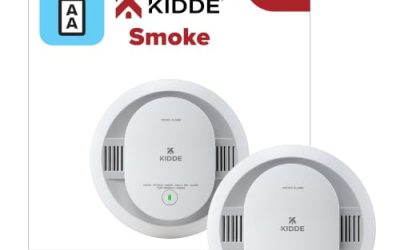
| X-Sense SD2J0AX | Hallway or door between house and garage | 10-year battery, UL 217 certified, photoelectric |
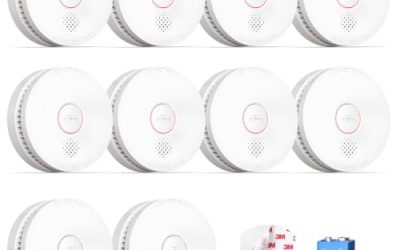
| SITERWELL 10-Year Alarm | No-maintenance battery coverage | 10-year product life, photoelectric sensor |
| Kidde Compact 10SDR | Small spaces and utility rooms | 4-inch body, AA battery, 85 dB alarm |
| SITERWELL 9V Alarm | Simple replacement of an old battery unit | 9V battery, silence button, low battery warning |
| First Alert BRK SMI100-AC | Wiring several rooms at once | Hardwired with battery backup, 6-pack |
How to Choose
Heat detector or smoke alarm
A heat detector reacts to temperature rise, not to particles, so exhaust and dust do not trigger it. That makes it the cleaner choice for the garage itself, while photoelectric smoke alarms belong in the adjoining house rooms. Heat detectors do not give early warning of slow smoldering fires, so they work best as part of a layered setup. Check the rated operating temperature range on the spec sheet and compare it to the coldest and hottest days your garage sees.
Sensor type and certification
Photoelectric sensors respond better to slow, smoky fires and tend to produce fewer cooking false alarms than ionization types. Look for UL 217 for smoke alarms and the matching listing for heat devices. Certification is the quickest way to separate a real safety device from a generic import with a nice box. Titles that say 10-year product life should also state a replace-by date on the unit itself.
Power and interconnection
Hardwired units with battery backup keep running through outages and can interconnect, so a trigger in the garage sounds the alarms in the bedrooms. Battery-only alarms are easier to install in a detached building where there is no wiring. A sealed 10-year battery avoids chirping at 3 a.m. but means the whole unit gets replaced at end of life. A 9V or AA model lets you swap batteries but needs a yearly habit of doing so. Interconnected hardwired devices must be the same brand and compatible series, so do not mix them casually.
Placement, noise, and cost tiers
Mount alarms on the ceiling away from the garage door, vents, and fans. Look for an 85 dB or louder alarm, a hush or silence button, and a low battery warning. Budget models often skimp on documentation and long-term support, mid-range models add certifications and hush functions, and premium sets bundle interconnection. Ignore marketing about smart features if the unit is only meant to sound a local alarm.
One more practical point: a garage with a car that sits warm after a drive, or a space-heater corner in a workshop, can create false trips near a ceiling-mounted sensor. Keep devices a few feet away from heat sources and from the door where cold air rushes in during winter.
Finally, think about who hears the alarm. A detached garage with nobody inside at night needs a signal that reaches the house, which usually means interconnection or a connected sensor. An attached garage under a bedroom needs the loudest, fastest warning possible, so the heat detector and the photoelectric alarms should be on the same system.
The 6 Best Options
Kidde Heat Detector
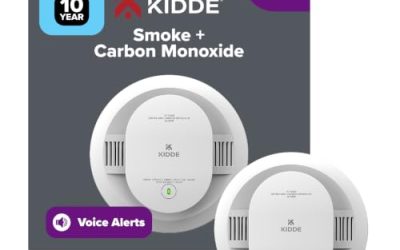
This is the only dedicated heat detector in the group, and its title points straight at garages. It is hardwired with battery backup, carries two LEDs, and offers interconnect capability, so it can trigger the other alarms in the house. Because it responds to temperature rise rather than particles, it sidesteps the exhaust, dust, and humidity that make smoke sensors cry wolf in a car bay. It is the logical anchor for an attached garage, with smoke alarms handling the living space around it.
- Strength: Heat sensing avoids the usual garage nuisance triggers.
- Strength: Interconnect capability lets it signal the rest of the house.
- Trade-off: Hardwiring means electrical work, and it will not give early smoke warning.
Skip it if the garage has no wiring and you only want a stick-on battery device.
X-Sense SD2J0AX
A photoelectric alarm with a 10-year battery and UL 217 certification, aimed at fewer cooking nuisance alarms and equipped with a one-button hush. This listing is a single unit, which makes it a tidy fit for the hallway or the door between garage and house, where a smoke alarm is useful and temperature swings are milder. The certification gives you a named standard to verify instead of a vague promise.
- Strength: UL 217 certification provides a clear standard to check.
- Strength: The hush button handles brief false triggers without pulling the battery.
- Trade-off: It is a sealed unit, so the whole alarm is replaced after ten years.
Skip it if you need a device rated specifically for the garage environment itself.
SITERWELL 10-Year Alarm
The SITERWELL pairs a photoelectric sensor with a battery rated for a ten-year product life and a low battery warning. It targets buyers who want to mount it once and forget it, whether in a bedroom hallway, a spare room, or a small outbuilding with no wiring. Photoelectric sensing is the type commonly favored for slow, smoky fires, which are the dangerous ones overnight. For a bedroom hallway, that profile is a sensible match, and the sealed battery means one less ceiling visit.
- Strength: No battery changes for the stated life of the device.
- Strength: Photoelectric sensing responds well to slow smoky fires.
- Trade-off: The title does not mention interconnection, so assume it alerts locally only.
Skip it if you want one fire in the garage to sound every bedroom alarm.
Kidde Compact 10SDR
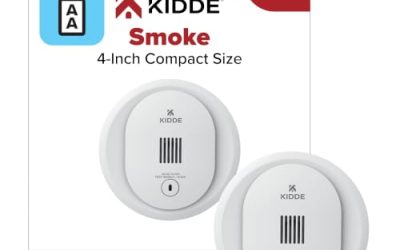
A four-inch smoke alarm running on AA batteries, with LED status lights and an 85 dB horn. The small body is built for tight spots, which makes it sensible in a utility room, a laundry nook, or a hobby corner that opens onto the garage. AA cells are cheap and found everywhere, so keeping it powered never requires a special trip. It is a smoke alarm, though, not a garage-rated device, so treat it as a companion to a heat detector rather than a replacement for one.
- Strength: Compact body fits small rooms and tight ceilings.
- Strength: Standard AA batteries are inexpensive and easy to swap.
- Trade-off: Batteries need regular replacement, and a smoke sensor may false-trip near fumes.
Skip it if you want a sealed long-life battery or hardwired power.
SITERWELL 9V Alarm
This photoelectric alarm runs on a 9V battery and lists a silence button, a low battery warning, and easy installation. It is a natural swap for an older battery detector in a hallway or bedroom, and it asks for nothing more than a screwdriver. Buyers who already stock 9V batteries for other gadgets will find it the least fussy way to add a photoelectric sensor to a room. The low battery warning gives you a chirp well before coverage lapses.
- Strength: Simple installation with no wiring involved.
- Strength: The silence button deals with minor false alarms.
- Trade-off: Yearly battery replacement is a chore that people forget.
Skip it if you would rather never think about batteries again.
First Alert BRK SMI100-AC
The only multi-pack aimed at whole-home wiring, this six-pack is hardwired with battery backup. It suits owners who are updating several rooms at once and want matching units across the house, including the rooms that border the garage. Matching devices are important in a hardwired system, because mixing series can break interconnection. The battery backup keeps protection alive through an outage. Because the pack is all one model line, replacing a failing unit later is straightforward.
- Strength: Six matching units cover multiple rooms in one purchase.
- Strength: Battery backup keeps protection running during power cuts.
- Trade-off: Installation needs existing wiring or an electrician.
Skip it if you only need one alarm for a detached building.
Which One Fits Your Situation
Attached garage with a bedroom above it
Put the Kidde Heat Detector in the garage and a First Alert BRK SMI100-AC in the rooms above and beside it, so an interconnected chain protects sleepers.
Detached workshop with no wiring
The SITERWELL 10-Year Alarm gives no-maintenance coverage, though a heat device is still the better fit if the manual allows battery heat alarms.
Replacing an old alarm in the entry hall
The X-Sense SD2J0AX is a tidy single unit with UL 217 certification for the door to the garage.
Tight budget and a small utility room
Use the Kidde Compact 10SDR for AA simplicity, or the SITERWELL 9V Alarm if you already stock 9V batteries.
Common Mistakes
- Mounting a standard smoke alarm in the garage despite manufacturer warnings about fumes and temperature.
- Placing any detector next to the garage door, a vent, or a heater where airflow causes false trips.
- Mixing brands in an interconnected hardwired system without confirming compatibility.
- Ignoring the replace-by date printed on a 10-year unit.
- Skipping local code, which can require alarms in specific rooms regardless of garage coverage.
Related guides
- What Is The Best Budget Most Responsive Gaming Mouse Wired
- Low Latency Gaming Headphones Usb-C 2.4 Ghz Wireless
- Mechanical Gaming Keyboards Competitive Pc Gaming
Frequently Asked Questions
Should a garage have a smoke alarm or a heat detector?
Many installation guides steer garages toward heat detectors because exhaust and dust confuse smoke sensors. Smoke alarms still belong in the connected living spaces. Read the manual and local code for your case.
Can I interconnect a garage detector with house alarms?
Only if the models support it and are compatible. Hardwired units with an interconnect feature, like the Kidde heat detector listed here, are designed for this use.
Are 10-year battery alarms worth it?
They remove battery chores and chirping, but the whole unit must be replaced at the end of its life. For hard-to-reach ceilings that trade is usually acceptable.
How many alarms does a home need?
Codes commonly call for one on each level and inside or near every sleeping area. Check your local rules, since requirements differ by region.