Most smoke alarms are loud enough on paper and still fail the real-world test of waking a sound sleeper behind a closed door. The question behind “loud smoke detectors” is whether the alarm will be heard at the far end of a hallway, over a fan or a white-noise machine, or by someone with mild hearing loss. Volume is only part of it, though: a loud alarm that triggers every time you sear a steak gets its battery pulled, and a silent one protects nobody.
This guide is for households that want a dependable, audible alarm without constant nuisance trips, whether in an apartment, a bedroom wing, or a house with a long hallway. The six picks include battery models listing 85 dB, photoelectric 10-year units, and a hardwired interconnected alarm with battery backup. Only some titles quote a decibel number, so the notes separate stated volume from design features that reduce false alarms. In 2026, sealed 10-year battery alarms are common, but the right fit still depends on how your home is wired and laid out. Think about where people sleep, where cooking happens, and how far the farthest bedroom is from the nearest alarm before you choose a model.
Our Top Picks


Top 3 picks at a glance
Quick Picks
As an Amazon Associate we earn from qualifying purchases at no extra cost to you.


| Product | Best for | Key spec from the title |
|---|---|---|
| Kidde 20SDR smoke detector | Standard homes and apartments | AA battery, LED status lights, loud 85 dB alarm |
| Kidde Compact 10SDR | Small rooms and tight spaces | 4-inch body, AA battery, loud 85 dB alarm |
| SITERWELL 10-pack smoke detectors | Whole-house coverage in one order | 10-year life, photoelectric sensor |
| SITERWELL 9V battery smoke alarm | Simple single-room replacement | 9V battery, photoelectric, fewer false alarms |
| X-Sense SD2J0AX | Kitchens and cooking-prone homes | 10-year battery, UL 217 certified, one-button hush |
| SITERWELL hardwired interconnected alarm | Homes with existing wiring | Hardwired with 9V backup, test and silence button |
How to Choose
Look for a stated decibel level and the standard behind it
The common reference level for residential alarms is at least 85 dB measured at 10 feet. Two Kidde models here name 85 dB in their titles. Others do not state a number, which is not a reason to rule them out but is a reason to read the product page. Bedroom doors, thick walls, and white-noise machines all reduce what a sleeper hears, so treat 85 dB as the floor, not the goal. If a family member sleeps with earplugs, uses a loud fan, or has reduced hearing, plan for alarms in every bedroom and interconnection rather than relying on a single hallway unit.
Choose the sensor type that matches your risk
Photoelectric sensors respond well to slow, smoldering fires and are less prone to cooking false alarms. Several listings here, including the X-Sense and the SITERWELL models, are described as photoelectric. If you place an alarm near a kitchen, bathroom, or garage entry, a photoelectric design with a hush button is much easier to live with than a hair-trigger unit. Ionization-only designs are usually the ones that react fastest to flaming fires but also trip most often on cooking smoke, which is why many households add a photoelectric alarm near the kitchen.
Decide on power: AA, 9V, sealed 10-year, or hardwired
AA and 9V models need battery changes, usually once or twice a year. Sealed 10-year batteries remove that chore, but the whole unit is replaced at the end of its life. Hardwired alarms with battery backup tie into household power and can interconnect, so one alarm sounds them all. Interconnection matters in long or multi-story homes, where a single alarm may not be loud enough at the far end. Whatever the power source, mark the install or replacement date on the unit so the schedule does not rely on memory.
Check certifications, ignore the gimmicks
UL 217 certification, which the X-Sense title cites, is the standard for smoke alarms in the United States. Low-battery warnings, test buttons, and silence buttons are genuinely useful. Budget models cut corners on sensitivity tuning and on how clearly they warn when a battery is dying, so look for a clear chirp pattern, an easy test button, and a manufacturer name you can find again. Resist the urge to buy by pack size alone; one trusted alarm per bedroom beats a larger bundle of units you never maintain.
The 6 Best Options
Kidde 20SDR Smoke Detector (1 Pack)
This AA battery-powered Kidde detector advertises LED status lights and a loud 85 dB alarm, aimed at homes and apartments. It is the natural pick for buyers who want a recognizable brand, a decibel number on the box, and a unit that is easy to mount. A single pack suits a replacement in a hallway or a landing, and the familiar name makes it simple to buy matching spares later.
- Strength: the 85 dB figure appears in the title.
- Strength: LED status lights make it easy to see that the alarm is working.
- Trade-off: AA batteries mean you must keep up with replacements.
Skip it if you want a sealed 10-year battery or an interconnected alarm, since each unit sounds only for its own smoke.
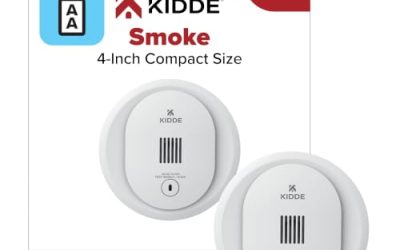
Kidde Compact 10SDR Smoke Detector
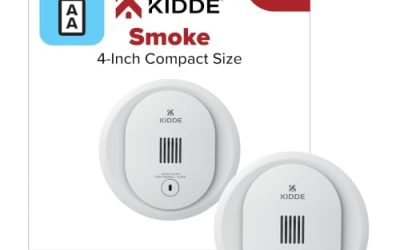
The 10SDR is a 4-inch compact smoke alarm with AA battery power, LED status lights, and the same loud 85 dB alarm. It suits small rooms, closets, and tighter ceilings where a larger body looks bulky. Small-room placement is also where a compact ceiling unit tends to be most useful, because the sound has less distance to travel before it reaches a sleeper.
- Strength: a 4-inch body is less obtrusive on a ceiling.
- Strength: it names 85 dB and LED status lights in the title.
- Trade-off: AA battery power requires regular changes.
Skip it if you want interconnection or a long-life sealed battery that removes routine maintenance.
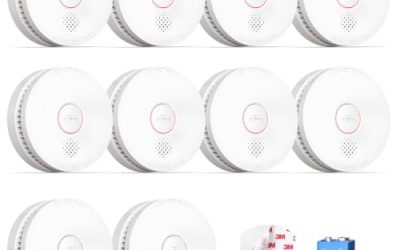
SITERWELL 10-Pack Smoke Detectors
SITERWELL’s 10-pack lists a 10-year product life, a photoelectric sensor, and a low-battery warning. It is the practical pick for landlords, large houses, or anyone outfitting every bedroom and hallway at once and wanting identical units throughout. Matching units simplify maintenance, because every alarm has the same chirp pattern, the same test button, and the same replacement date.
- Strength: ten units cover a multi-room home or a rental building in one order.
- Strength: the photoelectric sensor and low-battery warning are named in the title.
- Trade-off: the visible title does not give a decibel figure.
Skip it if you only need one alarm or want a stated volume before ordering, since ten units are a large commitment for a single apartment.
SITERWELL 9V Battery Smoke Alarm
This small SITERWELL alarm runs on a 9V battery, uses a photoelectric sensor, and aims to reduce false alarms. It is a simple, no-wiring replacement for a bedroom or hallway where an old alarm has failed. The small body and the familiar battery type make it an easy swap that rarely needs new drilling, which matters in a rental where the ceiling should stay unmarked.
- Strength: the photoelectric design is meant to cut nuisance alarms.
- Strength: easy installation with a common 9V battery.
- Trade-off: no decibel figure appears in the visible title.
Skip it if you want sealed batteries that never need changing, or if you need a stated decibel number before you buy.
X-Sense SD2J0AX Smoke Detector (1 Pack)
X-Sense lists a 10-year battery, UL 217 certification, a photoelectric sensor, fewer cooking nuisance alarms, and a one-button hush. It is built for kitchens and open-plan homes, where a standard alarm tends to trip on toast. A photoelectric sensor combined with a hush button means a smoky pan does not tempt anyone to remove the battery, which is the usual way alarms end up useless.
- Strength: UL 217 certification is explicit in the title.
- Strength: the one-button hush silences nuisance alarms quickly.
- Trade-off: the visible title gives no decibel figure.
Skip it if you want a hardwired or interconnected alarm, since this is a standalone unit with its own sealed power source.
SITERWELL Hardwired Interconnected Smoke Alarm
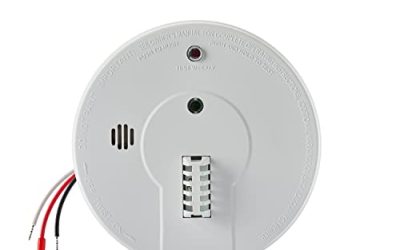
This SITERWELL alarm is a hardwired photoelectric unit with a 9V backup battery, interconnection, and a test and silence button. It fits homes that already have alarm wiring and want every unit to sound together. In a two-story house, that shared warning is the strongest argument for choosing a hardwired design, because the sound travels from wherever the smoke is detected.
- Strength: interconnection makes one trigger sound the whole system.
- Strength: a 9V backup keeps it working during a power outage.
- Trade-off: hardwired installation may require an electrician.
Skip it if you rent or have no existing alarm wiring, because a hardwired install may need permission and a qualified electrician.
Which One Fits Your Situation
You want a stated volume in the title
Choose the Kidde 20SDR or the Kidde Compact 10SDR, which both quote 85 dB. The compact version suits a small bedroom, while the standard unit is the easier choice for a landing or hallway.
Your kitchen alarm keeps going off during dinner
The X-Sense SD2J0AX is built around fewer cooking nuisance alarms and a one-button hush. Placing it at a sensible distance from the stove, rather than directly above it, helps further.
You own a long house with several bedrooms
The SITERWELL hardwired interconnected alarm makes every unit sound together, which helps in long hallways. It is also the best fit for a house where one person sleeps with the door closed at the far end of a corridor.
You manage a rental or need many alarms at once
The SITERWELL 10-pack covers the whole property in one order. Pair it with a single hardwired unit near the main stairs if you want a stronger shared warning.
Common Mistakes
- Assuming every alarm is equally loud when only some titles state a decibel level.
- Placing an alarm directly beside a kitchen or shower and then disabling it after the first nuisance trip, which leaves the room unprotected.
- Forgetting to track battery change dates on AA and 9V models.
- Mixing different alarm types in a house that needs interconnection.
- Ignoring the replacement date on sealed 10-year units, which are designed to be swapped as a whole after their listed life ends.
Related guides
- What Is The Best Budget Most Responsive Gaming Mouse Wired
- Low Latency Gaming Headphones Usb-C 2.4 Ghz Wireless
- Low Latency Gaming Headphones Usb-C Dongle 2.4 Ghz
Frequently Asked Questions
How loud should a smoke alarm be?
The usual residential reference is at least 85 dB at 10 feet. Interconnected systems and bedroom placement help when you need more reach, particularly for deep sleepers.
Are photoelectric alarms better?
They detect slow, smoldering fires well and tend to cause fewer cooking false alarms. Many households use them near kitchens and bedrooms for that reason, often alongside a second type elsewhere.
Do 10-year alarms need battery changes?
Sealed 10-year models do not have replaceable batteries. You replace the whole alarm at the end of its listed life.
Should alarms be interconnected?
In larger or multi-story homes, yes. When one alarm sounds all of them, people hear it sooner, wherever they are in the house, and the warning reaches closed bedrooms far from the source.