A vacation home thermostat has a different job from the one in your primary residence. The house sits empty for weeks, then fills up on a Friday night and needs to feel comfortable within an hour. In between, the thermostat must keep pipes from freezing in winter and keep humidity and heat from damaging the place in summer, all while you are hundreds of miles away. That job favors remote access and a reliable setback range over fancy color screens. A thermostat that cannot be reached from your phone leaves you guessing whether the furnace kicked on during a cold snap, and a guess is an expensive way to protect a second property.
This guide is for owners of cabins, beach houses, and seasonal condos choosing between a simple programmable unit and a Wi-Fi model they can adjust from a phone. The six thermostats below split into three groups: basic non-Wi-Fi units, Wi-Fi smart thermostats with app control, and one touchscreen option with geofencing. Judgments rely on the listed specs only, and the main compatibility rule is checking your heating and cooling system before you buy. If you are shopping in 2026, also look at how long each brand has supported its app, because a thermostat you rarely touch can quietly fall out of date between visits.
Our Top Picks

Top 3 picks at a glance
Quick Picks
As an Amazon Associate we earn from qualifying purchases at no extra cost to you.



| Product | Best for | Key spec from the listing |
|---|---|---|
| Honeywell Home X2P (RTH20B) | Simple scheduled setback without Wi-Fi | Programmable, 1 Heat/1 Cool, 5-2 day schedule |
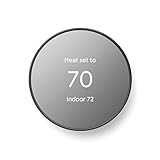
| Google Nest Thermostat | Easy phone control for remote stays | Programmable Wi-Fi thermostat, charcoal finish |
| Suuwer Non-Programmable Thermostat | Set-it-and-forget-it holding temperature | 1 Heat/1 Cool single-stage, blue backlight |
| Sensi Smart Thermostat ST55 | DIY installers who want Alexa | Wi-Fi, Alexa support, Energy Star certified |
| vine Smart Thermostat | Detailed weekly scheduling | 7-day, 8-period programmable, Alexa and Google Assistant |
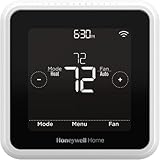
| Honeywell Home T5 Smart Wi-Fi (RTH8800WF2022) | Pre-arrival warming with geofencing | 7-day programmable touchscreen, C-wire required |
How to Choose
Decide whether you need remote access
If the house is empty for weeks, a Wi-Fi thermostat lets you check that the heat is still running and raise it before you arrive. This matters most in cold regions, where a failed furnace can mean burst pipes. Non-Wi-Fi models such as the Honeywell X2P and the Suuwer are cheaper and simpler, but you cannot see or change anything until you are standing in the hallway. Wi-Fi also depends on reliable internet at the property, so confirm you pay for service year-round. Some owners keep a low-cost plan active just for the thermostat and a camera, and that monthly cost belongs in the decision. If the router loses power during a storm, the thermostat usually keeps its last schedule, but remote control will pause until the network returns.
Check system compatibility
Three listings above mention 1 Heat/1 Cool single-stage compatibility. Heat pumps, multi-stage furnaces, and baseboard heaters (line voltage) need different thermostats. Count the wires behind your current thermostat and photograph them before you shop. The Honeywell T5 states that a C-wire is required, which is a common power wire missing from older homes. Some Wi-Fi models can borrow power from other wires, but older cabins often have only two or three conductors, and running a new cable through plaster or log walls is rarely worth the effort. Check the wiring before you fall for a feature list.
Look at scheduling flexibility
A 5-2 day schedule gives one routine for weekdays and another for weekends, which fits a house used on weekends. A 7-day, 8-period schedule offers far more detail, but vacation homes rarely follow a daily routine, so geofencing or app control often beats a complex program. A schedule only helps when somebody is there to follow it, and guests who arrive on a Thursday instead of a Friday will find the house cold if the program is rigid. Flexibility beats precision at a second home.
Think about setback and safety
Whatever you choose, confirm you can set a low heating temperature while the house is vacant, and a high one for cooling. Budget models cut corners on app reliability, notifications, and sensor features, so ignore extra screens or backlight colors and focus on the temperature range and alerts. Also look at how the thermostat behaves after a power cut: it should return to your schedule on its own, without a setup screen waiting for a button press.
The 6 Best Options
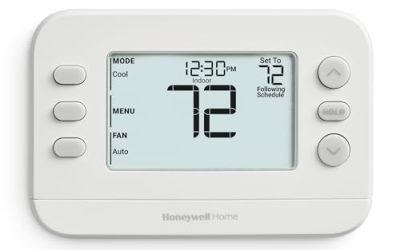
Honeywell Home X2P (RTH20B)
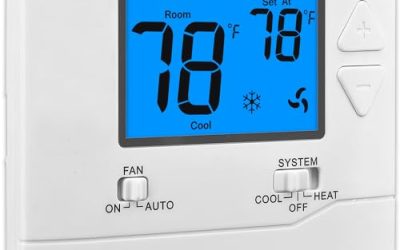
The X2P is a straightforward programmable thermostat with a 5-2 day schedule for single-stage systems. It suits owners who visit every weekend and want a predictable routine, with a lower temperature set for the empty days and a comfortable one for arrival. There is no app to maintain and no account to forget the password for, which some owners count as a benefit for a house that sits empty most of the month.
- Strength: the 5-2 day program fits a weekend-use house.
- Strength: a familiar Honeywell design is easy to set up on 1 Heat/1 Cool systems.
- Trade-off: no Wi-Fi is listed, so no remote checks.
Skip it if you are far from the property and want to monitor it, or if your guests arrive on irregular days.
Google Nest Thermostat
The Nest is a programmable Wi-Fi thermostat in a charcoal finish, built for people who prefer to adjust things from a phone. It is a natural choice if you already use Google’s home apps and want to adjust the house from the road. Checking in before a long drive and raising the heat means walking into a warm room instead of a cold one, which is the single biggest comfort gain at a seasonal property.
- Strength: Wi-Fi control lets you warm the house before arrival.
- Strength: the listing calls it programmable, so schedules are possible.
- Trade-off: the visible title does not state system compatibility, so check your wiring.
Skip it if the property has no dependable internet, or if your system is not a simple single-stage setup.
Suuwer Non-Programmable Thermostat
This unit is for single-stage 1 Heat/1 Cool systems and keeps one temperature until you change it. A blue backlight helps you read it in a dim cabin hallway. For an owner who wants the thermostat to disappear into the wall and simply keep the place from freezing, a unit with nothing to program is hard to get wrong, and guests cannot accidentally scramble a schedule.
- Strength: nothing to program, so nothing to forget.
- Strength: conventional single-stage compatibility is clearly stated.
- Trade-off: no schedule and no remote access.
Skip it if you want energy savings through automated setbacks, since you would have to change the temperature by hand every time you arrive or leave.
Sensi Smart Thermostat ST55
The Sensi pairs Wi-Fi with DIY installation, Alexa support, and Energy Star certification. It suits owners who plan to install it themselves and want to check in through an app. Because the house is far away, a thermostat that a handy owner can swap in a single weekend avoids paying a contractor for a short visit.
- Strength: DIY installation keeps labor costs down.
- Strength: Energy Star certification signals efficiency standards.
- Trade-off: the listing does not give schedule details in the visible title.
Skip it if you want a touchscreen or geofencing, or if your wiring lacks the common wire some smart models need.
vine Smart Thermostat
The vine is a Wi-Fi thermostat with Alexa and Google Assistant compatibility and a 7-day, 8-period programmable schedule. It is the most flexible scheduler of the group, and it is Energy Star certified. If you rent the home to guests, a detailed schedule lets you set comfortable temperatures for check-in hours and economical ones for cleaning days, all without being on site.
- Strength: the 7×8 schedule allows detailed routines for rental guests.
- Strength: works with both major voice assistants.
- Trade-off: it is a less established brand, so check support terms.
Skip it if you prefer a well-known name on the wall or want a long record of app support from a large brand.
Honeywell Home T5 Smart Wi-Fi (RTH8800WF2022)
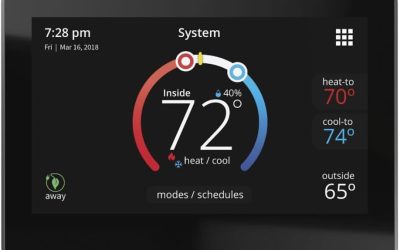
The T5 combines a touchscreen, 7-day programming, Alexa readiness, and geofencing, which can sense when your phone nears the house. That makes it the most automatic choice for a place you arrive at unpredictably. Instead of leaving the heat high for a weekend that may never happen, you can keep a low setback and let the phone trigger comfort as you approach.
- Strength: geofencing can start conditioning as you approach.
- Strength: Energy Star certification and a clear touchscreen.
- Trade-off: a C-wire is required, which may mean extra wiring.
Skip it if your thermostat has no spare wire for power, or if you would rather not depend on a phone location feature.
Which One Fits Your Situation
You visit most weekends on a set routine
The Honeywell Home X2P keeps a weekday and weekend program without needing internet, which makes it a calm choice for a cabin where the signal is weak.
You arrive at random times and want the house warm
The Honeywell Home T5 with geofencing is built for that pattern, since it can react to your phone as you near the driveway. The Google Nest Thermostat is the simpler alternative if you would rather tap an app than rely on location.
You rent the house to guests
The vine Smart Thermostat offers the most detailed schedule and works with both Alexa and Google Assistant.
The house is remote and internet is not guaranteed
The Suuwer Non-Programmable Thermostat avoids Wi-Fi reliance and simply holds the temperature you set. Set a safe low in winter or a safe high in summer before you leave, and the house stays protected without any network.
Common Mistakes
- Buying a smart thermostat for a location that loses internet during the off-season.
- Ignoring system type and installing a single-stage unit on a heat pump.
- Forgetting to check for a C-wire before choosing a model that needs one.
- Setting the vacant temperature too low or too high and risking pipes or humidity.
- Skipping alerts and low-temperature warnings, so a failed heater goes unnoticed for weeks.
Frequently Asked Questions
Do I need a smart thermostat for a vacation home?
Not strictly, but remote access gives peace of mind and lets you pre-warm the house. If the home has no internet, a simple programmable unit is more practical. A smart thermostat that cannot reach its network becomes an ordinary thermostat with extra steps.
What temperature should I leave it at?
Many owners keep winter heat in the low 50s Fahrenheit to protect plumbing, but climate and insulation vary. Check local guidance for your building, and ask your plumber or insurer if the house has older pipes or an unusual layout. A few degrees of margin costs little compared with a burst pipe.
Can I install these myself?
The Sensi listing states DIY installation, and most of these units mount like a standard thermostat. Turn power off at the breaker and photograph the wiring first.
What is a C-wire?
It is a common wire that supplies continuous power to the thermostat. Some Wi-Fi models, like the Honeywell T5, need one, and older homes sometimes lack it.