If your lights, speakers, and cameras already live in the Google Home app, the thermostat decision narrows quickly: you are choosing between Google’s own Nest models rather than comparing a dozen brands. The real fork is whether you want the simpler Nest Thermostat, which you program and adjust, or the Nest Learning Thermostat, which builds a schedule from how you use it and pairs with room sensors for uneven houses.
This guide is for homeowners and renters with permission to swap a wall thermostat who want voice control, remote adjustment, and energy-saving features inside the Google ecosystem. Eight listings are compared from their titles alone. Several differ only by finish, so this guide focuses on the model tiers, what each includes, and what to check at home in 2026 before you order, especially wiring and heating system type.
Our Top Picks
Top 3 picks at a glance
Quick Picks
As an Amazon Associate we earn from qualifying purchases at no extra cost to you.



| Product | Best for | Key spec from title |
|---|---|---|
| Nest Thermostat (Snow) | Light-colored walls | Programmable Wi-Fi thermostat |
| Nest Thermostat (Charcoal) | Dark or modern trim | Programmable Wi-Fi thermostat |
| Nest Learning Thermostat with Sensor (Obsidian) | Dark finish and multi-room comfort | 4th gen plus 2nd gen sensor |
| Nest Thermostat (Fog) | Soft gray decor | Programmable Wi-Fi thermostat |
| Nest Learning Thermostat with Sensor (Silver) | Metallic finish and learning schedules | 4th gen plus 2nd gen sensor |
| Nest Thermostat (Sand) | Warm neutral decor | Programmable Wi-Fi thermostat |
| Nest Learning Thermostat (4th Gen) with Sensor | Multi-platform smart homes | Alexa and Apple HomeKit compatibility listed |
| Nest Thermostat with Trim Kit | Covering old wall marks | Easy installation, trim kit bundle |
How to Choose
Learning versus standard
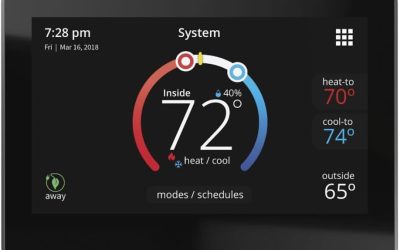
The standard Nest Thermostat is a programmable Wi-Fi unit: you set a schedule in the app, adjust it by voice or phone, and it handles the basics well. The Learning Thermostat studies your changes and builds the schedule for you. If your routine is predictable and you like control, the standard model is plenty. If you hate programming, the learning version removes that chore. The learning approach also tends to appeal to households with irregular schedules, where setting fixed weekday and weekend blocks never quite matches real life.
Check your heating and cooling system first
Before buying any smart thermostat, confirm your system type and wiring. Low-voltage forced-air systems are widely supported; line-voltage electric baseboard heat usually is not. Many Nest models work with or without a common wire, but verify against the compatibility checker for your equipment. A wrong match is the most common reason these installs go badly. Take a photo of the wires on your current thermostat before you disconnect anything, label each one, and note whether you have a heat pump, since that changes how the new unit must be configured.
Room sensors and uneven houses
If one bedroom runs warm while the hallway thermostat reads comfortable, a remote sensor solves a real problem by letting the system respond to temperature where you are. Two listings bundle the 2nd generation temperature sensor with the 4th generation Learning Thermostat. Standard Nest Thermostat listings here do not mention sensors, so factor in that you may be limited to one reading point. Where the thermostat sits also matters: a hallway near a vent or a window will skew readings, and a sensor in the room you actually use helps correct that.
Finish, trim, and extras that matter
Finishes are cosmetic, but a trim kit matters if your old thermostat left paint marks or a visible hole. Compatibility with other ecosystems, such as Alexa and Apple HomeKit in one listing, matters only if your household is mixed. Ignore small finish differences when comparing capability, because the same model name usually delivers the same core features across colors. Likewise, ignore bundle wording that sounds exciting but only repeats features the base thermostat already has.
The 8 Best Options
Nest Thermostat (Snow)
The Snow finish of the programmable Wi-Fi Nest Thermostat is the straightforward choice for homes with white or light walls. The title describes it as a smart thermostat for home with a programmable schedule, which suits people who want remote control and voice commands without paying for the learning tier. It is the easiest of this group to justify for rental-friendly, no-fuss upgrades.
- Strength: Wi-Fi control and programmable scheduling in a simple package.
- Strength: the light finish blends into bright walls.
- Trade-off: no sensor or learning capability is named in the title.
Skip it if you want automatic scheduling or multi-room sensing.
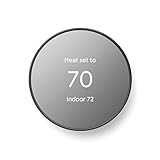
Nest Thermostat (Charcoal)
The Charcoal version offers the same programmable Wi-Fi feature set in a darker finish. It fits homes with darker trim, accent walls, or modern hardware where a bright white plate would stand out. Because the model is the same as its lighter siblings, the decision here is almost entirely about how it looks on your wall rather than how it performs.
- Strength: the same Wi-Fi and programmable scheduling as the other colors.
- Strength: a dark finish suits contemporary decor.
- Trade-off: dark plates can show dust and fingerprints more readily.
Skip it if your walls are pale and you would rather it disappear.
Nest Learning Thermostat with Sensor (Obsidian)
This bundle pairs the 4th generation Nest Learning Thermostat with a 2nd generation Nest Temperature Sensor in Obsidian. It targets households that want the thermostat to learn routines and also read the temperature in a second room. That makes it a stronger fit for larger or multi-level homes, where a single wall unit rarely tells the whole story.
- Strength: learning scheduling reduces manual programming.
- Strength: the included sensor expands where temperature is measured.
- Trade-off: it sits at the premium tier compared with the standard Nest Thermostat.
Skip it if you prefer to set a schedule yourself and have a small home.
Nest Thermostat (Fog)
Fog is a soft gray finish of the same programmable Wi-Fi thermostat. It is a good match for gray, greige, or mixed-neutral rooms where pure white looks stark and charcoal looks heavy. As with the other standard colors, the functionality is identical, and the buyer is really choosing a style that complements the wall and trim around it.
- Strength: a neutral middle-ground color.
- Strength: programmable Wi-Fi control from the Google Home app.
- Trade-off: no included sensor, so a single reading point.
Skip it if you want learning features or multi-room readings. Otherwise it is a quiet, dependable fit for neutral interiors.
Nest Learning Thermostat with Sensor (Silver)
The Silver bundle matches the Obsidian one in features, pairing a 4th generation Learning Thermostat with a 2nd generation temperature sensor. The lighter metallic finish tends to suit brushed-metal hardware and bright interiors. It is aimed at buyers who want automated scheduling and an extra temperature reading, but would rather not live with a dark plate on the wall.
- Strength: learning behavior plus sensor in one bundle.
- Strength: a lighter metallic look that suits many interiors.
- Trade-off: premium tier cost versus the standard thermostat.
Skip it if you only need basic scheduling at a lower cost.
Nest Thermostat (Sand)
Sand is a warm neutral finish for the programmable Wi-Fi Nest Thermostat. It works in rooms with beige, cream, or wood tones, where cooler grays can feel off. It is a good pick for people who care about visual harmony and want the same trustworthy scheduling and remote control that every standard Nest Thermostat provides.
- Strength: a warm tone that blends with earthy decor.
- Strength: remote and voice control through Google Home.
- Trade-off: the listing mentions no learning or sensor features.
Skip it if you want a bundle with an extra sensor.
Nest Learning Thermostat (4th Gen) with Sensor
This listing highlights energy saving and compatibility with Alexa and Apple HomeKit, in addition to the temperature sensor. That makes it the most attractive option for a mixed household where some members use different voice assistants or phones. The fourth generation learning design pairs with the sensor to handle uneven rooms while the broader compatibility reduces ecosystem lock-in.
- Strength: multi-platform compatibility is named in the title.
- Strength: an energy-saving focus with an included sensor.
- Trade-off: the title is cut off, so confirm which finish ships.
Skip it if your home is entirely Google and you want the cheapest route.
Nest Thermostat with Trim Kit
This white Nest Thermostat bundle is described as programmable and learning, with easy installation and a trim kit. The trim plate is the practical benefit: it covers paint gaps and old mounting holes left by a previous unit. It suits renovations and replacements where the wall behind the old thermostat does not look clean.
- Strength: the included trim kit hides wall damage.
- Strength: easy installation is emphasized in the title.
- Trade-off: only a white finish is offered in this bundle.
Skip it if your wall is already clean and you want a color other than white.
Which One Fits Your Situation
You want the simplest Google Home upgrade
Pick a standard Nest Thermostat in Snow, Fog, or Sand, depending on your walls. The programmable Wi-Fi feature set covers voice control and remote adjustment, which is what most households actually use day to day. It is also the easiest model to justify in a rental where you plan to take the unit with you.
Your house has hot and cold spots
Choose the Nest Learning Thermostat with Sensor in Obsidian or Silver so the system can read a second room instead of relying only on the hallway.
Your family uses mixed ecosystems
The Nest Learning Thermostat (4th Gen) with Sensor lists Alexa and Apple HomeKit compatibility, which suits households that do not live entirely in Google Home.
Your old thermostat left a mess
The Nest Thermostat with Trim Kit includes a plate to cover marks, so you avoid repainting before you can finish the swap. It is a small detail, but it is often what separates a tidy finished install from one that looks half done.
Common Mistakes
- Skipping the compatibility check for your heating and cooling equipment.
- Paying for the learning tier when a simple schedule would do.
- Assuming every standard model includes a remote sensor.
- Choosing a finish for decor and then forgetting the wall needs a trim plate.
- Ignoring the wiring, especially the common wire, before installation day.
Related guides
- What Is The Best Budget Most Responsive Gaming Mouse Wired
- Low Latency Gaming Headphones Usb-C 2.4 Ghz Wireless
- Low Latency Gaming Headphones Usb-C Dongle 2.4 Ghz
Frequently Asked Questions
Does a Nest Thermostat work with Google Home?
Yes, Nest thermostats are designed to work with the Google Home app and Google voice assistants. You can adjust temperature, schedules, and modes by voice or phone.
Do I need a common wire?
Many installs benefit from one, but requirements depend on your system and the model. Use the manufacturer’s compatibility checker before ordering. If your system needs a power accessory, factor that into your plan, and if the wiring looks unusual, a local HVAC technician can confirm compatibility in a short visit.
Is the Learning Thermostat worth the extra cost?
It is worth it if you dislike programming schedules or have uneven rooms that a sensor can fix. For a predictable routine, the standard model is often enough. Many households that start with the simpler unit find it handles everything they need through the Google Home app.
Does color change performance?
No. Color options like Snow, Charcoal, Fog, and Sand share the same model features and differ only in appearance. Pick the shade that suits your wall, because you will see it every day and the performance will be the same either way.