An energy-saving thermostat saves money in only one way: it stops your heating and cooling system from running harder or longer than the house needs. A basic digital model does that by holding a set temperature accurately and letting you lower or raise it by hand; a smart model adds schedules, away modes, and remote control so the setback happens without you thinking about it. Which approach pays off depends less on the hardware than on your habits, because a clever thermostat that you never program saves nothing.
This guide is for homeowners and renters with a standard single-stage furnace and air conditioner who want lower bills without hiring an electrician. Eight options appear below: five plain non-programmable digital units sold under generic names, plus three smart models from Sensi, an Alexa-and-Ring branded unit, and ecobee. The generic listings are nearly identical, so the text treats them as a family and points out what separates them. Facts come from the product titles, and you should verify wiring compatibility before buying in 2026.
Our Top Picks
Top 3 picks at a glance
Quick Picks
As an Amazon Associate we earn from qualifying purchases at no extra cost to you.


| Product | Best for | Key spec from the listing |
|---|---|---|
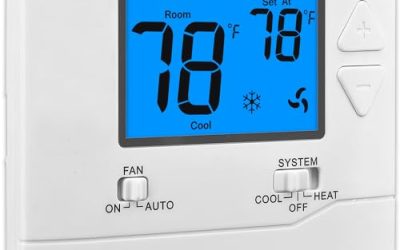
| Digital non-programmable thermostat, white backlight (first listing) | Simple, low-cost replacement | Single-stage, 1 Heat/1 Cool, DIY install |
| Digital non-programmable thermostat, white backlight (second listing) | Simple replacement in a standard system | Single-stage, 1 Heat/1 Cool, white backlight |
| Non-programmable thermostat, blue backlight (first listing) | Readable display in dim rooms | Single-stage, 1 Heat/1 Cool, blue backlight |
| Sensi Smart Thermostat ST55 | Wi-Fi control without a big learning curve | Wi-Fi, DIY, Alexa, Energy Star certified |
| Alexa-and-Ring Smart Thermostat | Alexa households | Works with Alexa and Ring, savings focus |
| Non-programmable thermostat, blue backlight (second listing) | Backup or rental unit | Single-stage, 1 Heat/1 Cool, DIY install |
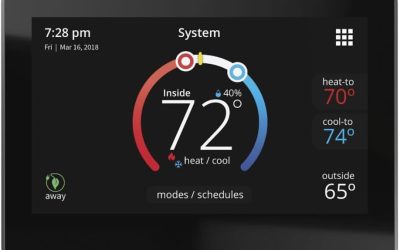
| ecobee Smart Thermostat Essential | Multi-platform smart homes | Programmable Wi-Fi, Siri, Alexa, Google, Energy Star |
| Digital non-programmable thermostat, white backlight (third listing) | Low-cost swap for a failed unit | Single-stage, 1 Heat/1 Cool, DIY install |
How to Choose
Confirm your system type before anything else
The generic units all state single-stage with 1 Heat and 1 Cool, which means they control a furnace and air conditioner that each have a single stage of output. They are not meant for multi-stage equipment or for heat pumps that use auxiliary or emergency heat. Look at the terminals on your current thermostat and at the label on your equipment. If you see wires marked W2, Y2, or O/B, you probably need a model that lists those connections, and you should read each smart thermostat’s compatibility page rather than assume it will work. Also note the voltage: these listings are aimed at standard low-voltage systems, typically 24 volts, and line-voltage baseboard heaters need a different kind of thermostat entirely. A five-minute look at the old unit saves a return trip and a wasted weekend.
Programmable, smart, or simple manual
Energy savings come from setbacks: lowering heating at night and when nobody is home, raising cooling during the same periods. A non-programmable digital model does this only when you change the setpoint yourself. A programmable or smart model automates it. The ecobee Essential is described as programmable and Wi-Fi enabled, the Sensi lists Wi-Fi and Alexa, and the Alexa-and-Ring unit highlights saving money and energy. If your schedule is irregular, remote control from a phone counts for more than a fixed program. If your days are predictable, a simple weekly schedule does the same job with less fuss. A practical threshold: if you would adjust a manual dial fewer than twice a day, the extra cost of a smart unit may take years to earn back, while a household that changes routines weekly will recover it faster through avoided waste. Look for eight or more schedule periods per day if you want fine control, and note that the listings here do not spell this out.
Wiring, power, and installation
Many smart thermostats want a common wire, often called the C-wire, to stay powered. Titles for the generic units mention easy DIY installation, and the Sensi lists DIY, but none of the listings promises a no-common-wire setup. Check your wall for a spare wire or plan on an adapter kit if needed. Turn the breaker off before swapping, photograph the old wiring, and label each wire. If the wiring looks unusual, such as high-voltage line wiring with thick conductors, stop and call an electrician.
What to ignore and where budget units cut corners
Ignore generic adjectives such as smart on a unit that is clearly non-programmable; one generic listing uses that word even though the title says non-programmable. Ignore backlight color, which is purely cosmetic. Cheaper thermostats cut corners on app quality, long-term firmware updates, sensor accuracy, and documentation. Energy Star certification, named on the Sensi and ecobee listings, is a useful tie-breaker because it signals a recognized efficiency standard. Remember that no thermostat reduces consumption if it is placed in direct sunlight or near a vent, so choose the mounting spot with care. An interior wall, about five feet off the floor, away from kitchens, windows, and exterior doors, gives the steadiest reading. Finally, set realistic targets: many households find that a few degrees of setback for eight hours a day is the comfortable limit, so do not chase extreme numbers that make you override the schedule.
The 8 Best Options
Digital Non-Programmable Thermostat, White Backlight (First Listing)
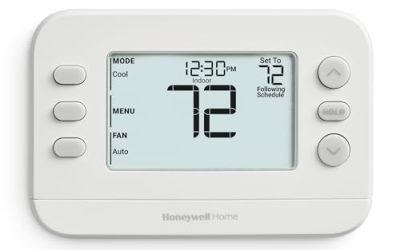
This unit is described as a digital energy-saving thermostat for single-stage systems with 1 Heat and 1 Cool, easy DIY installation, and a white backlight. It suits a household that is happy to adjust the temperature by hand and wants a clear display, such as a retiree who is home most of the day and nudges the dial as needed. Because it has no schedule to configure, there is nothing to forget or reset after a power interruption.
- Strength: the listing states easy DIY installation for standard systems.
- Strength: no Wi-Fi setup or account is required.
- Trade-off: it cannot schedule setbacks, so savings depend on you.
Skip it if you want remote access or an automatic schedule.
Digital Non-Programmable Thermostat, White Backlight (Second Listing)
Another white-backlit single-stage model with 1 Heat and 1 Cool, phrased almost identically to the first. It is a practical replacement for a worn unit in a basic furnace and air conditioner setup, and a reasonable choice for a landlord outfitting several identical apartments. The matching wording across listings means you should compare seller terms and return windows, since the titles alone will not separate them.
- Strength: straightforward single-stage control.
- Strength: DIY installation is part of the pitch.
- Trade-off: the near-identical listing makes brand and support details hard to verify.
Skip it if you want a recognized brand behind the product.
Non-Programmable Thermostat, Blue Backlight (First Listing)
This variant lists a blue backlight and is described as a digital energy-saving smart thermostat, although the title also says non-programmable. Treat it as a manual digital model with a different display color. It fits someone replacing a dated dial thermostat who wants a legible digital readout in a hallway that stays dim, without taking on any app or account.
- Strength: same single-stage 1 Heat and 1 Cool compatibility.
- Strength: the blue backlight may be easier to read at night for some people.
- Trade-off: the smart wording is confusing and should not be taken as a feature.
Skip it if you expect app control.
Sensi Smart Thermostat ST55
The title lists Wi-Fi, DIY installation, Alexa compatibility, and Energy Star certification. It is meant for homeowners who want remote control and scheduling from a recognized thermostat brand, such as a commuter who wants to lower the heat from the road or turn the air conditioning on before arriving home. The ST55 model number makes it easy to look up wiring guidance before purchase.
- Strength: Wi-Fi and Alexa support enable remote adjustments.
- Strength: Energy Star certification signals an efficiency standard.
- Trade-off: it needs a compatible wiring setup, and the listing does not spell out details.
Skip it if your system has multi-stage equipment you have not verified.
Alexa-and-Ring Smart Thermostat
This unit is pitched on saving money and energy and on working with Alexa and Ring. It fits households already built around those ecosystems, where a single app and voice assistant already manage lights, cameras, and doorbells. Adding the thermostat to that routine means setback temperatures can follow the same away and home triggers you already use.
- Strength: direct integration with Alexa and Ring devices.
- Strength: the listing is focused on energy savings.
- Trade-off: limited ecosystem flexibility compared with models listing Siri and Google.
Skip it if you use Apple Home or Google Home as your main platform.
Non-Programmable Thermostat, Blue Backlight (Second Listing)
A second blue-backlit variant with the same single-stage design and DIY installation claim. It is a fit for rentals or secondary spaces where simplicity matters more than features, such as a guest suite, a finished basement, or a small cottage used on weekends. A basic digital readout is enough there, and you avoid configuring Wi-Fi for a space that is mostly empty.
- Strength: simple operation with no network setup.
- Strength: matches standard single-stage furnace and air conditioner systems.
- Trade-off: no scheduling or remote access.
Skip it if you want to reduce use automatically.
ecobee Smart Thermostat Essential
The listing calls it a programmable Wi-Fi thermostat that works with Siri, Alexa, and Google Assistant, with Energy Star certification. It is the most platform-flexible smart option here, which helps in a household where one person uses an iPhone and another uses an Android phone. Programmable scheduling means savings continue even when nobody opens the app, provided you take the time to set the periods.
- Strength: works with all three major voice assistants.
- Strength: programmable scheduling plus Energy Star certification.
- Trade-off: it asks for compatible wiring and more setup than a manual unit.
Skip it if you want a thermostat with no app or account.
Digital Non-Programmable Thermostat, White Backlight (Third Listing)
The third white-backlight entry repeats the single-stage, 1 Heat and 1 Cool, DIY description. It is an inexpensive swap when a thermostat fails in the middle of a cold snap and you want the house heating again the same afternoon. With no network setup, the job is mostly wiring and a mounting plate, though the sparse listing leaves documentation questions to the product page.
- Strength: easy swap for common systems.
- Strength: no subscription or Wi-Fi requirements.
- Trade-off: limited product information beyond the title.
Skip it if you need documentation and long-term support.
Which One Fits Your Situation
You want the lowest-cost swap
Any of the generic non-programmable units will do for a basic system. Pick based on return terms and backlight preference. This route suits a vacation rental or a spare room where the occupants change often, since a manual unit has no schedule to forget about. Pair it with a note by the dial asking occupants to lower it when they leave, and the setback habit does most of the work.
You want real savings with little effort
The ecobee Essential or the Sensi ST55 automate setbacks and can be adjusted by phone. Both list Energy Star certification. The ecobee is described as programmable, which fits a household with a stable weekly rhythm, while the Sensi suits people who want a simpler path to remote control and voice commands through Alexa.
You live in an Alexa and Ring home
The Alexa-and-Ring thermostat integrates directly with the devices you already own.
You use Apple or Google voice control
Choose the ecobee, which lists Siri, Alexa, and Google Assistant.
Common Mistakes
- Buying a single-stage thermostat for a multi-stage system or heat pump with auxiliary heat.
- Skipping the wiring check and discovering the smart model needs a common wire.
- Never programming the schedule, so the thermostat saves nothing.
- Mounting the unit in sunlight or near a vent, which skews the readings.
- Treating the word smart in a title as proof of Wi-Fi when the listing says non-programmable.
Related guides
- What Is The Best Budget Most Responsive Gaming Mouse Wired
- Low Latency Gaming Headphones Usb-C 2.4 Ghz Wireless
- Mechanical Gaming Keyboards Competitive Pc Gaming
Frequently Asked Questions
Does a non-programmable thermostat save energy?
It can, if you lower the setpoint when you leave or sleep. The device itself does not do it for you.
Do I need a common wire for a smart thermostat?
Many smart models do. Check the compatibility page for your model and your wall wiring before buying.
What does Energy Star certified mean?
It indicates the product meets an efficiency standard set by a recognized program. It does not guarantee a specific amount of savings.
Can I install these myself?
Several listings advertise DIY installation. Turn off power, photograph the wiring, and call an electrician if anything looks unfamiliar.