A drawer full of dead remotes, controllers and flashlights usually points to one decision: which charger deserves a permanent spot on the shelf. The best AA and AAA battery chargers are not defined by flashy marketing but by a few checkable traits, namely how many bays they offer, whether each bay works independently, what chemistry they accept and how they receive power. A four-bay unit that fits beside a router is a very different tool from a sixteen-bay unit meant for a household that runs through cells weekly.
This guide is for people who already own, or are about to buy, NiMH cells and want a charger that matches their habits. Gamers with controller packs, parents with toys, photographers with flash units and travelers with a single backpack all land on different answers. Everything below is based on the listed specs in each product title, so use it to narrow your shortlist and then confirm details on the product page.
Our Top Picks
Top 3 picks at a glance
Quick Picks
As an Amazon Associate we earn from qualifying purchases at no extra cost to you.



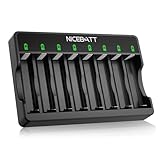
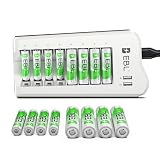

| Product | Best for | Key spec from the title |
|---|---|---|
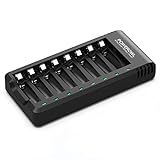
| POWEROWL 8-Bay | Desk or travel use with USB power | 8 bays, independent slots, USB charging, Ni-MH |
| BONAI 16-Bay | Large households and heavy battery use | 16 bays, independent control, LED light, standard US plug |
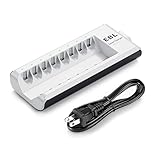
| EBL 8-Bay (fast charging) | RC hobbyists and mixed NiMH/NiCd packs | 8 individual bays, NiMH and NiCd, AC plug |
| Basics 4-Bay Smart Charger | Small homes and a first charger | 4 bays, LED indicators, overcharge protection |
| Basics USB Portable Charger | Carry-on bags and travel | USB port, portable, over-charge protection |
| Smart 8-Bay USB-C | Reviving over-discharged cells | Over-discharge damage repair, USB Type-C |
| EBL 8-Bay with Batteries | Buyers who need cells and charger together | 8 AA 2300mAh and 8 AAA 1100mAh, 2 USB ports |
| Energizer Recharge Pro | Simple, quick starter kit | 4 AA NiMH included, full charge in 4 hours |
How to Choose
Match the bay count to your battery inventory
Count the cells you actually rotate. A pair of controllers needs four cells at a time, so a four-bay charger refills a full set in one go. A household with remotes, wall clocks, wireless keyboards and toys is better served by eight bays, and a sixteen-bay unit only makes sense if you regularly keep more than a dozen cells in circulation. Bigger is not automatically better: a large charger occupies a socket, takes shelf space and often draws more total power.
Look for independent bays
Independent slots let each cell charge on its own schedule, which matters when you mix a nearly full cell with a drained one. Chargers that pair cells force both to the same cutoff, so one weak battery can leave its partner undercharged. Titles that say “independent,” “individual” or “independent control” tell you each bay monitors its own cell. This also lets you charge one or three batteries without wasting a slot.
Check the chemistry and the protection list
Every charger here targets NiMH cells, and a few also list NiCd. Do not put alkaline or lithium cells in these chargers. Useful protection terms include overcharge protection, LED status indicators and over-discharge repair, which tries to wake cells that have sagged too low. Capacity labels such as 2300mAh for AA and 1100mAh for AAA are a sensible reality check: cells much lower than that will charge fast but run out sooner, while claims far above typical figures deserve suspicion.
Decide how it will be powered
Wall-plug chargers with a built-in AC connector are the simplest for a drawer or desk. USB-powered models, including USB Type-C versions, fit travel and power-bank use but need a suitable source and cable. Two USB output ports, as on one EBL listing, can top up a phone while cells charge, though they share the total power budget. Budget models tend to cut corners on bay independence, status lights and clear charging indicators, so those lines are worth reading before you buy.
The 8 Best Options
POWEROWL 8-Bay AA AAA Charger
This eight-bay charger is aimed at people who want independent slots and USB-based charging instead of a bulky wall unit. The title lists high-speed USB charging, independent slots and Ni-MH support, and also says “No Adapter,” so confirm what power source you will use.
- Eight independent slots let you charge odd numbers of cells without waiting for a pair.
- USB input makes it easy to run from a power bank or computer port.
- Trade-off: the listing mentions no adapter, so you may need to supply your own USB power block.
Skip it if you want a plug-and-play wall charger with everything in the box. It suits desk setups and tech-minded households with spare USB bricks.
BONAI 16-Bay Charger
Sixteen bays make this the volume option for families, offices and hobby setups that burn through AA and AAA cells every week. The title highlights independent control, an LED light and a standard American AC plug, so it works from any wall outlet without extra accessories.
- Sixteen independent bays can refill a full drawer of cells in one session.
- Standard AC plug avoids cable and adapter hunting.
- Trade-off: its footprint and bay count are overkill for light users.
Skip it if you own fewer than eight rechargeable cells or have limited counter space. Heavy users with controllers, cameras and toys will get the most from it.
EBL 8-Bay Charger (Fast Charging)
This EBL model is the flexible one, since the title lists support for both NiMH and NiCd cells in eight individual bays. It also mentions fast charging and RC battery use, which suggests it appeals to hobbyists with older NiCd packs alongside modern NiMH cells.
- Handles NiMH and NiCd, useful for legacy devices and hobby gear.
- Individual bays mean partial loads work without trouble.
- Trade-off: the title says nothing about USB output or over-discharge repair.
Skip it if you want phone charging or a travel-sized unit. It fits workshop shelves and RC enthusiasts who keep mixed cells.
Basics 4-Bay Smart Charger
A four-bay layout is the sensible starting point for a single household with a couple of controllers and a few remotes. The listing names LED indicators, overcharge protection and fast charging for AA and AAA NiMH cells, which covers the essentials without extras.
- Overcharge protection and LED indicators make it easy to see when cells are done.
- Compact four-bay size suits shelves, nightstands and small desks.
- Trade-off: only four bays, so refilling a large collection takes several rounds.
Skip it if you juggle more than eight cells at a time. It is a straightforward pick for first-time rechargeable users.
Basics USB Portable Charger
This one targets travel and tidy bags. The title lists a USB port, a portable build and over-charge protection for AA and AAA NiMH cells, so it can run off a laptop, power bank or compact USB adapter.
- USB power and a portable build suit carry-on bags and camping trips.
- Over-charge protection helps protect cells during overnight use.
- Trade-off: portable chargers typically offer fewer bays, so the title gives no sign of large-batch refills.
Skip it if you need to restock a big battery drawer quickly. It is the better fit for photographers, hikers and travelers.
Smart 8-Bay USB-C Charger
The standout phrase here is over-discharge damage repair, which suggests the charger tries to revive cells that sank too low. It also offers USB Type-C fast charging in eight bays for NiMH and NiCd cells, a modern connector that shares cables with phones and tablets.
- USB-C input and eight bays combine convenience with capacity.
- Repair mode may help with neglected cells from long-forgotten gadgets.
- Trade-off: the title gives no brand or capacity detail, so check the full listing.
Skip it if you want a recognized brand name or an included wall plug. It suits buyers with a pile of aging cells to revive.
EBL 8-Bay With Batteries and Dual USB
This kit bundles the charger with eight AA cells at 2300mAh and eight AAA cells at 1100mAh, so a buyer without any rechargeables can start immediately. The listing adds two USB ports that can charge a phone while cells charge.
- Sixteen cells in the box remove the need to shop for batteries separately.
- Dual USB outputs add a small phone top-up option.
- Trade-off: bundled kits lock you into the included cell capacities.
Skip it if you already own a stack of rechargeable cells. It fits newcomers who want one complete solution.
Energizer Recharge Pro With 4 AA
A familiar brand and a ready-to-go bundle define this model. The title lists four NiMH AA batteries and states that the charger provides a full charge in four hours, which gives buyers a clear expectation.
- Four cells included make it usable straight out of the box.
- The four-hour full charge claim is easy to plan around.
- Trade-off: four bays limit capacity for larger households.
Skip it if you have many AAA devices or need more than four cells at once. It is a good first charger for a small home.
Which One Fits Your Situation
You manage a household full of battery gadgets
Pick the BONAI 16-Bay. Its sixteen independent bays and standard American plug let one session cover remotes, toys, flashlights and controller packs without juggling several smaller chargers.
You travel often and carry cells in a bag
The Basics USB Portable Charger fits that routine. It runs from USB and has overcharge protection, so a power bank or laptop port is enough. If you want eight bays on the road, the POWEROWL 8-Bay is the alternate pick.
You have a drawer of neglected cells
The Smart 8-Bay USB-C is aimed at that problem with its over-discharge repair feature. Treat the repair mode as a bonus rather than a guarantee, and retire any cell that will not hold charge afterward.
You are starting from zero
Choose the EBL 8-Bay with batteries if you want a wide mix of AA and AAA cells at once, or the Energizer Recharge Pro if four AA cells will do. Both remove the guesswork of matching cells to a charger.
Common Mistakes
- Buying a sixteen-bay charger when only four or five cells are in regular rotation, then paying for space that sits empty.
- Ignoring independent bay wording and ending up with a paired design that undercharges mismatched cells.
- Trying to charge alkaline or lithium cells in a NiMH charger, which is unsafe.
- Forgetting the power source: a USB charger still needs a suitable adapter, and some listings do not include one.
- Judging cells only by brand without checking capacity, such as 2300mAh for AA or 1100mAh for AAA, which makes runtime comparisons possible.
Related guides
- What Is The Best Budget Most Responsive Gaming Mouse Wired
- Low Latency Gaming Headphones Usb-C 2.4 Ghz Wireless
- Mechanical Gaming Keyboards Competitive Pc Gaming
Frequently Asked Questions
Can these chargers handle alkaline batteries?
No. Every model here is built for rechargeable NiMH cells, and some also list NiCd. Charging alkaline or lithium batteries in them can cause leaks or damage, so keep disposable cells out of the bays.
Is a smart charger really necessary?
Basic overnight chargers work, but smart designs add per-bay monitoring, indicators and protection against overcharging. Those features extend cell life over years of use, which is the real saving with rechargeables.
Do I need a charger with USB-C?
USB-C is a convenience, not a requirement. It helps if you already carry USB-C cables and power banks, while an AC plug model is simpler for a fixed spot at home.
How do I know when to replace a rechargeable cell?
Look for cells that finish charging unusually fast, run out quickly or get noticeably warm. Those are signs of lost capacity, and retiring them is better than letting them degrade the rest of the set in 2026 and beyond.