A dead car battery rarely announces itself politely. It happens on the first cold morning, after a long trip where the car sat in an airport lot, or when a classic roadster has been parked under a cover since October. The choice behind “best car battery chargers” is really three different decisions bundled together: do you want a slow maintainer that keeps a healthy battery topped up, a mid-sized smart charger that recovers a flat battery overnight, or a heavy unit with engine-start capability for emergencies? The right answer depends on what you park, how long it sits, and how much risk you can tolerate in a cold driveway.
This guide is for owners of daily drivers, seasonal vehicles, motorcycles and lawn tractors who would rather plug in a smart charger than buy a new battery every few years. Every pick below is judged only on what its listing says: amperage, voltage support, protection modes and extra functions such as desulfation or engine start. Where a product does not state something, we do not assume it, and we flag the trade-offs so you can match the charger to the job instead of paying for features you will never use in 2026.
Our Top Picks
Top 3 picks at a glance
Quick Picks
As an Amazon Associate we earn from qualifying purchases at no extra cost to you.




| Product | Best for | Key spec from the title |
|---|---|---|
| Schumacher SC1280 | All-round garage charging | 15A, 6V/12V, 3A trickle charge |
| NOCO Genius1 | Long-term storage of small batteries | 1A, 6/12V, desulfator, force mode |
| TowerTop 2/10/25 Amp | Selectable charge rates with engine start | 2/10/25 amp, engine start, winter mode |
| NOCO Genius5 | Cars and motorcycles on a maintainer | 5A, 6/12V, temperature compensation |
| E-FAST 25A | 12V and 24V systems | 25A, 12V/24V, 200s booster mode |
| Schumacher SC1445 Wheeled | Shop use and emergency starts | 250A engine start, 50A/25A boost |
| NOCO Genius10 | Faster recovery of larger batteries | 10A, 6/12V, overcharge protection |
| 12V 10A Smart Trickle Charger | Budget-minded 12V charging with a display | 10A, LCD display, 8-layer protection |
How to Choose
Match amperage to battery size and patience
Amperage sets how fast a battery refills. A 1A to 3A unit is a maintainer: it is ideal for motorcycles, mowers and cars in winter storage, but it can take days to recover a fully drained car battery. A 5A to 10A charger handles typical passenger-car batteries overnight. Anything at 15A or 25A is for large truck or SUV batteries, or for owners in a hurry. A common rule is to keep charge current near one-tenth to one-fifth of the battery’s amp-hour rating, so a huge charger is not automatically a better one for a small battery.
Check voltage and chemistry support
Most listings cover 12V, and several also cover 6V for classic cars, garden equipment and older motorcycles. If you own a 24V system, such as some trucks or marine setups, you need a unit that explicitly says 12V/24V. Also confirm the charger supports the chemistry you own; if your listing is silent on lithium or AGM modes, do not assume them. Look for a clear statement on the product page rather than a vague “all batteries” claim.
Protection and smart features that matter
Fully automatic microprocessor control, overcharge protection, reverse-polarity protection and temperature compensation are the features that keep a battery healthy over months. Temperature compensation adjusts charging voltage in a freezing garage or a hot shed. A desulfator mode can help older lead-acid batteries that have lost capacity, though it is no miracle for a battery that is physically failing. A force or override mode is useful when a deeply discharged battery is too low for the charger to detect.
Decide whether you need engine start
Engine-start and booster modes are convenient when a battery is too flat to turn over, but they add cost and weight. If the car lives in a garage and you only charge occasionally, skip them. If you manage a small fleet, a farm vehicle or a vehicle that sits outdoors, a wheeled unit with a stated starting current rating is a better fit. Ignore marketing language about “repairing” batteries beyond what the specs actually list, and note that budget models often cut corners on cable length, clamp quality and displays.
The 8 Best Options
Schumacher SC1280
The SC1280 is a fully automatic, microprocessor-controlled charger that supports both 6V and 12V batteries and lists a 15A rate alongside a 3A trickle mode. That range suits households with a daily driver plus a classic car or small engine that uses a smaller battery. The title also mentions restoring batteries, which points to a recovery mode for tired units.
- Strength: covers 6V and 12V in one garage-friendly unit.
- Strength: the 3A trickle setting means one charger handles quick top-ups and gentle maintenance.
- Trade-off: the listing does not state engine-start capability, so it will not jump a completely dead car.
Skip it if you need a starter function or if you run a 24V system.
NOCO Genius1
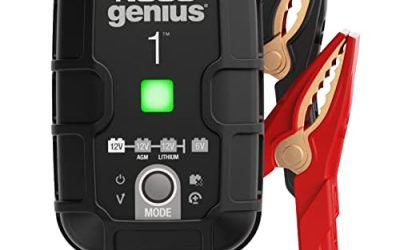
The Genius1 is a 1A, 6/12V smart charger and maintainer built for slow, patient care. Its title lists overcharge protection, a desulfator, temperature compensation and a force mode, which is an unusually complete feature set for a small unit. It makes sense for motorcycles, ATVs, mowers and a seldom-driven second car that sits for weeks.
- Strength: temperature compensation and overcharge protection suit unattended storage.
- Strength: 6V and 12V coverage in a compact maintainer.
- Trade-off: 1A output is slow for a fully drained car battery.
Skip it if you need to recover large truck batteries quickly.
TowerTop 2/10/25 Amp
This TowerTop is a 12V fully automatic maintainer with three listed charge rates of 2, 10 and 25 amps, plus engine start, an auto desulfator, battery repair mode and a winter mode. The selectable rates make it flexible: low for small batteries, high when time matters. The engine-start feature adds emergency value for people who do not want a separate jump pack.
- Strength: three charge rates cover motorcycles through larger vehicles.
- Strength: engine start and winter mode are included in the same unit.
- Trade-off: the title lists 12V only, so it is not for 6V classics.
Skip it if you own a 6V vehicle or want the simplest possible plug-and-forget maintainer.
NOCO Genius5
The Genius5 steps up to 5A while keeping 6/12V support and the same protection list as its smaller sibling: overcharge protection, desulfator, temperature compensation and a force mode. It is a sensible middle size for compact cars, motorcycles and boats that need both quick charging and long-term maintenance.
- Strength: 5A is a practical rate for typical car batteries over a day or two.
- Strength: dual 6V and 12V support with temperature compensation.
- Trade-off: it is slower than 10A units on large batteries.
Skip it if your batteries are very large or you need an engine-start mode.
E-FAST 25A
The E-FAST unit stands out for listing both 12V and 24V support at 25A, making it relevant for owners of larger trucks, RVs or equipment with 24V systems. The title also lists a 200-second booster mode, an automatic maintainer function, a desulfator and adjustable amp trickle charging.
- Strength: 12V and 24V support in a single charger.
- Strength: high 25A output plus an adjustable trickle option for storage.
- Trade-off: it is more charger than a small motorcycle or lawn tractor battery needs.
Skip it if you only own small 12V batteries and prefer a compact maintainer.
Schumacher SC1445 Wheeled
The SC1445 is a wheeled 6/12V unit with a 250A engine-start rating and 50A/25A boost rates, controlled by a manual timer. It is closer to a shop tool than a trickle maintainer, and the wheels make it easy to roll between vehicles in a driveway or workshop.
- Strength: high engine-start current for stubborn dead batteries.
- Strength: wheeled design suits shared garages and small repair shops.
- Trade-off: manual timer control means you manage the charge yourself rather than leaving it fully automatic.
Skip it if you want a hands-off storage maintainer for a seasonal vehicle.
NOCO Genius10
The Genius10 is a 10A, 6/12V smart charger and maintainer that carries the same overcharge protection, desulfator, temperature compensation and force mode features found across the NOCO line. It suits larger car, truck and SUV batteries where 5A feels too slow but you still want smart maintenance afterward.
- Strength: 10A recovers bigger batteries noticeably faster than the smaller units.
- Strength: it still works as a maintainer once the battery is full.
- Trade-off: the listing does not state engine start.
Skip it if you have only small batteries or need a starter function.
12V 10A Smart Trickle Charger
This generic-brand charger lists 12V, 10A, fully automatic operation, temperature compensation, an LCD display and 8-layer protection. For buyers who want visible charging status on a budget-tier unit, the display and protection list are the main draw.
- Strength: an LCD lets you see charging progress at a glance.
- Strength: 10A suits most passenger-car batteries.
- Trade-off: it is a lesser-known brand, so judge cable and clamp quality carefully.
Skip it if you need 6V or 24V support, or want a recognizable brand’s service network.
Which One Fits Your Situation
A motorcycle or mower parked all winter
The NOCO Genius1 is the right size: low current, temperature compensation and protection for months of unattended plugging in. The Genius5 is a good step up if the same charger will also serve a car.
A family SUV that will not start on a frozen morning
The TowerTop 2/10/25 Amp gives you selectable rates plus engine start in a winter-ready package. If you would rather keep things simple and fully automatic, the NOCO Genius10 recovers larger batteries at a steady pace.
A farm, shop or small fleet
The wheeled Schumacher SC1445 offers a high starting current rating and portability. The E-FAST 25A is the better pick if some of your equipment runs on 24V.
A classic car with a 6V system
The Schumacher SC1280 or any of the NOCO 6/12V models fit. Choose the SC1280 if you also want a high-rate option for modern cars in the same garage.
Common Mistakes
- Buying the biggest amperage available, when a small battery is better served by a gentle, lower-current charge.
- Assuming every charger supports lithium or AGM batteries without confirming the listing.
- Skipping temperature compensation for a charger that will live in an unheated garage.
- Expecting a desulfator to revive a battery that is physically damaged or very old.
- Leaving a manual-timer charger connected overnight when it is not designed to maintain.
Related guides
- What Is The Best Budget Most Responsive Gaming Mouse Wired
- Low Latency Gaming Headphones Usb-C 2.4 Ghz Wireless
- Mechanical Gaming Keyboards Competitive Pc Gaming
Frequently Asked Questions
What is the difference between a charger and a maintainer?
A charger pushes current to refill a depleted battery, while a maintainer supplies a small, regulated current to hold a full battery steady. Many smart units do both, switching automatically once the battery reaches full charge.
Can I leave a smart charger connected for weeks?
Fully automatic, microprocessor-controlled models that list overcharge protection are designed for long connections. Manual-timer units are not, so watch the clock and disconnect when the cycle ends.
Do I need a charger with engine start?
Only if you want one device that can handle emergencies. For vehicles that live in a garage and are charged on a schedule, a maintainer or mid-size charger is usually enough.
How do I know if a charger fits my battery?
Match the voltage first, then pick an amperage that suits the battery’s capacity. Check the listing for the chemistry your battery uses, and confirm clamp and cable length reach from the outlet to the battery.