A heat pump is not just a furnace with a different name, and the thermostat on the wall has to know the difference. Heat pumps move heat in both directions, switch between heating and cooling with a reversing valve, and often lean on a backup heat source when the weather gets very cold. A thermostat built only for a basic furnace and air conditioner can misread those signals, which is why buyers searching for heat pump models are right to be careful.
The key phrase to hunt for is “2 Heat/1 Cool.” It means two heating stages, typically the heat pump itself plus an auxiliary or emergency source, and one cooling stage. Most of the eight thermostats below are simple non-programmable units that meet that spec, plus one programmable Honeywell for buyers who want a schedule. This guide explains what to check on your wiring in 2026, how to compare similar-looking models, and which thermostat suits which kind of household.
Our Top Picks
 Honeywell Home X2P Programmable Thermostat240 Volts8.4 x 6.55 x 1.65 Inches0.88 poundsCheck on Amazon

Top 3 picks at a glance
Quick Picks
As an Amazon Associate we earn from qualifying purchases at no extra cost to you.


| Product | Best for | Key spec from the title |
|---|---|---|
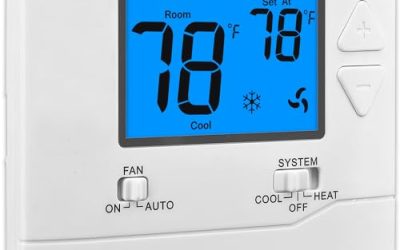
| Unbranded Heat Pump Thermostat (first listing) | Straightforward DIY swap | 2 Heat/1 Cool heat pump or 1 Heat/1 Cool, easy DIY install |
| Garystat Non-Programmable | Readability from across the room | 2 Heat/1 Cool, temperature and humidity monitor, large green LCD |
| Aowel 2 Heat/1 Cool | Homes mixing heat pump and conventional systems | Heat pump and single-stage compatible, humidity monitor |
| Unbranded 2H/1C Humidity-Display Thermostat | Large display on a budget | 2H/1C, large LCD showing temperature and humidity |
| Heagstat Heat Pump Thermostat | Systems with auxiliary or emergency heat | 2 Heat/1 Cool, aux or emergency heating, manual operation |
| Honeywell Home X2P (RTH22B) | Households wanting a schedule | Programmable, conventional and heat pump compatible |
| Suuwer Non-Programmable Heat Pump | Simple, no-frills replacement | Up to 2 Heat/1 Cool |
| Unbranded Heat Pump Thermostat (second listing) | Alternate to the first listing | 2 Heat/1 Cool heat pump or 1 Heat/1 Cool, easy DIY install |
How to Choose
Confirm 2 Heat/1 Cool and the reversing valve
Look at the terminal labels on your current thermostat. A heat pump system usually has an O or B terminal for the reversing valve, and a terminal for auxiliary or emergency heat, often marked W2, AUX, or E. A thermostat meant for heat pumps must be rated 2 Heat/1 Cool and accept that O/B wire. A model that says only 1 Heat/1 Cool will not manage a heat pump with backup heat correctly. If your wiring does not match the listing, ask an HVAC technician before you buy. It also helps to know whether your system is a plain heat pump or a dual-fuel setup that pairs the pump with a gas furnace; dual-fuel systems often need a thermostat or control board that handles the switchover, and a basic model may not.
Understand auxiliary and emergency heat
Heat pumps lose output as outdoor temperatures fall. When the pump cannot keep up, an electric strip or furnace backup takes over as auxiliary heat. Emergency heat is a manual setting that skips the compressor entirely, meant for a failing outdoor unit. A good heat pump thermostat gives you access to both and makes the difference clear on the display. The Heagstat title mentions aux or emergency heating and manual operation, which are the details to look for. If you ever see the emergency heat indicator on, treat it as a prompt to check the outdoor unit instead of a normal winter setting, because running only electric backup heat is usually the most expensive way to warm a house.
Decide between programmable and non-programmable
Heat pumps respond slowly to big temperature swings, and aggressive setbacks can trigger expensive auxiliary heat when the system tries to catch up. That is one reason many owners prefer a non-programmable thermostat that holds a steady setting. If your household has a predictable weekday pattern, though, a programmable model like the Honeywell X2P can use gentle schedules. Either way, avoid steep overnight drops in winter, and keep the schedule simple. A two- or three-degree adjustment is usually all a heat pump needs to save energy without chasing the temperature with backup heat. Compressor protection is another quiet but valuable feature: look for a built-in delay that prevents rapid restarts, since short cycling is hard on the outdoor unit.
Check power, display, and what to ignore
Many low-voltage thermostats need either a common wire or batteries; confirm which one the listing expects. A large display and a humidity readout are conveniences, not controls: the humidity number does not manage a humidifier. Ignore marketing about energy-saving unless a specific feature backs it up. Budget models can cut corners on manuals and support, so photograph your wires, label them, and read the compatibility chart for your equipment before installing. If a listing is truncated, as several here are, treat the missing words as unknown and look for the full wiring chart on the product page rather than assuming it will fit.
The 8 Best Options
Unbranded Heat Pump Thermostat (first listing)
This non-programmable thermostat works with a 2 Heat/1 Cool heat pump or a 1 Heat/1 Cool conventional single-stage system, and the title stresses easy DIY installation. It suits owners who want a plain replacement without a learning curve, including those who inherit a heat pump with an older dial thermostat and simply want something clearer on the wall. Because the listing also covers a simple furnace-and-air-conditioner system, it travels well if you later change equipment.
- Strength: it covers both heat pump and basic furnace setups in a single model.
- Strength: no schedule to program keeps daily use simple.
- Trade-off: no brand name in the title means limited information about support.
Skip it if you want a recognizable brand or a built-in schedule.
Garystat Non-Programmable
Garystat targets heat pump homes with a 2 Heat/1 Cool thermostat, adding a temperature and humidity monitor and a large green LCD. It suits people who want to read the display from across the room, such as older family members who find small digits hard to see. The green backlight is a matter of taste, but a large face is a practical advantage in a hallway.
- Strength: the large green LCD is easy to read at a glance.
- Strength: the temperature and humidity monitor gives a quick sense of indoor conditions.
- Trade-off: the humidity reading is informational only.
Skip it if you want a programmable thermostat or a mainstream brand.
Aowel 2 Heat/1 Cool
Aowel’s non-programmable model supports a heat pump system and a conventional single-stage system, with a room temperature and humidity monitor. It is useful for rentals or property managers who deal with different equipment across units.
- Strength: it covers both heat pump and single-stage systems.
- Strength: a room temperature and humidity monitor adds context.
- Trade-off: its title is long and truncated, so confirm all specs on the product page.
Skip it if you want a thermostat from an established HVAC brand.
Unbranded 2H/1C Humidity-Display Thermostat
This is a non-programmable heat pump thermostat rated 2H/1C with a large LCD showing room temperature and humidity. The shorthand in the title is compact, but the spec matches what a heat pump with backup heat typically needs. It is a reasonable pick for someone who wants the humidity readout and a big screen without paying for a famous name.
- Strength: 2H/1C rating aligns with heat pump requirements.
- Strength: a large LCD shows both temperature and humidity.
- Trade-off: no brand or model name makes support and manuals harder to find.
Skip it if you want a programmable schedule or a documented brand.
Heagstat Heat Pump Thermostat
Heagstat’s heat pump model is rated 2 Heat/1 Cool and says it works with systems that have aux or emergency heating, with manual operation for heat and cool. It suits homeowners who want direct control over how the backup heat engages.
- Strength: the title explicitly names auxiliary and emergency heat support.
- Strength: manual operation keeps the system predictable.
- Trade-off: manual control means you must change settings yourself as seasons shift.
Skip it if you want automated scheduling or humidity readouts.
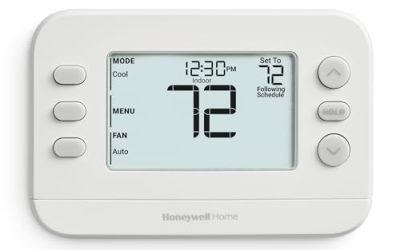
Honeywell Home X2P (RTH22B)
The X2P is the only programmable thermostat in the group, listed with conventional and heat pump compatibility and a flexible schedule. It is the choice for households with set work and sleep hours who still want a recognizable brand and a clear model number.
- Strength: a flexible schedule can match a predictable weekly routine.
- Strength: a major brand and a specific model number, RTH22B, simplify lookups.
- Trade-off: schedules take time to set up and must be gentle to avoid heavy auxiliary heat use.
Skip it if you want zero programming or a humidity display.
Suuwer Non-Programmable Heat Pump
The Suuwer is a plain non-programmable heat pump thermostat for homes with up to 2 Heat/1 Cool. It suits owners who want a clean swap and a no-schedule interface, such as a vacation home or a rental where the temperature should simply stay put. Its “up to” wording signals it can also run simpler systems.
- Strength: it states heat pump support and up to 2 Heat/1 Cool in the title.
- Strength: without scheduling, there is little to configure.
- Trade-off: the short title leaves out details like display type or backlight.
Skip it if you want extra features such as humidity monitoring.
Unbranded Heat Pump Thermostat (second listing)
This second unbranded listing repeats the first listing’s formula: a non-programmable thermostat for conventional single-stage systems, either 2 Heat/1 Cool heat pump or 1 Heat/1 Cool, with easy DIY installation. It is a fallback if the first listing is unavailable.
- Strength: it works with heat pump or conventional setups.
- Strength: easy DIY installation helps first-time installers.
- Trade-off: near-identical titles across two listings make it easy to confuse them.
Skip it if you want brand recognition or a programmable model.
Which One Fits Your Situation
You have a heat pump with electric backup heat
The Heagstat Heat Pump Thermostat names aux or emergency heat directly, which helps you confirm it matches your system. Check that your outdoor unit and air handler also expect the same wire layout before you commit.
You keep a predictable work schedule
The Honeywell Home X2P (RTH22B) offers a flexible schedule from a known brand. Use gentle setbacks so the heat pump is not forced into auxiliary heat each morning. Set the sleep period only a couple of degrees lower, and let the comfort period begin a little before you wake so the system has time to recover on the compressor alone.
You want a big readable display
The Garystat Non-Programmable has a large green LCD and a temperature and humidity monitor, which suits a hallway or living area.
You manage mixed equipment
The Aowel 2 Heat/1 Cool supports both heat pump and conventional single-stage systems, so one model covers varied units.
Common Mistakes
- Installing a 1 Heat/1 Cool thermostat on a heat pump with backup heat.
- Skipping the wiring photo and then forgetting which wire went to which terminal.
- Programming steep overnight setbacks that force expensive auxiliary heat every morning.
- Switching to emergency heat without a real equipment problem.
- Assuming that a humidity readout controls a humidifier.
Related guides
- What Is The Best Budget Most Responsive Gaming Mouse Wired
- Low Latency Gaming Headphones Usb-C 2.4 Ghz Wireless
- Low Latency Gaming Headphones Usb-C Dongle 2.4 Ghz
Frequently Asked Questions
What does 2 Heat/1 Cool mean?
It means the thermostat supports two stages of heating and one stage of cooling, which fits a heat pump with auxiliary heat. A 1 Heat/1 Cool model has only one heating stage.
Do heat pumps need special thermostats?
They need a thermostat that handles the reversing valve and, in many cases, auxiliary heat. A model rated for heat pumps will have the right terminals and logic.
Is a programmable thermostat a good idea with a heat pump?
It can be, with small setbacks. Large temperature swings can cause the system to call on auxiliary heat to catch up, which uses more power.
Can I install it myself?
Many homeowners can, with power off at the breaker and clear labeling of wires. If you are unsure about your wiring, hire an HVAC technician.