
The best motorcycle saddlebags for most touring riders are waterproof soft panniers with independent mounting hardware, a heat shield, and enough capacity for your actual luggage—not simply the largest bags you can fit.
Your ideal choice depends on the motorcycle and the type of touring. A sport-touring bike usually benefits from shaped, lockable hard cases; an adventure bike suits quick-release aluminum panniers or rugged soft luggage; and a dual-sport or dirt-oriented motorcycle needs narrow bags that tolerate falls and keep clear of the exhaust.
As an Amazon Associate we earn from qualifying purchases at no extra cost to you.


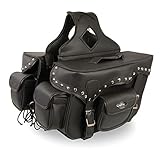

Top 3 picks at a glance
Best motorcycle saddlebags by riding situation
| Riding situation | Best luggage type | Useful capacity | Strong choice | Main compromise |
|---|---|---|---|---|
| Long-distance road touring | Lockable hard panniers | 50–70 liters per pair | Givi Trekker Outback or motorcycle-specific OEM cases | Width, weight, and crash damage |
| Adventure touring with mixed pavement and gravel | Aluminum panniers or reinforced soft panniers | 50–70 liters per pair | SW-Motech TRAX ADV, SysBag WP, or similar systems | Requires a compatible rack |
| Frequent off-road riding | Soft roll-top panniers | 30–50 liters per pair | Kriega OS-22 systems or Mosko Moto Backcountry systems | Less theft resistance |
| Small dual-sport or minimalist travel | Narrow soft saddlebags | 20–40 liters per pair | DrySpec D20 or similar compact dry luggage | Limited clothing and camping space |
| Commuting and occasional overnight trips | Throw-over soft saddlebags | 30–50 liters per pair | Nelson-Rigg Sierra Dry or similar waterproof throw-over bags | Needs careful securing and exhaust protection |
How much storage capacity do you actually need?
Capacity is normally quoted for the pair, but the usable volume is lower once you account for rounded corners, mounting frames, compression, and the need to keep heavy items low. A practical two-night road-trip load often needs about 35–45 liters: approximately 12 liters for clothing, 8 liters for shoes and rain gear, 10 liters for toiletries and electronics, and 8–15 liters for tools, spare gloves, and small personal items.
For camping, add roughly 25–40 liters for a compact tent, sleeping bag, sleeping pad, and cooking equipment. That puts a realistic target at 60–85 liters, usually split between panniers and a dry duffel on the rear seat. Do not fill every available liter just because it exists. A pair of 35-liter panniers can carry more than enough for touring, while a pair of 45-liter cases may make a narrow motorcycle unnecessarily wide.
Capacity decision rule
- Choose 20–30 liters per side for commuting, light clothing, and day rides.
- Choose 30–40 liters per side for hotel-based touring.
- Choose 35–45 liters per side for camping or cold-weather touring.
- Choose the smaller option if the pannier extends far beyond the handlebar or forces your legs outward when standing.
Soft versus hard motorcycle saddlebags
Soft panniers
Soft bags are lighter, easier to compress, and safer when a motorcycle falls on rocky ground. Their flexible shape also works better around high exhausts, passenger footpeg brackets, and unusual subframes. Models such as Kriega OS-22 systems, Mosko Moto Backcountry luggage, SW-Motech SysBag WP bags, and Nelson-Rigg Sierra Dry bags represent different versions of this approach.
The weaknesses are security and support. A roll-top soft bag can be water-resistant or waterproof, but the fabric can be cut and the mounting straps can be removed if the motorcycle is left unattended. Soft bags also need a firm rack or heat shield. Without one, they can move toward the wheel or sag onto the muffler.
Hard cases
Hard panniers provide a defined shape, better protection for cameras and fragile equipment, and more convenient locking. Givi Trekker Outback cases and manufacturer-specific touring cases are common examples. Aluminum cases are especially useful for expedition-style travel because they are easy to strap luggage onto and can double as a flat surface when parked.
The drawbacks are weight, width, and impact behavior. A rigid case can transfer crash loads into its rack or subframe. It can also catch the ground abruptly in a low-speed fall. Hard cases are best when most riding is on pavement and the motorcycle has a properly engineered mounting system.
Waterproofing: understand the construction
“Water-resistant” is not the same as waterproof. A rain cover protects the fabric but can collect water underneath and flap at speed. A waterproof roll-top bag uses coated fabric and a folded closure; it is usually the better choice for sustained rain. Hard cases rely on a gasket and correctly adjusted latches, but a damaged seal or a lid packed too tightly can still allow leaks.
| Construction | Rain performance | Best use | What to inspect |
|---|---|---|---|
| Coated roll-top soft bag | Very good when closed correctly | All-weather touring and off-road travel | Seam welding, roll-top width, buckle quality |
| Zippered textile bag with rain cover | Good for showers; variable in prolonged rain | Commuting and fair-weather touring | Cover attachment, zipper flap, drainage |
| Gasketed hard case | Very good if seals and latches are aligned | Road touring and secure parking | Gasket compression, lid alignment, drain holes |
| Unlined leather or basic textile | Low without an inner dry bag | Short rides and styling-focused builds | Use separate waterproof liners for valuables |
Keep passports, phones, cameras, and spare clothing inside a secondary dry bag even when the pannier is advertised as waterproof. Repeated opening, dust contamination, and incorrectly folded roll tops are common real-world failure points.
Mounting hardware and motorcycle fit
The bag is only half of a pannier system. Hard cases normally require a model-specific rack, while soft luggage may use a universal saddle system, semi-rigid side supports, or a dedicated rack. A rack keeps the bag away from the wheel, gives the mounting straps something stable to resist, and reduces movement during braking.
Check whether the luggage is designed for your rack tube diameter and mounting plate. SW-Motech systems, for example, use particular rack interfaces and adapters; a case that looks physically compatible may not latch securely without the correct hardware. OEM panniers are usually the cleanest fit but can cost more and may offer less capacity than aftermarket systems.
Exhaust-clearance check
Measure clearance with the motorcycle loaded, not on an empty stand. Position the bag, compress the rear suspension, and check the gap between the bag and the muffler at its closest point. As a practical target, maintain at least 50 mm of air space from a hot muffler where possible, and use a proper heat shield or metal-backed guard if the design places the bag closer. Never rely on a thin fabric panel alone.
- Keep the bag behind the passenger footpeg bracket when the exhaust exits high.
- Check that a strap cannot touch the header, catalytic converter, chain, wheel, or brake rotor.
- Turn the handlebar fully left and right to confirm the front of the bag cannot interfere with controls or your leg.
- After 15–20 minutes of riding, stop and inspect for heat-softened plastic, shiny fabric, or loose straps.
Security, weight, and handling
Hard cases with integrated locks are the best option for brief stops, but they are not a substitute for removing valuables. Soft panniers can be secured with lockable straps, cable locks, or a rack-specific locking system, although these measures mainly deter opportunistic theft.
Distribute weight evenly from side to side and place dense items low and close to the motorcycle. A useful loading example is 8 kg in the left pannier, 8 kg in the right pannier, and 4 kg in a tail bag rather than putting 15 kg in one side. Stay below the lower of the bag manufacturer’s limit, rack limit, and motorcycle luggage limit. The motorcycle’s maximum permitted load includes the rider, passenger, luggage, and accessories—not just the panniers.
After installation, check the rack bolts after the first loaded ride and periodically thereafter. Use the specified thread-locking method or torque values from the rack manufacturer; do not substitute a guessed torque for a structural fastener.
Recommended buying path
- Measure the motorcycle first. Record muffler position, rack width, passenger peg location, rear axle area, and the widest point of the handlebars.
- Set a capacity target. Estimate your normal load and add only 15–20 percent spare volume.
- Choose the construction. Select hard cases for locks and road use, or reinforced waterproof soft bags for lighter weight and frequent falls.
- Confirm every adapter. Verify the rack model, mounting plate, tube diameter, and whether left and right supports are included.
- Check heat and wheel clearance. Test with the suspension compressed and the bags fully loaded.
- Load-test before touring. Ride locally, brake firmly in a safe area, and inspect for movement, rubbing, and heat damage.
Price expectations
Basic throw-over textile or compact waterproof saddlebags usually cost about $100–$250 per pair. More durable roll-top soft panniers commonly fall around $250–$600, excluding a rack. Premium soft systems and complete mounting kits often reach $500–$900. Lockable hard panniers with racks commonly range from $600 to more than $1,200 depending on material, capacity, and motorcycle-specific hardware.
For most riders, the best motorcycle saddlebags are not the most expensive or largest set. Choose the narrowest waterproof system that carries your normal load, clears the exhaust with a safety margin, locks or secures appropriately for your stops, and has mounting hardware designed for your exact motorcycle.
Frequently asked questions
What should I measure before buying motorcycle saddlebags?
Measure the muffler position, rack width, passenger peg location, rear axle area, and the motorcycle’s widest handlebar point. Also check the rack tube diameter or mounting plate requirements for the luggage system. These measurements help confirm motorcycle fit, prevent interference with controls or your legs, and show whether the panniers will make the motorcycle unnecessarily wide.
Can I use universal saddlebags without installing a rack?
Some soft luggage uses a universal saddle system, but a firm rack or heat shield is still important. A rack keeps the bag away from the wheel, limits movement during braking, and supports the mounting straps. Without suitable support, a soft bag can move toward the wheel or sag onto the muffler, creating clearance and heat problems.
How can I keep valuables dry inside motorcycle saddlebags?
Place passports, phones, cameras, and spare clothing inside a secondary dry bag, even when the pannier is advertised as waterproof. Coated roll-top bags perform very well when closed correctly, while rain covers and zippered textile bags can be less reliable during prolonged rain. Repeated opening, dust contamination, and incorrectly folded roll tops can cause leaks.
Are hard panniers safer than soft panniers in a crash?
Not in every situation. Soft panniers are lighter, easier to compress, and safer when a motorcycle falls on rocky ground. Hard cases protect fragile equipment better, but they can catch the ground abruptly and transfer crash loads into the rack or subframe. Hard cases are best when most riding is on pavement and the mounting system is properly engineered.
How should I distribute luggage weight between the bags?
Distribute weight evenly from side to side, keeping dense items low and close to the motorcycle. For example, the article suggests eight kilograms in each pannier and four kilograms in a tail bag rather than fifteen kilograms in one side. Stay below the lowest limit specified by the bags, rack, and motorcycle, remembering that rider and passenger weight also count.


