
Best Guitar Pickups for Metal
The best guitar pickups for metal are the Fishman Fluence Modern Ceramic/Alnico set for the widest range of tunings and tones, the EMG 81/85 set for tight, compressed high-gain rhythm, and the Seymour Duncan Nazgûl/Sentient set when you want passive dynamics with aggressive low-tuned rhythm and usable lead tone.
There is no single best pickup for every metal rig. Your tuning, amplifier, scale length, playing attack, wiring, and preference for compressed or dynamic response matter more than a pickup’s output rating alone. Use the guide below to match the pickup to the job rather than choosing the most powerful model.
As an Amazon Associate we earn from qualifying purchases at no extra cost to you.
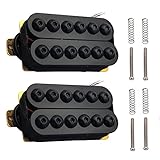

Quick comparison: active and passive metal pickups
| Pickup or set | Type and magnet | Best tuning range | Output character | Best use | Important wiring note |
|---|---|---|---|---|---|
| EMG 81 | Active ceramic | E standard to Drop B | High, compressed, focused | Fast rhythm, palm mutes, precise lead attack | Requires a 9V battery and active-compatible volume/tone pots |
| EMG 85 | Active Alnico | E standard to Drop C | Fuller and smoother than the 81 | Neck leads, solos, thick rhythm | Often paired with an 81 bridge pickup |
| Fishman Fluence Modern Ceramic/Alnico | Active-voiced multi-voice, ceramic bridge and Alnico neck | E standard to Drop G# with suitable strings and setup | Tight, quiet, configurable | Modern metal, progressive metal, multiple tunings | Needs the correct push-pull or mini-switch wiring for alternate voices |
| Seymour Duncan Nazgûl/Sentient | Passive ceramic bridge and Alnico neck | Drop D to Drop G# | Very aggressive bridge, articulate neck | Low-tuned rhythm plus melodic lead | Works with conventional passive controls and no battery |
| Seymour Duncan Blackouts | Active, commonly Alnico or ceramic depending on model | E standard to Drop A | Powerful and smooth, with strong low end | High-gain rhythm where active compression is preferred | Uses active electronics and a battery compartment is advisable |
| DiMarzio D Activator X | Passive ceramic | E standard to Drop C | Hot, sharp, and controlled | Classic-to-modern metal with pick attack | Usually installed with 500k controls |
These tuning ranges are practical starting points, not hard limits. A pickup does not determine whether a guitar can handle Drop G or lower; scale length, string gauge, bridge stability, setup, and amplifier EQ are equally important.
Choose by tuning before choosing by output
Standard tuning through Drop C
In E standard, Drop D, and Drop C, almost any quality high-output pickup can produce convincing metal. The main decision is response. An EMG 81 or Fishman Fluence Modern Ceramic gives a compressed, immediate attack that suits fast alternate picking and tightly gated riffs. A passive pickup such as the DiMarzio D Activator X or Seymour Duncan JB preserves more pick and volume-knob dynamics.
If your guitar sounds thin in these tunings, do not automatically install a hotter pickup. Excessive output can push the preamp too hard and exaggerate upper-mid harshness. A fuller Alnico neck pickup or a less aggressive bridge model may provide the better balance.
Drop B through Drop A
For Drop B, Drop A, and similar tunings, articulation becomes more important than maximum output. The Nazgûl bridge pickup is designed for a forceful low end and pronounced upper-mid cut, while the Sentient neck pickup keeps chords and lead lines from becoming overly muddy. Fishman Fluence Modern pickups are another strong choice when you want tight lows, low noise, and selectable voices.
Use heavier strings and adjust pickup height carefully. A low-tuned guitar with very light strings can sound loose regardless of the pickup. For a 25.5-inch scale guitar in Drop A, a set around .012–.060 or .013–.062 is often a more useful starting point than simply buying the highest-output humbucker.
Drop G# and lower
At Drop G#, Drop G, and lower, select a pickup for separation rather than bass quantity. Ceramic bridge pickups and modern active designs often keep the initial attack clear, but they can become unforgiving if the amplifier already has excessive high mids. Passive pickups can also work well when paired with an appropriate string set and a controlled high-gain signal chain.
For very low tunings, a baritone or extended-scale guitar is usually the bigger improvement. A 27-inch scale increases string tension by roughly 12% compared with a 25.5-inch scale at the same pitch, helping notes stay firm before the pickup ever receives the signal.
Active versus passive: the real tonal difference
Active pickups
Active pickups use a low-impedance preamp powered by a battery. Their output is not simply “more powerful”; the preamp also reduces cable loading and gives the pickup a consistent frequency response. This produces strong transient control, low noise, and a compressed feel that works especially well for palm-muted riffs.
The EMG 81 emphasizes tight bass and cutting upper mids. It is a particularly good bridge pickup for precise thrash, metalcore, and rhythm parts that need to remain clear through dense arrangements. The EMG 85 has a broader, warmer response and is commonly used in the neck for solos and sustained lines.
Fishman Fluence Modern pickups are useful when one guitar must cover several metal styles. Their alternate voices can provide a modern active sound, a more passive-like response, or a hot, cutting character, depending on the wiring and model. They are a strong choice for players who switch between standard tuning, Drop C, and lower tunings.
Passive pickups
Passive pickups do not need a battery and usually respond more noticeably to pick attack, volume-knob changes, and picking position. That makes them attractive for players who want cleans, crunch, and high gain from the same guitar.
The Nazgûl is voiced for aggressive low-tuned rhythm, with enough upper-mid presence to keep dense chords readable. The Sentient neck pickup complements it by offering a smoother, more balanced response for solos and chord work. The DiMarzio D Activator X is a good alternative when you want a hot ceramic pickup with quick attack in standard or moderately low tunings.
Match the pickup to rhythm or lead tone
- For tight rhythm: choose a ceramic bridge pickup or a modern active bridge pickup. Look for controlled bass, fast attack, and upper-mid articulation rather than maximum resistance.
- For singing leads: choose an Alnico neck pickup or a neck model with a smoother high end. The EMG 85, Fishman Fluence Modern Alnico, and Sentient are suitable directions.
- For one-pickup guitars: use a balanced bridge pickup rather than an extreme rhythm-only model. A pickup that is too sharp in the bridge may make clean and lead sounds difficult to manage.
- For djent and precision metal: prioritize controlled low end, low noise, and a quick transient. Active designs and focused ceramic passives are common choices.
- For classic and traditional metal: a passive Alnico or ceramic humbucker can provide more midrange movement and less compression than a modern active pickup.
Wiring and installation compatibility
Passive and active systems are not interchangeable without checking the controls. Passive humbuckers generally use 500k volume and tone pots, while many active systems use low-value controls supplied with the pickup. Installing an active pickup with unsuitable passive pots can produce an incorrect response, and leaving passive pots in an active system can cause noise or poor control behavior.
Before ordering, check the following:
- Cavity depth: Some active pickups and battery systems require more room than a conventional passive installation.
- Battery access: A 9V battery may last roughly 500–1,000 playing hours depending on the circuit, but a cable left plugged into the guitar can drain it quickly. Unplug the guitar after playing.
- Pickup spacing: Measure the distance between the centers of the outer strings at the bridge. Choose standard or F-spaced/Trembucker spacing as appropriate for your bridge.
- Switching requirements: Multi-voice systems need push-pull pots, mini-switches, or other manufacturer-specified wiring to access their alternate sounds.
- Polarity and phase: Mixing brands can create thin or hollow tones in the middle switch position if the pickups are out of phase or use incompatible wiring conventions.
A practical decision matrix
| Your situation | Best direction | Why |
|---|---|---|
| Drop C, fast rhythm, maximum consistency | EMG 81 bridge or Fluence Modern Ceramic | Compressed attack and controlled low end make rapid riffs easier to separate |
| Drop B to Drop G#, passive guitar, no battery | Nazgûl/Sentient | Strong bridge definition with a more expressive neck response |
| One guitar for rhythm, lead, and alternate voices | Fluence Modern Ceramic/Alnico | Switchable voices cover more tonal ground than a single fixed voicing |
| Traditional metal, bluesy lead, volume-knob cleanup | Hot passive Alnico or ceramic humbucker | More touch sensitivity and less compression than most active systems |
| Thick neck lead tone and sustained solos | EMG 85 or Fluence Modern Alnico neck | Smoother magnetic response and fuller mids reduce piercing high end |
Pickup-height setup after installation
Pickup height can change the result as much as the model itself. Start with the bridge pickup about 2.0–2.5 mm from the underside of the highest string and 2.5–3.0 mm from the lowest string while fretting the last fret. Measure with the strings fretted, then compare volume between the bridge and neck positions.
- If the sound is harsh or compressed, lower the pickup slightly, especially on the treble side.
- If low notes feel weak or undefined, lower the bass side rather than immediately increasing amplifier bass.
- If the neck pickup overwhelms the bridge, lower the neck pickup by 1–2 mm.
- If the attack lacks definition, raise the bridge pickup in small increments and reduce amplifier gain before adding more treble.
For a first amplifier setup, try gain around 5–6 out of 10, bass around 4, middle around 5–6, treble around 5, and presence around 4–5. Add gain only after the guitar is clear. Too much gain masks picking errors and turns low-tuned chords into indistinct low-frequency energy.
Frequently asked questions
Can I use an active pickup in a guitar currently wired for passive pickups?
Not without checking and possibly changing the controls. Passive humbuckers generally use 500k volume and tone pots, while many active systems use low-value controls supplied with the pickup. Active pickups also need a battery, and some installations require additional cavity space. Before ordering, verify the pickup’s control, battery, and wiring requirements.
What should I check before buying a pickup for a tremolo-equipped guitar?
Check the spacing between the centers of the outer strings at the bridge. Choose standard or F-spaced/Trembucker spacing as appropriate for your bridge. Incorrect spacing may make the pickup a less suitable match for the guitar. You should also check cavity depth, switching requirements, and whether the installation needs room for a battery.
Will a hotter pickup automatically make a low-tuned guitar sound tighter?
No. In low tunings, articulation depends on more than output, including string gauge, scale length, bridge stability, setup, and amplifier EQ. A guitar with very light strings can sound loose regardless of the pickup. Heavier strings and careful pickup-height adjustment may help, while an extended-scale guitar can provide more string tension.
How long does an active-pickup battery usually last?
A 9V battery may last roughly 500–1,000 playing hours, depending on the circuit. However, leaving a cable plugged into the guitar can drain the battery quickly because the connection keeps the active system engaged. Unplug the guitar after playing, and make sure the instrument has suitable space or access for its battery.
Can mixing pickups from different brands cause a problem?
Yes. Mixing brands can create thin or hollow tones in the middle switch position if the pickups are out of phase or use incompatible wiring conventions. Before combining models, check their polarity and phase requirements, as well as their control and switching compatibility. This is especially important when combining active and passive systems.
Final recommendation
Choose the Fishman Fluence Modern Ceramic/Alnico if you need one flexible, quiet system for several tunings and metal styles. Choose the EMG 81/85 when compressed, immediate active response is the priority. Choose the Seymour Duncan Nazgûl/Sentient when you want low-tuned aggression with passive dynamics and no battery. For traditional metal and players who work the volume knob, choose a hot passive pickup instead of assuming the highest-output active model will sound better.


