
The best DJ mixer for most beginners is a two-channel model with a USB connection and solid EQs, while club DJs should choose a four-channel mixer with booth output, balanced master outs, and dependable effects; mobile DJs may get more value from a compact four-channel mixer with microphone controls and flexible connectivity.
As an Amazon Associate we earn from qualifying purchases at no extra cost to you.


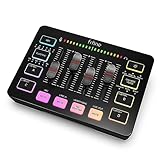
Top 3 picks at a glance
Quick picks by gig type
| Situation | Best fit | Recommended models | Typical market range |
|---|---|---|---|
| Learning at home with two decks | Two channels, USB, built-in effects, compact layout | AlphaTheta DJM-450, Allen & Heath Xone:23C | Usually $400–$800 |
| Turntablism and scratch practice | Two channels, adjustable crossfader, strong phono inputs | Rane Seventy-Two MKII | Usually $1,200–$1,800 |
| Small club or serious home setup | Four channels, booth output, send/return, club-style workflow | AlphaTheta DJM-750MK2, Allen & Heath Xone:43 | Usually $900–$1,500 |
| Club-standard preparation | Four channels, multiple digital inputs, robust effects and monitoring | AlphaTheta DJM-A9, Allen & Heath Xone:96 | Usually $2,000–$3,500 |
| Mobile events with microphones | Four channels, independent mic EQ, USB, balanced outputs | Numark M6 USB, Mackie ProFX-style mixer plus a DJ mixer | Usually $250–$900 |
How to choose among the best DJ mixers
1. Match the channel count to your next setup
Two channels are enough for a pair of media players or turntables, and they make learning gain staging and transitions less distracting. Choose four channels if you expect to use four decks, combine digital players with turntables, or layer an external sampler, drum machine, or backup source.
A four-channel mixer is not automatically better. It is physically wider, costs more, and gives you more controls to maintain. If you will only ever connect two sources, a high-quality two-channel mixer often gives better value than an inexpensive four-channel model.
- Two channels: bedroom practice, basic parties, scratch practice, and compact booths.
- Four channels: club-style mixing, four-deck sets, hybrid live setups, and mobile backup sources.
- More than four channels: useful mainly for live electronic performances, multiple guest DJs, or complex installations.
2. Treat the crossfader as a mechanical specification
If you blend with channel faders, the crossfader is less important than the EQ and line faders. If you scratch, cut, or perform fast transforms, it becomes one of the most important parts of the mixer.
Look for an adjustable crossfader curve, reverse or hamster switch, and a replaceable or contactless fader. A short cut-in distance lets the sound appear quickly; a longer curve is more comfortable for gradual fades. The Rane Seventy-Two MKII is aimed at scratch-oriented users because its layout and fader controls prioritize performance techniques. The AlphaTheta DJM-450 is more suitable for conventional blending and occasional scratching than for heavy turntablist use.
For a mobile DJ, replaceability matters more than an exotic fader specification. Dust, transport, and repeated setup can eventually affect any mechanical control. A mixer with accessible replacement parts may cost less over several years than a cheaper unit that must be discarded after a worn fader develops noise.
3. Decide whether you need onboard effects
Built-in effects are useful when the mixer is the center of the performance. They are less important if your media players or DJ software already provide effects.
- Filter only: enough for simple transitions and a clean beginner workflow.
- Filter, delay, echo, and reverb: practical for club transitions and occasional performance moments.
- Beat-synced effects: helpful when the mixer receives a reliable BPM or digital link from compatible equipment.
- Send/return: best for adding an external effects unit, synthesizer, or looper.
The AlphaTheta DJM-450 and DJM-750MK2 offer the familiar club-style effects approach, while Allen & Heath Xone mixers are often chosen for their analog-oriented sound and filter workflow rather than a large collection of built-in digital effects. Do not buy a mixer for its effect count alone: an effect that cannot be heard clearly in your monitoring system will not improve a set.
Connectivity that changes the buying decision
| Connection | Why it matters | Who needs it |
|---|---|---|
| RCA line input | Connects most consumer and DJ playback equipment | Every home and mobile DJ |
| Phono input | Accepts turntable-level signals from cartridges | Vinyl DJs; not required for media players |
| Balanced XLR master output | Rejects more cable noise over long runs | Clubs, venues, and mobile PA systems |
| TRS booth output | Allows a separately controlled booth monitor | Club DJs and anyone using a monitor speaker |
| USB audio interface | Routes computer audio, recording, or software channels through the mixer | Digital DJs, streaming, and recording |
| Microphone input with independent EQ | Prevents speech from competing with the music | Weddings, announcements, and corporate events |
Balanced outputs are especially valuable for mobile gigs. A 15-meter unbalanced RCA run can pick up hum from lighting and power equipment, whereas a balanced XLR connection is designed to reject common interference. A mixer with only an unbalanced master output can still work, but it may require a DI box or a very short cable run.
Head-to-head: the main mixer categories
Best beginner route: AlphaTheta DJM-450
The DJM-450 is a sensible starting point for someone who wants to learn a club-style layout without immediately paying flagship prices. It has two channels, phono and line inputs, USB connectivity, a booth output, and built-in effects. Its layout prepares a new DJ for the general workflow found on larger DJM mixers.
Choose it when you have two decks, want software integration, and prefer smooth blending over specialized scratch performance. Its main limitation is expansion: adding a third or fourth deck later means replacing the mixer rather than simply using another channel.
Best analog-focused alternative: Allen & Heath Xone:23C
The Xone:23C is a compact two-channel mixer with a distinctive analog-oriented design, a powerful filter section, and USB connectivity. It suits DJs who value hands-on EQ and filter control and do not need a large effects menu.
It is a strong choice for house, techno, and vinyl users, but its workflow differs from the common club-standard DJM arrangement. If you regularly play on DJM equipment, the DJM-450 offers more familiar preparation.
Best four-channel step-up: AlphaTheta DJM-750MK2
The DJM-750MK2 adds four channels, club-style effects, booth monitoring, and more room for multiple decks. It is appropriate for a home setup intended to resemble a club booth or for small venues where several sources must remain connected.
Its value is highest when you will actually use the extra channels. For two-deck mixing, the additional width and cost provide little audible benefit.
Best for a club-standard digital setup: AlphaTheta DJM-A9
The DJM-A9 is designed for professional club environments, with four channels, extensive digital connectivity, multiple microphone options, advanced effects, and a large monitoring section. It makes sense for working DJs, venues, and production spaces that need a broad range of inputs and a familiar professional layout.
It is excessive for a first bedroom mixer unless you specifically want to practice on a flagship-style system or need its connectivity for a complex setup.
Best for an analog club workflow: Allen & Heath Xone:96
The Xone:96 is a four-channel analog mixer with extensive USB audio capability and a strong focus on routing, filtering, and external equipment. It is a better fit for DJs who use modular hardware, external effects, or a DVS setup and want detailed routing options.
Compared with an effects-heavy digital mixer, it expects more of the character and processing to come from the DJ, software, or external gear. That can be an advantage for creative setups, but it increases the learning curve.
A practical decision matrix
| Your situation | Minimum useful specification | Best direction |
|---|---|---|
| Two digital decks in a bedroom | 2 channels, RCA line inputs, headphone cue, USB optional | DJM-450 or similar two-channel mixer |
| Two turntables and scratch practice | 2 phono channels, adjustable replaceable crossfader | Scratch-oriented battle mixer such as Rane Seventy-Two MKII |
| Four-deck club-style mixing | 4 channels, booth output, balanced master, beat effects | DJM-750MK2 or comparable four-channel mixer |
| Wedding and corporate work | Balanced output, independent microphone EQ, USB, backup input | Four-channel mobile-focused mixer |
| DJ plus drum machine and effects unit | 4 channels, send/return, USB routing, line-level headroom | Xone:96 or another routing-focused four-channel mixer |
Worked setup: choosing channels before you buy
Suppose your planned rig includes two media players, one turntable, and a drum machine. The two media players require two channels, the turntable requires one phono channel, and the drum machine requires one line channel:
2 media players + 1 turntable + 1 drum machine = 4 mixer channels.
A two-channel mixer would force you to unplug equipment or use an external submixer. A four-channel model leaves no spare channel, so a DJ who may add a sampler soon should consider a mixer with flexible line inputs and a practical way to route an additional source. This simple inventory is more useful than choosing by price alone.
Settings that prevent common beginner problems
- Set channel gain with peaks around -6 dB: this leaves headroom for louder sections and reduces accidental clipping.
- Keep the master below the red zone: increasing a distorted master does not restore detail; turn up the PA or amplifier instead.
- Start the booth level low: booth speakers are close to the DJ, so excessive monitoring volume can cause fatigue and make the main system seem quieter than it is.
- Use the microphone channel sparingly: speech usually needs less low end than music. If the mixer provides mic EQ, reduce unnecessary bass before raising volume.
- Test every cable before the gig: confirm each source, headphone cue, master output, booth output, and microphone separately while there is still time to replace a faulty cable.
Frequently asked questions
Can I connect turntables and media players to the same mixer?
Yes, if the mixer has both phono and line inputs. Phono inputs accept turntable-level signals from cartridges, while RCA line inputs connect most consumer and DJ playback equipment. Check the available inputs before buying, especially if you plan to switch between vinyl and media players.
Do I need a USB connection to learn DJing?
No, USB is optional for a basic two-deck bedroom setup. It becomes useful if you want to route computer audio, record, stream, or use software channels through the mixer. A two-channel mixer with a headphone cue and RCA line inputs covers the minimum listed for two digital decks.
What should I look for in a mixer for long cable runs?
Look for balanced XLR master outputs, which are designed to reject common interference over long runs. The article notes that an unbalanced RCA run of 15 meters can pick up hum from lighting and power equipment. A mixer with only unbalanced outputs may require a DI box or a short cable run.
Is a four-channel mixer useful if I only have two decks?
It can be useful if you expect to add sources, but it is not automatically better. Four channels suit four decks, a mix of digital players and turntables, or an external sampler, drum machine, or backup source. If you will only connect two sources, a quality two-channel mixer may offer better value.
Which mixer features matter most for weddings and announcements?
Prioritize a microphone input with independent EQ, balanced outputs, and a backup input. Independent microphone EQ helps speech avoid competing with the music, while balanced outputs suit mobile PA systems. The article recommends a four-channel mobile-focused mixer for wedding and corporate work.
Final buying advice
For most first-time buyers, prioritize a clean layout, reliable headphone cueing, and the connections your current equipment actually uses. Choose the DJM-450 for a familiar two-channel club workflow, the Xone:23C for an analog-focused setup, a DJM-750MK2 for affordable four-channel expansion, and the Xone:96 or DJM-A9 only when your routing, deck count, or professional requirements justify the extra cost. For scratch-heavy work, spend the budget on crossfader quality and replaceability rather than a long list of effects.


