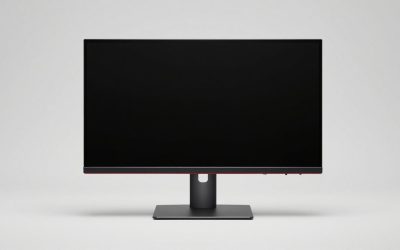
If the front lip of your desk leaves a red line across your forearms after a long session, you have felt contact stress, the pressure a hard edge puts on soft tissue. A desk edge cushion is a padded strip that clips or sticks along that front edge to spread the load. It is a small, $15-35 accessory, but for shallow desks and forearm-heavy gaming postures it can matter more than a fancy wrist rest. Here is when it helps and how to pick one.
As an Amazon Associate we earn from qualifying purchases at no extra cost to you.


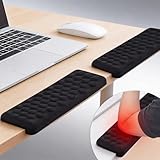
Our Top Picks


Top 3 picks at a glance
What contact stress does
Resting your forearms on a sharp 90-degree desk edge concentrates pressure on a thin band of skin, tendons, and nerves. Over hours that can cause numbness, tingling, or an aching groove, especially if you play with your arms drawn back and your wrists near the edge. Ergonomics guidance specifically calls out avoiding hard edges under the forearms and wrists. A cushioned edge, or a desk with a rounded waterfall edge, removes that pressure point.
Edge cushion vs wrist rest
They are not the same tool. A wrist rest supports your palms right in front of the keyboard or mouse. An edge cushion protects the forearms and the underside of the wrist where they cross the desk’s front lip. If your pain is a line across the forearms rather than sore palms, the edge is the culprit and a wrist rest will not touch it.
| Type | How it attaches | Best for | Price |
|---|---|---|---|
| Adhesive foam strip | Peel-and-stick along edge | Permanent fix, most desks | $12-25 |
| Clip-on gel bumper | Slides over the lip | Renters, no residue | $18-35 |
| Full edge guard (U-channel) | Friction or adhesive channel | Thick, sharp edges | $15-30 |
What to look for
Match the cushion to your edge thickness; U-channel guards usually fit lips of about 18-40mm. Choose gel or dense foam over flimsy hollow rubber, which flattens fast. If you want zero residue on a nice desk, pick a clip-on or friction-fit design rather than adhesive. Length matters too: buy enough to cover the full width where your arms actually rest, typically 60-90cm, rather than a short strip that leaves a hard section exposed.
The free alternatives
Be honest that you may not need to buy anything. Pushing your keyboard back so your forearms rest on the desk surface (not the edge), lowering your chair a touch, or adding a keyboard tray or desk extender can move the pressure off the lip entirely. An edge cushion is the right buy when the desk is too shallow to move things back and the edge is unavoidably where your arms land.
Installation and durability
Clean and dry the edge before applying adhesive, and press firmly for 30 seconds so it bonds. In warm rooms, cheap adhesive can creep, so a clip-on is more reliable long term. Expect to replace foam every year or two as it compresses; gel lasts longer. If the cushion starts sliding, a thin bead of removable mounting tape underneath usually cures it without permanent residue.
Who benefits most
An edge cushion pays off most for specific setups. Shallow desks under 60cm force your arms toward the lip, so the edge is unavoidable and padding helps immediately. Glass and metal desks have colder, harder edges than wood and cause contact stress faster. People who play with a low chair or a pulled-back arm posture, common in fighting games and MMOs, ride the edge more than someone with a deep desk and forearms fully supported on the surface. Taller users whose elbows sit above a low desk also tend to load the front lip. If instead you sit at a deep desk with your whole forearm on the surface, you probably do not need one at all. Diagnose by looking for a red mark or numb patch across the forearm after a session; that line is exactly what the cushion removes.
FAQ
Do I need an edge cushion if I already have a wrist rest?
Possibly, because they protect different areas. A wrist rest supports your palms at the keyboard, while an edge cushion protects your forearms where they cross the desk’s front lip. If your discomfort is a line across the forearms, the wrist rest will not fix it.
Will an adhesive edge cushion ruin my desk finish?
Quality foam strips use residue-light adhesive, but any glue risks marking a delicate finish. On a desk you care about, choose a clip-on or friction-fit U-channel guard that grips the lip mechanically and leaves no glue behind.
Bottom line
A desk edge cushion is a cheap, targeted fix for the red-line ache a sharp desk lip leaves on your forearms, and it solves a problem a wrist rest cannot. First try pushing your keyboard back or adding depth; if the edge is still where your arms land, buy a gel or dense-foam guard sized to your edge thickness, and prefer a clip-on design if you want to protect the desk finish.
Related guides
- Best Cheap Tablets for Kids: Eight Listings Sorted by Age, Controls and Storage: 7 Compared (2026)
- Best Ultrawide Gaming Monitors: Six Screens Sized Against Real Desks: 6 Compared (2026)
- Best Game Room Neon Lights: Ten Signs and Icon Lamps Compared: 10 Compared (2026)
- 10 Best 75% Hot-Swappable Mechanical Keyboards (October 2026)
More from Amazon
Programs that pair well with the guide above. Offers and eligibility are set by Amazon and may change.
Free shipping on eligible items, Prime Video and more. Eligible new members can start with a free trial.
Start a Prime free trialAd-free music streaming. Eligible new subscribers can start with a free trial.
Try Music Unlimited freeA Prime membership for ages 18-24 with a trial period. Eligibility is set by Amazon.
See Prime for Young AdultsAudiobooks and podcasts to listen to on the go. Eligible new members can start with a free trial.
Try Audible freeAs an Amazon Associate we earn from qualifying purchases.